
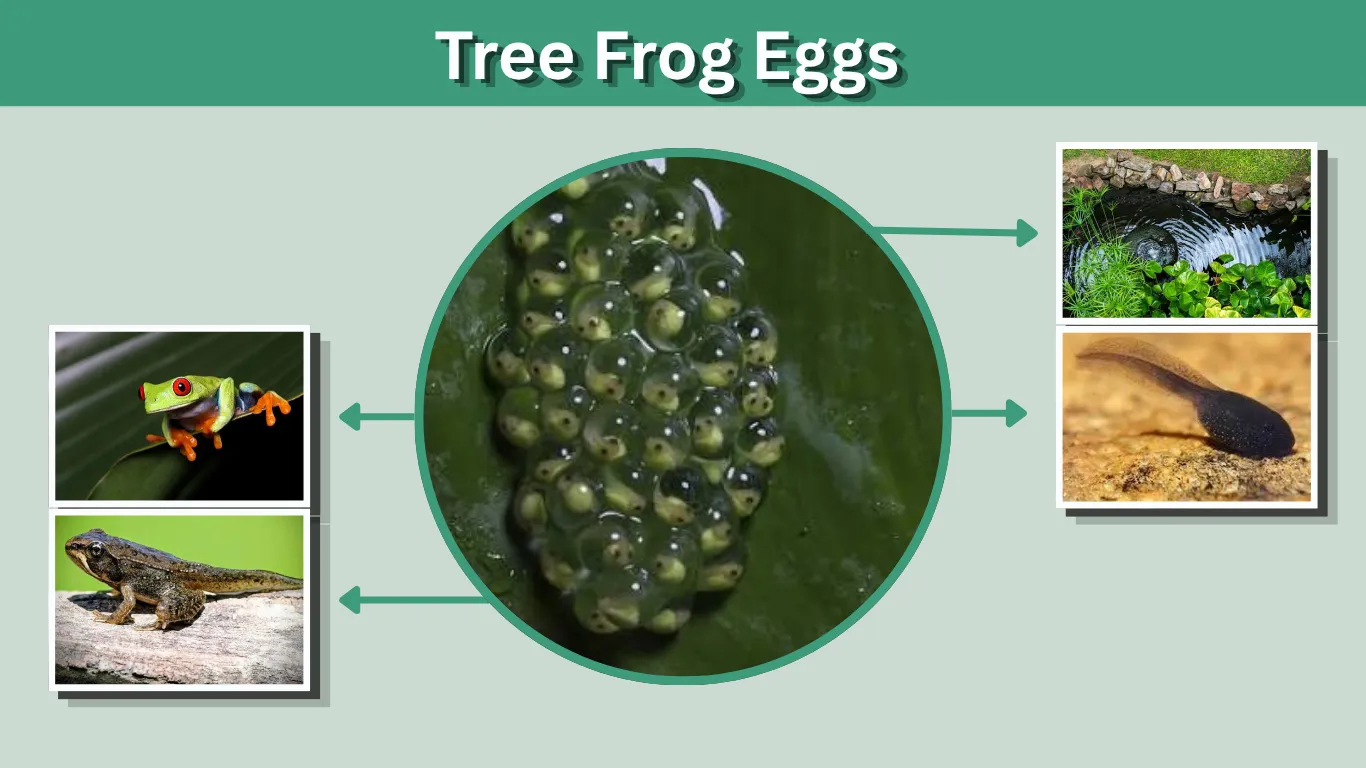
Tree frog eggs are small, jelly-covered structures that mark the beginning of a frog’s life cycle. Depending on the species, females may deposit them in ponds, attach them to underwater plants, or place them on leaves hanging above water. Gray, green, Cuban, Pacific, and red-eyed tree frogs each have distinctive egg-laying habits. Knowing what tree frog eggs look like, where they are found, and how long they take to hatch can help you identify them and understand how these delicate amphibians develop in their natural environments.
What Do Tree Frog Eggs Look Like?
Tree frog eggs typically appear as small, round structures surrounded by transparent, jelly-like material. Their appearance varies depending on the species, development stage, and breeding environment.
Most contain a dark embryo surrounded by a lighter protective layer. Some form compact clusters, while others float separately or remain attached to vegetation.
Tree Frog Egg Identification
- Shape: Usually round or slightly oval.
- Color: Black, brown, cream, or pale yellow embryos.
- Outer Layer: Transparent, gelatinous coating.
- Size: Usually only a few millimeters across.
- Arrangement: Clusters, loose groups, or scattered eggs.
- Location: Ponds, vegetation, temporary pools, or leaves.
- Appearance: Small dots suspended inside clear jelly.
Why Are Tree Frog Eggs Covered in Jelly?
The gelatinous coating protects developing embryos and helps maintain moisture. It also provides physical protection while allowing oxygen to reach the embryos.
Eggs laid outside water require especially suitable humidity levels to prevent dehydration.
Where Do Tree Frogs Lay Their Eggs?
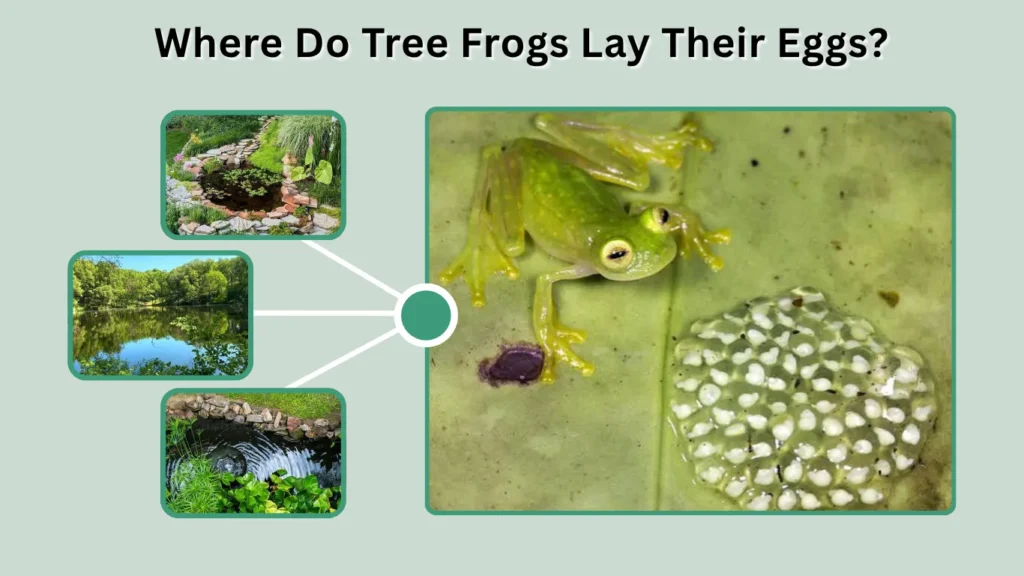
Tree frogs use different breeding locations depending on their species and natural habitat. Although adults frequently live in trees, many species return to water to reproduce.
Shallow ponds, wetlands, and temporary rain-filled pools provide suitable environments for eggs and developing tadpoles.
Do Tree Frogs Lay Eggs in Water?
Yes, many tree frog species lay their eggs directly in freshwater. Gray tree frogs, American green tree frogs, and Pacific tree frogs commonly reproduce in ponds or other quiet water bodies.
Their eggs may attach to aquatic plants or float near the surface.
Do Tree Frogs Lay Eggs on Leaves?
Some tropical species lay eggs above water rather than directly inside it.
Red-eyed tree frogs attach gelatinous egg clusters to leaves overhanging ponds. When the embryos hatch, tadpoles fall into the water below and continue developing.
Different Types of Tree Frog Eggs
Tree frog eggs vary considerably among species. Their color, number, arrangement, and hatching time provide useful identification clues.
Understanding these differences is especially helpful when examining eggs found in backyard ponds or natural wetlands.
Gray Tree Frog Eggs
Gray tree frogs (Dryophytes versicolor) deposit small egg masses attached to vegetation near the water’s surface.
Each cluster commonly contains approximately 30–40 eggs. Females may produce around 1,800 eggs during a breeding period.
Under suitable conditions, the eggs usually hatch within three to seven days.
Green Tree Frog Eggs
American green tree frogs (Dryophytes cinereus) lay dark-centered eggs in small masses associated with aquatic vegetation.
A female may produce several hundred eggs. Hatching commonly occurs within approximately four to fourteen days, depending on environmental conditions.
Pacific Tree Frog Eggs
Pacific tree frogs (Pseudacris regilla and closely related species) lay small, gelatinous egg clusters attached to submerged plants.
Individual clusters commonly contain approximately 9–70 eggs. Hatching times vary with water temperature and may range from about one to several weeks.
Cuban Tree Frog Eggs
Cuban tree frogs (Osteopilus septentrionalis) produce numerous small eggs that float across the water’s surface.
Their eggs resemble scattered black dots rather than compact jelly masses. Large females may produce thousands of eggs.
Red-Eyed Tree Frog Eggs
Red-eyed tree frogs (Agalychnis callidryas) lay approximately 40 eggs per clutch on leaves hanging above water.
Their translucent eggs usually hatch after approximately six to seven days. Developing embryos can sometimes hatch earlier when threatened by predators or dangerous conditions.
White’s Tree Frog Eggs
White’s tree frogs (Ranoidea caerulea), also called Australian green tree frogs, lay eggs in freshwater during rainy breeding periods.
Their eggs develop rapidly under favorable conditions and may begin hatching within one to three days.
How Many Eggs Do Tree Frogs Lay?
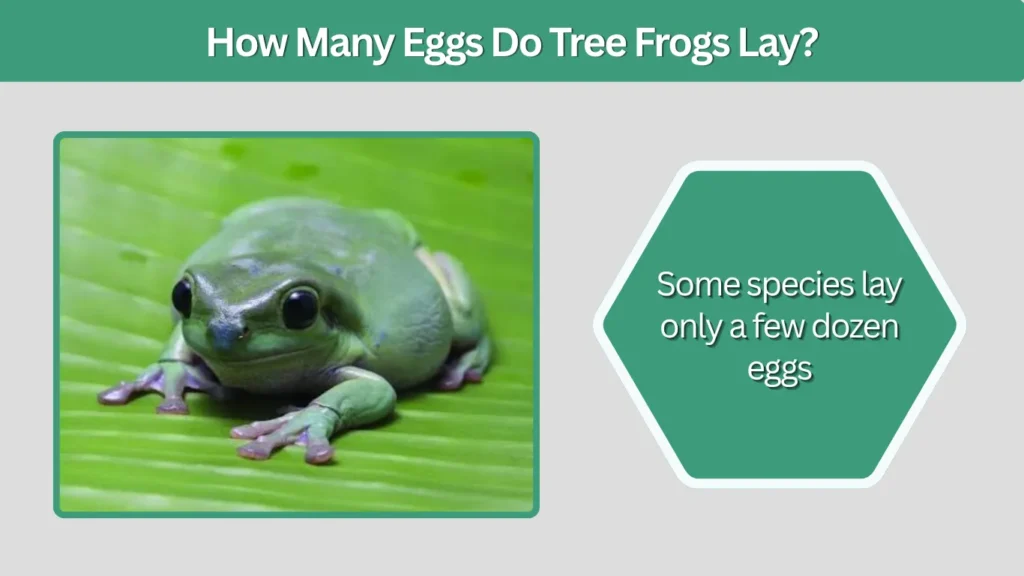
The number of eggs produced depends on the species, female body size, and reproductive conditions.
Some species lay only a few dozen eggs in each clutch, while others produce hundreds or thousands during a breeding season.
Why Do Tree Frogs Produce So Many Eggs?
Tree frog eggs face numerous dangers, including predators, drying conditions, and changing water levels.
Producing multiple eggs increases the likelihood that some offspring will survive to adulthood.
However, not every tree frog species produces large clutches. Reproductive strategies vary considerably.
How Long Do Tree Frog Eggs Take to Hatch?
Tree frog egg hatching times differ by species and environmental conditions. Some hatch within a few days, while others require several weeks.
Temperature, oxygen availability, moisture, and embryo development influence the process.
Tree Frog Egg Hatching Time
Gray tree frog eggs commonly hatch within three to seven days. American green tree frog eggs often hatch in approximately five days under favorable conditions.
Red-eyed tree frog eggs usually hatch after six or seven days, although early hatching can occur.
Pacific tree frog eggs may require considerably longer in cooler conditions.
What Affects Egg Development?
Warmer temperatures within a species’ suitable range generally accelerate embryo development. Cooler conditions often slow growth.
However, excessive heat, contaminated water, and insufficient oxygen can damage developing eggs.
Tree Frog Eggs Hatching and Life Cycle
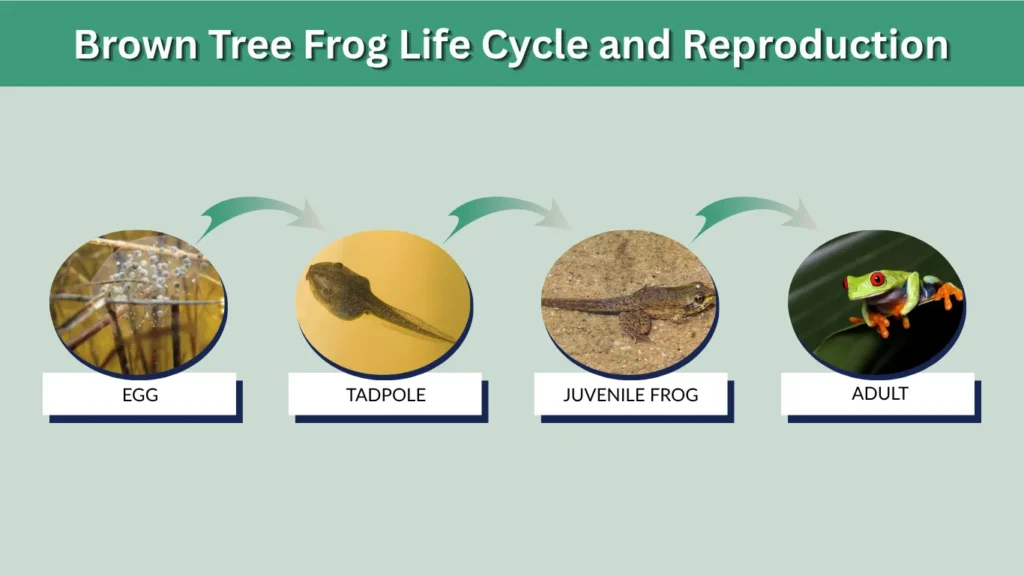
Tree frogs undergo metamorphosis, transforming from aquatic larvae into young frogs.
The developmental process involves several stages, each requiring suitable environmental conditions.
Stages of Tree Frog Development
- Egg Laying: Females deposit fertilized eggs in suitable locations.
- Embryo Development: Young frogs begin developing inside protective egg coverings.
- Hatching: Tadpoles emerge from the eggs.
- Tadpole Growth: Larvae feed and develop in water.
- Leg Development: Hind legs and eventually front legs appear.
- Metamorphosis: The tail is absorbed as the young frog develops.
- Juvenile Stage: Young frogs begin living outside water.
How Long Do Tadpoles Take to Become Frogs?
Tadpole development varies widely between species. Some complete metamorphosis within several weeks, while others require months.
Water temperature, food availability, and environmental conditions strongly influence their growth.
What to Do If You Find Tree Frog Eggs in a Pool
Tree frogs sometimes lay eggs in swimming pools, especially when water is untreated or temporarily stagnant.
Unfortunately, chlorine and other pool chemicals can harm eggs and tadpoles.
How to Handle Tree Frog Eggs Safely
- Identify the Species: Determine whether the eggs belong to a native or invasive frog.
- Avoid Chemicals: Never add chemicals directly to eggs or tadpoles.
- Do Not Relocate Unknown Eggs: Moving eggs can spread invasive species and amphibian diseases.
- Contact Wildlife Experts: Ask a local wildlife agency for species-specific guidance.
- Prevent Future Entry: Use appropriate pool covers and frog escape ramps.
Can Tree Frog Eggs Survive in Chlorinated Water?
Tree frog eggs generally cannot tolerate normal swimming pool chemical treatments.
Chlorine can damage developing embryos and reduce their chances of survival.
If eggs appear in a pool, seek identification and appropriate guidance before attempting relocation.
How to Protect Tree Frog Eggs in a Pond
Natural ponds provide important breeding habitats for tree frogs. Protecting their eggs helps maintain local amphibian populations.
Avoid introducing pesticides, fertilizers, or harmful chemicals near breeding water. Native aquatic plants provide attachment surfaces and shelter for developing tadpoles.
Maintaining natural vegetation around ponds also supports adult frogs during breeding periods.
Avoid unnecessary disturbance of egg masses, and never transfer wild eggs between ponds without appropriate wildlife guidance.
FAQs
1. When Do Tree Frogs Lay Eggs?
Most tree frogs lay eggs during warmer or rainy breeding periods. Gray tree frogs commonly reproduce during spring and early summer, while tropical species may breed during rainy seasons. Exact breeding times depend on species, geographic location, and environmental conditions.
2. Can Tree Frog Eggs Survive Outside Water?
Some tree frog species naturally lay eggs outside water, particularly on moist leaves above ponds. However, many species require their eggs to remain submerged. Eggs adapted to aquatic environments generally cannot survive prolonged drying.
3. Are Tree Frog Eggs Black or White?
Tree frog eggs often contain dark embryos surrounded by transparent jelly. Some may appear black, brown, cream, or pale yellow. Their appearance depends on species and developmental stage, so color alone is not enough for accurate identification.
4. Do Tree Frog Eggs Need Oxygen?
Yes, developing tree frog embryos require oxygen. Aquatic eggs obtain dissolved oxygen from surrounding water, while eggs laid on leaves exchange gases with the air. Poor water quality or insufficient oxygen can interfere with development.
5. Can You Move Tree Frog Eggs to Another Pond?
Moving wild tree frog eggs between ponds is generally discouraged. Relocation can spread diseases, parasites, and invasive species. It may also be restricted by wildlife regulations. Contact a local wildlife authority before moving eggs or tadpoles.
