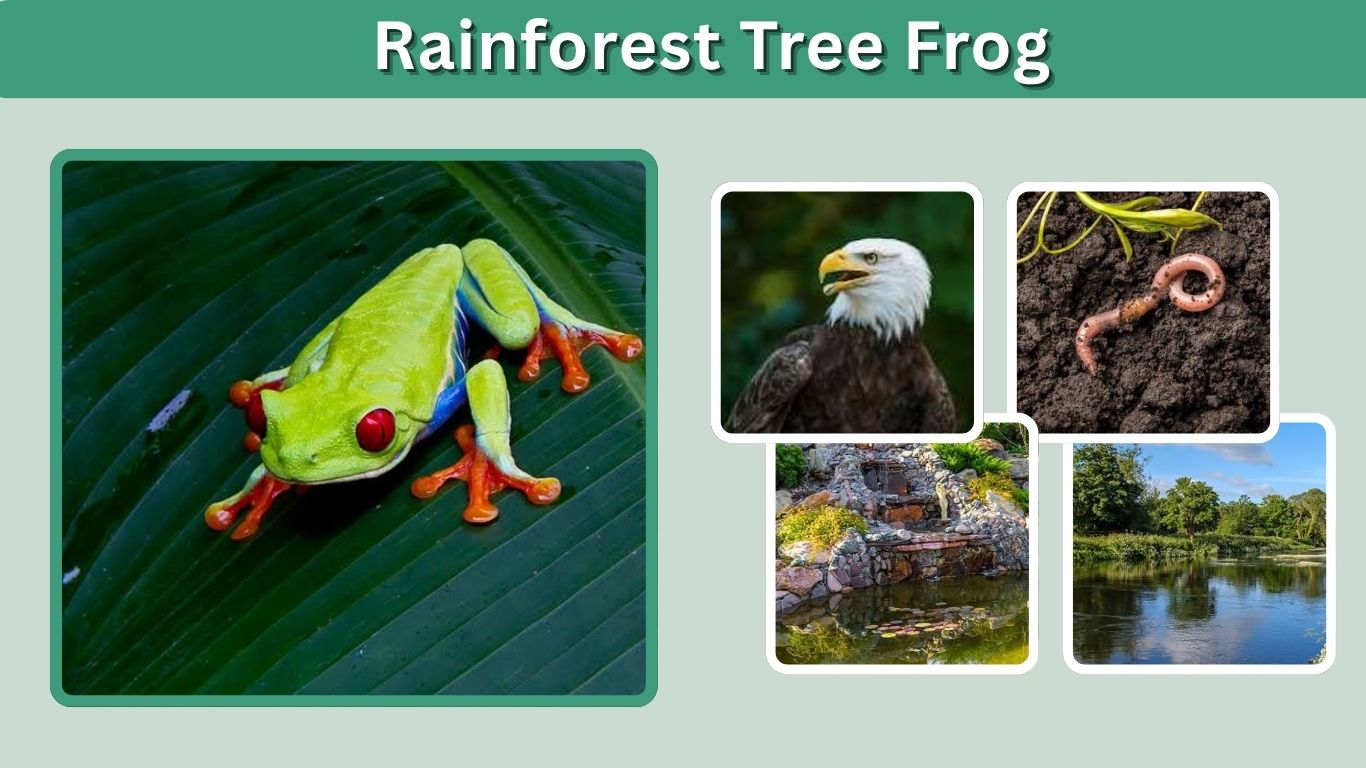
Rainforest tree frogs are remarkable amphibians known for their colorful bodies, excellent climbing abilities, and fascinating survival strategies. Found in tropical forests across Central America, South America, Asia, and Australia, these frogs have developed special adaptations for living among trees and dense vegetation. Many species, including the famous red-eyed tree frog, spend their days hiding beneath leaves and become active after sunset. They play an important role in rainforest ecosystems by controlling insect populations. Learning about their habitat, diet, predators, reproduction, and behavior reveals how these amphibians survive in tropical environments.
What Is a Rainforest Tree Frog?
A rainforest tree frog is an amphibian that lives in tropical forest environments, often spending much of its life among trees and vegetation. The name refers to numerous species rather than one particular frog.
These frogs belong to different families and vary considerably in size, appearance, and behavior. Most possess specialized toe pads that help them grip smooth leaves and branches.
Rainforest Tree Frog Identification
- Animal Group: Amphibians
- Habitat: Tropical rainforests and humid forests
- Distribution: Central America, South America, Asia, and Australia
- Average Size: Varies from under one inch to several inches
- Body Color: Green, brown, yellow, or multicolored
- Skin Texture: Smooth or slightly rough, depending on species
- Diet: Insects and small invertebrates
- Activity: Mostly nocturnal
- Reproduction: Egg-laying with different developmental strategies
Physical Appearance
Rainforest tree frogs usually have slender bodies, strong hind legs, and prominent eyes. Their skin colors often match surrounding vegetation, helping them remain hidden.
Some species display bright colors, while others resemble leaves or tree bark. Their adhesive toe pads allow them to climb vertical surfaces and move through dense vegetation.
Where Do Rainforest Tree Frogs Live?
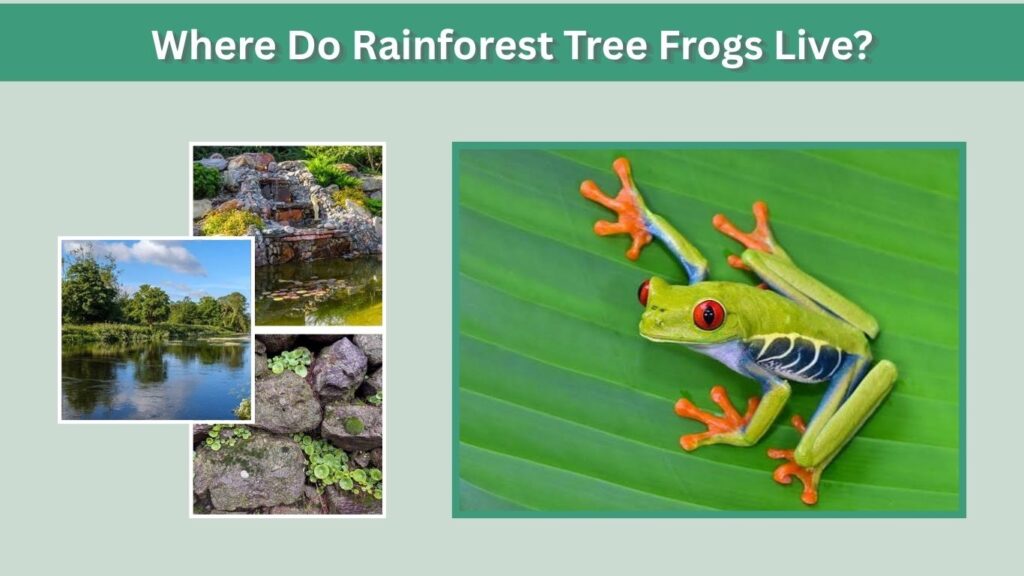
Rainforest tree frogs inhabit tropical regions with high humidity, abundant vegetation, and suitable breeding locations. Their environments provide food, shelter, and protection from extreme temperatures.
They commonly live around forest streams, ponds, water-filled tree cavities, and dense vegetation. Different species occupy different heights within the forest.
Rainforest Layers and Habitat
Many tree frogs inhabit the understory and canopy layers. The understory provides shaded vegetation, moisture, and numerous hiding places.
The canopy offers leaves, branches, and insects. Some species spend most of their time above ground, while others descend toward water during breeding periods.
Do Tree Frogs Live in the Amazon Rainforest?
Yes, the Amazon rainforest supports numerous tree frog species, including the Amazon milk frog and several monkey frog species.
However, the famous red-eyed tree frog (Agalychnis callidryas) primarily inhabits Central America and parts of northern Colombia. It is not a native Amazon Basin species.
How Do Tree Frogs Adapt to the Rainforest?
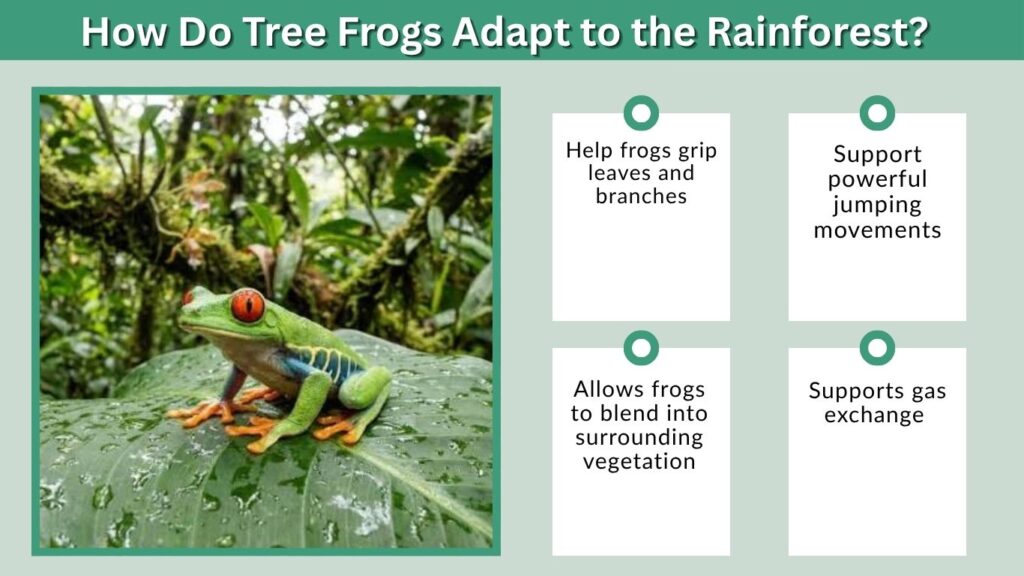
Rainforest tree frogs possess specialized physical and behavioral adaptations that help them survive in environments filled with predators, dense vegetation, and changing weather conditions.
Their climbing abilities allow them to access food and shelter above the forest floor. Camouflage and nighttime activity provide additional protection.
Important Rainforest Tree Frog Adaptations
- Adhesive Toe Pads: Help frogs grip leaves and branches.
- Strong Hind Legs: Support powerful jumping movements.
- Camouflage: Allows frogs to blend into surrounding vegetation.
- Large Eyes: Help detect prey and movement in dim light.
- Moist Skin: Supports gas exchange and water absorption.
- Nocturnal Activity: Helps avoid some daytime predators.
- Flexible Bodies: Allow movement through narrow spaces and dense plants.
How Do Red-Eyed Tree Frogs Survive?
Red-eyed tree frogs have bright green bodies that resemble fresh leaves. During daylight hours, they often rest with their legs tucked beneath their bodies and eyes closed.
When disturbed, they may suddenly expose their bright red eyes and colorful sides. This unexpected display can startle predators, providing an opportunity to escape.
Types of Tree Frogs Found in Rainforests
Tropical rainforests contain many tree frog species with different colors, sizes, and behaviors. Some are highly specialized for living in forest canopies, while others use both trees and aquatic habitats.
Three well-known examples demonstrate the remarkable diversity of these amphibians.
Red-Eyed Tree Frog
The red-eyed tree frog has a bright green body, striking red eyes, orange feet, and blue markings along its sides.
Native to Central America and nearby regions, this nocturnal species typically rests on leaves during the day and searches for insects after sunset.
Amazon Milk Frog
The Amazon milk frog (Trachycephalus resinifictrix) is native to northern South American rainforests. It has brown-and-gray coloration that resembles tree bark.
This species often inhabits vegetation around water-filled tree cavities. When threatened, it can release a milky defensive skin secretion.
Australian Green Tree Frog
The Australian green tree frog (Ranoidea caerulea) occurs across parts of northern and eastern Australia, including tropical forests.
It has a rounded body, smooth green skin, and prominent toe pads. Unlike some rainforest specialists, it also inhabits woodlands and areas around buildings.
What Do Rainforest Tree Frogs Eat?
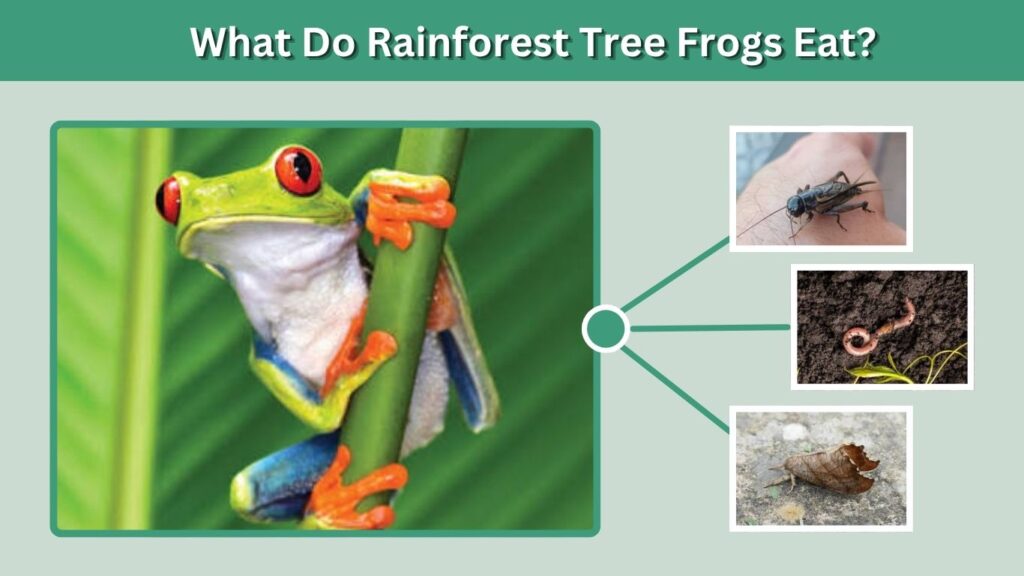
Rainforest tree frogs are primarily carnivorous animals that feed on insects and other small invertebrates. Their diets depend on body size, species, and available prey.
Many hunt after sunset when flying and crawling insects become active. Their feeding habits help regulate insect populations in tropical forests.
Common Foods of Rainforest Tree Frogs
- Crickets: Provide protein and nutrients.
- Moths: Common prey for nocturnal species.
- Flies: Captured around vegetation and water.
- Beetles: Eaten by frogs capable of swallowing them.
- Grasshoppers: Consumed by larger tree frogs.
- Spiders: Occasionally eaten by certain species.
How Do Rainforest Tree Frogs Hunt?
Many tree frogs use a sit-and-wait hunting strategy. They remain motionless until an insect moves within striking distance.
They then rapidly extend their sticky tongues to capture prey. Some species actively search branches and leaves for food instead of waiting in one location.
Rainforest Tree Frog Reproduction and Life Cycle
Rainforest tree frogs generally reproduce during periods when suitable moisture and breeding habitats are available. Many species become particularly active during rainy seasons.
Their reproductive strategies vary considerably. Some lay eggs directly in water, while others attach eggs to vegetation or deposit them inside protected tree cavities.
How Do Rainforest Tree Frogs Reproduce?
Male tree frogs produce calls to attract females. After mating, females deposit eggs in locations suited to their species.
In many species, the eggs hatch into tadpoles that develop in water. Over time, tadpoles grow legs, absorb their tails, and transform into juvenile frogs.
Red-Eyed Tree Frog Life Cycle
Female red-eyed tree frogs typically lay eggs on leaves hanging above water. After hatching, tadpoles fall into the water below.
Interestingly, developing embryos can sometimes hatch early when threatened by predators, particularly egg-eating snakes. This adaptation may increase their chances of survival.
What Eats Tree Frogs in the Rainforest?
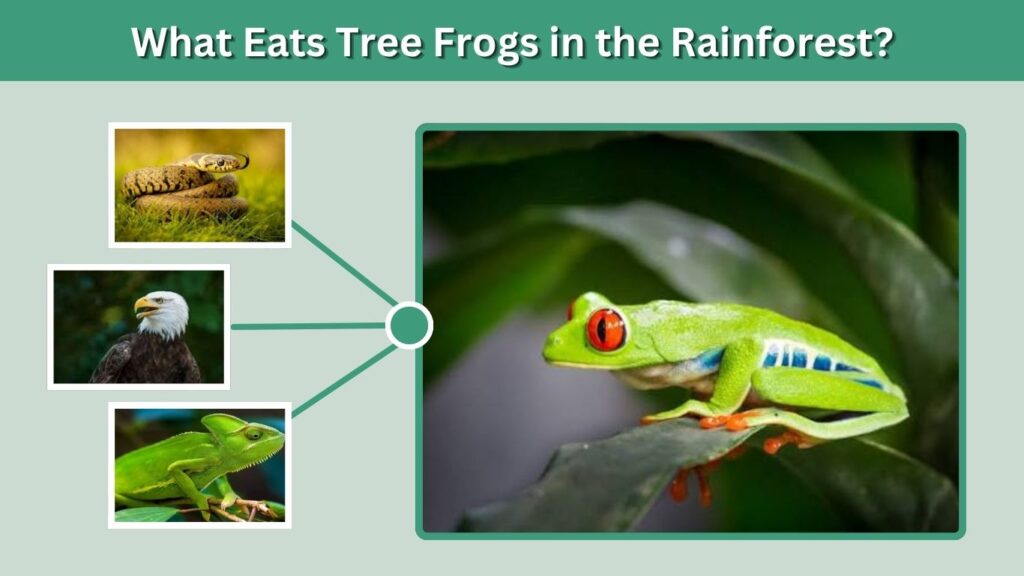
Rainforest tree frogs face predators throughout their lives. Their eggs, tadpoles, and adults are vulnerable to different animals.
Predator avoidance is an important part of their daily behavior. Many species rely on camouflage, hiding, and quick escape movements rather than direct confrontation.
Common Rainforest Tree Frog Predators
- Snakes: Hunt frogs among leaves and branches.
- Birds: Capture frogs resting in vegetation.
- Lizards: Consume small frogs and juveniles.
- Large Spiders: Occasionally prey on smaller species.
- Larger Frogs: Sometimes eat smaller amphibians.
How Do Tree Frogs Escape Predators?
Many rainforest tree frogs remain motionless when potential predators approach. Their body coloration makes them difficult to distinguish from leaves or bark.
If discovered, they may leap away, hide beneath vegetation, or reveal startling colors. Certain species also produce defensive skin secretions.
Why Are Rainforest Tree Frogs Important?
Rainforest tree frogs contribute to ecological balance by consuming insects and providing food for other animals. Their presence supports complex food webs connecting aquatic and terrestrial environments.
They are also sensitive to changes in environmental conditions. Habitat destruction, pollution, climate change, and infectious diseases threaten many amphibian populations.
Protecting rainforests, freshwater habitats, and breeding locations helps conserve these species and maintain biodiversity.
FAQs
1. Do Red-Eyed Tree Frogs Live in the Rainforest?
Yes, red-eyed tree frogs inhabit tropical rainforests mainly in Central America and nearby northern South America. They spend much of their time resting on vegetation during daylight hours and become active at night to hunt insects.
2. What Layer of the Rainforest Do Tree Frogs Live In?
Many rainforest tree frogs inhabit the understory and canopy layers. However, their preferred locations vary by species. Some live high among branches, while others frequently visit vegetation near streams, ponds, and the forest floor.
3. Are Rainforest Tree Frogs Poisonous?
Some rainforest tree frogs produce toxic or irritating skin secretions, while others are not considered poisonous to humans. Toxicity depends on the species. Avoid unnecessary handling because amphibians have delicate skin and may carry harmful microorganisms.
4. How Long Do Rainforest Tree Frogs Live?
Rainforest tree frog lifespans vary considerably among species. Some survive only a few years in the wild, while others may live much longer. Food availability, predation, disease, and environmental conditions influence their lifespan.
5. How Do Tree Frogs Help the Rainforest?
Tree frogs help rainforest ecosystems by consuming insects and serving as prey for birds, snakes, and other animals. Their tadpoles also contribute to aquatic food webs, making these amphibians valuable members of tropical forest communities.
