
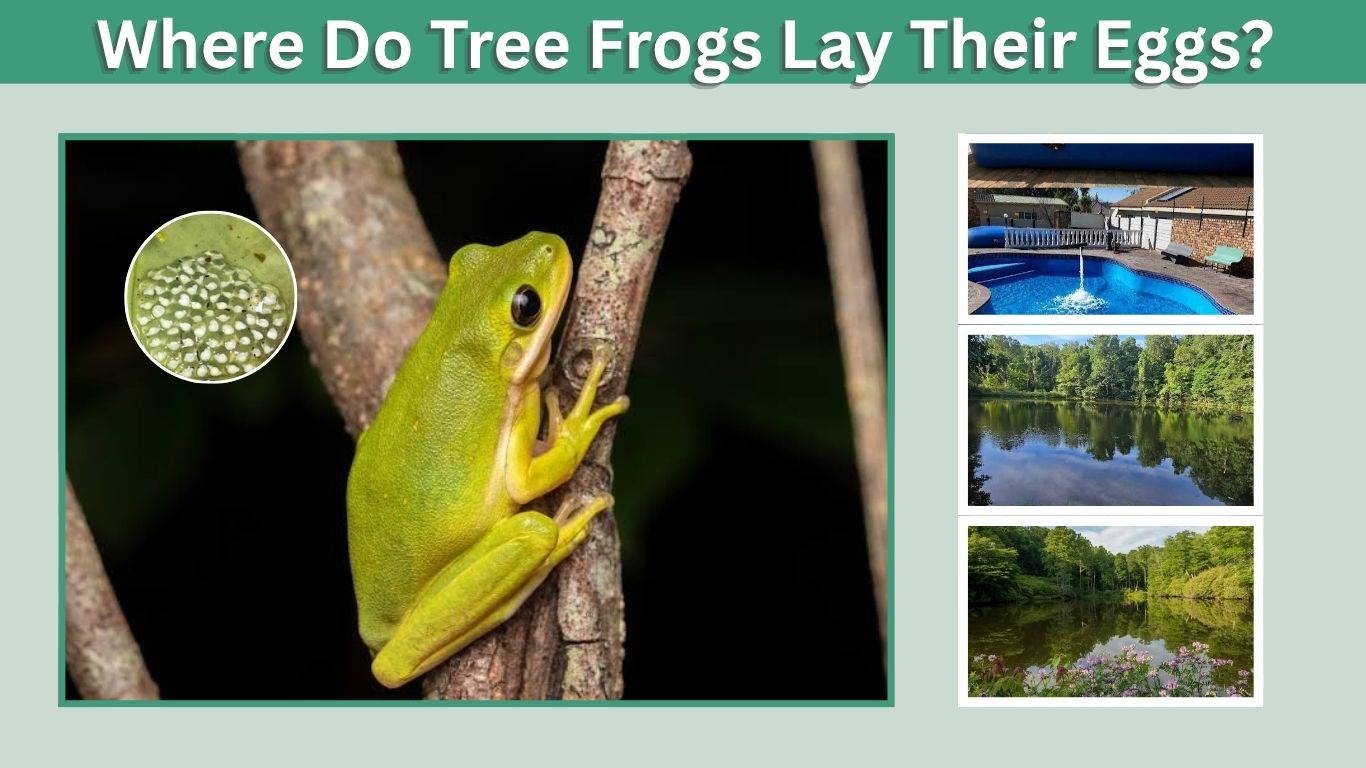
Tree frogs lay their eggs in different locations depending on their species, habitat, and breeding conditions. Many species deposit eggs in ponds, shallow pools, or wetlands, while others attach them to leaves hanging above water. Some tropical tree frogs even use water-filled tree cavities for reproduction. These breeding locations provide moisture, protection, and suitable conditions for developing tadpoles. Understanding where tree frogs lay their eggs, how they choose breeding sites, and when reproduction occurs can help you recognize their eggs and better understand their fascinating life cycle.
Where Do Tree Frogs Lay Their Eggs?
Most tree frogs lay their eggs in freshwater habitats such as ponds, wetlands, temporary pools, and slow-moving water. However, some tropical species deposit eggs on vegetation above water or use water-filled tree cavities.
Their breeding locations depend on the species and the environmental conditions required for successful egg development.
Do Tree Frogs Lay Eggs in Water?
Yes, many tree frogs lay eggs directly in freshwater. Gray tree frogs, American green tree frogs, and Pacific tree frogs commonly deposit eggs in ponds or shallow pools.
Their eggs may float near the surface or attach to submerged vegetation. The surrounding water provides moisture and a suitable environment for developing embryos.
Do Tree Frogs Lay Eggs on Trees?
Some tree frog species lay eggs on leaves or vegetation above water. Red-eyed tree frogs are a well-known example.
Females attach gelatinous egg clusters to leaves hanging over ponds. Once the eggs hatch, the tadpoles drop into the water below and continue developing.
Common Places Where Tree Frogs Lay Eggs

Tree frogs select breeding locations that provide suitable moisture, temperature, and protection. Some species prefer permanent ponds, while others use temporary pools created by rainfall.
Different environments offer advantages depending on local predators and available resources.
Common Tree Frog Egg-Laying Locations
- Freshwater Ponds: Provide suitable breeding habitats for many tree frog species.
- Temporary Rain Pools: Offer shallow water that may contain fewer predatory fish.
- Wetlands: Support breeding through abundant vegetation and moisture.
- Aquatic Plants: Provide surfaces where eggs can attach.
- Leaves Above Water: Used by species such as red-eyed tree frogs.
- Tree Cavities: Some tropical species reproduce in water-filled tree holes.
- Roadside Ditches: Occasionally provide temporary breeding locations.
- Artificial Water Containers: May attract frogs when suitable natural habitats are limited.
Why Do Tree Frogs Choose These Locations?
Tree frogs need suitable conditions for their eggs to develop. Moisture prevents eggs from drying out, while appropriate temperatures support embryo growth.
Some species select temporary fish-free pools because predatory fish can consume eggs and tadpoles.
However, temporary pools may dry before tadpoles finish developing, making breeding-site selection important for survival.
Where Do Different Tree Frog Species Lay Eggs?
Tree frog species have different reproductive habits. Although many rely on freshwater, their preferred egg-laying locations vary according to habitat and evolutionary adaptations.
Understanding these differences helps identify breeding sites and recognize eggs in natural environments.
Where Do Gray Tree Frogs Lay Their Eggs?
Gray tree frogs (Dryophytes versicolor) lay eggs in shallow freshwater, including woodland ponds, marshes, and temporary pools.
Females deposit small gelatinous clusters that attach to aquatic vegetation or other submerged structures.
The eggs generally hatch within three to seven days, depending on water temperature.
Where Do American Green Tree Frogs Lay Eggs?
American green tree frogs (Dryophytes cinereus) commonly lay eggs in ponds, marshes, and other quiet freshwater habitats.
Their egg masses often float near the surface and may attach to aquatic vegetation.
These frogs reproduce primarily during warmer months, particularly when rainfall creates suitable breeding conditions.
Where Do Red-Eyed Tree Frogs Lay Eggs?
Red-eyed tree frogs (Agalychnis callidryas) lay their eggs on leaves hanging above ponds in tropical rainforests.
This strategy keeps developing embryos outside the water until they hatch.
The tadpoles then fall into the pond below, where they continue their aquatic development.
Where Do Cuban Tree Frogs Lay Eggs?
Cuban tree frogs (Osteopilus septentrionalis) lay eggs in quiet freshwater, including ponds, ditches, buckets, and sometimes swimming pools.
Their eggs form scattered, floating patches across the water’s surface rather than tightly attached clusters.
Cuban tree frogs are invasive in Florida, so identifying their breeding sites is especially important.
Where Do Pacific Tree Frogs Lay Eggs?
Pacific tree frogs, also called Pacific chorus frogs, usually lay eggs in shallow ponds, seasonal pools, and wetlands.
Females attach small gelatinous egg clusters to submerged vegetation.
These frogs commonly breed during late winter and spring in suitable parts of their range.
How Do Tree Frogs Lay Their Eggs?
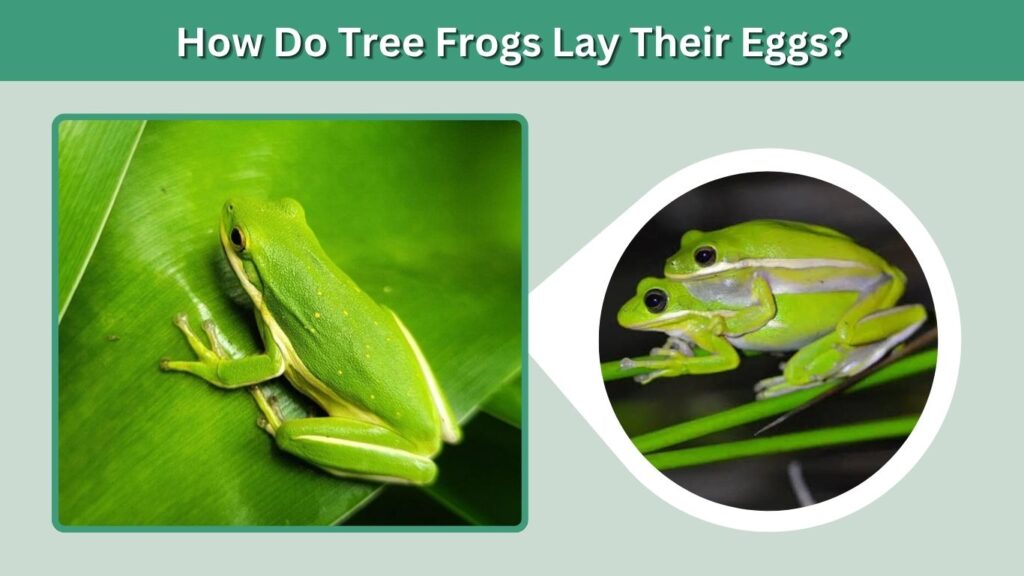
Tree frog reproduction usually begins when environmental conditions become favorable. Males produce calls to attract females, often near suitable freshwater habitats.
After mating begins, females release eggs in locations appropriate for their species.
Tree Frog Egg-Laying Process
- Calling: Male frogs produce mating calls to attract females.
- Mate Selection: Females approach suitable males.
- Amplexus: The male holds the female during reproduction.
- Egg Deposition: Females release eggs into water or onto suitable surfaces.
- Fertilization: In most tree frogs, males fertilize eggs externally.
- Embryo Development: Fertilized eggs develop inside protective gelatinous coverings.
- Hatching: Tadpoles emerge and enter their aquatic developmental stage.
Do Tree Frogs Lay Eggs or Give Birth?
Most tree frogs reproduce by laying eggs rather than giving birth to live young.
Their eggs usually develop outside the female’s body. Depending on the species, embryos may develop in water, on moist vegetation, or in specialized breeding locations.
When Do Tree Frogs Lay Their Eggs?
Tree frog breeding seasons depend on temperature, rainfall, geographic location, and species.
In temperate regions, many frogs reproduce during spring and summer. Tropical species often respond to rainy seasons, when suitable breeding habitats become available.
Tree Frog Breeding Seasons in North America
Gray tree frogs generally breed from late spring into summer, depending on local temperatures.
American green tree frogs commonly reproduce during warm, humid periods from spring through summer. In warmer southern regions, breeding may continue later into the year.
Pacific tree frogs often begin breeding during late winter or early spring when seasonal rainfall creates suitable pools.
When Do Tropical Tree Frogs Lay Eggs?
Tropical tree frogs frequently reproduce during rainy periods because moisture supports egg development and increases available breeding habitats.
Red-eyed tree frogs commonly breed during rainy seasons in Central America.
Rainfall can stimulate male calling, mating activity, and egg deposition.
How Many Eggs Do Tree Frogs Lay?

The number of eggs produced varies considerably among species. Some deposit relatively small clutches, while others release hundreds or thousands of eggs.
Larger females often produce more eggs, but reproductive strategy also influences clutch size.
Tree Frog Egg Numbers by Species
Gray tree frog females may produce approximately 1,000–2,000 eggs during a breeding event.
American green tree frogs commonly produce several hundred eggs, often divided into smaller masses.
Red-eyed tree frogs generally deposit several dozen eggs per clutch. Cuban tree frogs can produce thousands of eggs during a breeding season.
How Long Do Tree Frog Eggs Take to Hatch?
Hatching time depends on species, temperature, and environmental conditions.
Gray tree frog eggs commonly hatch within three to seven days. Red-eyed tree frog eggs usually hatch after approximately six or seven days.
Some other tree frog species develop more quickly or require several weeks, particularly in cooler conditions.
What to Do If You Find Tree Frog Eggs
Finding tree frog eggs in a backyard pond or temporary pool can be exciting. However, their delicate structure makes them vulnerable to environmental disturbances.
Correct identification is important before deciding whether any action is necessary.
How to Protect Tree Frog Eggs
- Avoid Touching: Leave egg masses undisturbed whenever possible.
- Maintain Water Quality: Keep pesticides, fertilizers, and chemicals away.
- Protect Vegetation: Preserve aquatic plants supporting egg clusters.
- Prevent Disturbance: Avoid unnecessary cleaning or draining of breeding ponds.
- Identify the Species: Determine whether eggs belong to native or invasive frogs.
- Consult Wildlife Experts: Seek advice before moving eggs or tadpoles.
What If Tree Frogs Lay Eggs in a Swimming Pool?
Tree frogs sometimes use swimming pools or rainwater collected on pool covers for breeding.
Chlorinated swimming pool water can harm eggs and tadpoles. Avoid adding chemicals directly to egg masses, and contact a local wildlife agency for safe, species-appropriate guidance.
Moving unidentified eggs to another pond is generally discouraged because it may spread invasive species or amphibian diseases.
Why Are Tree Frog Breeding Locations Important?
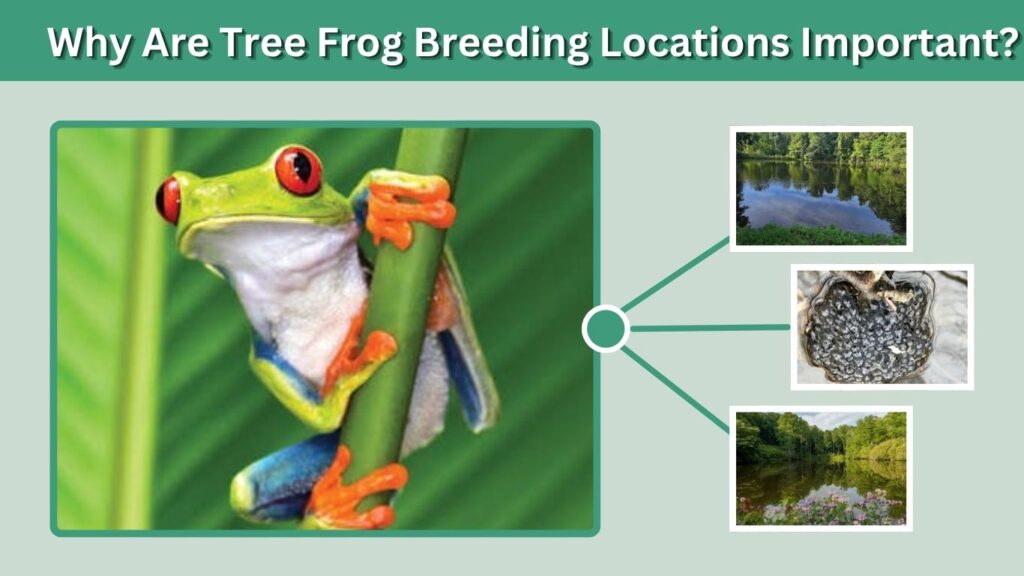
Suitable breeding habitats are essential for maintaining healthy tree frog populations.
Ponds, wetlands, and temporary pools provide environments where eggs can develop and tadpoles can grow. Vegetation also offers protection from predators and environmental disturbances.
Habitat destruction, water pollution, and altered rainfall patterns can reduce the availability of suitable breeding sites.
Protecting freshwater ecosystems and surrounding vegetation helps preserve tree frog populations and supports other wildlife that depends on these environments.
FAQs
1. Do All Tree Frogs Lay Their Eggs in Water?
No, not all tree frogs lay eggs directly in water. Many species use ponds, wetlands, and temporary pools, while others deposit eggs on moist leaves above water. Their breeding methods depend on species and habitat requirements.
2. Where Do Gray Tree Frogs Lay Their Eggs?
Gray tree frogs typically lay eggs in shallow ponds, temporary pools, and wetlands. Females deposit small gelatinous clusters that attach to aquatic vegetation or submerged structures. These breeding habitats provide suitable conditions for eggs and developing tadpoles.
3. Do Tree Frogs Lay Eggs on Land?
Some tree frogs lay eggs outside water, particularly on moist leaves or other protected surfaces. Red-eyed tree frogs are a familiar example. However, their tadpoles still require water after hatching to complete their aquatic development.
4. How Often Do Tree Frogs Lay Eggs?
Egg-laying frequency depends on species, environmental conditions, and breeding season. Some tree frogs reproduce during a limited annual period, while others may produce multiple clutches when favorable rainfall, temperature, and food conditions continue.
5. Can Tree Frogs Lay Eggs Without a Pond?
Yes, some tree frogs can lay eggs without a traditional pond. Certain species use temporary rain pools, water-filled tree cavities, or leaves positioned above water. However, many species still require an aquatic environment for their developing tadpoles.
