Tree frogs are beneficial amphibians that help control insects, but they can become unwelcome visitors around homes, swimming pools, porches, and gardens. Their nighttime calls, unexpected appearances, and tendency to gather near outdoor lights can make homeowners look for effective removal methods. Fortunately, several natural and humane approaches can discourage tree frogs without harming them. By reducing moisture, managing insects, and blocking entry points, you can make your property less attractive. This guide explains how to get rid of tree frogs safely and prevent them from returning.
Why Are Tree Frogs Around Your House?
Tree frogs usually gather around homes because they find suitable moisture, shelter, and food. Gardens, swimming pools, and outdoor lighting can create favorable conditions for these amphibians, particularly during warm or rainy weather.
Understanding what attracts tree frogs is essential for choosing effective prevention methods.
Moisture and Water Sources
Tree frogs need moisture to keep their skin healthy. Leaking faucets, standing water, swimming pools, and damp garden areas can attract them.
Some species also use nearby ponds and temporary pools for breeding.
Insects and Outdoor Lighting
Porch lights and illuminated windows attract moths, mosquitoes, flies, and other insects.
Tree frogs often gather near these lights because they provide convenient feeding opportunities. Reducing insect concentrations can make these locations less attractive.
How to Get Rid of Tree Frogs Naturally
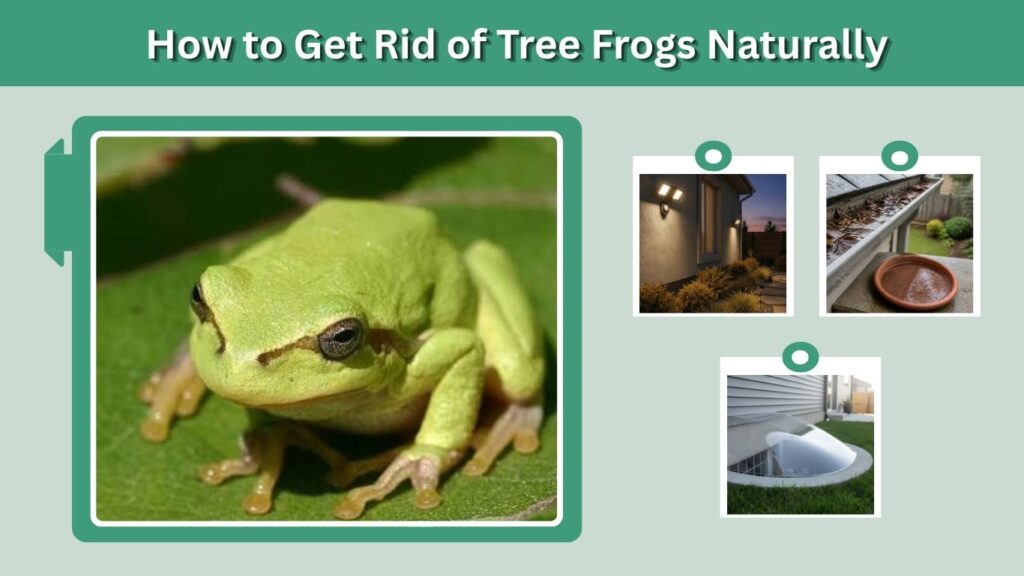
Natural tree frog control focuses on removing attractants rather than using harmful chemicals. Most native tree frogs play important ecological roles, so prevention and gentle exclusion are preferable to killing them.
Effective Natural Methods
- Reduce standing water: Empty unused containers, buckets, and clogged gutters.
- Control outdoor lighting: Turn off unnecessary lights and use motion-activated fixtures.
- Remove unnecessary hiding places: Clear clutter, unused pots, and debris near entrances.
- Repair water leaks: Fix dripping pipes and faucets that create persistent dampness.
- Install window screens: Block openings that allow frogs to enter living spaces.
- Reduce insect attractants: Keep outdoor dining areas clean and use insect-resistant lighting.
- Seal entry points: Close small gaps around doors, windows, and utility pipes.
These measures may gradually reduce frog activity without damaging surrounding wildlife.
How to Get Rid of Tree Frogs Around Your Pool
Swimming pools can attract tree frogs because they provide moisture and resemble natural water sources. Unfortunately, frogs may struggle to escape pools with smooth, vertical walls.
Preventing accidental entry and providing safe exits are the best approaches.
Ways to Keep Tree Frogs Away From Pools
- Install a pool cover: Use a properly fitted cover when the pool is not in use.
- Add wildlife escape ramps: Provide floating ramps designed for frogs and other small animals.
- Reduce nearby lighting: Limit lights that attract insects around the pool.
- Maintain surrounding vegetation: Trim dense plants directly beside pool edges.
- Check skimmer baskets: Inspect them regularly for trapped wildlife.
- Remove frogs gently: Use a soft pool net to rescue frogs without direct handling.
What to Do If a Frog Is Swimming in Your Pool
Use a pool skimmer or soft net to lift the frog from the water. Place it in a shaded, sheltered location nearby, away from pets and traffic.
Avoid adding chemicals specifically to repel frogs. Normal pool chemicals may already be harmful to amphibians.
How to Keep Tree Frogs Off Your Porch and Windows
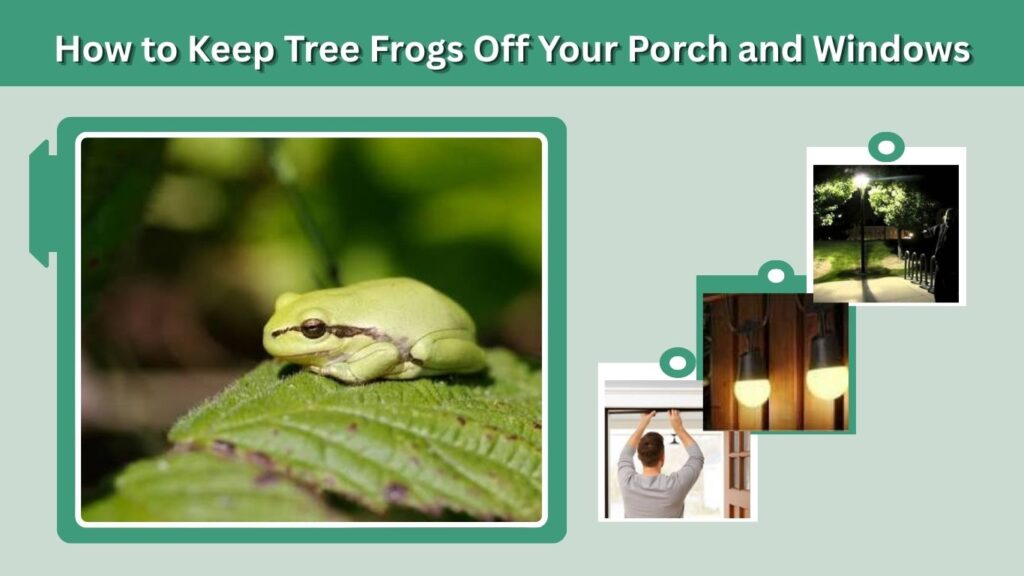
Porches, exterior walls, and windows are common resting and hunting locations for tree frogs. These areas frequently attract insects, particularly when lights remain on throughout the night.
Changing lighting and reducing access can discourage repeated visits.
Practical Porch and Window Solutions
- Switch to warmer outdoor lighting: Warm amber bulbs generally attract fewer insects than bright, cool-white lights.
- Turn lights off earlier: Reduce unnecessary nighttime illumination.
- Keep window screens secure: Repair damaged screens and frames.
- Trim nearby branches: Reduce vegetation touching walls and windows.
- Check door seals: Install weatherstripping where gaps exist.
Avoid spraying frogs with vinegar, saltwater, or household cleaning products. These substances can injure their sensitive skin.
How to Get Rid of Tree Frogs Inside Your House
Tree frogs occasionally enter houses through open doors, damaged screens, or gaps around windows. They generally enter accidentally while searching for food, moisture, or shelter.
The safest response is to remove the animal gently and prevent additional entry.
How to Remove a Tree Frog Indoors
- Close interior doors: Keep the frog in one room so it cannot move throughout the house.
- Prepare a container: Use a clean, ventilated container and a piece of stiff cardboard.
- Capture it gently: Place the container over the frog and carefully slide the cardboard beneath it.
- Release it nearby: Choose a sheltered outdoor area close to where it was found, when appropriate and legally permitted.
- Inspect entry points: Repair screens, door gaps, and other openings.
Avoid touching frogs unnecessarily because chemicals on human hands can damage their sensitive skin.
How to Get Rid of Tree Frogs in Your Yard
Tree frogs may settle in gardens containing dense vegetation, moist soil, insects, and sheltered resting places. These conditions make yards particularly attractive during warm seasons.
Completely eliminating frogs from an outdoor property is usually unnecessary and unrealistic.
Make Your Yard Less Attractive
Focus on reducing excessive moisture immediately around your home. Repair irrigation leaks, improve drainage where water collects unintentionally, and remove unused containers.
Keep vegetation from touching the house and reduce unnecessary nighttime lighting. Natural garden habitats farther from entrances can continue supporting beneficial amphibians.
How to Get Rid of Tree Frogs in a Pond
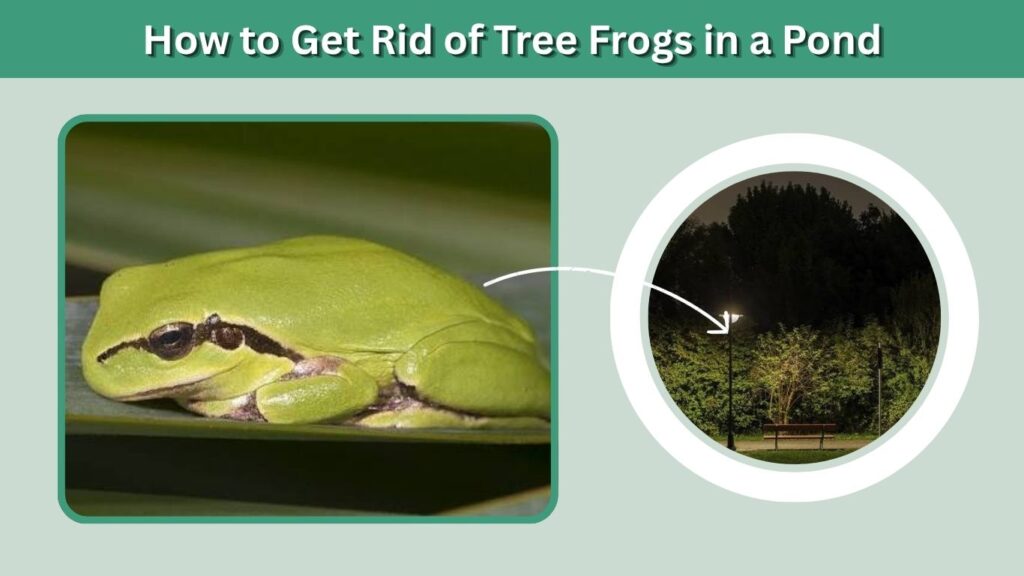
Tree frogs frequently visit garden ponds to breed and hunt insects. Their presence is usually beneficial because frogs contribute to local biodiversity and food webs.
Removing frogs from a natural or established pond may also be restricted by wildlife protection regulations.
Managing Frogs Without Harming Them
If frogs gather near a pond close to your house, focus on limiting artificial lights and improving separation between the pond and living areas.
Avoid introducing fish or chemicals specifically to eliminate frogs. These actions may harm other wildlife and disrupt the pond ecosystem.
Where breeding frogs or eggs are present, seek local wildlife guidance before attempting relocation or removal.
How to Get Rid of Tree Frogs in Florida
Florida has numerous native tree frog species, including green tree frogs and squirrel tree frogs. These amphibians provide important ecological benefits and should generally be managed through humane exclusion.
However, Florida also has invasive Cuban treefrogs, which can threaten native wildlife.
Dealing With Cuban Treefrogs
Cuban treefrogs are typically larger than many native species and have unusually large toe pads. Their skin secretions may irritate people and pets.
The University of Florida recommends controlling confirmed invasive Cuban treefrogs to protect native amphibians.
Correct identification is essential before taking action. Follow current Florida wildlife guidance or contact a local extension office for appropriate management instructions.
What Should You Avoid When Removing Tree Frogs?
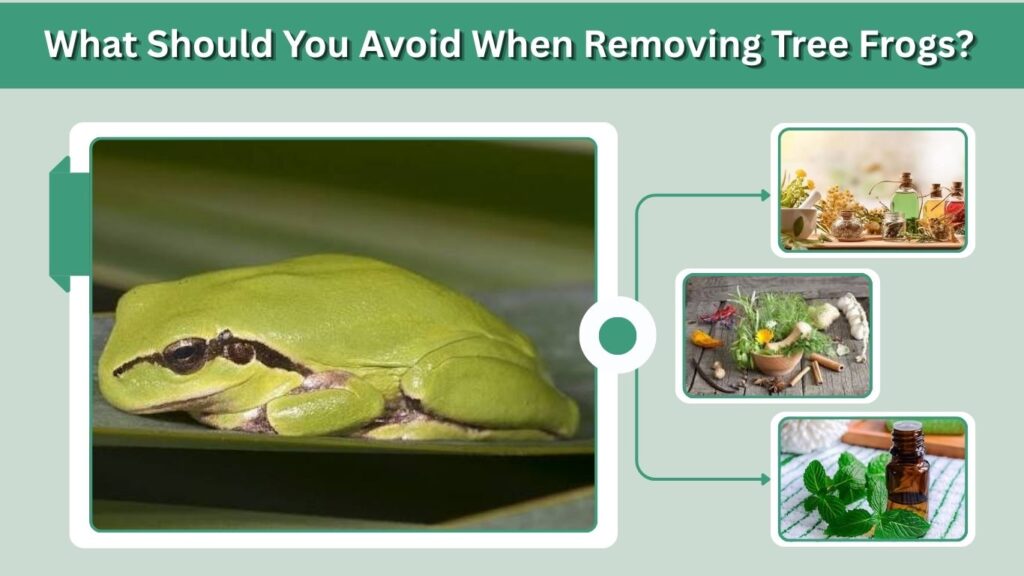
Some commonly suggested household remedies can seriously injure amphibians. Tree frogs absorb substances through their delicate skin, making chemical exposure particularly dangerous.
Harmful Removal Methods
Do not apply salt, vinegar, bleach, ammonia, or concentrated essential oils directly to frogs or their resting places. Avoid glue traps and unnecessary pesticide treatments.
These methods can harm frogs, pets, beneficial insects, and other wildlife. Humane exclusion and habitat modification are safer long-term solutions.
FAQs
1. How do you get rid of tree frogs naturally?
Reduce standing water, repair leaks, manage outdoor lighting, and seal entry points. Removing unnecessary shelter near doors and windows also helps discourage frogs. These approaches reduce attractants without using harmful chemicals or unnecessarily disturbing native amphibians.
2. How do I keep tree frogs away from my pool?
Install a properly fitted pool cover and provide wildlife escape ramps. Reduce outdoor lighting and dense vegetation near the pool. If a frog enters the water, gently remove it with a net and place it somewhere sheltered nearby.
3. Why are tree frogs on my porch every night?
Tree frogs often visit porches because artificial lighting attracts insects. Moisture, nearby vegetation, and sheltered surfaces also provide favorable conditions. Turning off unnecessary lights and reducing insect attractants may gradually decrease nighttime frog activity.
4. Does vinegar get rid of tree frogs?
Vinegar is not a recommended tree frog repellent because its acidity can injure amphibian skin. Instead of spraying vinegar, reduce excess moisture, change outdoor lighting, and block entry points to discourage frogs without causing unnecessary harm.
5. How can I prevent tree frogs from entering my house?
Install secure window screens, seal cracks, repair door weatherstripping, and keep doors closed during the evening. Reduce outdoor insect-attracting lights near entrances. If a frog enters, gently capture it and release it appropriately near its original location.
