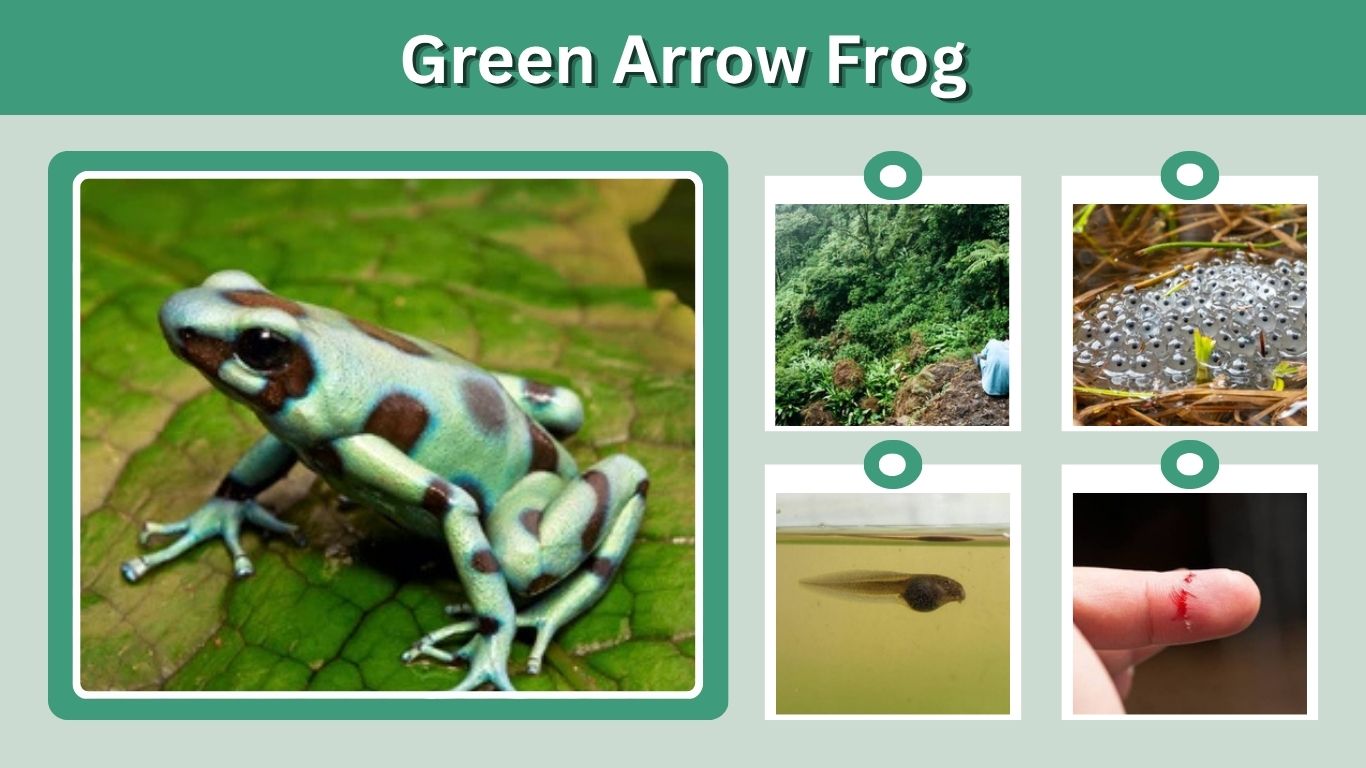
The green arrow frog is a colorful amphibian known for its striking green-and-black markings, small body, and poisonous skin secretions. Commonly called the green and black poison dart frog, this species belongs to the family Dendrobatidae and lives mainly in tropical rainforests of Central America. Its bright colors warn predators about potential toxicity, while its specialized diet supports its natural chemical defenses. Understanding green arrow frog characteristics, habitat, diet, reproduction, and lifespan reveals how this fascinating amphibian survives in its natural environment.
What Is a Green Arrow Frog?
The green arrow frog generally refers to the green and black poison dart frog (Dendrobates auratus), a small tropical amphibian recognized for its vivid coloration. It belongs to a group of frogs famous for their chemical defenses and distinctive body patterns. Unlike ordinary green tree frogs, this species spends much of its time moving through moist forest floors and low vegetation.
Green and Black Arrow Frog Identification
The green and black arrow frog has a compact body, smooth skin, prominent eyes, and strong hind legs. Its body usually displays bright green markings against a dark background.
Important identification characteristics include:
- Scientific name: Dendrobates auratus
- Family: Dendrobatidae
- Body length: Approximately 1–1.7 inches
- Skin color: Green, blue-green, or turquoise with dark markings
- Activity: Primarily active during daylight
- Movement: Short jumps and careful climbing
- Feet: Unwebbed toes with expanded tips
Females are sometimes slightly larger than males, although the sexes generally look similar.
Green Arrow Frog Color Variations
Green arrow frogs show remarkable differences in coloration between populations. Some individuals have bright emerald-green patches, while others display turquoise, blue, gold, or pale-green markings.
The arrangement of black spots, bands, and irregular patches also varies. These differences are often associated with geographic populations or color morphs.
The colorful patterns function as warning signals to potential predators. This defense strategy is called aposematic coloration.
Green Poison Arrow Frog Habitat and Distribution
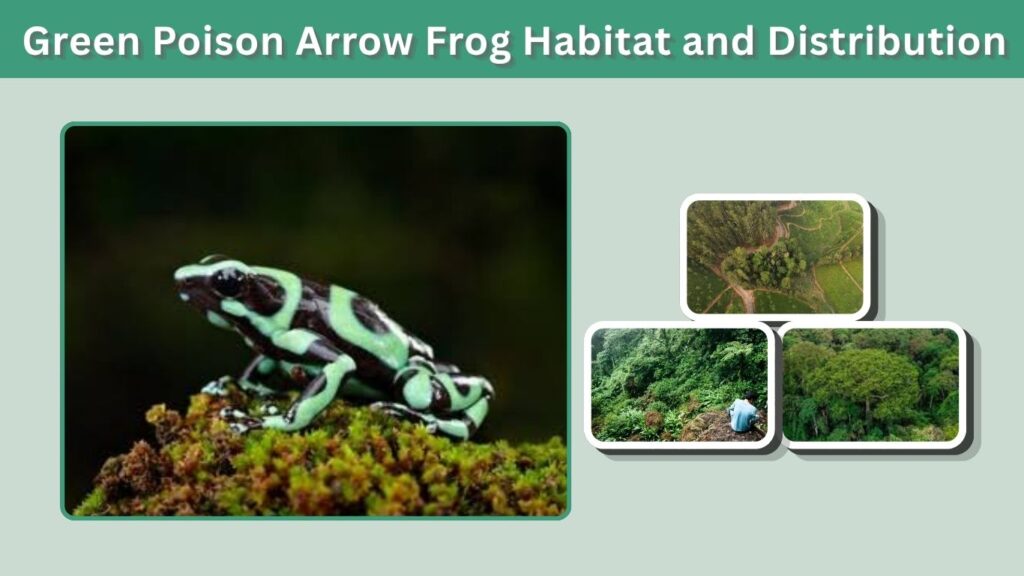
Green poison arrow frogs naturally inhabit tropical regions where humidity remains high and vegetation provides abundant shelter. These amphibians rely on moist environments because their skin must remain hydrated. They commonly occupy rainforest floors, leaf litter, and vegetation near small streams or pools. Suitable habitats also contain the tiny invertebrates necessary for their diet and chemical defenses.
Where Do Green Arrow Frogs Live?
The native geographic range of Dendrobates auratus extends through portions of Central America into northwestern South America.
Its distribution includes:
- Southern Nicaragua: Humid tropical forest habitats
- Costa Rica: Rainforests and shaded vegetation
- Panama: Moist lowland and forest environments
- Northwestern Colombia: Tropical forest regions
- Hawaii: Introduced populations, particularly on Oahu
Hawaiian populations originated from human introductions rather than natural migration.
Natural Habitat and Environmental Conditions
Green arrow frogs prefer shaded environments with damp soil, decomposing leaves, fallen logs, and dense vegetation. These features offer protection against dehydration and provide hiding places from predators.
Although primarily terrestrial, these frogs can climb rocks, roots, and low plants. They are often found near small pools where tadpoles can complete their development.
Seasonal rainfall influences their movements, breeding activities, and access to suitable water-filled habitats.
Are Green Arrow Frogs Poisonous?
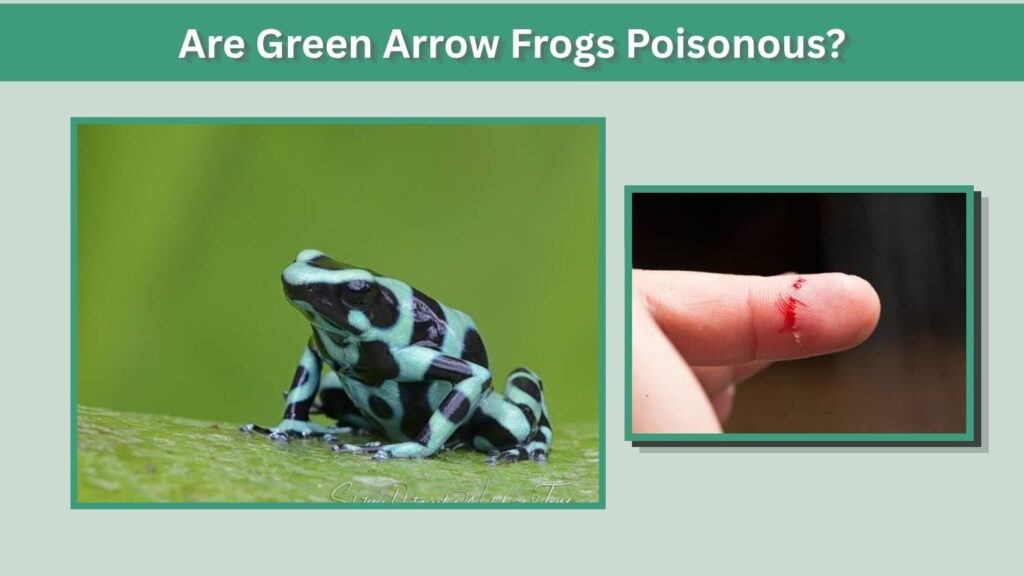
Wild green arrow frogs possess skin glands containing defensive chemicals known as alkaloids. Their toxicity is closely connected to the small arthropods they consume. These chemicals help discourage predators from swallowing or attacking them. However, their toxicity varies with diet and environmental conditions. Captive-bred individuals maintained on ordinary feeder insects generally do not accumulate the same defensive toxins.
How Dangerous Is a Green Poison Arrow Frog?
The green poison arrow frog is poisonous rather than venomous. It does not inject poison through fangs or a stinger. Instead, defensive chemicals occur in its skin secretions.
Its toxicity is generally less severe than that of certain highly poisonous Phyllobates species.
However, wild frogs should never be handled unnecessarily, and their skin secretions should not contact the eyes, mouth, or broken skin. Even captive frogs require careful handling because their delicate skin can be damaged.
What Do Green Arrow Frogs Eat?
Green arrow frogs are carnivorous amphibians that specialize in consuming tiny invertebrates. Their natural diet provides the nutrients required for growth and influences their chemical defenses.
Common food sources include:
- Ants: Important contributors to their natural alkaloid intake
- Mites: Small arthropods commonly found in leaf litter
- Tiny insects: Various soft-bodied forest invertebrates
- Springtails: Small organisms found in moist environments
- Other arthropods: Additional prey small enough to capture
They detect prey visually and capture it using quick movements of their sticky tongues.
Green Arrow Frog Behavior and Reproduction
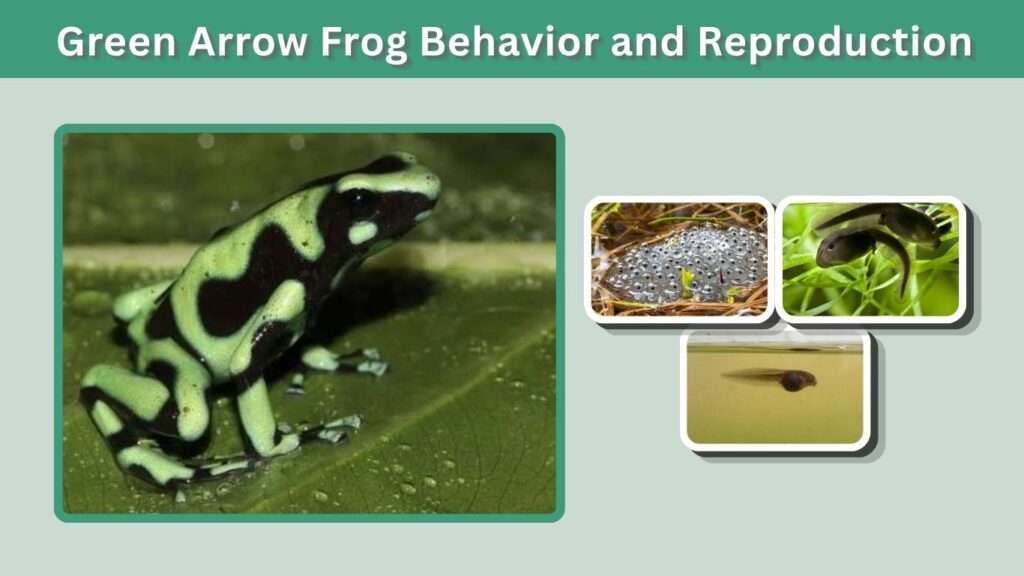
Green arrow frogs are mainly diurnal, meaning they are active during daylight hours. Their daily activities include searching for food, exploring sheltered areas, and communicating with other frogs. During breeding periods, males establish territories and use vocal signals to attract females. Their reproduction involves unusual parental care, particularly the transportation of tadpoles to suitable aquatic environments.
Green Arrow Frog Mating and Egg Laying
Male green arrow frogs produce soft calls to advertise territories and attract potential mates. Courtship can involve close physical contact and movement between suitable egg-laying locations.
Females deposit small groups of gelatinous eggs in protected, moist places, often within leaf litter or other sheltered surfaces.
After fertilization, the male typically guards the developing eggs and helps prevent them from drying out.
Green Arrow Frog Tadpole Development
Once the eggs hatch, the tadpoles climb onto the male’s back. He transports them to small pools or other water-filled spaces where they can continue developing.
The reproductive cycle includes:
- Courtship: Males attract females through calls and displays.
- Egg laying: Females deposit eggs in damp, protected locations.
- Incubation: Embryos develop inside gelatinous egg coverings.
- Tadpole transport: Males carry newly hatched tadpoles to water.
- Metamorphosis: Tadpoles gradually develop legs and absorb their tails.
- Juvenile stage: Young frogs begin living mainly on land.
This parental behavior improves the offspring’s chances of reaching suitable developmental habitats.
Green Arrow Frog Lifespan and Interesting Facts
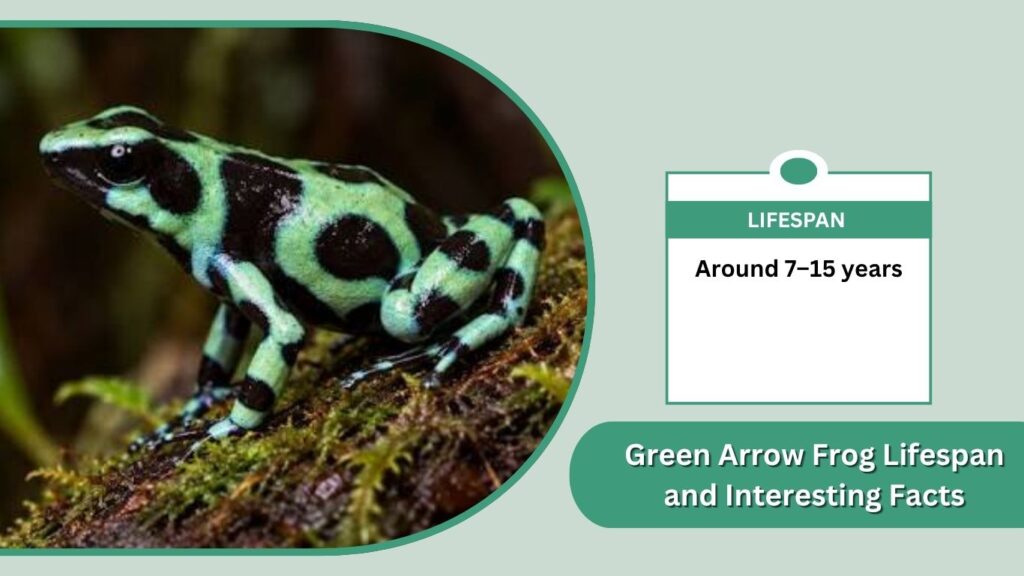
Green arrow frogs can survive for several years, although longevity depends on environmental conditions, food availability, disease, and predation. Their natural lifespan remains less thoroughly documented than their captive lifespan. In protected environments with appropriate husbandry, individuals may live considerably longer than expected for such small amphibians. Their unusual colors, behaviors, and reproductive strategies make them especially interesting to amphibian enthusiasts.
How Long Do Green and Black Arrow Frogs Live?
Green and black arrow frogs may live around 7–15 years or longer under suitable captive conditions, although individual longevity varies. Published captive records also include an average of approximately 8.3 years.
Their lifespan depends on several important factors:
- Nutrition: Suitable small insects support healthy growth.
- Humidity: Consistent moisture helps prevent dehydration.
- Temperature: Stable tropical conditions reduce environmental stress.
- Cleanliness: Hygienic habitats help reduce disease risks.
- Predation: Protected environments remove many natural threats.
Wild survival is influenced by predators, habitat disturbances, and changing weather conditions.
Conservation Status and Ecological Importance
The green and black poison dart frog is currently classified as Least Concern on the IUCN Red List. However, some geographic populations face habitat loss and other environmental pressures.
Forest clearance, habitat fragmentation, pollution, and wildlife collection can negatively affect local populations.
These frogs help regulate populations of tiny arthropods and contribute to tropical forest food webs. Protecting their habitat also benefits numerous other rainforest species.
FAQs
1. Is a Green Arrow Frog Poisonous to Humans?
Wild green arrow frogs contain defensive alkaloids in their skin, making them poisonous. However, their toxicity varies, and they are not among the most dangerous poison dart frogs. Captive-bred individuals fed ordinary feeder insects generally lack the same chemical defenses. Avoid unnecessary handling, especially of wild frogs.
2. How Big Does a Green and Black Arrow Frog Get?
Adult green and black arrow frogs generally measure approximately 1–1.7 inches in body length. Females may be slightly larger than males, although size differences are not always obvious. Their compact bodies, smooth skin, and bright green markings make them recognizable despite their small size.
3. How Long Do Green and Black Arrow Frogs Live?
Green and black arrow frogs can live approximately 7–15 years or longer in well-maintained captivity, although lifespan varies. Their survival depends on nutrition, humidity, temperature, health, and habitat quality. Accurate lifespan estimates for wild populations are less established because individuals face additional environmental threats.
4. Is a Green Arrow Frog the Same as a Green Tree Frog?
No. The green arrow frog commonly refers to Dendrobates auratus, a poison dart frog from tropical Central America and northwestern South America. Green tree frogs belong to other amphibian groups. They differ in their body structure, coloration, defensive chemistry, habitat preferences, and reproductive behavior.
5. Can Green Arrow Frogs Be Kept as Pets?
Yes. Captive-bred green and black poison dart frogs are maintained by experienced amphibian keepers. They require suitable humidity, temperature, ventilation, tiny live prey, and a carefully prepared enclosure. Choose legally sourced captive-bred animals rather than wild-caught specimens, and avoid frequent handling because their skin is delicate.
