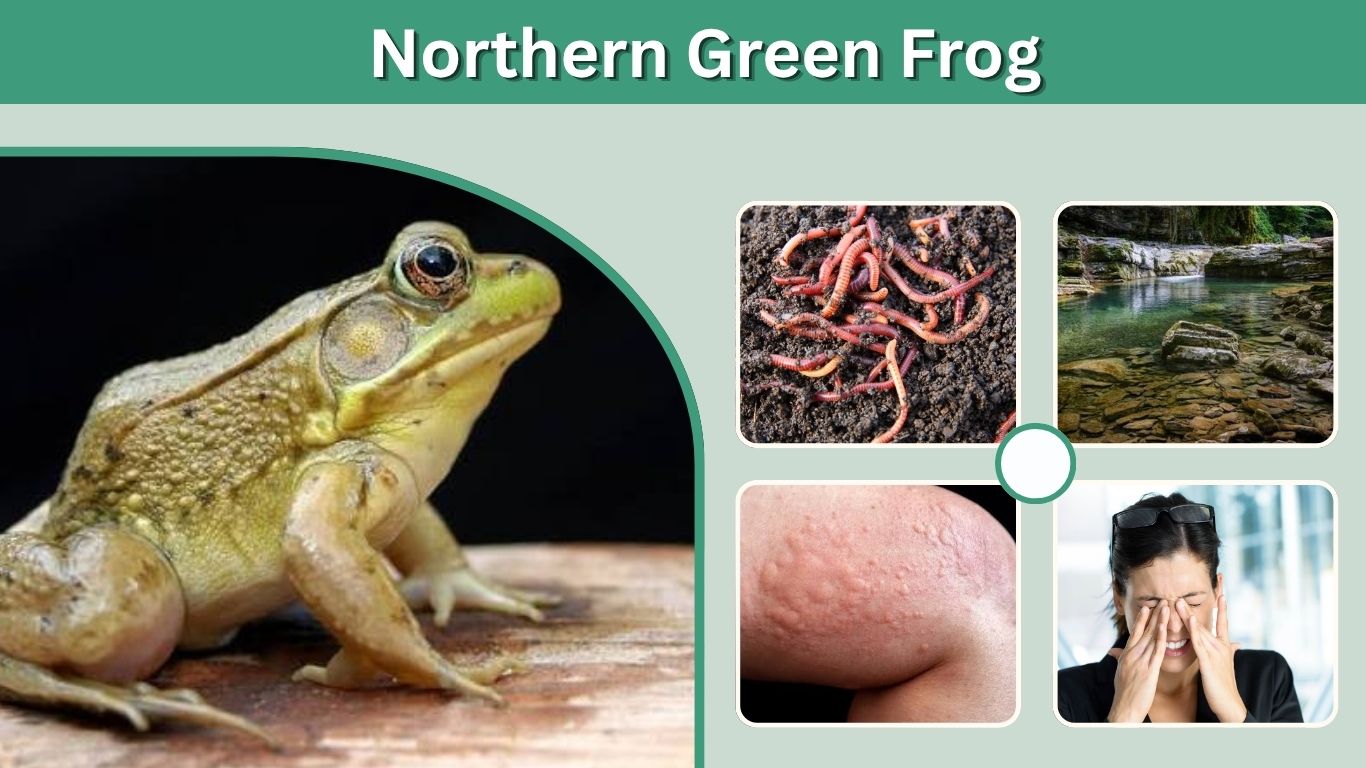
The Northern Green Frog (Lithobates clamitans melanota) is a common freshwater amphibian found across eastern North America. Known for its greenish head, brown or olive-colored body, and distinctive banjo-like call, this frog inhabits ponds, lakes, wetlands, and slow-moving streams. Although it resembles the American bullfrog, several physical characteristics make identification easier. Northern Green Frogs play an important role in freshwater ecosystems by consuming insects and serving as prey for larger animals. Understanding their size, habitat, diet, lifespan, breeding behavior, and identification helps explain their fascinating natural history.
What Is a Northern Green Frog?
The Northern Green Frog is traditionally classified as a subspecies of the North American Green Frog (Lithobates clamitans). Its scientific name is Lithobates clamitans melanota, although the older name Rana clamitans melanota also appears in scientific literature. It belongs to the family Ranidae, commonly known as true frogs.
Northern Green Frog Identification
Northern Green Frogs have several distinctive characteristics that help distinguish them from other freshwater amphibians.
- Scientific name: Lithobates clamitans melanota
- Family: Ranidae
- Body color: Olive-green, brown, bronze, or dark green
- Head: Usually greener than the rest of the body
- Belly: Whitish, sometimes with dark markings
- Skin: Smooth to slightly textured
- Eyes: Large, with prominent circular eardrums behind them
- Back: Two raised dorsolateral folds
- Habitat: Freshwater ponds, lakes, marshes, and streams
Their coloration varies considerably, and some individuals appear almost black.
Northern Green Frog Size and Appearance
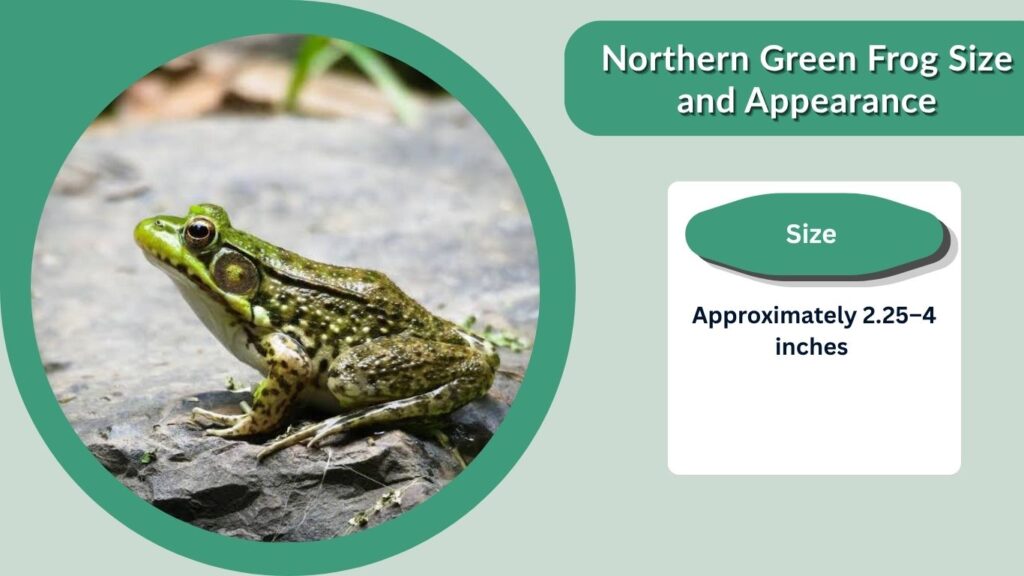
Northern Green Frogs are medium-sized amphibians with muscular hind legs, broad heads, and streamlined bodies. Their powerful legs support swimming and jumping, while their coloring provides camouflage among aquatic plants and muddy shorelines. Body size varies with age, sex, environmental conditions, and food availability.
How Big Do Northern Green Frogs Get?
Adult Northern Green Frogs generally measure approximately 2.25–4 inches (6–10 cm) from snout to vent, excluding their hind legs.
Their bodies are relatively robust, although they are typically smaller than adult American bullfrogs. Young frogs are considerably smaller and gradually develop adult coloration as they mature.
Northern Green Frog Male vs. Female
Male and female Northern Green Frogs look similar, but several characteristics help distinguish them.
| Feature | Male | Female |
| Throat color | Usually bright yellow | Usually pale or whitish |
| Eardrum size | Larger than the eye | Approximately eye-sized |
| Forearms | More muscular | Less developed |
| Mating behavior | Calls and defends territory | Selects mates and lays eggs |
| Body color | Green, olive, or brown | Green, olive, or brown |
The size of the circular eardrum, called the tympanum, is one of the most reliable identification features.
Where Do Northern Green Frogs Live?
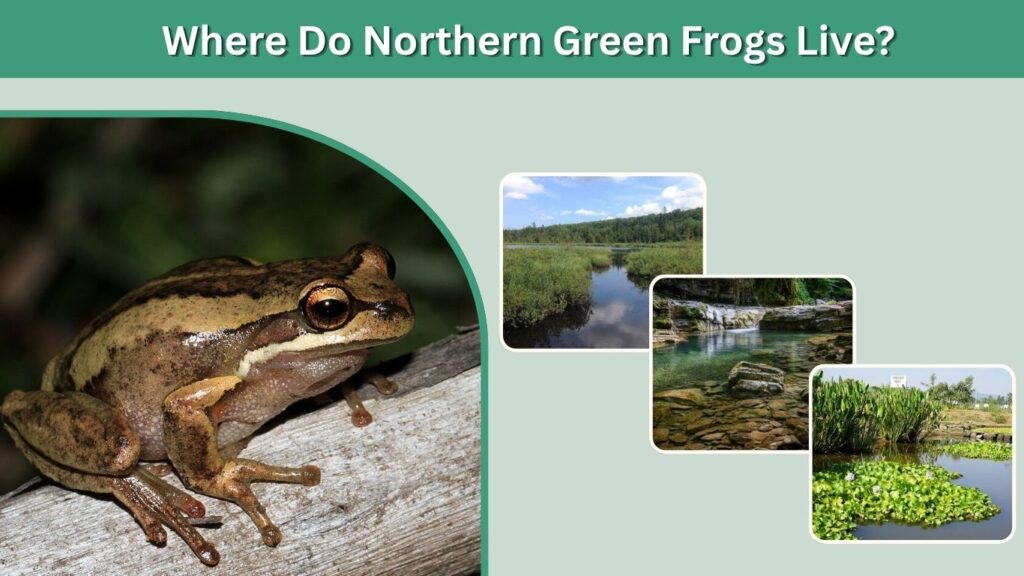
Northern Green Frogs inhabit freshwater environments throughout much of eastern North America. Their geographic distribution includes parts of the northeastern and midwestern United States and southeastern Canada. These amphibians depend on aquatic habitats for feeding, breeding, protection, and overwintering, making reliable water sources essential to their survival.
Northern Green Frog Habitat
Northern Green Frogs commonly inhabit:
- Ponds: Permanent freshwater ponds with vegetation
- Lakes: Shallow shorelines with sheltered areas
- Wetlands: Marshes and swamps containing aquatic plants
- Streams: Slow-moving streams with suitable cover
- Rivers: Quiet margins and backwaters
- Wooded pools: Shaded water surrounded by vegetation
Adults often remain close to shorelines, where they can quickly escape into water when threatened.
Northern Green Frog Geographic Range
Northern Green Frogs occur in states such as Ohio, Michigan, Illinois, Pennsylvania, New York, and Maryland.
They also inhabit parts of Ontario, Quebec, and other eastern Canadian regions.
In Ohio, Northern Green Frogs are particularly widespread. They are also present in parts of British Columbia, where introduced green frog populations have become established outside their native distribution.
What Do Northern Green Frogs Eat?
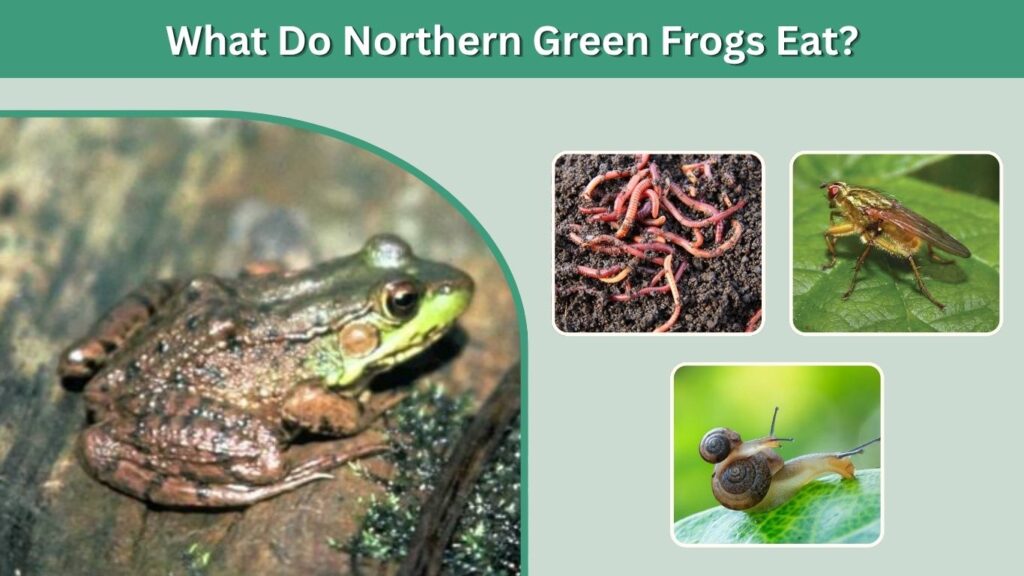
Northern Green Frogs are opportunistic carnivores that consume a wide variety of small animals. They primarily hunt near water, capturing prey with their sticky tongues and powerful jaws. Their diet changes as they mature, with tadpoles consuming mostly aquatic microorganisms and algae before transitioning to animal prey.
Northern Green Frog Diet
Adult Northern Green Frogs commonly eat:
- Insects: Flies, beetles, moths, and grasshoppers
- Spiders: Small spiders found near water
- Worms: Earthworms and other soft-bodied invertebrates
- Snails: Small aquatic and terrestrial snails
- Small fish: Occasionally captured in shallow water
- Other small animals: Including smaller amphibians when available
They generally capture moving prey and swallow it whole.
What Do Baby Northern Green Frogs Eat?
Newly hatched tadpoles primarily consume algae, diatoms, microorganisms, and suspended organic material.
After metamorphosis, juvenile frogs begin eating small insects and other appropriately sized invertebrates.
As juveniles grow, their diet becomes increasingly similar to that of adult frogs.
Northern Green Frog Call and Sounds
The Northern Green Frog is widely recognized for its distinctive vocalization. Male frogs produce calls during the breeding season to attract females and communicate with nearby males. Their calls are particularly noticeable around ponds and wetlands during warmer months, often continuing into the evening.
What Does a Northern Green Frog Sound Like?
The Northern Green Frog call sounds like a single pluck of a loose banjo string.
It is often described as a short, resonant “gunk” sound, sometimes repeated several times with decreasing intensity.
Males typically call from the water’s edge or partially submerged positions. They may also produce different sounds during territorial encounters or when disturbed.
Northern Green Frog Life Cycle and Tadpoles
Northern Green Frogs undergo complete amphibian metamorphosis, progressing from eggs to aquatic tadpoles and eventually into air-breathing adults. Their breeding season depends on geographic location and water temperature. Development may be completed within one summer, although some tadpoles remain in water throughout winter.
Eggs and Breeding Season
Northern Green Frogs usually breed from late spring through summer.
Females deposit floating masses containing hundreds or thousands of eggs in freshwater. A single egg mass can contain approximately 1,000–8,500 eggs.
Under favorable conditions, eggs hatch within several days.
Northern Green Frog Tadpoles
Northern Green Frog tadpoles have rounded bodies, long tails, and dark greenish or brown coloration.
They feed primarily on algae and microorganisms while developing underwater.
Some tadpoles transform into juvenile frogs during their first summer. Others overwinter in ponds and complete metamorphosis the following spring or summer.
Northern Green Frog Lifespan and Hibernation
Northern Green Frogs can survive for several years when suitable habitats and food are available. Their longevity depends on environmental conditions, disease, predators, and seasonal changes. In colder regions, they reduce their activity during winter and seek protected environments that provide enough moisture and oxygen for survival.
How Long Do Northern Green Frogs Live?
Northern Green Frogs commonly live approximately five to six years in the wild, although individual lifespans vary.
Captive green frogs have reportedly survived up to ten years under suitable conditions.
Predation, disease, habitat loss, and environmental stress can shorten their lifespan.
How Do Northern Green Frogs Hibernate?
During winter, Northern Green Frogs enter a period of reduced activity called brumation.
They commonly overwinter underwater in oxygen-rich ponds, streams, or springs where the water does not freeze completely.
Some individuals shelter beneath vegetation or damp soil. Unlike freeze-tolerant wood frogs, Northern Green Frogs generally depend on unfrozen refuges.
Northern Green Frog vs. Bullfrog
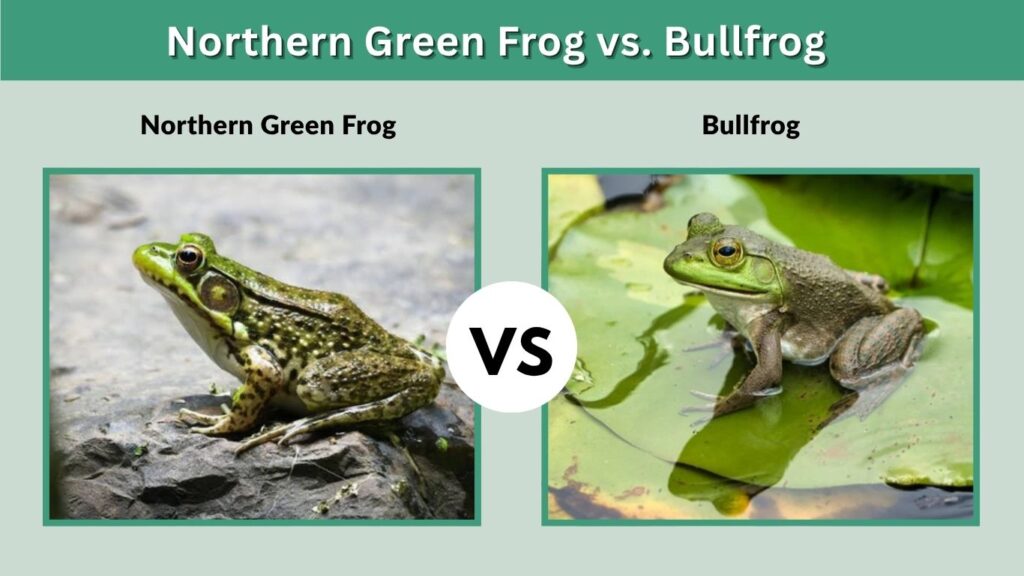
Northern Green Frogs are frequently confused with American bullfrogs because both species have greenish coloration and inhabit freshwater environments. However, differences in body size, skin folds, and vocalizations make them distinguishable. The presence of prominent dorsolateral ridges is particularly useful when identifying these amphibians.
Key Differences
| Feature | Northern Green Frog | American Bullfrog |
| Scientific name | Lithobates clamitans melanota | Lithobates catesbeianus |
| Typical size | 2.25–4 inches | Often 3.5–6 inches or more |
| Dorsolateral folds | Prominent ridges along back | Absent |
| Call | Plucked banjo string | Deep, resonant bellow |
| Habitat | Freshwater shorelines | Larger permanent water bodies and other aquatic habitats |
Northern Green Frog vs. Bronze Frog
The Northern Green Frog and Bronze Frog are traditionally recognized as geographic forms of the Green Frog species.
Northern Green Frogs are more common in northern regions and often display darker green coloration.
Bronze Frogs occur mainly farther south and commonly have bronze or brownish bodies. Their overall structure and behavior are very similar.
Northern Green Frog Care as a Pet
Northern Green Frogs are sometimes maintained in captivity, but they require specialized amphibian care. Because they spend considerable time in water, their enclosures must provide both aquatic and terrestrial environments. Captive frogs also need suitable temperatures, clean water, proper nutrition, and limited handling to avoid stress.
Northern Green Frog Tank Setup
A suitable enclosure should include:
- Water area: Clean, dechlorinated freshwater
- Land area: Stable surfaces for resting
- Shelter: Aquatic plants, logs, and hiding places
- Ventilation: Good airflow
- Temperature: Conditions appropriate to the frog’s natural seasonal requirements
- Water quality: Regular monitoring for ammonia and other contaminants
Avoid housing these frogs with smaller animals that could become prey or with aggressive species.
Feeding and Handling
Captive Northern Green Frogs require appropriately sized live insects and other suitable prey.
Their diet should be varied, with nutritional supplementation guided by an amphibian veterinarian or experienced keeper.
Because amphibians have sensitive, permeable skin, unnecessary handling should be avoided. Wildlife collection and ownership regulations must be checked before keeping native frogs.
Are Northern Green Frogs Poisonous?
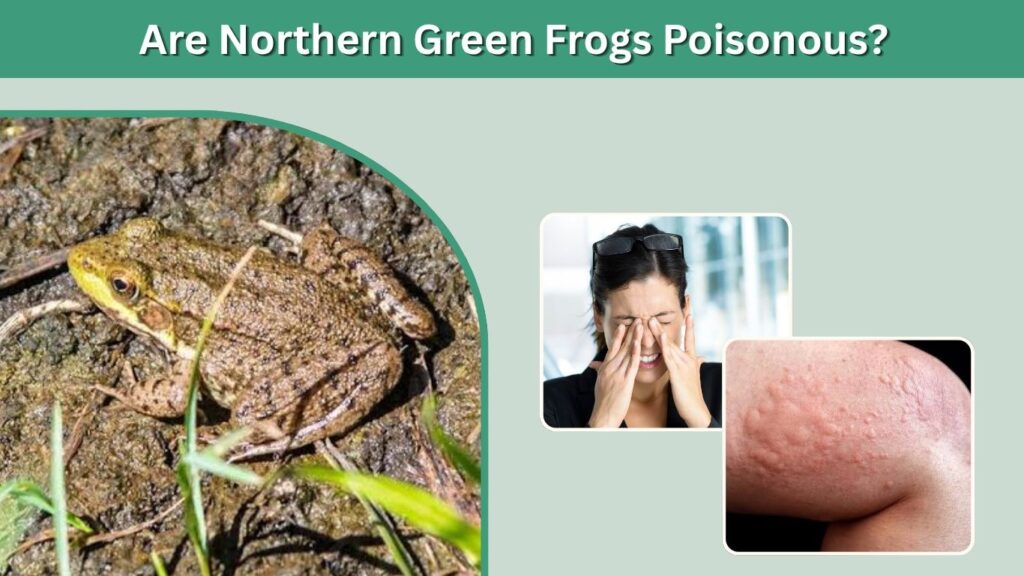
Northern Green Frogs are not considered dangerously poisonous to humans. They do not possess venom-injecting structures, and they are generally harmless when left undisturbed.
However, frog skin secretes protective mucus that may cause irritation in sensitive individuals. Avoid touching your eyes or mouth after handling amphibians.
Their main defenses include camouflage, rapid jumping, swimming, and escaping into nearby water.
FAQs
1. Are Northern Green Frogs Dangerous?
Northern Green Frogs are generally harmless to humans. They do not have venomous bites or stingers. However, their skin secretions may cause irritation, and amphibians can carry microorganisms such as Salmonella. Wash your hands after handling frogs or their habitats.
2. Can Northern Green Frogs Live With Fish?
Northern Green Frogs may eat small fish, while larger fish may prey on tadpoles or young frogs. Keeping them together can also create water-quality and feeding problems. A dedicated amphibian enclosure is generally safer than a mixed aquarium.
3. What Animals Eat Northern Green Frogs?
Northern Green Frogs are preyed upon by herons, snakes, raccoons, turtles, larger frogs, and certain fish. Their eggs and tadpoles are also vulnerable to aquatic predators. Camouflage and rapid escape into water help protect them from danger.
4. Are Northern Green Frogs the Same as Green Tree Frogs?
No. Northern Green Frogs belong to the genus Lithobates and spend much of their lives near freshwater. Green tree frogs belong to other genera, such as Dryophytes, and are more adapted to climbing vegetation.
5. When Do Northern Green Frogs Lay Eggs?
Northern Green Frogs generally lay eggs from late spring through summer, depending on their location. In northern areas, breeding often begins around May or June. Females deposit floating egg masses in suitable freshwater habitats where tadpoles can develop.
