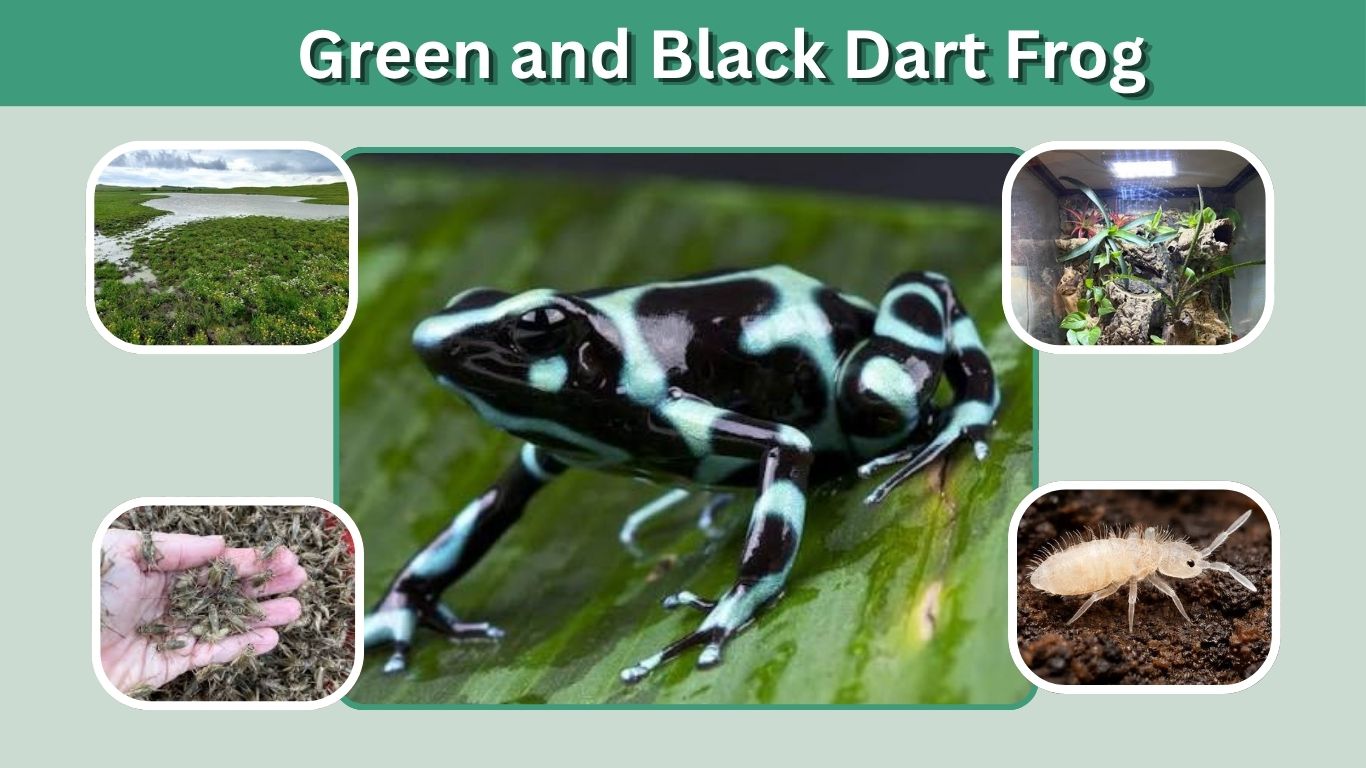
The green and black dart frog is a small tropical amphibian famous for its bright green markings, black patterns, and fascinating behavior. Scientifically known as Dendrobates auratus, this poison dart frog naturally inhabits humid forests across Central America and northwestern Colombia. It is also popular among amphibian enthusiasts because of its colorful appearance and interesting breeding habits. Although wild individuals possess poisonous skin secretions, captive-bred frogs generally lack these toxins. Understanding green and black dart frog care, habitat, diet, calling behavior, and lifespan helps enthusiasts appreciate this remarkable species.
Green and Black Dart Frog Identification and Characteristics
The green and black dart frog belongs to the family Dendrobatidae, a group of amphibians known for their colorful appearance and chemical defenses. Its contrasting body patterns serve as warning coloration against potential predators. Although individuals vary in appearance, most have smooth skin, relatively long limbs, and small adhesive toe pads that help them climb vegetation and other surfaces.
Green and Black Dart Frog Size and Appearance
Adult green and black dart frogs generally measure about 1–2 inches in length. Females are often slightly larger and more robust than males, although the differences can be subtle.
Key identification features include:
- Body color: Bright green or turquoise with black markings.
- Skin texture: Smooth and slightly glossy.
- Eyes: Dark, prominent eyes positioned on the head.
- Feet: Small adhesive toe pads that support climbing.
- Body shape: Compact body with relatively slender limbs.
- Activity: Primarily active during daylight hours.
Their bright coloration is known as aposematism, which warns potential predators about chemical defenses.
Costa Rican and Hawaiian Green and Black Dart Frogs
Costa Rican green and black dart frogs naturally occur in tropical forests with abundant rainfall and dense vegetation. Their patterns vary between geographic populations, including green, blue-green, and dark-colored forms.
Hawaiian green and black dart frogs belong to the same species but originate from introduced populations. The frogs were intentionally introduced to Oahu in 1932 for mosquito control.
Some Hawaiian frogs display metallic green, bronze, or turquoise coloring. Differences in appearance do not necessarily indicate separate species.
Green and Black Dart Frog Care and Enclosure Setup
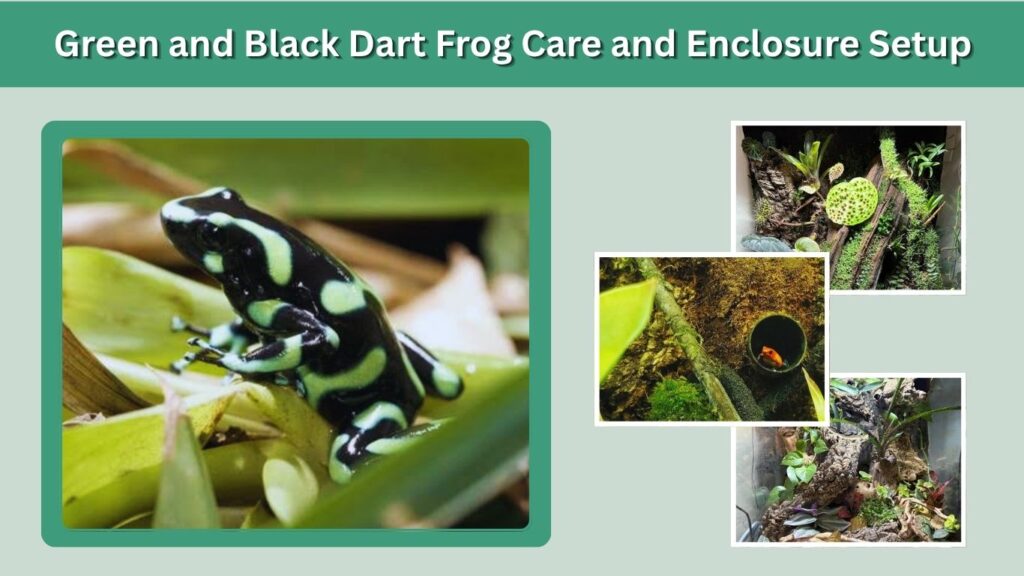
Proper green and black dart frog care requires a carefully maintained tropical enclosure that resembles the species’ natural environment. These amphibians depend on consistent humidity, moderate temperatures, and protected hiding areas. They also need access to suitable tiny live insects. Because their skin is delicate and highly permeable, maintaining appropriate environmental conditions is essential for long-term health.
Best Terrarium Setup for Green and Black Dart Frogs
A planted tropical vivarium provides a suitable habitat for captive-bred green and black dart frogs. An enclosure approximately 18 × 18 × 24 inches can accommodate a compatible pair, provided sufficient floor space and shelter are available.
Important enclosure features include:
- Drainage layer: Prevents water from saturating the substrate.
- Moist substrate: Supports humidity and living plants.
- Leaf litter: Creates natural hiding and foraging areas.
- Live plants: Provide cover and climbing opportunities.
- Cork bark: Offers sheltered resting places.
- Ventilation: Helps maintain healthy air circulation.
Avoid sharp decorations, deep open water, and materials containing harmful chemicals. Frogs should never be housed with incompatible species.
Temperature, Humidity, and Lighting Requirements
Green and black dart frogs generally thrive at temperatures around 70–78°F (21–26°C). Prolonged exposure to temperatures above 80°F (27°C) can be dangerous.
Humidity should generally remain around 70–90%, with consistently damp hiding areas and appropriate ventilation. A digital thermometer and hygrometer help monitor environmental conditions.
Provide a regular day-and-night lighting cycle. Suitable plant lighting and carefully selected low-output UVB can support vivarium conditions, but unnecessary heating lamps should be avoided.
Use dechlorinated water for misting and moisture management.
Green and Black Dart Frog Diet and Feeding
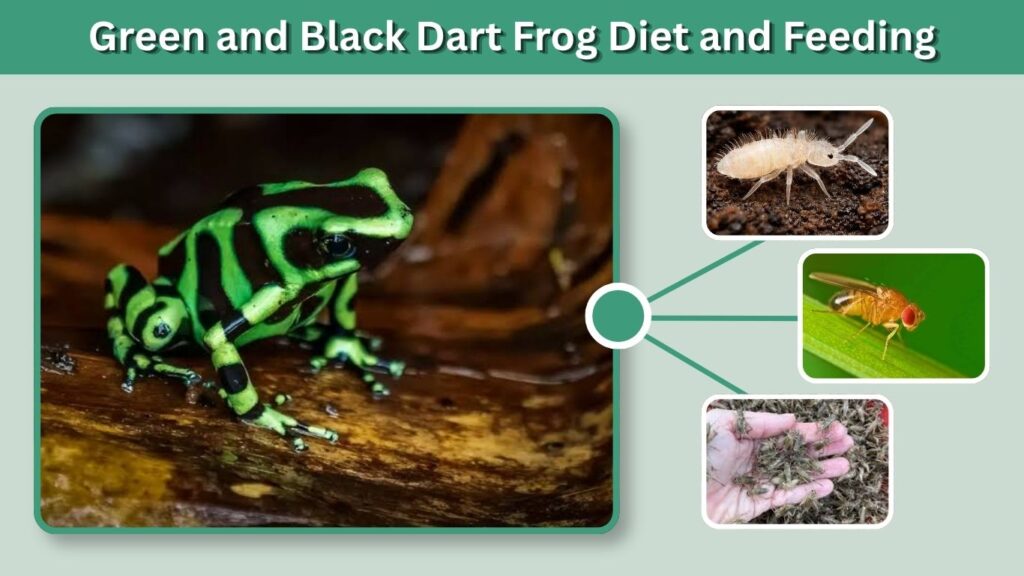
Green and black dart frogs are insectivorous amphibians that consume small arthropods. In their natural habitat, they forage through leaf litter and vegetation for ants, mites, and other tiny invertebrates. Their wild diet is also responsible for the defensive chemicals stored in their skin. Captive individuals require appropriately sized feeder insects and balanced nutritional supplementation.
What Do Green and Black Dart Frogs Eat?
Green and black dart frogs have small mouths and require tiny live prey that can be swallowed easily.
Common captive food options include:
- Flightless fruit flies: A primary food source for captive frogs.
- Springtails: Tiny arthropods suitable for juveniles and adults.
- Pinhead crickets: Small crickets appropriate for larger individuals.
- Small isopods: Additional live prey for dietary variety.
- Other cultured insects: Suitable species raised for amphibian feeding.
Adults can often be fed several times weekly, while rapidly growing juveniles may require daily feeding. Adjust feeding frequency to body condition and appetite.
Use amphibian-appropriate calcium and vitamin supplements according to veterinary or specialist guidance.
Are Green and Black Dart Frogs Poisonous in Captivity?
Wild green and black dart frogs obtain defensive alkaloids from certain arthropods they consume. These compounds accumulate in specialized skin glands.
Captive-bred frogs fed ordinary cultured insects generally lack the same toxic defenses because their diet does not provide the necessary alkaloids.
However, captive-bred frogs should not be handled casually. Human skin oils, chemicals, and physical pressure can harm their sensitive skin.
If handling is essential, use clean, moistened, powder-free gloves.
Green and Black Dart Frog Calling and Breeding Behavior
Green and black dart frogs communicate through vocalizations and physical movements during courtship. Males establish territories and produce relatively quiet calls to attract females. Their reproductive behavior is particularly interesting because males protect developing eggs and transport tadpoles to water-filled locations. These behaviors occur naturally in humid environments and can also be observed in carefully maintained breeding enclosures.
What Does a Green and Black Dart Frog Call Sound Like?
The green and black dart frog call is generally soft and can resemble a series of chirps or buzzing notes rather than a loud croak.
Male frogs vocalize to attract potential mates and communicate with competing males. Calling activity often increases during favorable breeding conditions.
Costa Rican green and black dart frog calling follows the same general species behavior. Hawaiian populations also belong to Dendrobates auratus, although calling activity may differ according to local environmental conditions.
Because their calls are relatively quiet, people may overlook them even when frogs are nearby.
How Do Green and Black Dart Frogs Reproduce?
Breeding generally involves a male attracting a female through vocalizations and courtship movements. The female deposits a small group of eggs in a protected, moist location.
After fertilization, the male commonly guards the eggs and monitors their development.
When the tadpoles hatch, they climb onto his back. He then transports them to suitable pools of water where they continue developing.
The tadpoles eventually undergo metamorphosis, developing legs and absorbing their tails before becoming juvenile frogs.
Green and Black Dart Frog Lifespan and Buying Guide
Green and black dart frogs can survive for many years when provided with appropriate environmental conditions and nutrition. Captive-bred individuals are available through specialized amphibian breeders, making responsible sourcing an important consideration. Before purchasing, prospective keepers should understand the enclosure requirements, feeding needs, veterinary care, and long-term responsibility associated with maintaining these delicate amphibians.
How Long Do Green and Black Dart Frogs Live?
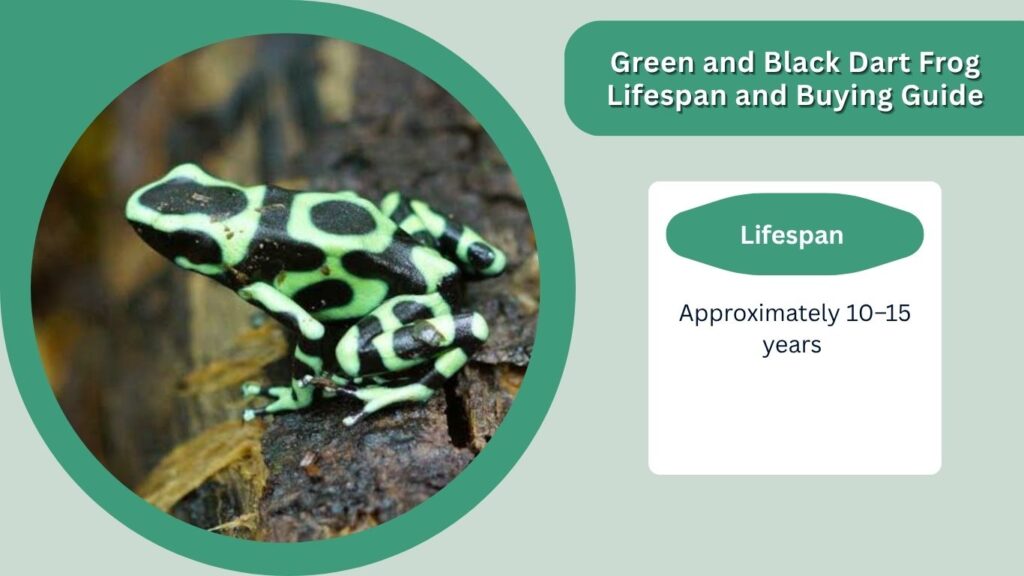
Green and black dart frogs commonly live approximately 10–15 years in well-maintained captivity. Some individuals have survived longer, with records exceeding 20 years.
Their longevity depends on several factors:
- Stable temperature: Prevents overheating and environmental stress.
- Suitable humidity: Supports normal skin function.
- Balanced nutrition: Helps maintain healthy growth.
- Clean habitat: Reduces exposure to harmful microorganisms.
- Veterinary care: Supports early diagnosis of health problems.
Their lifespan in natural habitats is less certain because wild frogs face predators, disease, and environmental changes.
Green and Black Dart Frog for Sale: What to Know
When searching for a green and black dart frog for sale, prioritize reputable breeders offering captive-bred specimens.
Healthy frogs should appear alert, move normally, and show appropriate body condition. Ask sellers about age, feeding history, geographic morph, and captive-breeding records.
Avoid purchasing frogs with unexplained weight loss, visible injuries, or unusual lethargy.
Confirm that ownership and transportation comply with applicable wildlife regulations. Never release captive frogs into natural habitats, where they could introduce diseases or disrupt local ecosystems.
FAQs
1. Are Green and Black Dart Frogs Good Pets?
Green and black dart frogs can be rewarding pets for keepers prepared to maintain a specialized tropical vivarium. They require stable humidity, moderate temperatures, tiny live insects, and minimal handling. Although they are sometimes recommended for beginners, their environmental needs make careful preparation essential before purchasing.
2. How Big Do Green and Black Dart Frogs Get?
Adult green and black dart frogs typically reach approximately 1–2 inches in length. Females may be slightly larger and heavier than males. Their small size allows them to move through leaf litter, climb vegetation, and hide among plants in tropical rainforest environments.
3. Why Is My Green and Black Dart Frog Not Calling?
Male green and black dart frogs may remain quiet because of age, stress, unsuitable environmental conditions, or the absence of breeding activity. Females do not produce the same advertisement calls. If calling suddenly stops alongside reduced appetite or unusual behavior, review husbandry conditions and consult an amphibian veterinarian.
4. Can Green and Black Dart Frogs Live Together?
Green and black dart frogs can sometimes live in compatible pairs or small same-species groups when sufficient space, hiding places, and food are available. However, competition and aggression can occur, especially during breeding. Monitor their behavior carefully and separate individuals if fighting or persistent harassment develops.
5. Are Hawaiian Green and Black Dart Frogs Different From Costa Rican Frogs?
Hawaiian and Costa Rican green and black dart frogs belong to the same species, Dendrobates auratus. Hawaiian populations originated through human introduction, while Costa Rican populations occur naturally. Geographic populations may show different colors and patterns, but they share the same fundamental biological characteristics and reproductive behaviors.
