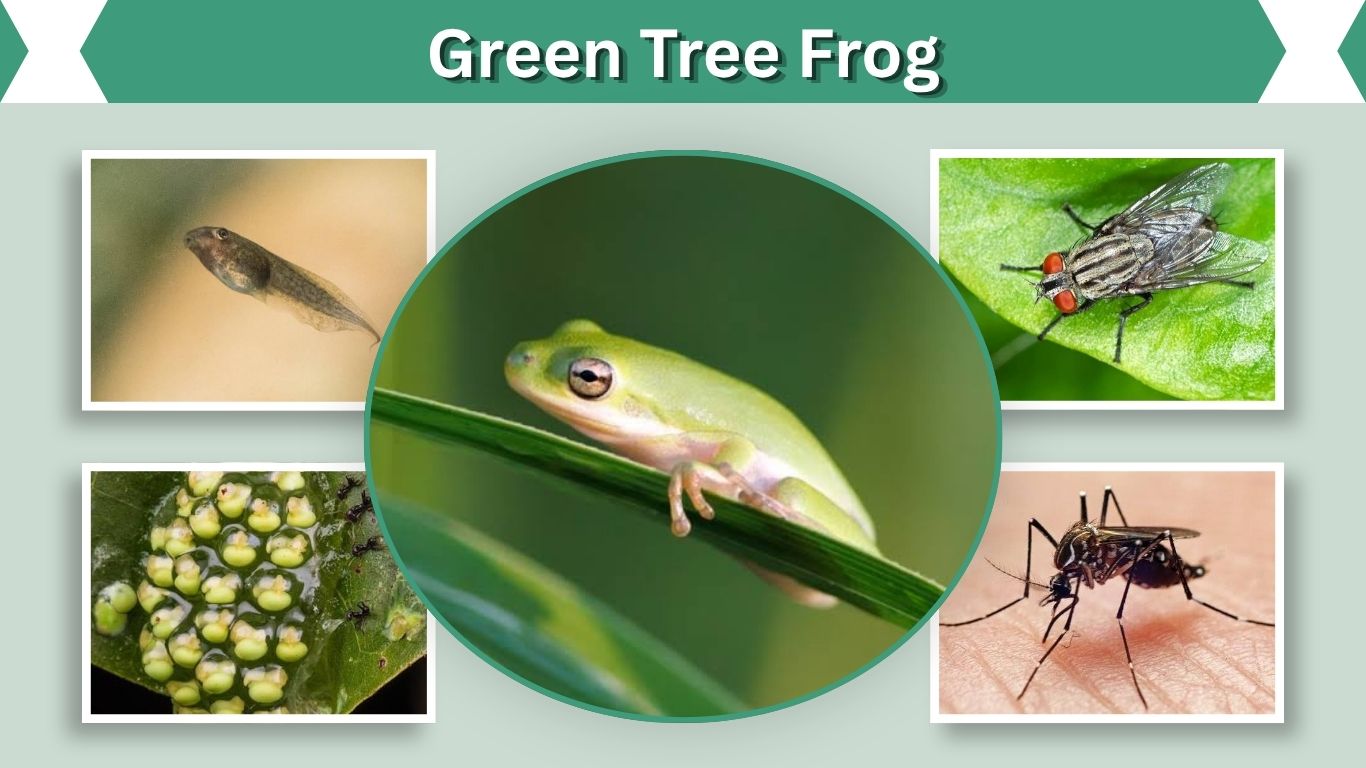
The green tree frog is a small, colorful amphibian commonly found throughout the southeastern United States. Known for its bright green body, smooth skin, and distinctive nighttime calls, this frog spends much of its life climbing trees, shrubs, and wetland vegetation. American green tree frogs are especially common near ponds, marshes, and backyard gardens. Their ability to change color, catch insects, and survive in different environments makes them fascinating animals. Understanding their identification, habitat, diet, behavior, and care can help you appreciate these remarkable frogs.
What Is a Green Tree Frog?
The American green tree frog (Hyla cinerea) is a small, tree-dwelling amphibian belonging to the family Hylidae. It is native to the southeastern United States and is commonly found near freshwater habitats. Unlike many aquatic frogs, green tree frogs have specialized toe pads that allow them to climb leaves, branches, and other surfaces. They are primarily nocturnal and feed on small insects.
Green Tree Frog Scientific Classification
- Common Name: American Green Tree Frog
- Scientific Name: Hyla cinerea
- Family: Hylidae
- Order: Anura
- Class: Amphibia
- Average Size: 1–2.5 inches
- Diet: Insectivorous
- Habitat: Wetlands, ponds, marshes, and trees
- Native Range: Southeastern United States
- Activity: Primarily nocturnal
American Green Tree Frog Characteristics
American green tree frogs have slender bodies, long legs, smooth skin, and large eyes.
Their bright coloration helps them blend into surrounding vegetation. They also have expanded toe pads that produce a strong grip on leaves and branches.
These adaptations make them excellent climbers and help them escape predators in their natural habitats.
How to Identify a Green Tree Frog
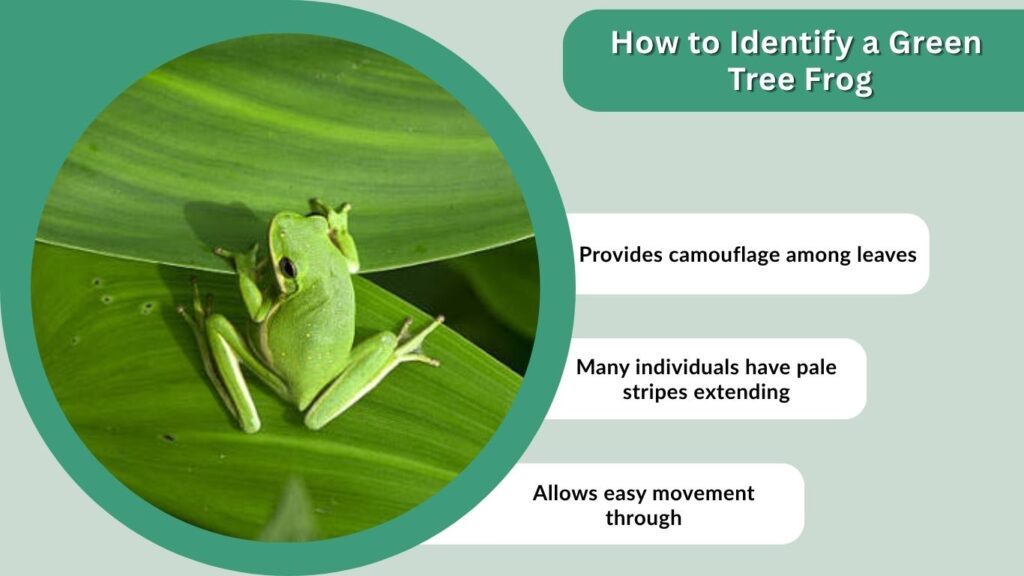
Green tree frogs are relatively easy to recognize because of their bright coloration and distinctive body structure. However, their appearance can vary depending on temperature, lighting, and environmental conditions. Most individuals have smooth green skin, a pale underside, and light-colored stripes along their sides. Their small size and specialized toe pads distinguish them from many other North American frogs.
Green Tree Frog Size and Color
Adult American green tree frogs typically measure between 1 and 2.5 inches long.
Their skin may appear bright green, olive green, yellowish-green, or occasionally grayish-green.
Some individuals have small golden or yellow spots scattered across their backs. Their undersides are generally white or cream-colored.
Distinctive Physical Features
- Bright Green Skin: Provides camouflage among leaves and vegetation.
- White Side Stripes: Many individuals have pale stripes extending along their sides.
- Adhesive Toe Pads: Help them climb vertical surfaces and plants.
- Large Eyes: Support hunting and movement in low-light conditions.
- Slender Body: Allows easy movement through dense vegetation.
- Long Hind Legs: Help them jump between branches and leaves.
Male vs. Female Green Tree Frog
Male green tree frogs are generally smaller than females and have a noticeable vocal sac beneath their throats.
During the breeding season, males inflate this vocal sac to produce loud mating calls.
Females usually have slightly larger bodies and do not produce the same advertisement calls.
Where Do Green Tree Frogs Live?
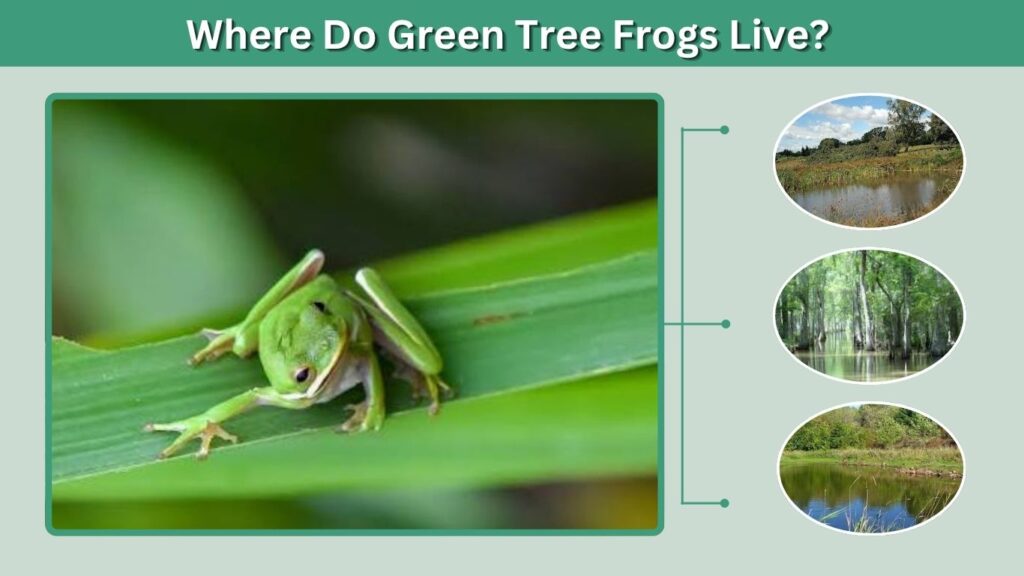
Green tree frogs prefer warm, humid environments with abundant vegetation and nearby freshwater. They spend much of their time resting on leaves, branches, and tall grasses. Although they are excellent climbers, they depend on aquatic environments for reproduction. Their natural habitats provide protection from predators, suitable humidity, and reliable populations of insects for feeding.
Common Green Tree Frog Habitats
- Freshwater Marshes: Dense vegetation provides shelter and breeding areas.
- Swamps: Humid conditions support climbing and feeding.
- Ponds: Nearby plants offer resting places and access to insects.
- Wetland Forests: Trees and shrubs provide elevated hiding spots.
- Lakeshores: Vegetated edges create suitable living environments.
- Backyard Gardens: Moist gardens near freshwater may attract these frogs.
Green Tree Frog Distribution
American green tree frogs are native to the southeastern United States.
They occur in states such as Florida, Georgia, Alabama, Mississippi, Louisiana, and Texas, along with other suitable southeastern regions.
They are particularly common in areas containing permanent freshwater and dense vegetation.
Green tree frogs may also appear around houses, especially near outdoor lights that attract insects.
What Do Green Tree Frogs Eat?

Green tree frogs are insectivorous amphibians that primarily consume small insects and other invertebrates. Their feeding habits help regulate insect populations around wetlands and gardens. As nocturnal hunters, they usually search for food after sunset. Their diet depends on body size, prey availability, and environmental conditions. They typically capture moving prey using their quick reflexes and sticky tongues.
Common Foods Green Tree Frogs Eat
- Crickets: A common food source for wild and captive frogs.
- Flies: Frequently captured near plants and outdoor lights.
- Moths: Often hunted during nighttime activity.
- Mosquitoes: Occasionally consumed when available.
- Small Beetles: Provide additional insect prey.
- Spiders: Sometimes eaten when suitable in size.
- Other Arthropods: Small invertebrates contribute to their diet.
How Do Green Tree Frogs Hunt?
Green tree frogs typically remain motionless on leaves or branches while watching for moving insects.
When prey approaches, they quickly extend their sticky tongues to capture it.
Their excellent climbing ability allows them to hunt insects on vegetation, walls, and other elevated surfaces.
They are particularly active on warm, humid nights when insects are abundant.
Green Tree Frog Sounds and Behavior
Green tree frogs are famous for their loud, repeated calls, which are commonly heard around wetlands during warmer months. Males use these vocalizations to attract females and communicate during the breeding season. Their behavior is strongly influenced by humidity, rainfall, temperature, and available shelter. Although they are primarily nocturnal, green tree frogs may occasionally become active during rainy daytime conditions.
What Does a Green Tree Frog Sound Like?
The American green tree frog produces a loud, nasal call often described as “quonk” or “reenk.”
Its repeated notes may resemble a duck-like honk or a small bell.
Male frogs often call from vegetation near ponds and marshes, especially during warm evenings.
Large groups of calling males can create surprisingly loud nighttime choruses.
Green Tree Frog Daily Behavior
Green tree frogs generally rest during daylight hours and become more active after sunset.
They often hide beneath broad leaves or among dense vegetation to avoid predators and conserve moisture.
When threatened, they may jump to nearby plants or retreat into protected spaces.
Birds, snakes, larger frogs, and some mammals are among their natural predators.
Green Tree Frog Reproduction and Life Cycle
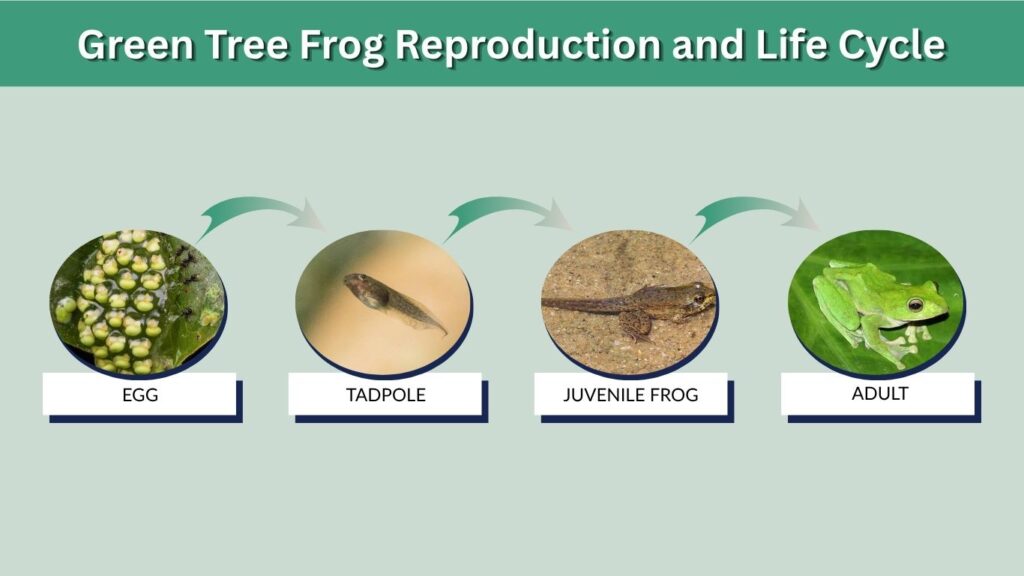
Green tree frogs reproduce in freshwater during warmer months, often following rainfall. Male frogs gather near ponds and wetlands, producing repeated calls to attract females. After mating, females deposit eggs in water, where developing embryos eventually hatch into tadpoles. Like other frogs, green tree frogs undergo metamorphosis, gradually transforming from aquatic larvae into small, air-breathing froglets.
Green Tree Frog Mating and Eggs
The breeding season generally extends from spring through summer, although it may continue longer in warmer southern regions.
Males call from plants near freshwater while females approach suitable breeding locations.
Females deposit small groups of jelly-covered eggs attached to aquatic vegetation.
Depending on environmental conditions, the eggs usually hatch within several days.
Green Tree Frog Tadpole Development
Newly hatched tadpoles remain underwater, where they feed on algae and other organic material.
As they grow, their hind legs develop, followed by their front legs.
Their tails gradually shrink as their bodies become adapted for life outside the water.
Under favorable conditions, metamorphosis may take approximately two months.
How to Care for a Green Tree Frog
American green tree frogs are sometimes kept as pets because of their small size, attractive appearance, and interesting behavior. However, they require suitable housing, humidity, temperature, and nutrition to remain healthy. Their delicate skin makes proper handling especially important. Captive-bred frogs are preferable to wild-caught individuals, and their enclosure should closely resemble a natural climbing environment.
Green Tree Frog Enclosure Setup
A tall, secure terrarium with good ventilation is important for green tree frogs.
The enclosure should contain climbing branches, broad-leaved plants, hiding spots, and a shallow dish of clean, dechlorinated water.
Vertical climbing space is particularly important because these frogs naturally spend much of their time above ground.
Temperature and Humidity Requirements
Green tree frogs generally do well with moderate warmth, suitable humidity, and a normal day-night cycle.
A daytime temperature around 72–80°F is commonly recommended for captive American green tree frogs.
Humidity must be monitored carefully, with adequate ventilation to prevent constantly wet, stagnant conditions.
Regular misting and access to clean water help maintain suitable moisture levels.
Feeding Green Tree Frogs in Captivity
Captive green tree frogs typically eat appropriately sized live insects, including crickets, small roaches, and flies.
Their diet should include variety and properly managed calcium and vitamin supplementation.
Feeding frequency depends on the frog’s age, size, and condition.
An amphibian-experienced veterinarian can provide guidance on nutrition and long-term care.
FAQs
1. Are Green Tree Frogs Poisonous?
American green tree frogs are not considered dangerously poisonous to humans. However, like other amphibians, they may carry bacteria such as Salmonella. Their sensitive skin can also be damaged by unnecessary handling. Avoid touching wild frogs whenever possible, and wash your hands after contact with frogs or their enclosures.
2. How Long Do Green Tree Frogs Live?
American green tree frogs can live for several years, depending on environmental conditions and overall health. In captivity, individuals may survive for approximately six years with proper care. Their lifespan in the wild is less certain because predators, diseases, weather conditions, and habitat changes affect survival.
3. Are Green Tree Frogs Good Pets?
American green tree frogs can make interesting pets for people prepared to maintain an appropriate terrarium. They need climbing space, suitable temperatures, controlled humidity, clean water, and live insects. They are primarily display animals rather than pets that enjoy handling, so regular observation is preferable to physical interaction.
4. Why Do Green Tree Frogs Make Noise at Night?
Male green tree frogs produce loud calls to attract females during the breeding season. Their vocal activity often increases during warm, humid weather and after rainfall. These repeated calls are common near ponds, marshes, and other breeding habitats, particularly during spring and summer evenings.
5. Can Green Tree Frogs Change Color?
American green tree frogs can change between brighter and darker shades of green, sometimes appearing grayish-green or olive. These changes may occur in response to temperature, lighting, activity, and environmental conditions. However, they cannot change into any color, and their usual appearance remains within a limited range of natural shades.
