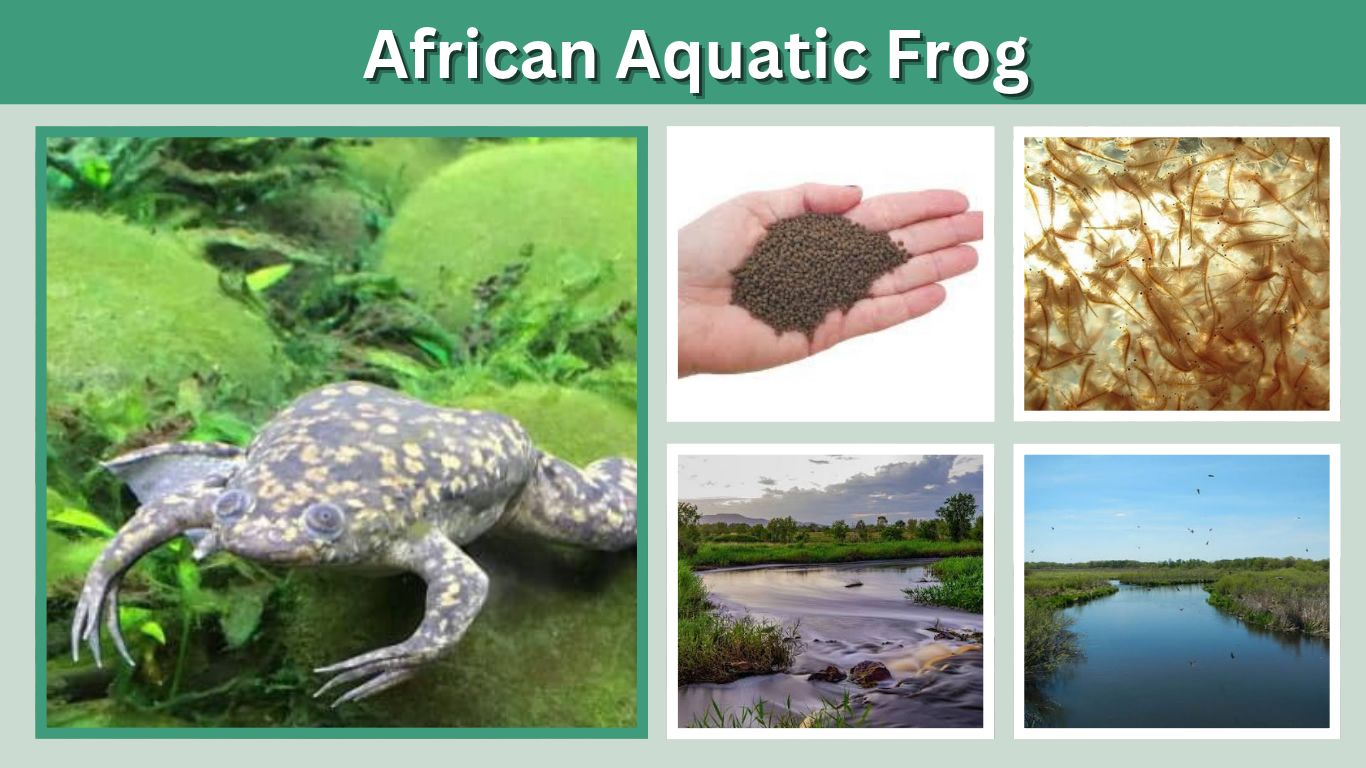
African aquatic frogs are fascinating amphibians that spend most or all of their lives in freshwater environments. Unlike many familiar frogs that regularly move between land and water, these species have bodies adapted for underwater living. Their webbed feet, flattened shapes, and unusual feeding behaviors make them interesting animals to observe. Two of the best-known aquarium varieties are African dwarf frogs and African clawed frogs. Although they share several characteristics, they differ significantly in size, temperament, and care requirements. Understanding these differences, along with their natural habitat, food preferences, and lifespan, is important for anyone interested in keeping African aquatic frogs.
What Is an African Aquatic Frog?
The term African aquatic frog commonly refers to several water-dwelling frog species native to Africa, particularly members of the family Pipidae.
These frogs have adaptations that allow them to spend nearly their entire lives underwater. They possess strong swimming legs, webbed hind feet, and streamlined bodies.
Unlike fish, however, adult aquatic African frogs have lungs and must breathe atmospheric oxygen.
They periodically swim to the surface, take a breath, and return underwater.
Two particularly familiar groups are African dwarf frogs (Hymenochirus) and African clawed frogs (Xenopus).
Although both are aquatic amphibians, they have different physical characteristics and aquarium requirements.
Common Types of African Aquatic Frogs
Several aquatic frog species occur across Africa. However, two groups are especially well known among aquarium enthusiasts.
1. African Dwarf Frog
African dwarf frogs belong to the genus Hymenochirus.
These small frogs generally reach approximately 1.5–2 inches in length, depending on the species.
They have brown or olive-colored bodies, dark markings, and webbed feet on all four limbs.
African dwarf frogs are generally peaceful and are often maintained in small groups.
Because they are relatively small, they require careful feeding and protection from aggressive aquarium companions.
They usually spend time resting near the aquarium bottom, exploring decorations, or swimming toward the surface for air.
2. African Clawed Frog
The African clawed frog (Xenopus laevis) is considerably larger than the African dwarf frog.
Adult females can reach approximately 4–5 inches in body length, while males are generally smaller.
Their hind feet are webbed and have distinctive dark claw-like tips on three toes.
Unlike African dwarf frogs, African clawed frogs do not have webbed front fingers.
They are active predators and scavengers that consume various aquatic animals.
African clawed frogs need larger aquariums and should not be housed with small fish or frogs that they might swallow.
Albino African clawed frogs are also common in captivity. Their pale coloration is a color variation rather than a separate species.
How to Identify an African Aquatic Frog
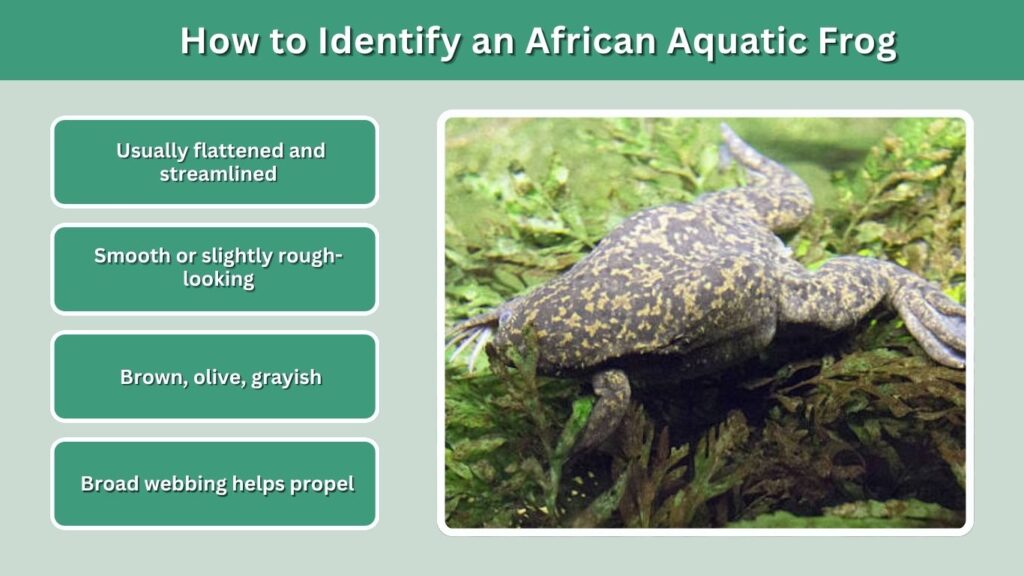
African aquatic frogs often have flattened bodies, powerful hind legs, and eyes adapted to viewing their surroundings underwater.
However, their appearance differs among species.
Important identification features include:
- Body shape: Usually flattened and streamlined for swimming.
- Skin: Smooth or slightly rough-looking, depending on the species.
- Coloration: Brown, olive, grayish, or occasionally pale albino coloration.
- Hind feet: Broad webbing helps propel the frog through water.
- Front feet: Webbed in African dwarf frogs but unwebbed in African clawed frogs.
- Eyes: Positioned toward the sides in dwarf frogs and more toward the top in clawed frogs.
- Size: Dwarf frogs remain small, while clawed frogs grow significantly larger.
These characteristics are particularly useful when identifying juvenile frogs, which may look similar in aquarium stores.
Where Do African Aquatic Frogs Live?
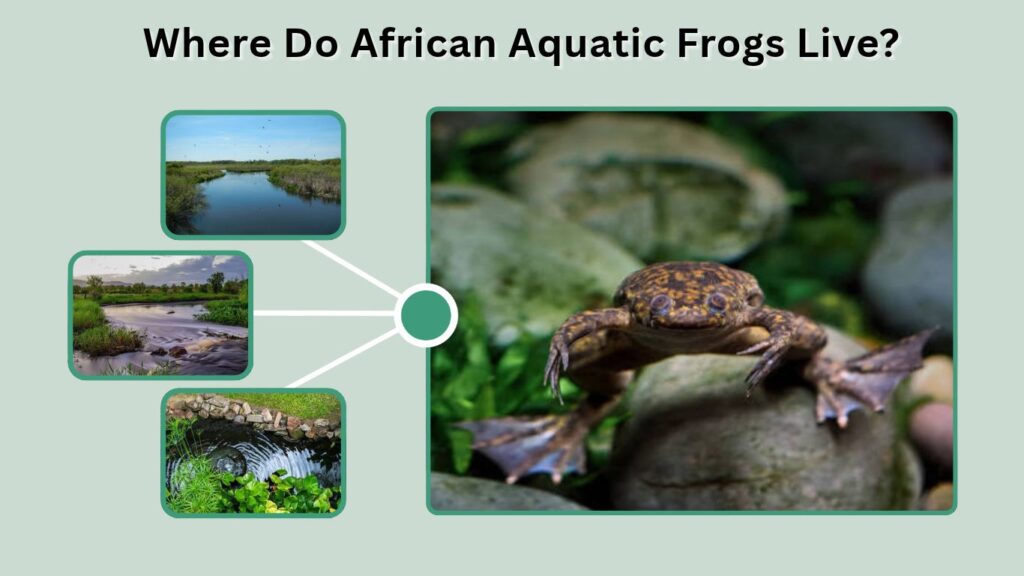
African aquatic frogs naturally inhabit various freshwater environments across parts of Africa.
African dwarf frogs occur in tropical African freshwater habitats, including relatively calm, vegetated waters.
African clawed frogs occupy a wider range of freshwater habitats, especially still ponds, pools, and slow-moving waterways.
Common habitat characteristics include:
- Freshwater with relatively gentle currents.
- Submerged vegetation and natural hiding places.
- Muddy, sandy, or debris-covered bottoms.
- Small aquatic invertebrates that provide food.
- Access to the water’s surface for breathing.
Vegetation and underwater structures provide shelter from predators.
Although these frogs are aquatic, they depend on atmospheric oxygen and cannot remain submerged indefinitely without breathing.
African Aquatic Frog Tank Setup and Care
Proper aquarium conditions are essential for maintaining healthy African aquatic frogs.
The most important requirements include adequate space, suitable water quality, gentle filtration, and safe hiding places.
Aquarium Tank Size
Tank size depends on the frog species and the number of animals.
For African dwarf frogs, a tank of approximately 10–15 gallons is a practical starting point for a small group.
African clawed frogs require considerably more space because of their larger adult size and greater waste production.
An aquarium holding approximately 100 liters or more is a better starting point for a small group of clawed frogs, with additional space needed as appropriate.
Choose a tank with adequate horizontal swimming space.
A secure aquarium lid is necessary to prevent accidental escapes.
Water Temperature and Quality
Water requirements vary by species.
African dwarf frogs generally thrive in tropical conditions around 72–78°F (22–26°C).
African clawed frogs tolerate a broader temperature range, and their aquarium conditions should be selected according to their specific requirements.
Both groups need clean, properly conditioned freshwater.
Important water-care practices include:
- Keep ammonia and nitrite at zero.
- Remove chlorine and chloramine from replacement water.
- Monitor pH, nitrate, and temperature regularly.
- Establish biological filtration before introducing frogs.
- Avoid sudden changes in water chemistry.
- Perform appropriate partial water changes.
A partial water change of approximately 25% weekly is a useful starting routine, adjusted according to water testing.
Substrate, Plants, and Decorations
A bare-bottom aquarium or suitable smooth sand can provide a safe environment.
Avoid small stones that frogs might accidentally swallow during feeding.
Aquatic plants, smooth caves, and other decorations provide hiding places.
Plants positioned near the surface may also offer resting spots for smaller frogs.
Decorations should not have sharp edges or openings that could trap the animals.
Use gentle filtration because strong currents may stress weaker swimmers.
What Do African Aquatic Frogs Eat?
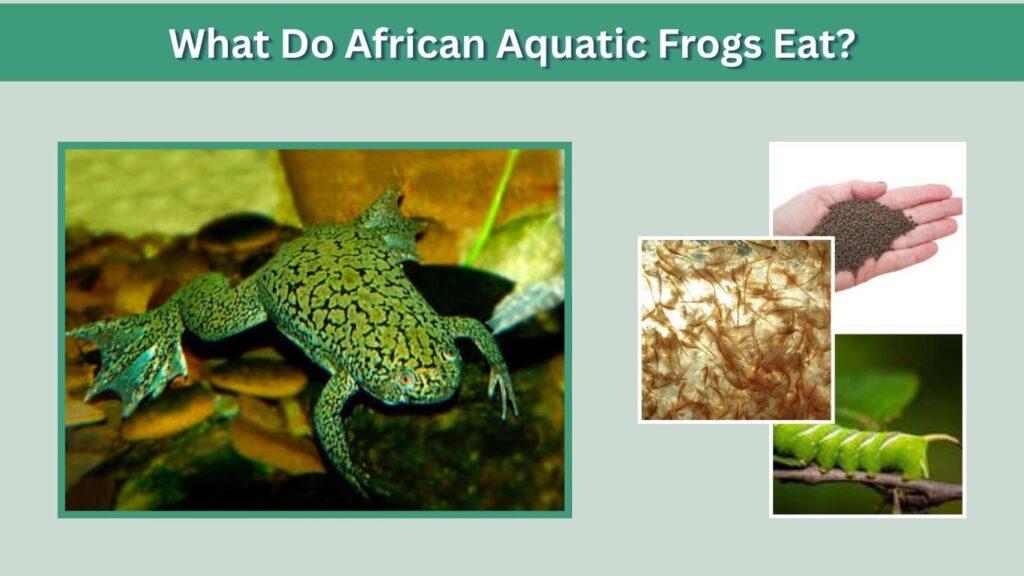
African aquatic frogs are primarily carnivorous.
Their natural diet includes aquatic invertebrates and other small animals found in freshwater habitats.
However, dietary requirements vary with species and body size.
African Dwarf Frog Diet
African dwarf frogs consume relatively small food items.
Suitable aquarium foods include:
- High-quality sinking aquatic frog pellets.
- Brine shrimp.
- Blackworms from reliable sources.
- Appropriately sized aquatic insect larvae.
- Thawed frozen bloodworms as part of a varied diet.
These frogs may struggle to compete with faster fish during feeding.
Placing food close to the frog using feeding tongs or a pipette can help ensure it receives enough nutrition.
African Clawed Frog Diet
African clawed frogs consume larger prey than their dwarf relatives.
In the wild, adults eat aquatic insects, crustaceans, worms, tadpoles, small fish, and other suitable animals.
Captive diets should include nutritionally balanced food formulated for aquatic carnivores, supplemented with appropriate invertebrate foods.
Because these frogs are opportunistic feeders, they may attempt to swallow smaller aquarium inhabitants.
How Often Should You Feed Them?
Feeding frequency depends on species, age, body condition, and food type.
Small meals offered once daily may be appropriate for many young or growing frogs, while some adults need less frequent feeding.
Avoid excessive portions.
Remove uneaten food to prevent waste accumulation and declining water quality.
African Aquatic Frog Lifespan
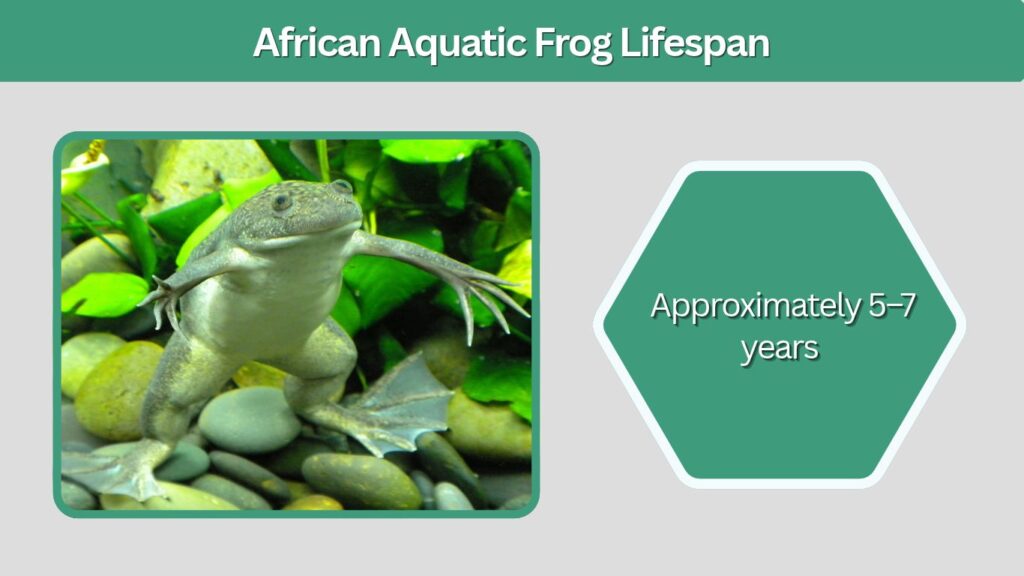
The lifespan of an African aquatic frog varies considerably between species.
African dwarf frogs commonly live around 5–7 years, although some individuals may live longer.
African clawed frogs can live substantially longer, potentially reaching approximately 15 years.
Factors affecting longevity include water quality, nutrition, genetic health, temperature, and stress.
A poorly maintained aquarium can increase the risk of infections and other health problems.
Stable conditions and appropriate care offer the best opportunity for a long lifespan.
African Aquatic Frog Behavior and Tank Mates
African aquatic frogs exhibit different behaviors depending on their species.
Dwarf frogs are generally peaceful and may rest among plants or decorations for extended periods.
They often explore the aquarium bottom while searching for food.
African clawed frogs are stronger predators and may consume smaller aquatic animals.
For this reason, these two frog groups should not be housed together.
African dwarf frogs may coexist with selected peaceful fish, although competition for food can become a problem.
Species-only aquariums are generally easier to manage and reduce compatibility concerns.
How Do African Aquatic Frogs Reproduce?
African aquatic frogs reproduce by laying eggs in freshwater.
During courtship, males may produce underwater sounds to attract females.
When mating occurs, the male grasps the female in a position called amplexus.
The female releases eggs, which are fertilized externally.
Depending on the species, eggs may float near the surface or attach to underwater objects.
After development, the eggs hatch into tadpoles.
The tadpoles gradually develop legs, absorb their tails, and transform into young frogs.
Successful captive breeding requires suitable environmental conditions and specialized care for the developing young.
Adults may consume eggs or tadpoles, making separate rearing arrangements necessary.
Common African Aquatic Frog Health Problems
African aquatic frogs are sensitive to poor water conditions and inappropriate aquarium treatments.
Several health problems can occur in captivity.
Common warning signs include:
- Unusual swelling or persistent bloating.
- Loss of appetite.
- Abnormal swimming behavior.
- White, fuzzy growths on the skin.
- Red patches or open sores.
- Unexplained weight loss.
- Difficulty reaching the surface to breathe.
Some skin shedding is normal, but persistent discoloration or abnormal growths may indicate disease.
If concerning symptoms appear, test aquarium water immediately and consult a veterinarian experienced with amphibians.
Avoid using fish medications without professional guidance because certain ingredients can harm frogs.
Handling should be minimized to protect their sensitive skin.
FAQs
1. Are African aquatic frogs fully aquatic?
African dwarf frogs are fully aquatic, while African clawed frogs are almost entirely aquatic and may occasionally move between water bodies. Both normally live underwater but must surface to breathe air.
2. Do African aquatic frogs need land?
African dwarf frogs do not require a land area. African clawed frogs also primarily need an aquatic setup. Both species require easy access to the water’s surface.
3. Can African aquatic frogs live with fish?
African dwarf frogs can sometimes live with carefully selected peaceful fish. African clawed frogs are more predatory and can eat smaller fish, so species-only housing is generally recommended.
4. How long can African aquatic frogs stay underwater?
These frogs can remain underwater for several minutes between breaths, although the exact duration depends on the species, activity, and environmental conditions. They must periodically reach the surface because adults breathe using lungs.
5. Are African aquatic frogs good pets?
African aquatic frogs can be rewarding pets for people prepared to maintain suitable freshwater conditions. African dwarf frogs are generally smaller and more peaceful, while African clawed frogs need larger aquariums and more careful consideration of their predatory behavior. Both require specialized care and a long-term commitment.
