
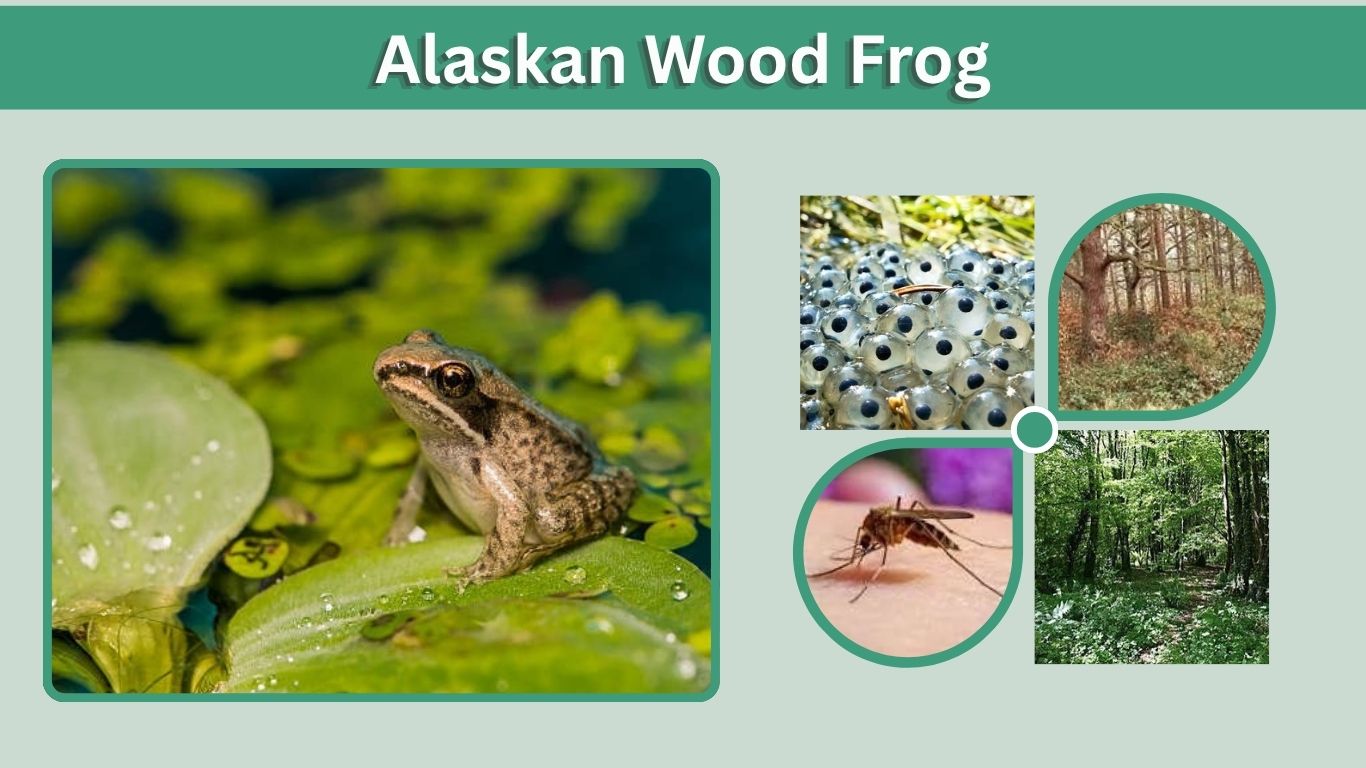
The Alaskan wood frog is famous for surviving winters that would kill most other amphibians. Known scientifically as Lithobates sylvaticus, this small frog can freeze much of its body during winter and become active again after temperatures rise. Wood frogs living in Alaska have developed especially impressive cold-weather adaptations, allowing them to survive months beneath leaf litter and snow. Beyond their freezing ability, these frogs have fascinating habitats, diets, breeding behaviors, life cycles, and ecological roles throughout Alaska’s forests, wetlands, and tundra-edge environments.
How Does the Alaskan Wood Frog Survive Freezing?
The Alaskan wood frog survives winter through a remarkable form of freeze tolerance. Instead of escaping severe cold by moving deep underground, it often spends winter close to the surface beneath leaves and other natural debris. During freezing, many normal body functions temporarily stop, but specialized chemical defenses help protect important tissues until spring temperatures allow the frog to thaw.
Does the Alaskan Wood Frog Really Freeze?
Yes. Alaskan wood frogs can survive while a significant portion of the water in their bodies becomes frozen.
When freezing begins, ice forms mainly outside the cells. The frog’s heart stops beating, breathing ceases, and normal movement disappears. To an observer, the animal can appear completely lifeless.
The key is preventing destructive ice crystals from forming inside sensitive cells. The frog accomplishes this by rapidly changing its internal chemistry before and during freezing.
How Glucose Protects the Frog
As temperatures drop, the frog’s liver releases large quantities of glucose into its bloodstream.
Glucose acts as a natural cryoprotectant. It helps:
- Protect cells from dehydration
- Reduce damage caused by ice formation
- Stabilize cell membranes
- Protect important organs
- Improve survival during repeated freeze-thaw cycles
- Provide energy once the frog begins thawing
Alaskan populations can accumulate particularly high levels of protective substances because they experience much colder winters than southern wood frog populations.
How Long Can Alaskan Wood Frogs Stay Frozen?
Wood frogs in Alaska may remain in a frozen or partially frozen state for extended portions of winter. In some northern areas, cold conditions can last for many months.
However, saying that every Alaskan wood frog remains continuously frozen for seven months is an oversimplification. Their body temperature can rise and fall with environmental conditions, producing multiple freezing and thawing events.
Their extraordinary ability allows them to endure an unusually long winter without eating or moving normally.
Alaskan Wood Frog Adaptations
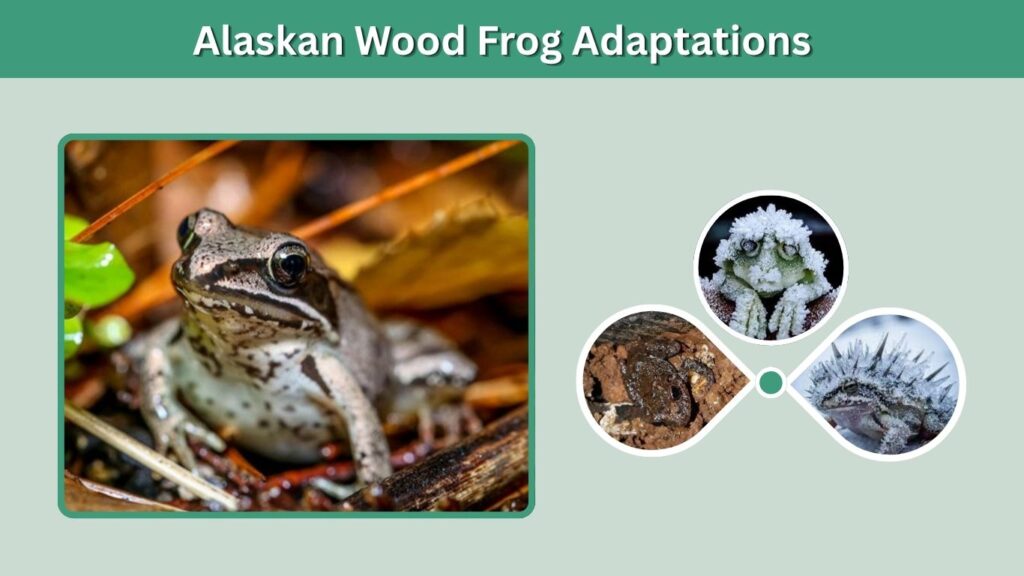
Surviving Alaska requires more than simply tolerating ice. Wood frogs combine physiological, structural, and behavioral adaptations that help them survive severe winters and short breeding seasons. Their bodies respond rapidly to cold, while their choice of overwintering sites provides additional protection. These adaptations have allowed wood frogs to live farther north than most other North American amphibians.
Important Cold-Weather Adaptations
Major adaptations include:
- Freeze tolerance: They can survive substantial body freezing.
- Glucose production: High glucose concentrations protect tissues.
- Urea accumulation: Urea also contributes to cellular protection.
- Leaf-litter hibernation: Frogs shelter beneath insulating vegetation.
- Metabolic depression: Energy use falls dramatically during freezing.
- Rapid spring recovery: Frogs become active quickly when temperatures rise.
- Cold-tolerant eggs: Early breeding allows reproduction soon after snowmelt.
Together, these traits make the species exceptionally well suited to northern climates.
Behavioral Adaptations
Wood frogs usually do not bury themselves far below the frost line. Instead, they choose shallow protected sites beneath leaf litter, moss, logs, and vegetation.
Snow cover provides additional insulation. Although the air above may become extremely cold, temperatures beneath snow and organic material fluctuate less dramatically.
In spring, wood frogs quickly leave their winter shelters and move toward temporary ponds. This rapid response helps them breed before many predators become abundant.
Structural Adaptations
The wood frog has a compact body and relatively short limbs compared with many highly aquatic frogs.
Its brown or reddish coloration blends well with fallen leaves, helping it avoid predators on the forest floor.
The most recognizable feature is a dark mask running through each eye. This marking, combined with a pale stripe along the upper lip, makes the species relatively easy to distinguish from many other Alaskan amphibians.
Alaskan Wood Frog Habitat and Diet
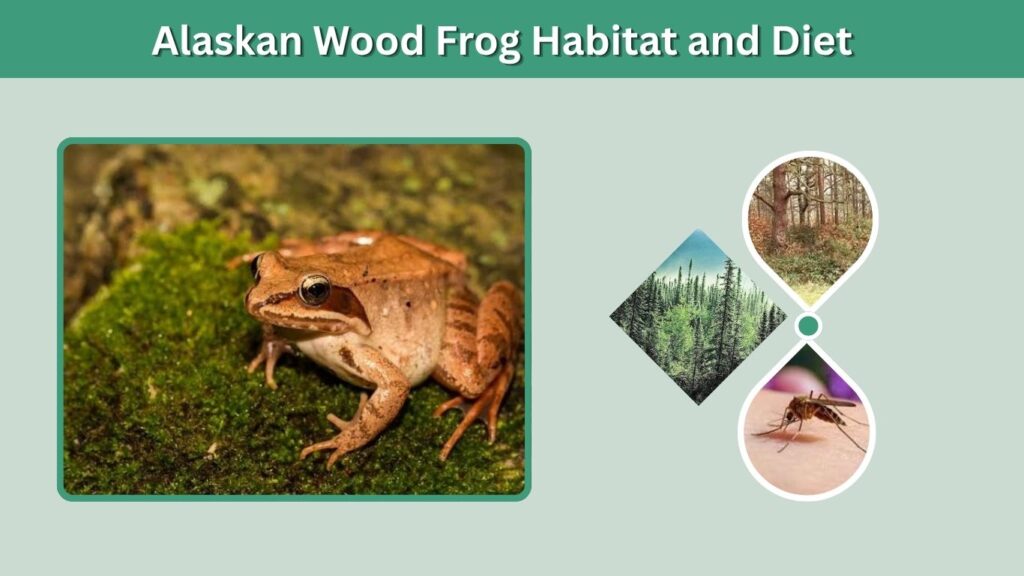
Wood frogs occur across a huge portion of northern North America and are the most widespread frog species in Alaska. They inhabit environments ranging from boreal forests to wetlands and areas close to the Arctic. Their ability to reproduce in temporary pools and survive freezing conditions allows them to occupy habitats that are unsuitable for many other frogs.
Where Do Alaskan Wood Frogs Live?
Typical habitats include:
- Boreal forests
- Woodland edges
- Tundra-transition areas
- Wet meadows
- Marshy environments
- Temporary spring ponds
- Areas near lakes and streams
- Moist leaf litter
- Shrubby wetlands
Adults spend much of the year on land rather than permanently living in water.
Temporary fish-free ponds are particularly important during breeding because eggs and tadpoles can develop with reduced pressure from fish predators.
What Do Alaskan Wood Frogs Eat?
Adult wood frogs are opportunistic predators of small invertebrates.
Their diet may include:
- Flies
- Mosquitoes
- Beetles
- Small spiders
- Ants
- Caterpillars
- Moths
- Small worms
- Other tiny arthropods
They typically wait for prey to approach and then capture it with a quick movement of the tongue.
Wood frog tadpoles have a very different diet, feeding mainly on algae, plant material, microorganisms, and decaying organic matter.
Role in the Ecosystem
Alaskan wood frogs are both predators and prey.
By consuming insects and other small invertebrates, adults help move energy through wetland and forest food webs. Tadpoles influence algae and microorganisms in breeding ponds.
Wood frogs themselves provide food for birds, snakes, mammals, fish, and other predators. Their eggs and tadpoles are particularly vulnerable, which is one reason females produce large numbers of eggs during each breeding season.
Alaskan Wood Frog Life Cycle and Reproduction
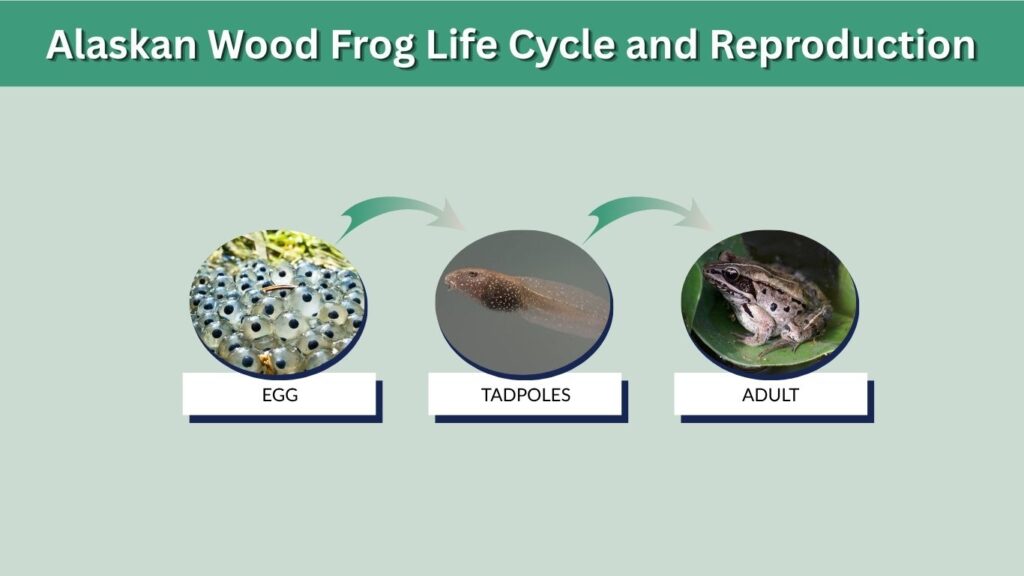
The breeding season begins rapidly after winter ends. Wood frogs are explosive breeders, meaning many individuals gather at ponds within a relatively short period. Their reproductive strategy suits Alaska’s short warm season because eggs and tadpoles must develop quickly enough to complete metamorphosis before temporary ponds dry or cold weather returns.
Breeding and Wood Frog Call
Male wood frogs gather around shallow ponds and produce distinctive calls to attract females.
Their call is often described as sounding somewhat like a duck’s quack. During peak breeding periods, hundreds of males may call simultaneously.
Wood frogs usually reproduce sexually. Fertilization is external: females release eggs into water while males release sperm over them.
Breeding can begin remarkably soon after snow and ice start disappearing.
Eggs and Tadpoles
The early life cycle includes:
- Females lay large gelatinous egg masses.
- Egg masses are attached to vegetation or float near the surface.
- Sunlight warms shallow water and helps development.
- Tadpoles hatch and remain fully aquatic.
- Tadpoles feed and grow rapidly.
- Hind legs develop first.
- Front legs appear later.
- The tail gradually disappears.
- Young froglets leave the pond.
Because the northern growing season is short, rapid development is extremely important.
Do Parents Care for Their Young?
Alaskan wood frogs provide little to no parental care after eggs are laid and fertilized.
Adults generally leave the breeding ponds after reproduction. Eggs and tadpoles must develop without protection from their parents.
Producing large numbers of eggs compensates for the high mortality of young frogs. Many eggs or tadpoles may be eaten, fail to develop, or become stranded if a temporary pond dries too quickly.
Alaskan Wood Frog Lifespan and Interesting Facts
Although their freezing ability receives most of the attention, wood frogs have several other unusual characteristics. They occupy some of the coldest environments inhabited by amphibians and can move between aquatic breeding habitats and terrestrial forests during the same year. Their lifespan depends on environmental conditions, predators, disease, and whether they survive their vulnerable early stages.
Alaskan Wood Frog Lifespan
Wood frogs generally live for several years, although accurately measuring lifespan in wild populations is difficult.
Many individuals die as eggs, tadpoles, or young froglets. Adults that successfully survive repeated winters may reproduce during several breeding seasons.
Their survival depends on finding appropriate overwintering sites and avoiding predators, disease, habitat loss, drought, and unusually damaging weather conditions.
Captive lifespan information is limited because wood frogs are primarily studied as wild animals rather than commonly maintained pets.
Interesting Alaskan Wood Frog Facts
Some notable facts include:
- They are among the northernmost amphibians in North America.
- Their scientific name is Lithobates sylvaticus.
- They can survive substantial freezing of body fluids.
- Their heart temporarily stops during deep freezing.
- Glucose functions as a natural antifreeze-like protectant.
- They overwinter close to the ground surface.
- They breed soon after spring thaw.
- Males produce a duck-like breeding call.
- Tadpoles develop rapidly during Alaska’s short summer.
- Adults are excellent camouflage among dead leaves.
Are Frozen Alaskan Wood Frogs a Hoax?
No. Freeze tolerance in wood frogs is a genuine biological phenomenon that has been extensively studied.
What can be misleading are exaggerated descriptions suggesting the frog becomes a completely solid block of ice without any biological protection. Ice forms primarily in extracellular spaces, while specialized cryoprotectants help prevent fatal cellular damage.
The frog’s ability is extraordinary, but it depends on complex physiological processes rather than simply freezing like ordinary water and somehow returning to life.
FAQs
Do Alaskan wood frogs freeze in winter?
Yes. Alaskan wood frogs can survive significant portions of their body water freezing during winter. Their heartbeat and breathing may temporarily stop, while glucose and other protective compounds help prevent severe cellular damage. They become active again as temperatures rise and their bodies thaw.
How long can an Alaskan wood frog stay frozen?
Wood frogs in Alaska may experience freezing conditions for several months, but they are not necessarily continuously frozen at the same temperature throughout winter. Environmental temperatures fluctuate, meaning the frogs may experience repeated freeze-thaw cycles while remaining dormant beneath insulating vegetation and snow.
Where do Alaskan wood frogs live?
They live throughout much of Alaska in boreal forests, wetlands, moist woodland, tundra-edge habitats, and areas near temporary ponds. Adults are mainly terrestrial outside the breeding season, while eggs and tadpoles require freshwater habitats for development.
What do Alaskan wood frogs eat?
Adult Alaskan wood frogs eat small invertebrates such as insects, spiders, worms, caterpillars, beetles, and flies. Tadpoles feed primarily on algae, microorganisms, decaying plant material, and other organic matter available within their shallow breeding ponds.
How does an Alaskan wood frog thaw without dying?
As temperatures rise, ice inside extracellular spaces gradually melts and normal circulation resumes. Cryoprotective glucose helps preserve cells during freezing, allowing organs to recover. The heart and breathing restart as the frog warms, and it can eventually resume normal activity and move toward spring breeding sites.
