
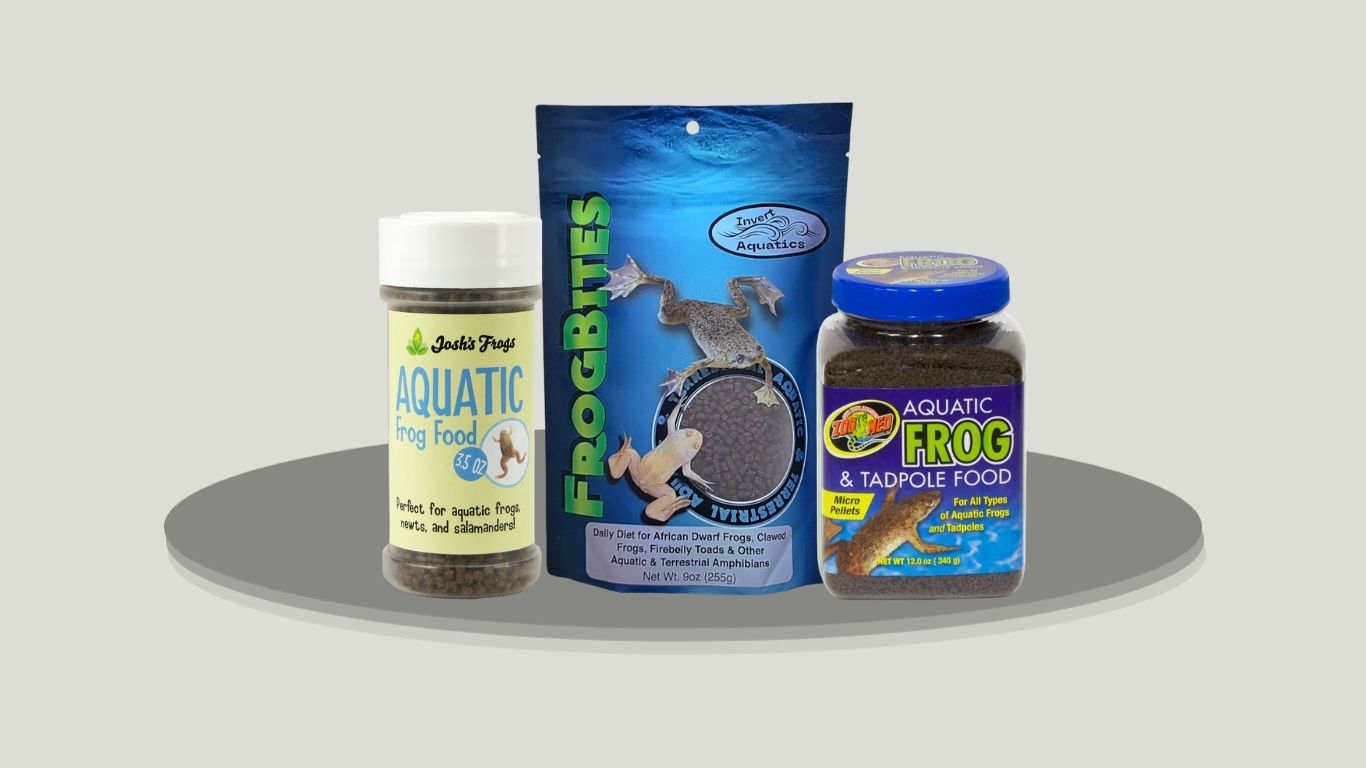
Choosing the right food is essential for keeping African dwarf frogs active, healthy, and properly nourished. These fully aquatic frogs need a protein-rich diet that is easy to find, swallow, and digest underwater. The best foods include sinking pellets, insect-based formulas, frog bites, and other options designed for aquatic amphibians. In this guide, we review five of the best African dwarf frog foods to help you compare nutrition, pellet size, feeding convenience, and suitability for everyday feeding in a well-maintained aquarium.
1. BugGraze African Dwarf Frog Food – Insect-Based Formula
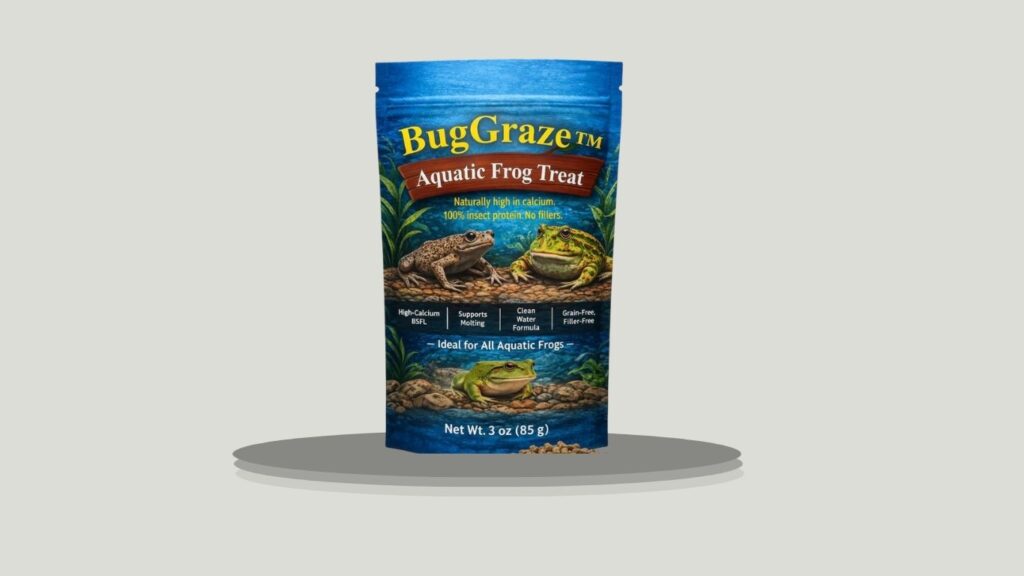
BugGraze African Dwarf Frog Food is designed around the natural preference of aquatic frogs for animal-based foods. Made with black soldier fly larvae, the soft-sinking pellets provide a protein-rich meal while settling toward the bottom where African dwarf frogs normally search for food. The formula contains no fillers or binders and is suitable for different life stages, making it an appealing everyday option for dedicated frog tanks.
Key Features
- Black soldier fly larvae-based formula
- High in animal protein
- Naturally provides calcium
- Soft-sinking pellets
- No fillers or binders
- Designed for aquatic frogs
- Suitable for multiple life stages
- Easy for bottom-feeding frogs to locate
Why It’s Best for a More Natural Diet
African dwarf frogs are carnivorous aquatic amphibians, so an insect-based food fits naturally into their feeding style. Black soldier fly larvae provide animal protein while also supplying naturally occurring calcium, giving this food a different nutritional profile from grain-heavy general-purpose pellets.
The sinking design is particularly important. African dwarf frogs spend their lives underwater and commonly search along the bottom for food. Pellets that descend into their feeding zone can therefore be easier for them to encounter than products that remain floating at the surface.
Feeding Performance & Water Quality
These pellets soften after entering the water, which can make them easier for small frogs to consume. Their bottom-feeding design also works well with feeding dishes, tweezers, or targeted feeding methods when tankmates might otherwise reach the food first.
Because the formula avoids unnecessary fillers and binders, it is designed to produce less uneaten waste when appropriately portioned. Even so, excess food should always be removed because decomposing pellets can affect aquarium water quality.
Overall Value & Verdict
BugGraze offers a compelling combination of insect-based nutrition, soft texture, and sinking performance. It is especially attractive for keepers who want a food specifically designed around aquatic frog feeding behavior rather than adapting a general reptile or fish diet.
Overall Verdict: BugGraze African Dwarf Frog Food is one of the strongest options for keepers seeking an insect-based sinking pellet that provides convenient feeding and species-appropriate animal protein.
2. Josh’s Frogs Aquatic Frog Food
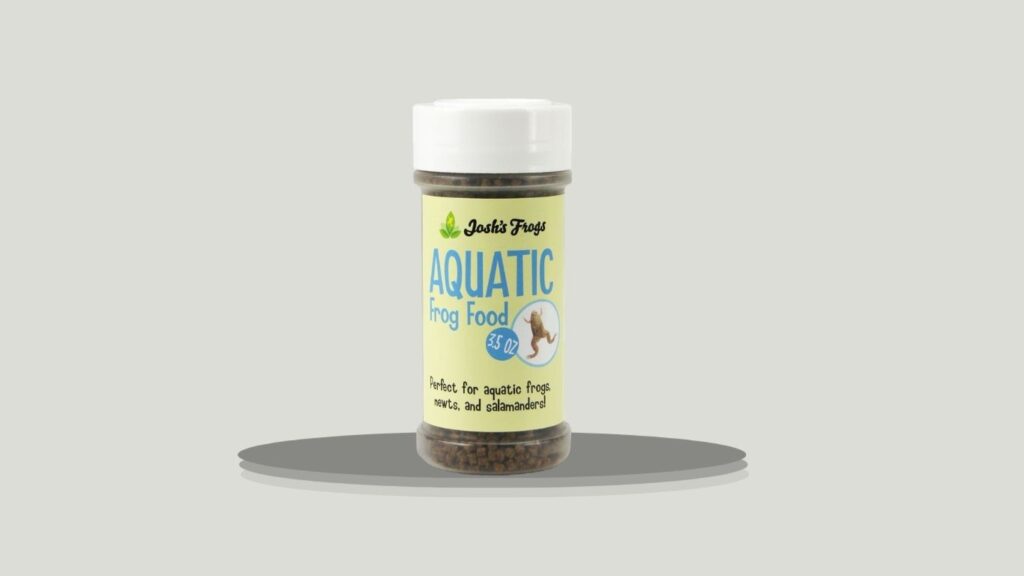
Josh’s Frogs Aquatic Frog Food is a moist pellet formulated specifically for aquatic frogs, newts, and salamanders. Its animal-protein-rich recipe and soft consistency make it well suited to African dwarf frogs, while the sinking format helps place the food where these bottom-feeding amphibians are likely to find it. Josh’s Frogs specifically recommends the product for commonly kept aquatic dwarf frogs.
Key Features
- Formulated specifically for aquatic frogs
- Rich in animal-based protein
- Moist pellet texture
- Sinks into the frog’s feeding zone
- Easy-to-digest formulation
- Designed to minimize water clouding when properly fed
- Suitable for newts and salamanders as well
- 1.85-ounce package
Why It’s Best for African Dwarf Frogs
One major advantage is that this food is not simply a generic aquatic pet pellet. Josh’s Frogs specifically includes aquatic dwarf frogs in its feeding guidance, recommending approximately two to three pellets three times per week for commonly kept dwarf frogs.
The moist texture is another useful feature. Small aquatic frogs can sometimes struggle with large or very hard foods, while softer pellets are easier to take into the mouth.
High animal-protein content also makes the formula better aligned with the nutritional preferences of African dwarf frogs than vegetable-focused foods.
Feeding Performance & Water Quality
The pellets sink, helping them reach the lower portion of the aquarium instead of remaining at the surface. This can improve feeding efficiency because African dwarf frogs have relatively poor eyesight and frequently locate food at close range.
Josh’s Frogs states that properly portioned food should not cloud the water. Their guidance recommends removing leftovers and performing water maintenance if uneaten food remains or cloudiness develops.
Target feeding can be especially effective in community aquariums where faster fish may otherwise steal the pellets.
Overall Value & Verdict
The combination of a moist texture, animal protein, sinking behavior, and frog-specific feeding instructions makes this one of the most purpose-built foods in the roundup.
Overall Verdict: Josh’s Frogs Aquatic Frog Food is an excellent everyday option for African dwarf frog keepers who want a soft, convenient sinking pellet developed specifically for aquatic amphibians.
3. Zoo Med Aquatic Frog & Tadpole Food
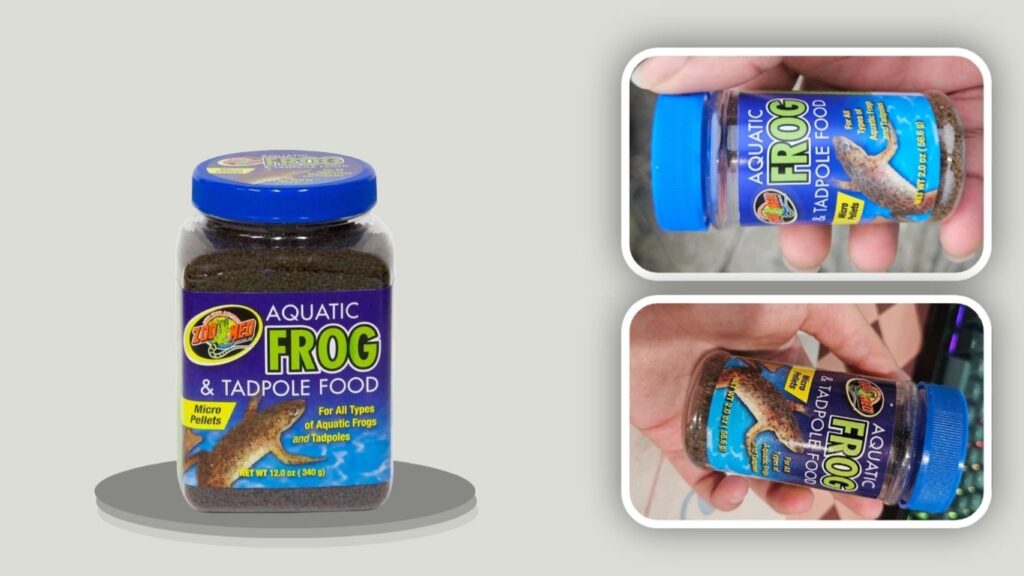
Zoo Med Aquatic Frog & Tadpole Food is a high-protein micro-pellet diet made specifically for aquatic frogs and tadpoles. Its tiny sinking pellets are particularly convenient for African dwarf frogs because they descend into the water rather than remaining at the surface. With 50% minimum crude protein and a nutrient-rich ingredient profile, it provides a concentrated feeding option in a compact, easy-to-store formula.
Key Features
- 50% minimum crude protein
- 16% minimum crude fat
- Small sinking micro-pellets
- Formulated for aquatic frogs and tadpoles
- Fish meal is a primary ingredient
- Contains vitamins and minerals
- Available in different container sizes
- Made for convenient daily portioning
Why It’s Best for Small-Mouth Frogs
Pellet size is one of Zoo Med’s biggest advantages for African dwarf frogs. These frogs have relatively small mouths, so oversized sticks and chunky pellets can be inconvenient without first being broken apart.
The micro-pellet format removes much of that preparation. Once added to the aquarium, the pellets sink into the part of the tank where African dwarf frogs normally forage.
The high-protein formulation is also notable. Zoo Med lists a minimum crude protein content of 50%, making this one of the more protein-dense prepared foods in the group.
Feeding Performance & Water Quality
Zoo Med recommends feeding roughly five to six pellets per frog or tadpole daily and removing uneaten food after about an hour. The company also notes that water movement from filtration may help stimulate feeding behavior.
The small pellet size makes controlled feeding relatively simple, but overfeeding should still be avoided. Tiny pellets can disappear into substrate, where leftovers may eventually affect water quality.
A feeding dish can make uneaten food easier to monitor and remove.
Overall Value & Verdict
Zoo Med combines high protein, small pellet size, and reliable sinking behavior in a formula developed specifically for aquatic amphibians. It is particularly convenient for keepers who prefer dry pellets that are easy to measure and store.
Overall Verdict: Zoo Med Aquatic Frog & Tadpole Food is an excellent choice for African dwarf frogs that need small, high-protein sinking pellets with minimal preparation.
4. Invert Aquatics Frog Bites
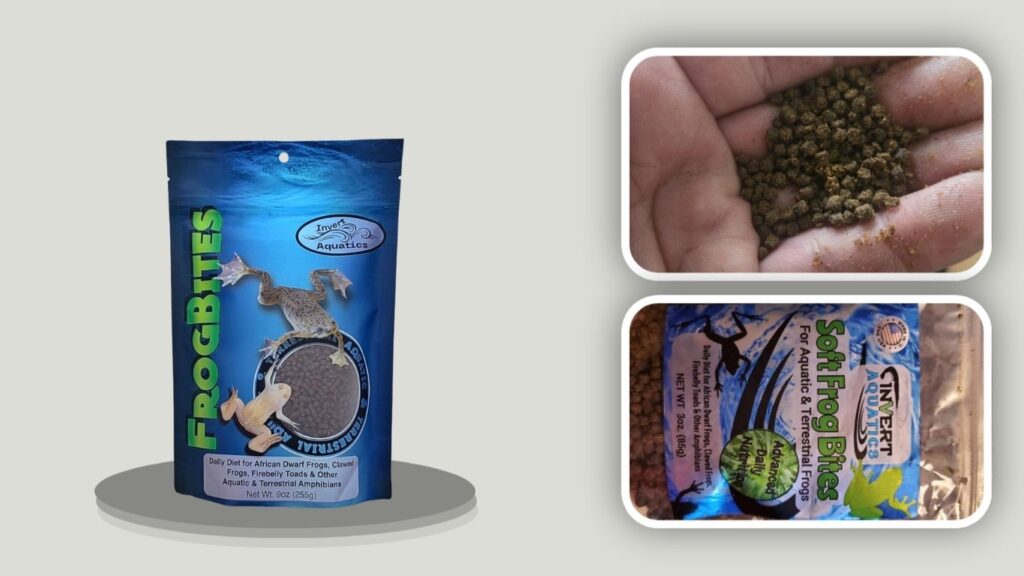
Invert Aquatics Frog Bites are soft, nutrient-dense sinking pellets developed for both aquatic and terrestrial amphibians. The formula contains fish meal, squid meal, shrimp meal, fish oil, vitamins, and minerals, providing substantial animal-based nutrition. With 45% minimum crude protein and 18% minimum fat, these soft pellets are particularly appealing for African dwarf frogs that benefit from small, easy-to-eat foods.
Key Features
- 45% minimum crude protein
- 18% minimum crude fat
- Soft and moist pellet texture
- Quick-sinking design
- Fish, squid, and shrimp ingredients
- Easily broken into smaller portions
- Designed for aquatic and terrestrial frogs
- Available in several package sizes
Why It’s Best for Soft, Easy Feeding
Texture is what makes Invert Aquatics Frog Bites particularly attractive for African dwarf frogs. Hard pellets sometimes require soaking or breaking before smaller amphibians can comfortably eat them, while these pellets are specifically made to remain comparatively soft.
They can also be broken apart for smaller frogs, giving keepers control over bite size. That flexibility can be useful for younger African dwarf frogs or individuals that have difficulty handling larger prepared foods.
The combination of fish, squid, shrimp, and fish oil also provides several animal-derived ingredients rather than relying primarily on plant matter.
Feeding Performance & Water Quality
The bites sink quickly, helping food reach African dwarf frogs instead of floating beyond their normal feeding zone. Their aroma is intended to stimulate feeding, which can be useful because these frogs often rely heavily on smell and close-range detection when locating meals.
Invert Aquatics recommends offering only what an amphibian can consume within a few minutes and removing leftovers to maintain cleaner aquarium water.
The soft consistency also works well for targeted feeding with aquarium tweezers or a small feeding dish.
Overall Value & Verdict
High protein, soft texture, and quick sinking give Frog Bites a strong combination of qualities for aquatic amphibians. The ability to break pellets into smaller pieces further increases versatility.
Overall Verdict: Invert Aquatics Frog Bites are an excellent choice for keepers who prioritize softer pellets, animal-based protein, and easy portion adjustment for African dwarf frogs.
5. Tetra ReptoMin Floating Food Sticks
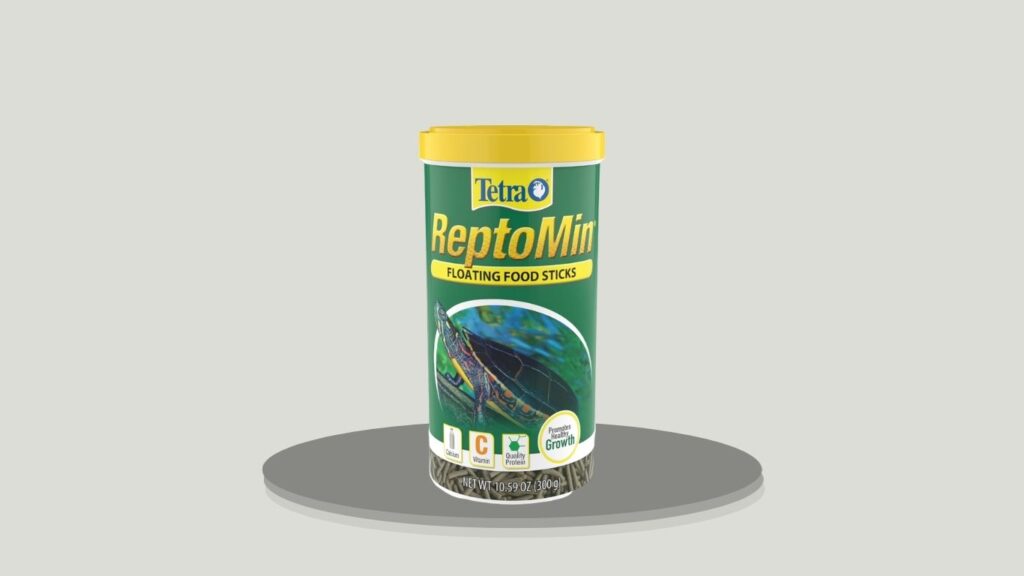
Tetra ReptoMin Floating Food Sticks are a long-established prepared diet designed for aquatic turtles, frogs, newts, and other aquatic reptiles and amphibians. The formula is protein-rich and enriched with calcium, vitamin D, and other nutrients. However, unlike the sinking foods above, ReptoMin floats, so African dwarf frog keepers may need to break or soften the sticks and use targeted feeding techniques for easier access.
Key Features
- Protein-rich prepared food
- Suitable for frogs, newts, and aquatic turtles
- Enriched with calcium
- Contains vitamin D
- Floating stick format
- No artificial flavors added in the current formula
- Easy to portion or break apart
- Established Tetra aquatic food line
Why It’s Best for Multi-Species Aquatic Households
ReptoMin is the most versatile option on this list for households that keep several types of aquatic animals. Rather than being exclusively formulated for African dwarf frogs, it is designed for turtles, frogs, newts, and other aquatic species.
That versatility can be convenient for keepers maintaining several enclosures. The sticks can also be broken into smaller portions, which makes them more manageable for frogs with small mouths.
Nutritionally, the calcium- and vitamin-D-enriched formulation adds value as part of a varied feeding program.
Feeding Performance & Practicality
The most important limitation for African dwarf frogs is that ReptoMin is a floating food. African dwarf frogs are fully aquatic but commonly locate food near the bottom, so a floating stick is not as naturally positioned for them as a sinking pellet.
Breaking the sticks into very small pieces and soaking them before targeted feeding can make them easier for dwarf frogs to handle. Feeding tweezers may also help deliver pieces directly in front of the frog.
Tetra recommends feeding only what the animal can consume within a few minutes rather than allowing uneaten food to remain in the aquarium.
Overall Value & Verdict
ReptoMin offers good versatility and established nutritional formulation, but its floating design makes it less specialized for African dwarf frogs than dedicated sinking foods.
Overall Verdict: Tetra ReptoMin is best for multi-species aquatic pet households or as part of a varied diet. For African dwarf frogs alone, a small sinking pellet such as Zoo Med, Josh’s Frogs, or Invert Aquatics will generally be easier to feed.
FAQs
1. What is the best food for African dwarf frogs?
The best food for African dwarf frogs is usually a protein-rich sinking food that is easy for them to find and swallow. Aquatic frog pellets, soft frog bites, black soldier fly larvae-based foods, bloodworms, and other animal-based foods can work well as part of a varied diet.
2. How often should I feed African dwarf frogs?
Adult African dwarf frogs are commonly fed small portions several times per week, while younger frogs may need more frequent meals. Feeding amounts depend on the food type, frog size, and tank conditions. Avoid overfeeding, and remove uneaten food before it begins affecting water quality.
3. Do African dwarf frogs need sinking pellets?
Sinking pellets are usually easier for African dwarf frogs to eat because they spend much of their time near the bottom of the aquarium. Floating foods can be harder for them to locate. Small, soft, sinking pellets are often the most convenient option for routine feeding.
4. Can African dwarf frogs eat bloodworms?
Yes, African dwarf frogs can eat bloodworms as part of a varied diet. Frozen or appropriately prepared bloodworms are commonly offered as an occasional protein-rich food. They should not necessarily be the only food provided, as a balanced feeding routine usually includes several suitable food types.
5. How can I make sure my African dwarf frog gets enough food?
Target feeding can help ensure each frog receives enough food, especially in community tanks with faster fish. Use feeding tweezers, a turkey baster, or a small feeding dish to place food close to the frog. Watch individual frogs during feeding and remove leftovers afterward.
