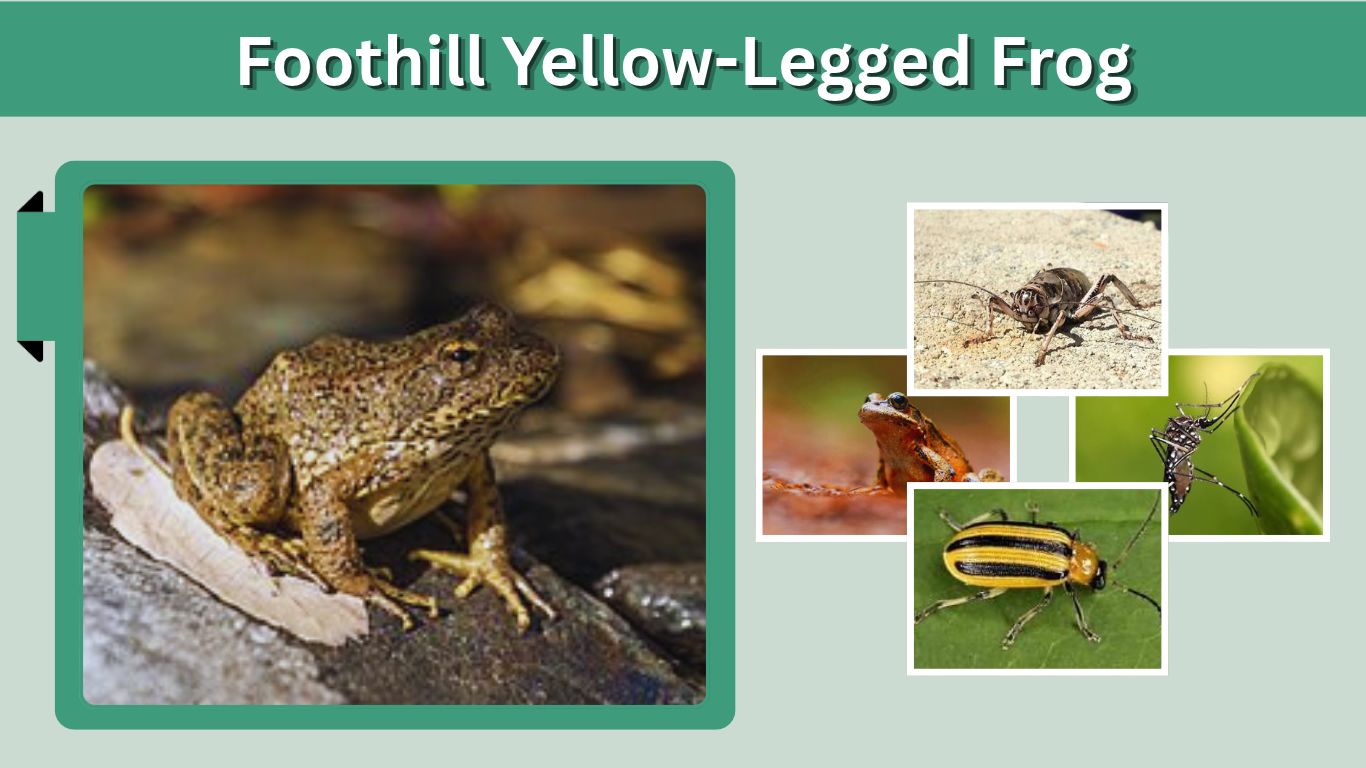
The foothill yellow-legged frog (Rana boylii) is a small, stream-dwelling amphibian native to California and Oregon. Known for its yellowish legs, rough skin, and excellent camouflage, this frog spends most of its life near rocky rivers and freshwater streams. Unfortunately, habitat destruction, changing river flows, invasive predators, and climate change have caused serious population declines in several regions. Understanding the foothill yellow-legged frog’s identification, habitat, diet, life cycle, and conservation status helps explain why protecting this remarkable amphibian is important.
What Is a Foothill Yellow-Legged Frog?
The foothill yellow-legged frog is a native North American amphibian belonging to the family Ranidae. Its scientific name is Rana boylii. Unlike many frogs that breed in ponds or lakes, this species depends on flowing streams for reproduction. Its natural coloring helps it blend into river rocks, gravel, and sandy streambanks.
Foothill Yellow-Legged Frog Identification
Foothill yellow-legged frogs are relatively small, typically measuring 1.5–3.2 inches long. Their appearance varies depending on their environment, but several characteristics help distinguish them from other frogs.
Important identification features include:
- Body color: Gray, olive, brown, or reddish-brown with irregular markings.
- Yellow legs: Yellowish coloring beneath the hind legs and sometimes the lower belly.
- Skin texture: Rough, slightly grainy skin that provides natural camouflage.
- Body shape: A moderately broad head, long hind legs, and webbed rear feet.
- Ear structure: A relatively inconspicuous eardrum behind each eye.
Their coloration can make them difficult to notice when resting among rocks.
Foothill Yellow-Legged Frog vs. California Red-Legged Frog
The foothill yellow-legged frog and California red-legged frog are both native to California, but they have different physical characteristics and habitat preferences.
| Feature | Foothill Yellow-Legged Frog | California Red-Legged Frog |
| Scientific name | Rana boylii | Rana draytonii |
| Leg coloration | Yellow underneath | Often reddish underneath |
| Typical habitat | Rocky flowing streams | Ponds, wetlands, and slow-moving water |
| Body size | 1.5–3.2 inches | Up to about 5 inches |
| Skin appearance | Rough and mottled | Prominent folds along the back |
Although both species may occur in nearby aquatic habitats, foothill yellow-legged frogs are especially associated with rocky stream environments.
Where Do Foothill Yellow-Legged Frogs Live?
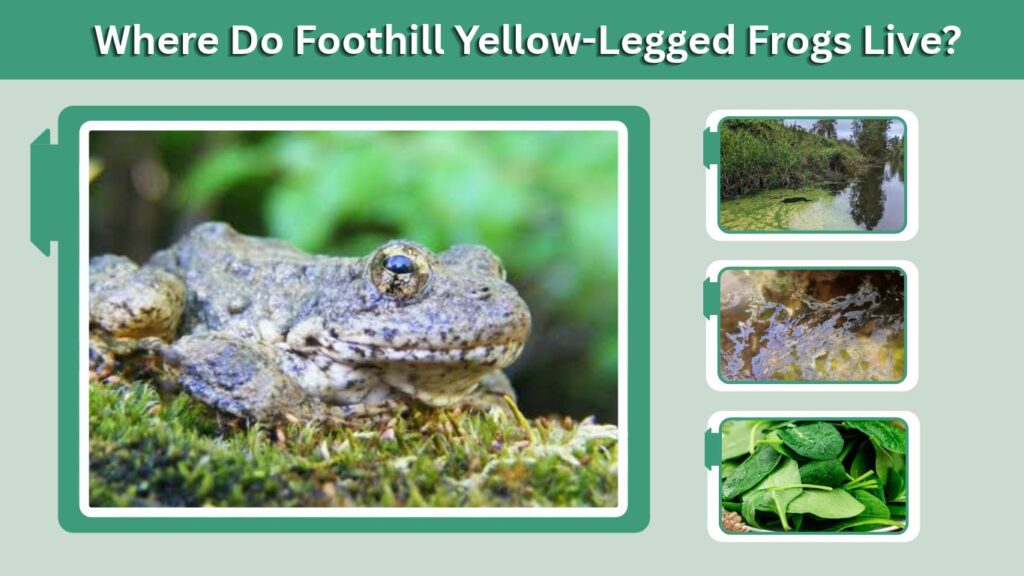
Foothill yellow-legged frogs inhabit streams and rivers throughout parts of the western United States. Their distribution extends from Oregon into southern California, primarily along foothills and mountainous regions. They generally remain close to water because their survival and reproduction depend on suitable freshwater conditions.
Foothill Yellow-Legged Frog Range
Historically, the species occurred from Oregon’s Willamette River drainage southward to California’s San Gabriel Mountains.
Its geographical distribution includes:
- Northern California: Coastal mountains, forested foothills, and river systems.
- Central California: Streams along coastal ranges and Sierra Nevada foothills.
- Southern California: Scattered populations, many of which have declined.
- Oregon: Lower-elevation streams, particularly in western and southwestern regions.
The species commonly occurs below approximately 5,000 feet in elevation, although local habitat conditions determine its distribution.
Foothill Yellow-Legged Frog Habitat Requirements
These frogs prefer clear freshwater streams containing rocks, gravel, cobbles, and shallow sections with moderate or slow-moving water.
Suitable habitats usually provide partially sunny areas, stable streambanks, natural vegetation, and sheltered places to escape predators.
Breeding locations are especially important. Females attach their eggs to submerged rocks in relatively calm water. Sudden changes in water depth or strong currents can destroy egg masses and reduce reproductive success.
What Do Foothill Yellow-Legged Frogs Eat?
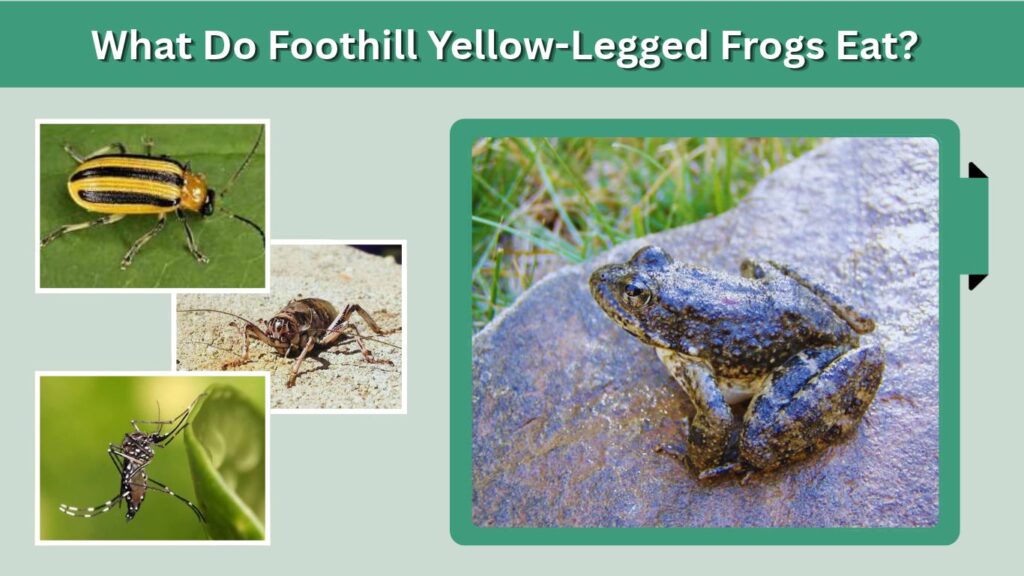
Foothill yellow-legged frogs are carnivorous as adults, feeding primarily on small invertebrates found around freshwater streams. Their diet changes as they develop from aquatic tadpoles into juvenile and adult frogs. They help control insect populations and transfer nutrients between aquatic and terrestrial environments.
Adult Foothill Yellow-Legged Frog Diet
Adult frogs consume various small animals, including:
- Flies and mosquitoes
- Beetles and grasshoppers
- Ants and small moths
- Water striders and other aquatic insects
- Small snails and additional invertebrates
They usually capture prey using their sticky tongues. Their hunting activity depends on temperature, seasonal conditions, and prey availability.
What Do Foothill Yellow-Legged Frog Tadpoles Eat?
Tadpoles primarily consume algae and other microscopic material growing on submerged rocks.
They scrape food from underwater surfaces using specialized mouthparts. This feeding behavior contributes to freshwater ecosystems by influencing algal growth and nutrient cycling.
Foothill Yellow-Legged Frog Life Cycle
The foothill yellow-legged frog undergoes complete metamorphosis, developing from an egg into a tadpole and eventually an adult frog. Its reproduction is closely connected to seasonal river conditions, particularly water temperature and streamflow. Breeding generally occurs when water levels become more stable after seasonal high flows.
Breeding Season and Eggs
Breeding usually takes place during spring or early summer, although timing varies by location and weather conditions.
Male frogs gather near suitable breeding sites and produce soft calls to attract females. Their vocalizations are often difficult to hear because they may call underwater.
A female typically produces one egg mass during a breeding season. Egg masses commonly contain approximately 1,000–2,500 eggs, although individual counts vary considerably.
The eggs form rounded clusters attached to submerged rocks or other stable surfaces in shallow water.
Foothill Yellow-Legged Frog Tadpoles
After hatching, tadpoles remain in aquatic habitats and feed on algae while developing.
Their bodies are generally dark when newly hatched, becoming more olive-gray or brown as they grow.
During metamorphosis, tadpoles develop hind legs, followed by front legs. Their tails gradually shrink as they transition into young frogs.
The duration of development depends on water temperature, food availability, and environmental conditions.
Young frogs remain closely associated with streams, where they continue growing toward adulthood.
Are Foothill Yellow-Legged Frogs Endangered?
Yes, several foothill yellow-legged frog populations are federally endangered or threatened, although the entire species does not have the same legal classification. The U.S. Fish and Wildlife Service recognizes six geographically and genetically distinct population segments. Four received federal protection under the Endangered Species Act in September 2023.
Foothill Yellow-Legged Frog Federal Status
| Population Segment | Federal Conservation Status |
| South Coast | Endangered |
| South Sierra | Endangered |
| Central Coast | Threatened |
| North Feather | Threatened |
| North Coast | Not federally listed |
| North Sierra | Not federally listed |
California also provides protection under its state Endangered Species Act.
Three California population groups are classified as endangered, while two are classified as threatened. The northwestern population remains a California Species of Special Concern rather than a state-listed endangered or threatened population.
Foothill Yellow-Legged Frog Critical Habitat
Critical habitat refers to geographical areas considered essential for conserving a federally protected species.
In January 2025, the U.S. Fish and Wildlife Service proposed designating approximately 760,071 acres of critical habitat for four protected foothill yellow-legged frog populations in California.
The proposed areas include important stream habitats and nearby land used for shelter and movement. The latest available federal records identify this designation as proposed, rather than finalized.
What Threatens Foothill Yellow-Legged Frogs?
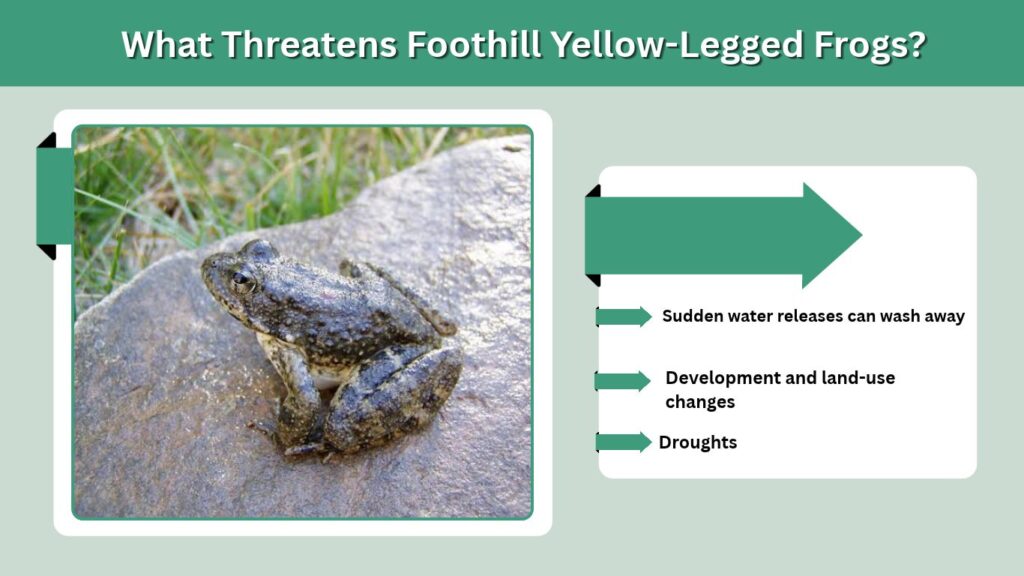
Foothill yellow-legged frog populations face numerous environmental challenges. Because they depend on specific stream conditions, changes to freshwater ecosystems can seriously affect their reproduction and survival.
Major threats include:
- Dam operations: Sudden water releases can wash away eggs or strand tadpoles.
- Habitat destruction: Development and land-use changes can damage streams and riverbanks.
- Invasive predators: Introduced fish and bullfrogs may prey on eggs, tadpoles, and young frogs.
- Climate change: Droughts, extreme temperatures, and altered rainfall affect freshwater habitats.
- Pollution: Agricultural runoff, sediment, and chemicals can degrade water quality.
- Disease: Amphibian pathogens may contribute to population declines.
High-severity wildfires and recreational disturbance can also damage breeding habitats.
How Can We Protect Foothill Yellow-Legged Frogs?
Conservation efforts focus on protecting freshwater ecosystems, maintaining suitable breeding conditions, and reducing human disturbance.
Effective conservation measures include:
- Maintaining natural streamflow patterns during breeding seasons.
- Restoring damaged streams and protecting native vegetation.
- Preventing the introduction of invasive fish and amphibians.
- Reducing chemical pollution and excessive sediment runoff.
- Monitoring frog populations and protecting important breeding sites.
Visitors should avoid disturbing egg masses, moving stream rocks unnecessarily, or handling wild frogs.
Protecting healthy river ecosystems benefits not only foothill yellow-legged frogs but also native fish, insects, and other freshwater wildlife.
FAQs
1. Are Foothill Yellow-Legged Frogs Poisonous?
Foothill yellow-legged frogs are not considered poisonous to humans. They do not possess the highly toxic defenses associated with some other amphibians. However, handling wild frogs is discouraged because their sensitive skin can absorb harmful chemicals, and unnecessary contact can cause stress or spread disease.
2. How Long Do Foothill Yellow-Legged Frogs Live?
Foothill yellow-legged frogs may survive approximately five years in the wild, although some individuals can live considerably longer. Their maximum potential lifespan is estimated at 10–15 years. Actual survival depends on predators, habitat quality, environmental conditions, disease, and other natural threats.
3. Do Foothill Yellow-Legged Frogs Make Sounds?
Yes, male foothill yellow-legged frogs produce soft, low-pitched calls during the breeding season. Their vocalizations are relatively quiet compared with those of many other frog species. Because males frequently call underwater, the sounds can be difficult for people to detect along streams.
4. Can Foothill Yellow-Legged Frogs Live Away From Water?
Foothill yellow-legged frogs are strongly associated with streams and rarely travel far from freshwater habitats. They may move across nearby banks and surrounding vegetation, particularly during seasonal changes. However, they depend on suitable aquatic environments for breeding, tadpole development, hydration, and long-term survival.
5. Why Are Foothill Yellow-Legged Frogs Important?
Foothill yellow-legged frogs help maintain ecological balance by consuming insects and other invertebrates while providing food for larger predators. Their sensitivity to changes in stream conditions also makes them valuable indicators of freshwater ecosystem health. Protecting these frogs helps preserve biodiversity in western North American rivers.
