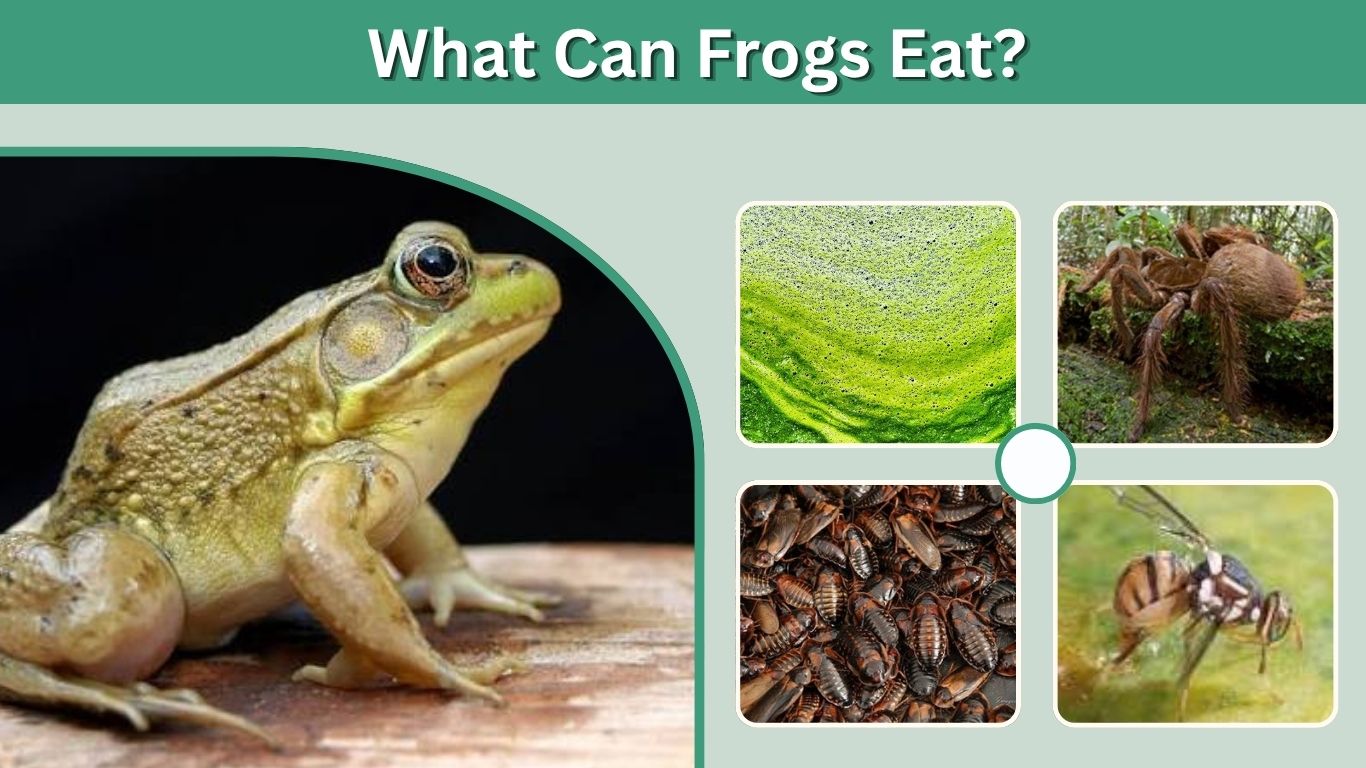
Frogs can eat a variety of foods, including crickets, worms, flies, roaches, and other small invertebrates. Most adult frogs are carnivorous and depend on animal-based foods for protein and essential nutrients. However, their diets vary depending on species, age, body size, and natural habitat. Tree frogs usually hunt insects, while larger frogs, such as Pacman frogs, can consume bigger prey. Aquatic frogs feed on worms and other small water-dwelling animals, and many tadpoles eat algae and organic matter. Understanding what frogs can eat helps ensure they receive suitable nutrition. Here are 10 of the best food options for frogs, along with important feeding tips.
What Can Frogs Eat?
Most adult frogs eat insects, worms, and other small animals. They capture prey using their sticky tongues or mouths and generally swallow food whole.
Wild frogs usually consume whatever suitable prey is available in their environment.
Pet frogs require a carefully selected diet because captive feeding conditions differ from those in the wild.
The most appropriate foods depend on the frog’s species and size.
10 Best Foods Frogs Can Eat
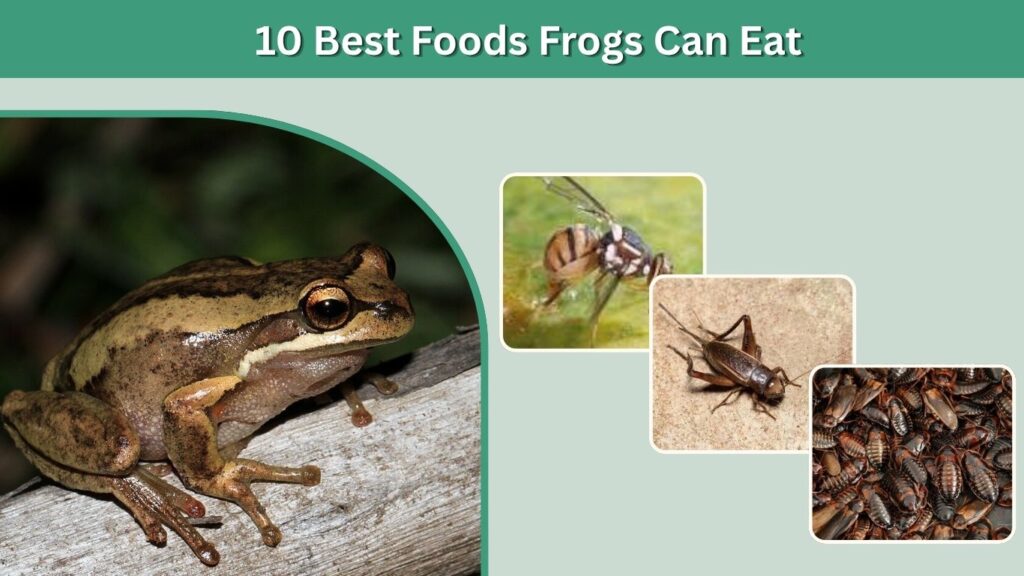
Frogs benefit from a varied diet containing appropriately sized prey. The following foods are commonly used for different species, although not every option is suitable for every frog.
1. Crickets
Crickets are among the most popular foods for pet frogs.
They provide protein and stimulate natural hunting behavior through their movement.
Many tree frogs, Pacman frogs, and other insect-eating species readily consume crickets.
However, crickets should be gut-loaded with nutritious food and supplemented appropriately because they do not provide a complete diet alone.
2. Dubia Roaches
Dubia roaches are commonly used as feeder insects for larger pet frogs where their use is permitted.
They provide protein and can be raised under controlled conditions.
Their movement also encourages feeding responses.
Choose roaches that are small enough for the frog to swallow safely, and avoid relying on a single feeder species.
3. Earthworms
Earthworms are nutritious prey for many terrestrial and semiaquatic frogs.
Larger frogs, including Pacman frogs, often consume appropriately sized earthworms.
They provide protein and moisture and are generally easier to digest than some hard-bodied insects.
Use captive-raised, pesticide-free worms rather than collecting them from potentially contaminated soil.
4. Fruit Flies
Fruit flies are excellent food for small frogs, including many poison dart frogs and newly developed froglets.
Flightless fruit flies are particularly useful in captive environments because they are easier to manage.
Their small size makes them suitable for frogs that cannot swallow larger insects.
They should be included as part of a varied, species-appropriate diet.
5. Springtails
Springtails are tiny soil-dwelling arthropods commonly used to feed very small frogs.
They are especially useful for young dart frogs and newly metamorphosed froglets.
Their small size makes them accessible to species that cannot consume crickets or larger prey.
Springtails are often cultured in terrariums and can provide a convenient supplementary food source.
6. Black Soldier Fly Larvae
Black soldier fly larvae are another useful feeder option for certain frog species.
They contain protein and can provide dietary calcium.
Their soft bodies and manageable sizes make them suitable for some insect-eating frogs.
However, their nutritional suitability depends on the frog’s species, and they should not automatically replace all other feeder insects.
7. Mealworms
Mealworms are commonly available feeder insects that some frogs readily consume.
They provide protein and energy but have relatively tough outer coverings.
Because of their nutritional characteristics, mealworms are generally better used as part of a varied diet rather than as the only food.
Choose small, appropriately sized mealworms and follow species-specific feeding guidance.
8. Waxworms
Waxworms are soft-bodied insect larvae that many frogs find appealing.
They contain relatively high amounts of fat, making them more suitable as occasional treats than regular staple foods.
Frequently feeding excessive quantities of fatty foods can contribute to an unbalanced diet and obesity.
Waxworms should be offered sparingly alongside more suitable everyday prey.
9. Bean Beetles
Bean beetles are small insects that can be useful for feeding tiny frogs.
They are sometimes included in the diets of poison dart frogs and other small amphibians.
Their size makes them suitable for frogs that require miniature prey.
Like fruit flies and springtails, bean beetles can help diversify the diet of small insect-eating species.
10. Aquatic Worms and Invertebrates
Aquatic frogs consume various small aquatic animals.
Suitable options for certain species include blackworms, bloodworms, and other small aquatic invertebrates.
Some captive aquatic frogs also accept specially formulated sinking frog pellets.
These foods are not necessarily appropriate for terrestrial frogs, so feeding choices should match the species.
What Can Frogs Eat Besides Bugs?
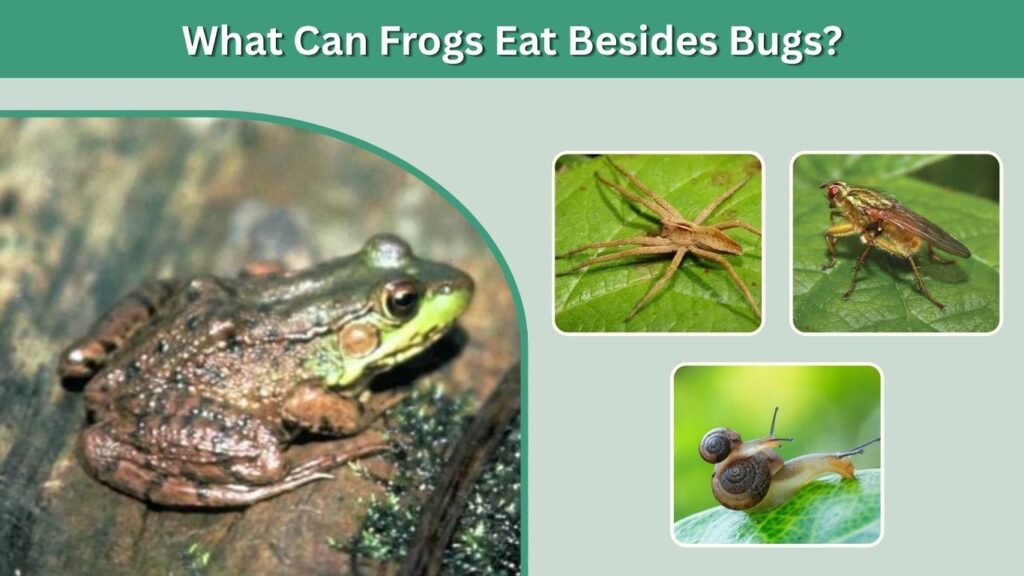
Frogs do not rely exclusively on insects.
Many species eat earthworms, spiders, snails, slugs, and other small invertebrates.
Larger wild frogs may also capture small fish, tadpoles, or even other frogs.
However, these larger prey items are not automatically suitable for captive feeding.
For most pet frogs, appropriately sized, commercially raised feeder insects and worms are safer and easier to manage.
A varied diet is generally preferable to feeding the same prey repeatedly.
What Can Different Types of Frogs Eat?
Different frog species have different feeding requirements.
A food suitable for a large Pacman frog may be too big for a poison dart frog.
| Frog Type | Suitable Food Examples |
| Pacman frog | Crickets, roaches, earthworms |
| American green tree frog | Crickets, small roaches, suitable insects |
| White’s tree frog | Crickets, roaches, worms |
| Poison dart frog | Fruit flies, springtails, bean beetles |
| African dwarf frog | Suitable aquatic worms, formulated aquatic frog pellets |
| African clawed frog | Aquatic invertebrates, worms, appropriate formulated foods |
| Small froglets | Springtails, tiny fruit flies, pinhead crickets |
Food sizes and feeding amounts should always match the frog’s developmental stage and physical condition.
What Can Baby Frogs Eat?
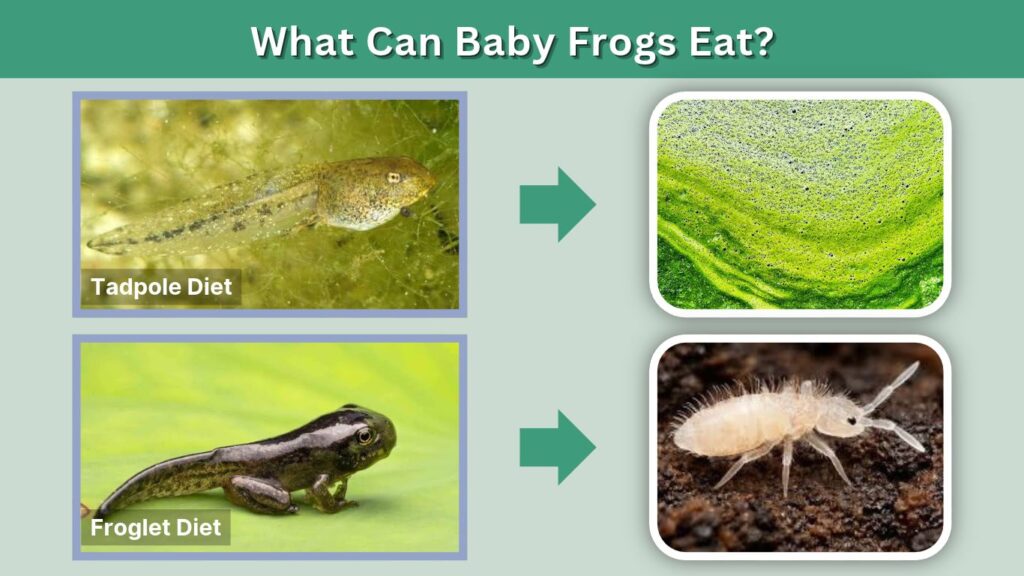
Baby frogs have different nutritional requirements depending on whether they are tadpoles or young froglets.
Tadpole Diet
Many tadpoles primarily consume algae, diatoms, and decaying organic material.
Some species also eat microscopic organisms or small aquatic animals.
However, tadpole diets vary considerably, and certain species are more carnivorous.
Froglet Diet
Once tadpoles complete metamorphosis, their feeding habits usually change.
Young froglets begin consuming small live prey.
Common foods include:
- Springtails
- Flightless fruit flies
- Pinhead crickets
- Other tiny, suitable invertebrates
Food must be small enough for the froglet to swallow safely.
What Can Frogs Not Eat?
Most adult frogs should not be fed ordinary human foods.
Foods to avoid include:
- Bread and crackers
- Candy and chocolate
- Processed snack foods
- Seasoned meat
- Dairy products
- Fruits and vegetables as a substitute for animal prey
- Wild insects exposed to pesticides
- Prey too large to swallow safely
Although some frog species have unusual natural diets, most pet frogs require animal-based foods.
Feeding inappropriate foods can cause nutritional deficiencies, digestive problems, or other health complications.
How to Feed Pet Frogs Safely
Providing suitable food involves more than selecting an insect species.
Choose the Right Prey Size
Always select prey that the frog can swallow comfortably.
Large or inappropriate prey can increase the risk of injury or feeding difficulties.
Provide Dietary Variety
Different feeder insects contain different amounts of protein, fat, calcium, and other nutrients.
Offering several appropriate foods helps reduce nutritional imbalances.
Use Gut-Loaded Insects
Gut-loading involves feeding insects a nutritious diet before offering them to frogs.
This improves their nutritional value.
Provide Appropriate Supplements
Many captive frogs require calcium and vitamin supplementation.
The correct amounts depend on the species, diet, and lighting conditions.
An experienced amphibian veterinarian can recommend a suitable supplementation routine.
FAQs
1. What Human Food Can Frogs Eat?
Most adult pet frogs should not receive ordinary human foods. Bread, fruit, vegetables, cooked meat, and processed foods are not suitable substitutes for their natural prey. Species-appropriate feeder insects and worms are generally better options.
2. Can Frogs Eat Fruits?
Most adult frogs are carnivorous and do not normally eat fruit as part of their regular diet. Some frogs may consume unusual foods in nature, but fruit should not be offered as a standard food to pet frogs.
3. What Can Pacman Frogs Eat?
Pacman frogs can eat appropriately sized crickets, roaches, earthworms, and other animal prey. Their large mouths allow them to capture relatively large food items, but captive feeding should prioritize balanced nutrition and safe prey sizes.
4. What Can Tree Frogs Eat Besides Crickets?
Tree frogs may eat suitable roaches, flies, worms, and other small invertebrates. The best alternatives depend on the species and body size. Offering a variety of gut-loaded insects can help support balanced nutrition.
5. Can Frogs Eat Dead Insects?
Many frogs prefer moving prey because movement triggers their hunting response. However, certain species, particularly some aquatic frogs, can accept nonliving foods. Captive feeding methods should reflect the frog’s natural behavior and nutritional requirements.
