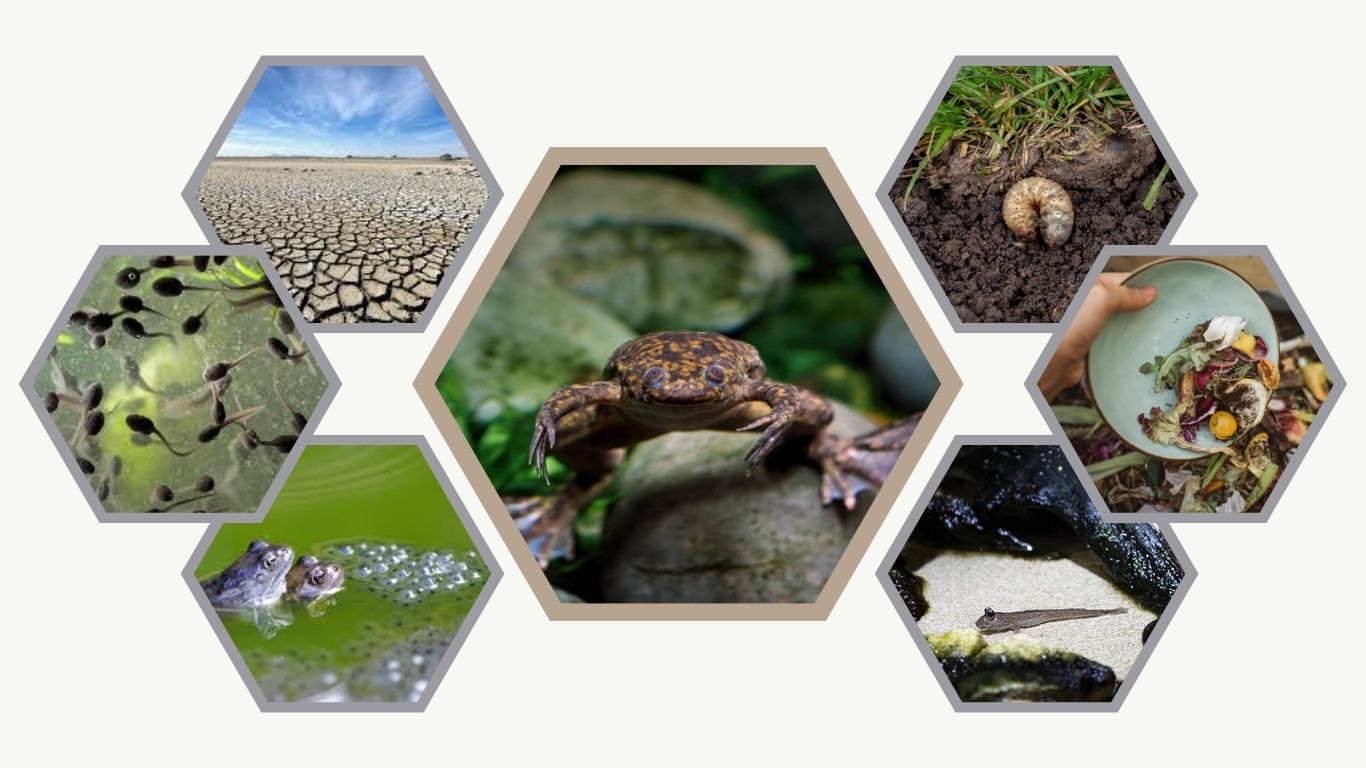
The African clawed frog (Xenopus laevis) is a fascinating fully aquatic amphibian known for its unique anatomy, adaptability, and scientific importance. Native to Sub-Saharan Africa, this species has gained global attention not only as a research model but also as a pet and, in some regions, an invasive species. This article explores its physical traits, habitat, behavior, and ecological role.
What Is the African Clawed Frog?
The African clawed frog belongs to the Pipidae family, a group of tongueless aquatic frogs. Unlike most amphibians, it spends its entire life underwater and has evolved several adaptations that make it highly efficient in aquatic environments.
It is commonly referred to as the platanna and is widely recognized for its use in laboratories and aquariums. Its resilience and ability to survive in varied conditions have contributed to its spread beyond its native range.
Physical Characteristics
The African clawed frog has a distinctive appearance that sets it apart from other frog species. Its body is flattened, which helps it glide smoothly through water, while its skin remains smooth and slippery.
Key Features
- Size: Typically grows between 5 to 12 cm in length
- Color: Olive, gray, or brown with mottled patterns; albino variants are common in captivity
- Claws: Sharp black claws on the hind feet used for tearing food
- Eyes: Positioned on top of the head for surface awareness
- Tongue: Completely absent, unlike most frogs
These features make the species highly specialized for aquatic living. Its powerful hind legs enable swift swimming, while its sensitive skin helps detect changes in the environment.
Natural Habitat and Distribution

African clawed frogs are native to a wide range of freshwater habitats across Sub-Saharan Africa. They thrive in still or slow-moving waters where food is abundant and conditions are stable.
They are highly adaptable and can survive in both clean and moderately polluted water. During dry periods, they can burrow into mud and remain dormant until water returns, a survival strategy known as estivation.
Habitat Overview Table
| Aspect | Details |
| Native Region | Sub-Saharan Africa |
| Water Type | Freshwater (ponds, lakes, slow rivers) |
| Temperature Range | 16°C – 28°C |
| Special Adaptation | Can survive drought by burrowing |
| Global Presence | Introduced in North America, Europe, Asia |
Due to human activity, including the pet trade and scientific use, this species has been introduced to many parts of the world, sometimes causing ecological imbalance.
Behavior and Lifestyle
The African clawed frog is primarily nocturnal, becoming more active during the night when it hunts for food. It is an excellent swimmer, using quick, darting movements to capture prey.
Unlike many amphibians, it does not rely on land at any stage of its life. Instead, it surfaces periodically to breathe air, as it has lungs rather than gills in adulthood.
Daily Behavior Patterns
- Active at night: Most feeding occurs after dark
- Solitary nature: Prefers living alone or with minimal interaction
- Surface breathing: Regular trips to the surface for air
- Strong swimmers: Uses hind legs for propulsion
These behaviors reflect its adaptation to aquatic life and help it survive in competitive environments.
Diet and Feeding Habits

African clawed frogs are carnivorous and opportunistic feeders. They consume a wide variety of prey and are not particularly selective about their diet.
They use a unique feeding method since they lack a tongue. Instead, they rely on suction and their front limbs to push food into their mouths.
Common Diet
- Insects and insect larvae
- Worms and crustaceans
- Small fish and tadpoles
- Organic debris (occasionally)
Their strong appetite and aggressive feeding behavior can make them dominant predators in their environment.
Unique Adaptations
The African clawed frog has evolved several specialized features that enhance its survival in aquatic ecosystems. These adaptations are key to its success both in the wild and in captivity.
One of the most notable adaptations is the lateral line system, which allows the frog to detect vibrations and movement in the water. This system functions similarly to that of fish, helping it locate prey even in low visibility conditions.
Another important feature is its clawed hind feet, which it uses not only for swimming but also for tearing apart food. Its ability to tolerate a wide range of environmental conditions further contributes to its resilience.
Role in Scientific Research
The African clawed frog has played a significant role in scientific discoveries, especially in the fields of biology and medicine. It became widely known in the early 20th century when it was used for pregnancy testing.
Scientists injected a woman’s urine into the frog, and if eggs were produced, it indicated pregnancy. This method was widely used before modern tests became available.
Today, Xenopus laevis remains a valuable model organism due to its large, easily observable eggs and rapid development. Researchers continue to use it to study genetics, embryology, and disease processes.
Reproduction and Life Cycle

The African clawed frog has a highly efficient reproductive system that allows it to produce large numbers of offspring, increasing its chances of survival in the wild. Breeding typically occurs in response to environmental changes such as rainfall or temperature shifts.
Mating and Development
During reproduction, the male grasps the female in a behavior known as amplexus. The female then releases eggs, which are fertilized externally.
- Egg production: Females can lay hundreds to thousands of eggs at once
- Fertilization: Occurs externally in water
- Hatching time: Eggs hatch within a few days
- Tadpole stage: Fully aquatic and filter feeders
- Metamorphosis: Transition to adult frog takes several weeks
The rapid development cycle makes this species especially useful in laboratory studies and contributes to its ability to establish populations quickly.
African Clawed Frog as a Pet
African clawed frogs are commonly kept as aquatic pets due to their hardiness and relatively simple care requirements. However, they are best suited for dedicated setups rather than community aquariums.
They require a fully aquatic tank with clean, dechlorinated water and adequate space to swim. Since they surface for air, the tank should not be too deep without resting spots.
Basic Care Requirements
- Tank size: Minimum 10–20 gallons per frog
- Water conditions: Clean, filtered, and stable temperature
- Diet: Protein-rich foods like pellets, worms, or frozen prey
- Tank mates: Generally not recommended due to aggressive feeding behavior
While they are low-maintenance compared to some pets, they still require consistent care and monitoring to ensure long-term health.
Invasive Species Concerns
Outside their native range, African clawed frogs have become invasive in several regions. Their adaptability and high reproductive rate allow them to outcompete native species.
They often prey on local amphibians and small aquatic animals, disrupting existing ecosystems. Additionally, they are known carriers of harmful pathogens.
Environmental Impact
- Compete with native amphibians for food
- Prey on local species, including endangered ones
- Spread diseases such as chytrid fungus
- Alter aquatic ecosystem balance
Because of these risks, their release into the wild is strongly discouraged and often illegal.
Legal Status and Regulations
Due to their invasive potential, many regions have imposed restrictions on owning or transporting African clawed frogs. Laws vary significantly depending on location.
Some areas allow ownership with permits, while others have complete bans. These regulations are designed to protect native ecosystems from unintended introductions.
Before acquiring one, it is essential to research local laws and ensure compliance with all regulations.
Conservation Status

Despite concerns about their impact outside native habitats, African clawed frogs are not currently considered endangered. They are classified as “Least Concern” due to their wide distribution and stable population.
However, environmental changes, pollution, and habitat destruction can still affect local populations. Conservation efforts focus more on controlling their spread in non-native areas rather than protecting them in the wild.
Pros and Cons of Keeping African Clawed Frogs
Keeping an African clawed frog can be rewarding, but it also comes with responsibilities. Understanding both advantages and challenges helps potential owners make informed decisions.
Pros
- Hardy and adaptable species
- Interesting to observe in an aquarium
- Long lifespan with proper care
Cons
- Can be aggressive toward other tank inhabitants
- Requires species-specific tank setup
- Legal restrictions in some regions
Balancing these factors is important before deciding to keep one as a pet.
FAQs
What is the lifespan of an African clawed frog?
African clawed frogs typically live between 10 and 15 years in captivity when provided with proper care. In some cases, they may live even longer. In the wild, their lifespan is often shorter due to predators, environmental stress, and limited resources.
Can African clawed frogs live with fish?
They generally should not be kept with fish. These frogs are opportunistic predators and may eat smaller fish or injure larger ones. Even if fish are not eaten, stress and competition for food can create an unhealthy environment for both species.
Are African clawed frogs fully aquatic?
Yes, African clawed frogs are completely aquatic and spend their entire lives in water. However, they have lungs instead of gills as adults, so they must regularly swim to the surface to breathe air, making access to the surface essential.
Why are African clawed frogs used in laboratories?
They are widely used in research because of their large eggs, rapid development, and ease of care. Scientists study them to better understand genetics, embryonic development, and disease processes, making them a valuable model organism in biology.
Are African clawed frogs illegal to own?
In some regions, they are restricted or banned due to their invasive nature and potential ecological impact. Laws vary widely, so it is important to check local regulations before purchasing or keeping an African clawed frog.
