
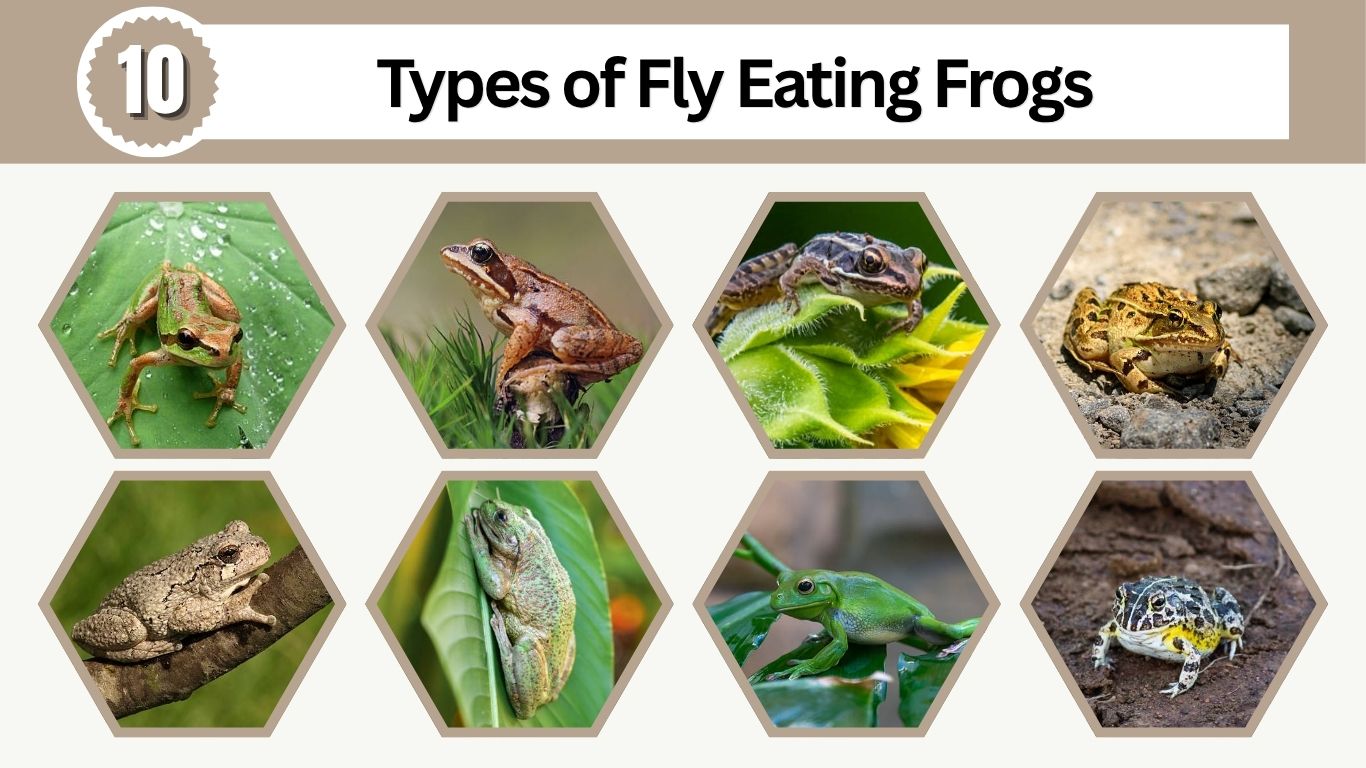
Frogs play an important role in nature by helping control insect populations, especially flies. These fascinating amphibians are skilled hunters, using their quick reflexes and sticky tongues to catch prey with ease. From large, powerful bullfrogs to small, agile tree frogs, many species rely on flies as a regular part of their diet. In this list, you’ll discover ten types of fly-eating frogs, each with unique features, habitats, and behaviors that make them effective and interesting insect predators.
1. African Bullfrog

The African bullfrog is one of the largest and most powerful frogs in the world. Known for its big size and strong appetite, it is an expert predator that can easily catch and eat flies along with many other small creatures. Its bold nature and unique appearance make it a fascinating species.
Identification
- Large, heavy body with a wide mouth
- Olive green to brown coloration with lighter underside
- Strong, muscular limbs
- Males are much larger than females, often reaching up to 25 cm
- Rough, thick skin adapted for dry conditions
Habitat
African bullfrogs are native to sub-Saharan Africa, where they live in savannas, grasslands, and semi-arid regions. They prefer areas with seasonal rainfall, as water is essential for breeding. During dry periods, they burrow deep into the soil and create a protective cocoon to retain moisture. When the rainy season begins, they emerge and gather near temporary pools and puddles. These water sources are important not only for survival but also for reproduction, as eggs and tadpoles need aquatic environments to develop.
Behavior and Diet
These frogs are aggressive and opportunistic predators. They sit still and wait for prey, then strike quickly with their powerful jaws. Flies are part of their diet, especially for younger frogs, but adults eat a wide range of prey including insects, small birds, reptiles, and even other frogs. They are mostly active during and after rainfall, when food is abundant. Males are also known for their protective behavior, sometimes guarding their tadpoles from danger.
Lifecycle
African bullfrogs have a lifecycle closely tied to rainfall. After mating, females lay thousands of eggs in shallow water. The eggs hatch quickly into tadpoles, which grow rapidly due to temporary water conditions. In some cases, the male helps protect the young and may even dig channels to keep water flowing. As they develop, tadpoles transform into froglets and eventually mature into large, land-dwelling adults.
2. American Bullfrog

The American bullfrog is one of the most well-known frogs in North America. It is large, strong, and highly adaptable, making it a skilled hunter of flies and other small prey. Its deep call and powerful presence make it a dominant species in many freshwater environments.
Identification
- Large, robust body with a broad head
- Green to brown coloration with darker spots
- Smooth, moist skin
- Prominent eardrum (tympanum) behind the eyes
- Can grow up to 15–20 cm in length
Habitat
American bullfrogs are commonly found in ponds, lakes, marshes, and slow-moving rivers across North America. They prefer permanent water bodies with plenty of vegetation, which provide shelter and hunting opportunities. These frogs spend most of their time near or in water, often sitting at the edge waiting for prey. Their adaptability allows them to thrive in both natural wetlands and human-made environments such as farm ponds and reservoirs.
Behavior and Diet
American bullfrogs are opportunistic predators with a very strong appetite. They usually remain still and wait for prey to come close before lunging forward. Flies are a regular part of their diet, especially for younger frogs, but they also eat beetles, dragonflies, small fish, birds, and even other frogs. They are mostly active at night but may also hunt during the day. Their deep croaking call is often heard during the breeding season as males attract females.
Lifecycle
The lifecycle of the American bullfrog begins when females lay eggs in large clusters on the surface of calm water. These eggs hatch into tadpoles, which may take one to two years to fully develop, depending on environmental conditions. During this time, they grow steadily before undergoing metamorphosis into froglets. As they mature, they become fully aquatic hunters, continuing their life near water throughout adulthood.
3. Green Tree Frog

The green tree frog is a small, lively amphibian known for its bright color and excellent climbing ability. It is a common fly-eating frog that plays an important role in controlling insect populations. Its cheerful appearance and gentle nature make it one of the most recognizable tree frogs.
Identification
- Bright green body with a smooth texture
- White or cream-colored stripe along the side
- Slender body with long legs
- Large, sticky toe pads for climbing
- Small size, typically around 4 to 6 cm
Habitat
Green tree frogs are commonly found in the southeastern United States. They prefer warm, humid environments such as wetlands, marshes, ponds, and forest edges. These frogs are often seen on plants, reeds, and tree branches near water sources. They rely on moist surroundings to keep their skin hydrated and healthy. Their ability to climb allows them to live both near the ground and higher in vegetation, giving them access to a wide range of food sources, including flying insects.
Behavior and Diet
Green tree frogs are mostly nocturnal and become active at night. They are skilled hunters that feed on flies, mosquitoes, moths, and other small insects. Using their sticky tongues, they quickly catch prey that comes within reach. During the day, they rest on leaves and blend into their surroundings to avoid predators. Males are known for their distinctive, repeated calls, especially during the breeding season, which often occurs after rainfall.
Lifecycle
The lifecycle of the green tree frog begins when females lay eggs in shallow water, often attached to vegetation. The eggs hatch into tadpoles, which live and grow in the water while feeding on algae and organic matter. Over time, they develop legs and lungs, transforming into froglets through metamorphosis. As they mature, they move onto land and into vegetation, continuing their life as insect-eating adults.
4. White’s Tree Frog

White’s tree frog, also known as the dumpy tree frog, is a calm and adorable species known for its chubby body and gentle expression. It is an excellent fly-eating frog, often seen catching insects with ease. Its friendly appearance and slow movements make it especially among frog enthusiasts.
Identification
- Plump, rounded body with a soft appearance
- Light green to bluish-green color, sometimes with white spots
- Large golden eyes with horizontal pupils
- Sticky toe pads for climbing
- Medium size, usually around 7 to 11 cm
Habitat
White’s tree frogs are native to Australia and New Guinea. They are commonly found in tropical forests, woodlands, and even urban areas. These frogs prefer warm and humid environments but are highly adaptable. They often live in trees, near water sources such as ponds, swamps, or rain-filled containers. Their ability to tolerate slightly drier conditions compared to other frogs allows them to survive in a wider range of habitats, including gardens and houses.
Behavior and Diet
These frogs are nocturnal and become active at night. They are slow-moving but efficient hunters, feeding on flies, crickets, moths, and other small insects. They use their sticky tongues to quickly catch prey. During the day, they rest in cool, shaded places like tree hollows or under leaves. White’s tree frogs are known for their calm nature and are less likely to jump away quickly compared to other species.
Lifecycle
The lifecycle begins when females lay eggs in water, usually in temporary pools or ponds. The eggs hatch into tadpoles, which develop in water while feeding on organic material. Over time, they undergo metamorphosis, growing legs and lungs before becoming froglets. As they mature, they move into trees and continue their life as adult frogs, feeding mainly on insects like flies.
5. Cuban Tree Frog

The Cuban tree frog is a large and adaptable species known for its strong hunting ability and appetite for flying insects like flies. Its soft skin and big eyes give it a somewhat cute appearance, even though it is a highly skilled predator. It is commonly found in warm regions and is known for thriving in different environments.
Identification
- Large body with slightly warty, loose skin
- Color varies from gray, green, to brown
- Big, bulging eyes with a noticeable expression
- Wide mouth adapted for catching prey
- Size ranges from 5 to 12 cm
Habitat
Cuban tree frogs are native to Cuba and the Caribbean but are also found in parts of the southeastern United States. They live in warm, humid environments such as forests, wetlands, gardens, and even urban areas. These frogs are highly adaptable and often live near human homes, hiding in damp places like pipes, walls, or outdoor structures. They prefer areas close to water sources, which are important for breeding and maintaining moisture.
Behavior and Diet
Cuban tree frogs are nocturnal and become active at night. They are aggressive and opportunistic feeders, often hunting around lights where insects gather. Flies are a common part of their diet, along with moths, beetles, and even smaller frogs. They use their quick reflexes and sticky tongues to catch prey. Their ability to climb allows them to hunt both on the ground and in elevated areas like walls and trees.
Lifecycle
The lifecycle starts when females lay eggs in still or slow-moving water, such as ponds or ditches. The eggs hatch into tadpoles, which develop in water over time. As they grow, they undergo metamorphosis, transforming into froglets with legs and lungs. Once mature, they leave the water and begin life on land, continuing to feed on insects and adapt to their surroundings.
6. Gray Tree Frog

The gray tree frog is a small, adaptable species known for its ability to change color and its strong appetite for insects like flies. Its soft, calm appearance and excellent climbing skills make it both cute and highly effective as a natural pest controller.
Identification
- Gray, green, or brown body that can change color
- Slightly bumpy skin with darker patterns
- Bright yellow or orange patches on inner thighs
- Large toe pads for strong climbing grip
- Small size, usually around 3 to 5 cm
Habitat
Gray tree frogs are found across much of North America, especially in forests, woodlands, and suburban areas. They prefer environments with plenty of trees and access to water sources like ponds, lakes, or temporary pools. These frogs spend most of their lives in trees, using their excellent climbing ability to move through branches and leaves. During the breeding season, they come down to water bodies where they reproduce. Their adaptability allows them to live close to human settlements as well.
Behavior and Diet
Gray tree frogs are mostly nocturnal and become active at night. They are skilled hunters that feed on flies, mosquitoes, moths, and other small insects. They often sit still and wait for prey to come close before quickly catching it with their sticky tongue. During the day, they rest on tree bark or leaves, blending in perfectly with their surroundings. Males produce a musical, trilling call to attract females, especially during warm evenings.
Lifecycle
Their lifecycle begins when females lay eggs in shallow water, often attached to plants. The eggs hatch into tadpoles, which grow in water while feeding on organic material. Over time, they develop legs and lungs, transforming into froglets through metamorphosis. As they mature, they move into trees and continue their life as insect-eating adults, playing an important role in controlling fly populations.
7. Leopard Frog

The leopard frog is a fast-moving and alert amphibian known for its spotted pattern and strong ability to catch flying insects like flies. Its lively behavior and sleek body make it both efficient at hunting and pleasant to observe in the wild.
Identification
- Green or brown body with dark, leopard-like spots
- Smooth, moist skin
- Long, powerful hind legs for jumping
- Light-colored underside
- Medium size, usually around 5 to 10 cm
Habitat
Leopard frogs are widely found across North America in a variety of habitats. They prefer areas near freshwater such as ponds, marshes, lakes, and slow-moving streams. These frogs often stay close to the edges of water bodies where vegetation is abundant. The presence of grass, reeds, and aquatic plants provides shelter and hunting grounds. They are comfortable both in water and on land, allowing them to adapt easily to changing environmental conditions.
Behavior and Diet
Leopard frogs are active both during the day and night, especially in warm weather. They are quick and alert, often jumping into water when disturbed. These frogs are skilled hunters, feeding on flies, mosquitoes, beetles, and other small insects. They rely on their sharp vision and fast reflexes to catch prey using their sticky tongues. Their ability to move quickly helps them both hunt effectively and escape predators.
Lifecycle
The lifecycle begins when females lay eggs in clusters in shallow water. The eggs hatch into tadpoles, which grow and develop in aquatic environments. Over time, they undergo metamorphosis, forming legs and lungs before becoming froglets. As they mature, they begin spending more time on land while still staying close to water sources. Adult leopard frogs continue feeding on insects and play an important role in maintaining ecological balance.
8. Pickerel Frog

The pickerel frog is a neat and attractive amphibian known for its patterned body and strong ability to catch insects like flies. It is a calm yet effective hunter, often found near water where insects are abundant.
Identification
- Light brown or tan body with two rows of dark square spots
- Smooth skin with a slightly shiny appearance
- Bright yellow or orange coloration on the inner thighs
- Slender body with long hind legs
- Medium size, usually around 4 to 7 cm
Habitat
Pickerel frogs are found in parts of North America, especially in the eastern United States and Canada. They prefer cool, clean environments such as streams, ponds, wetlands, and wooded areas. These frogs are often seen near the edges of water, where there is plenty of vegetation for shelter. They tend to stay in moist, shaded places during the day and rely on nearby water sources for breeding and survival.
Behavior and Diet
Pickerel frogs are mostly active during the evening and night. They are quiet and less vocal compared to other frogs but are skilled hunters. Their diet includes flies, ants, beetles, and other small insects. They usually wait patiently for prey to come close before striking quickly with their sticky tongue. When threatened, they may jump into water or release a mild toxin from their skin to deter predators.
Lifecycle
The lifecycle begins when females lay eggs in clusters in shallow, cool water. The eggs hatch into tadpoles, which develop in aquatic environments while feeding on plant material. As they grow, they undergo metamorphosis, forming legs and lungs. Eventually, they become froglets and move onto land while staying close to water. Adult frogs continue feeding on insects like flies and play a role in controlling pest populations.
9. Wood Frog

The wood frog is a hardy and adaptable species known for its ability to survive in cold climates. It is an effective fly-eating frog that plays an important role in controlling insect populations. Its simple appearance and calm nature give it a subtle kind of cuteness.
Identification
- Brown, tan, or reddish body with smooth skin
- Dark mask-like marking across the eyes
- Light-colored underside
- Medium size, usually around 4 to 7 cm
- Strong hind legs for jumping
Habitat
Wood frogs are found across North America, especially in forests, wetlands, and tundra regions. They prefer moist environments such as ponds, swamps, and wooded areas. These frogs are unique because they can live in colder climates, even surviving freezing temperatures during winter. They stay near temporary pools during breeding season and move into forests during other times. Their ability to adapt to different environments makes them widespread and common.
Behavior and Diet
Wood frogs are mostly active during the warmer months and can be seen both during the day and night. They feed on flies, mosquitoes, beetles, and other small insects. They are quick hunters, using their sticky tongues to catch prey. When threatened, they rely on camouflage and quick jumps to escape. Their quiet nature and ability to blend into leaf litter help them avoid predators.
Lifecycle
The lifecycle of the wood frog begins early in spring when snow starts to melt. Females lay eggs in temporary pools of water, often in large clusters. The eggs hatch into tadpoles, which grow quickly due to short breeding seasons. As they develop, they undergo metamorphosis and become froglets. Once mature, they move into forested areas and continue feeding on insects, including flies.
10. Pacific Tree Frog

The Pacific tree frog is a small, energetic amphibian known for its adaptability and strong appetite for insects like flies. Despite its tiny size, it is a highly effective hunter and is often heard more than seen due to its loud and distinctive call.
Identification
- Small body with smooth skin
- Color varies from green to brown, sometimes changing for camouflage
- Dark stripe running from nose through the eye
- Large toe pads for climbing
- Size usually around 3 to 5 cm
Habitat
Pacific tree frogs are commonly found along the western coast of North America, from Canada to California. They live in a variety of environments, including forests, grasslands, wetlands, and even urban areas. These frogs prefer areas near water such as ponds, streams, and temporary pools, which are essential for breeding. Their adaptability allows them to survive in both natural and human-altered environments, making them one of the most widespread frog species in their range.
Behavior and Diet
These frogs are mostly nocturnal but can also be active during the day, especially in damp conditions. They are excellent hunters that feed on flies, mosquitoes, spiders, and other small insects. They often wait patiently before quickly snapping up prey with their sticky tongues. Pacific tree frogs are also known for their loud, repeated calls, especially during the breeding season, which helps attract mates.
Lifecycle
The lifecycle begins when females lay eggs in shallow water, often attached to plants. The eggs hatch into tadpoles, which develop in aquatic environments while feeding on organic matter. Over time, they undergo metamorphosis, growing legs and lungs before becoming froglets. As they mature, they move onto land and continue their life as insect-eating adults, helping control fly populations.
FAQs
Do all frogs eat flies?
Most frogs eat flies as part of their diet, especially smaller and medium-sized species. Flies are easy to catch and commonly found in their habitats. However, many frogs also eat other insects and even larger prey depending on their size.
How do frogs catch flies?
Frogs use their long, sticky tongues to catch flies. When a fly comes close, the frog quickly flicks out its tongue, trapping the insect and pulling it back into its mouth in a split second.
Are fly-eating frogs helpful to humans?
Yes, fly-eating frogs are very helpful because they naturally control insect populations. By eating flies and other pests, they help reduce the spread of diseases and keep ecosystems balanced.
When are frogs most active in catching flies?
Most frogs are nocturnal, meaning they hunt flies at night when insects are more active. However, some species are active during the day and will also catch flies whenever they have the opportunity.
Can frogs survive without eating flies?
Yes, frogs can survive without flies as long as they have access to other food sources like ants, beetles, spiders, or worms. Flies are just one part of their varied diet.
