
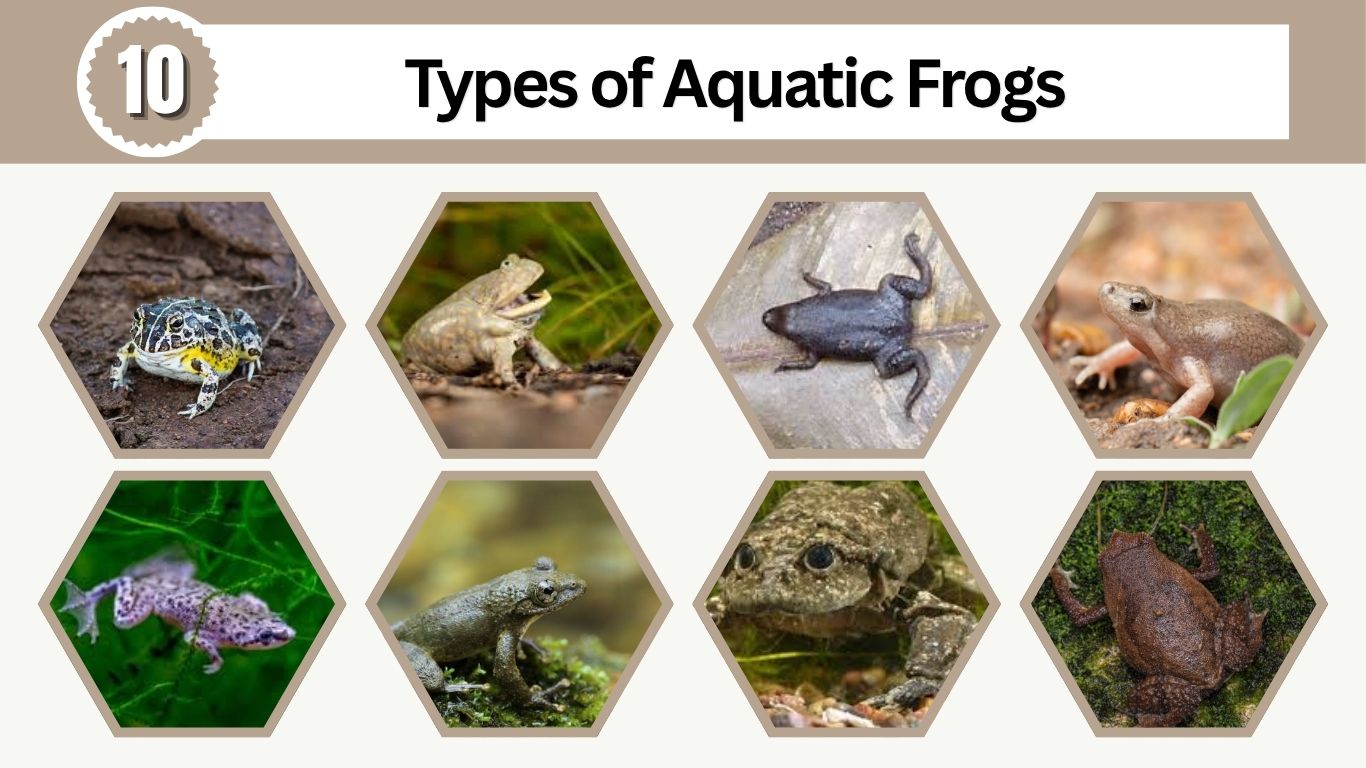
Aquatic frogs are fascinating amphibians that spend most or all of their lives in water. They are specially adapted for swimming, with features like webbed feet, smooth skin, and streamlined bodies. Found in different parts of the world, these frogs vary in size, behavior, and habitat preferences, making them both interesting to study and popular among aquarium enthusiasts.
In this guide, you’ll discover 10 types of aquatic frogs, each with unique characteristics, habitats, and care needs. Whether you’re a beginner or simply curious about amphibians, this list will help you understand these amazing water-dwelling frogs better.
1. African Clawed Frog

The African Clawed Frog is a fully aquatic amphibian native to sub-Saharan Africa. It is well known for its resilience and ability to survive in a wide range of water conditions. Unlike many other frogs, it does not require land and spends its entire life underwater. This species has been widely used in scientific research and is also a popular choice among aquarium hobbyists due to its low-maintenance care requirements. Its unique physical traits and adaptable behavior make it one of the most recognized aquatic frogs in the world.
Identification
- Smooth, slippery skin with a gray, brown, or olive coloration that may include faint mottling
- Flattened body shape with a relatively small head and no visible external ears
- Eyes positioned on the top of the head, allowing it to see above while mostly submerged
- Strong hind legs with fully webbed feet and three distinct black claws on each foot
- Front limbs are short, unwebbed, and used more for sensing than swimming
- Lacks a tongue and teeth, relying on suction and limb movement to capture food
Habitat
African Clawed Frogs inhabit a variety of freshwater environments, including ponds, lakes, slow-moving rivers, and marshlands. They prefer calm or still waters with soft, muddy bottoms where they can hide and hunt. These frogs are highly tolerant of poor water conditions, including low oxygen levels, which allows them to survive in habitats that might not support other amphibians. They frequently rise to the surface to breathe air, making them less dependent on dissolved oxygen in water. Seasonal droughts can force them to burrow into mud and enter a state of dormancy until water returns.
Behaviors
This species is primarily nocturnal, becoming more active during the night when it hunts for food. It relies heavily on its sense of touch, using sensitive fingers to detect vibrations and movement in the water. African Clawed Frogs are opportunistic and quick feeders, often lunging suddenly at prey. They are solitary by nature but can tolerate the presence of others if space and food are sufficient. When threatened, they may remain still to avoid detection or rapidly swim away using powerful kicks. They are also known to produce clicking sounds underwater, especially during mating periods.
Diet and Care
African Clawed Frogs are carnivorous and will eat a wide range of foods, including insects, worms, small fish, and crustaceans. In captivity, they can be fed high-quality frog pellets, frozen bloodworms, brine shrimp, and occasional live food. They require a secure aquarium with clean, dechlorinated water and a reliable filtration system. Since they surface for air, the tank should not be completely filled, and a tight lid is necessary to prevent escape. Regular water changes and proper feeding schedules are important to maintain their health and prevent obesity, which is common in captive individuals.
2. Western Clawed Frog

The Western Clawed Frog is another fully aquatic species found mainly in West Africa. Closely related to the African Clawed Frog, it shares many similar traits but is generally smaller and less commonly known. This species thrives in freshwater habitats and is well adapted to life underwater, rarely needing to leave its aquatic environment. Its ability to tolerate varying conditions makes it a resilient amphibian in the wild, although it is less frequently kept in captivity compared to its relative.
Identification
- Smooth skin with coloration ranging from light brown to olive or gray
- Slightly smaller and more slender body compared to the African Clawed Frog
- Flattened body with a short head and upward-facing eyes
- Strong hind legs with webbed feet and small black claws on the toes
- Front limbs are short, unwebbed, and used for sensing food
- Lacks a tongue, using suction feeding to capture prey
Habitat
The Western Clawed Frog lives in freshwater environments such as ponds, slow-moving streams, and temporary pools. It prefers calm waters with soft substrates like mud or sand, where it can hide and search for food. This species can survive in areas with fluctuating water levels and may burrow into the mud during dry periods. Like other clawed frogs, it surfaces regularly to breathe air, allowing it to live in waters with lower oxygen levels. Vegetation in its habitat provides both shelter and hunting grounds.
Behaviors
Western Clawed Frogs are mostly nocturnal and spend much of their time resting during the day. At night, they become active hunters, using their sensitive fingers to detect movement in the water. They are quick and opportunistic feeders, often snapping up prey with sudden bursts of speed. These frogs are generally solitary but may share space with others if resources are sufficient. When threatened, they rely on camouflage or rapid swimming to escape predators.
Diet and Care
In the wild, they feed on insects, larvae, worms, and small aquatic animals. In captivity, they can be provided with frog pellets, frozen or live foods such as bloodworms and brine shrimp. A well-maintained aquarium with clean water and proper filtration is essential for their health. The tank should include hiding spots and a secure lid, as they are capable of escaping. Regular feeding and water maintenance help ensure they remain healthy and active in captivity.
3. Surinam Toad

The Surinam Toad is a unique and fully aquatic amphibian native to South America, particularly the Amazon Basin. It is widely known for its unusual appearance and remarkable reproductive behavior. Unlike typical frogs, it has a flattened body that helps it blend into the muddy bottoms of slow-moving waters. This species is fascinating to observe but is less commonly kept as a pet due to its specialized care needs and distinctive lifestyle.
Identification
- Extremely flat, leaf-like body that aids in camouflage
- Rough, mottled brown or gray skin resembling decaying plant matter
- Small, triangular head with tiny eyes and no visible eyelids
- Long fingers with star-shaped sensory tips used to detect prey
- No tongue or teeth, relying on suction feeding
- Fully webbed hind feet for efficient swimming
Habitat
Surinam Toads inhabit slow-moving or still freshwater environments such as swamps, ponds, flooded forests, and backwaters of rivers. They prefer habitats with soft, muddy bottoms and plenty of leaf litter, which provides both camouflage and protection from predators. These frogs rarely leave the water and depend on aquatic environments for all aspects of their life. The warm, humid climate of tropical regions supports their survival, and they thrive in areas with dense vegetation and low water flow.
Behaviors
This species is mostly inactive during the day, often lying motionless to blend into its surroundings. It becomes more active at night, using its sensitive fingertips to locate food in murky water. The Surinam Toad is best known for its unusual breeding behavior, where eggs are embedded into the female’s back, developing there until fully formed froglets emerge. This unique adaptation helps protect the offspring from predators. When threatened, it relies heavily on camouflage rather than speed to avoid danger.
Diet and Care
Surinam Toads are carnivorous and feed on small fish, insects, worms, and other aquatic invertebrates. In captivity, they require a large aquarium with warm, clean water and minimal current. They can be fed live or frozen foods such as bloodworms, small fish, and shrimp. Due to their sensitivity, maintaining water quality is crucial. Their tank should mimic natural conditions with soft substrates and hiding areas, ensuring a stress-free environment for proper health and behavior.
4. Titicaca Water Frog

The Titicaca Water Frog is a rare and highly specialized aquatic species native to Lake Titicaca, located between Peru and Bolivia. It is well known for its unusual appearance and its adaptation to cold, high-altitude environments. This frog spends its entire life in water and relies heavily on its skin for breathing, making it one of the most distinctive aquatic frogs in the world.
Identification
- Loose, excessive skin folds covering the body, giving it a wrinkled appearance
- Dark brown, gray, or greenish coloration that helps it blend into rocky lake bottoms
- Flattened body adapted for fully aquatic life
- Relatively small head with upward-facing eyes
- Fully webbed feet for swimming
- Skin used for oxygen absorption, especially in low-oxygen environments
Habitat
This species is found exclusively in Lake Titicaca and nearby water systems at high altitudes. It lives in cold, freshwater environments with rocky or muddy bottoms. The lake’s low oxygen levels have led the frog to develop its signature skin folds, which increase surface area for oxygen absorption. It prefers deeper waters but may also be found near the shoreline. Clean, well-oxygenated water is essential for its survival, making it highly sensitive to pollution and environmental changes.
Behaviors
Titicaca Water Frogs are generally slow-moving and spend much of their time resting on the lakebed. They perform a unique behavior known as the “push-up,” where they move their bodies to increase water flow over their skin, helping with respiration. These frogs are mostly solitary and not very aggressive. They rely more on their specialized physiology than speed or strength to survive. Their activity levels are typically low, conserving energy in their cold environment.
Diet and Care
They feed on small aquatic organisms such as worms, insects, and crustaceans. In captivity, they require very specific conditions, including cold, clean, and highly oxygenated water. Replicating their natural habitat is challenging, which is why they are rarely kept as pets. A controlled environment with proper filtration and temperature regulation is essential. Due to their sensitivity, even slight changes in water quality can affect their health significantly.
5. Lake Oku Clawed Frog

The Lake Oku Clawed Frog is a rare aquatic species found only in Lake Oku in Cameroon. It is one of the few frogs adapted to life in a high-altitude volcanic lake. Due to its very limited range, this species is considered unique and vulnerable. It spends nearly all its time in water and has evolved to survive in a stable but restricted environment.
Identification
- Smooth skin with a dark brown or grayish coloration
- Medium-sized body with a slightly flattened shape
- Upward-facing eyes suited for aquatic vision
- Strong hind legs with webbed feet for swimming
- Small claws present on the toes, similar to other clawed frogs
- Front limbs short and unwebbed, used for sensing surroundings
Habitat
This frog is found exclusively in Lake Oku, a crater lake surrounded by forested highlands. The water is cool, clear, and relatively stable in temperature throughout the year. It prefers deeper areas of the lake but may also inhabit shallow zones with vegetation. The isolated nature of the lake makes this species highly sensitive to environmental changes, including pollution and habitat disturbance.
Behaviors
Lake Oku Clawed Frogs are mostly aquatic and spend their time swimming or resting on the lakebed. They are generally quiet and not very active during the day. At night, they may become more active in search of food. Like other aquatic frogs, they rely on quick movements to capture prey. Their behavior is influenced by the stable conditions of their environment, leading to a relatively calm and consistent activity pattern.
Diet and Care
They feed on small aquatic organisms such as insects, larvae, and tiny invertebrates. In captivity, their care is difficult due to their specific environmental needs, including clean, cool water and stable conditions. They require a well-maintained aquatic setup with proper filtration. Because of their rarity and conservation status, they are not commonly kept as pets, and efforts are focused more on protecting them in their natural habitat.
6. Zaire Dwarf Clawed Frog

The Zaire Dwarf Clawed Frog is a small, fully aquatic species native to Central Africa, particularly the Congo Basin. It is often kept in home aquariums due to its manageable size and peaceful nature. Unlike larger clawed frogs, this species is more delicate and requires slightly more attention to water quality. Its active behavior and small size make it popular among aquatic frog enthusiasts.
Identification
- Small body size, usually growing only a few inches long
- Smooth skin with gray, brown, or olive tones, often with darker spots
- Slender body with a slightly pointed snout
- Fully webbed feet on both front and hind limbs
- No claws on toes, unlike larger clawed frog species
- Eyes positioned on the sides of the head rather than fully on top
Habitat
This species inhabits slow-moving or still freshwater environments such as ponds, streams, and flooded forest areas. It prefers warm water with plenty of vegetation, which provides hiding places and security. In the wild, it lives among plants and debris where it can easily find food and avoid predators. In captivity, it thrives in aquariums that replicate these conditions with gentle filtration and stable water parameters.
Behaviors
Zaire Dwarf Clawed Frogs are active and social compared to many other aquatic frogs. They often swim around the tank and may interact with others of their kind. They are generally peaceful and can be kept in groups if space allows. These frogs are both diurnal and nocturnal, meaning they can be active at various times of the day. They frequently swim to the surface to breathe air.
Diet and Care
They are carnivorous and feed on small foods such as bloodworms, brine shrimp, and finely chopped worms. In aquariums, they may also eat sinking pellets designed for aquatic frogs. Clean, warm water and a well-maintained tank are essential for their health. They require hiding spots, gentle filtration, and regular feeding. Care should be taken to ensure they receive enough food, as they can be outcompeted by faster tank mates.
7. Gaboon Dwarf Clawed Frog

The Gaboon Dwarf Clawed Frog is a small, fully aquatic species native to Central Africa, especially in regions around Gabon. It is closely related to other dwarf clawed frogs and is popular in aquariums due to its peaceful temperament and compact size. This species is well suited for community tanks and is often chosen by beginners for its manageable care requirements.
Identification
- Small, slender body typically reaching around 1.5 to 2.5 inches in length
- Smooth skin with light brown, gray, or olive coloration and subtle patterns
- Rounded snout with eyes positioned on the sides of the head
- Fully webbed feet on both front and hind limbs
- No visible claws, distinguishing it from larger clawed frog species
- Thin limbs adapted for gentle swimming rather than powerful bursts
Habitat
In the wild, the Gaboon Dwarf Clawed Frog lives in slow-moving waters such as ponds, marshes, and forest streams. It prefers warm, shallow environments with dense vegetation, which offers shelter and breeding areas. These frogs spend most of their time among plants or near the bottom, where they feel secure. In captivity, they thrive in aquariums that mimic these natural conditions, including stable temperatures, soft lighting, and plenty of hiding spaces.
Behaviors
This species is peaceful and social, often doing well in small groups. It is generally non-aggressive and can coexist with other calm aquatic animals. Gaboon Dwarf Clawed Frogs are active swimmers but also spend time resting on plants or the tank floor. They regularly surface to breathe air. Their movements are gentle, and they rely on subtle vibrations to locate food rather than chasing prey aggressively.
Diet and Care
They are carnivorous and feed on small aquatic foods such as bloodworms, brine shrimp, daphnia, and finely chopped worms. In aquariums, sinking pellets can also be included in their diet. They require clean, warm water with gentle filtration, as strong currents can stress them. Providing hiding spots and maintaining good water quality are essential for their well-being. Regular feeding and monitoring ensure they remain healthy and active.
8. Congo Dwarf Clawed Frog

The Congo Dwarf Clawed Frog is a small, fully aquatic amphibian native to the Congo River Basin in Central Africa. It is commonly kept in aquariums due to its calm nature and ease of care. This species is often confused with other dwarf frogs but stands out for its adaptability and active behavior. It thrives in well-maintained aquatic environments and is suitable for both beginners and experienced hobbyists.
Identification
- Small size, usually around 1.5 to 2 inches in length
- Smooth skin with gray, olive, or light brown coloration, sometimes with faint markings
- Slender body with a slightly rounded snout
- Fully webbed feet on both front and hind limbs
- No claws present on the toes
- Eyes located on the sides of the head, giving a wider field of vision
Habitat
In the wild, the Congo Dwarf Clawed Frog inhabits slow-moving rivers, streams, ponds, and flooded forest areas. It prefers warm, shallow waters with abundant vegetation for shelter and breeding. These environments provide protection from predators and easy access to food. In captivity, it does best in aquariums that replicate these natural conditions, including stable temperatures, gentle water flow, and plenty of plants or hiding spots.
Behaviors
Congo Dwarf Clawed Frogs are peaceful and social, often doing well in small groups. They are active swimmers and can be seen exploring their environment throughout the day and night. These frogs regularly surface to breathe air and may rest on plants or tank decorations. They rely on subtle movements and vibrations to locate food rather than chasing it aggressively, making them calm and easy to observe.
Diet and Care
They are carnivorous and feed on small foods such as bloodworms, brine shrimp, daphnia, and other tiny aquatic organisms. In aquariums, they can also be given sinking pellets designed for aquatic frogs. Clean, warm water and gentle filtration are essential for their health. The tank should include hiding spots and a secure environment. Regular feeding and proper maintenance help ensure they remain healthy and active.
9. Budgett’s Frog

Budgett’s Frog is a unique aquatic frog native to South America, particularly Argentina, Paraguay, and Bolivia. It is well known for its wide mouth, flattened body, and bold personality. Unlike many other frogs, it spends most of its time in water and is highly adapted to aquatic life. Its unusual appearance and behavior make it a fascinating species, though it requires careful handling and proper care in captivity.
Identification
- Broad, flattened body with a very large, wide mouth
- Smooth skin with green, brown, or gray coloration and dark patterns
- Short limbs compared to body size, giving it a compact appearance
- Eyes positioned on top of the head for surface visibility
- Fully webbed hind feet for swimming
- Distinctive, almost “grumpy” facial expression
Habitat
Budgett’s Frog lives in temporary pools, slow-moving waters, and marshy areas in its native range. These environments may dry out seasonally, so the frog is adapted to survive fluctuating water levels. It prefers shallow, warm waters with soft, muddy bottoms. During dry periods, it may burrow into mud to retain moisture until conditions improve. In captivity, it requires a shallow aquatic setup with clean, warm water and minimal current.
Behaviors
This frog is known for its bold and sometimes aggressive behavior. It is mostly sedentary, often resting at the bottom and waiting for prey to come close. Budgett’s Frog is an ambush predator and will snap quickly at anything that fits in its mouth. It can be territorial and is usually kept alone. When threatened, it may open its mouth wide as a defensive display, making it appear more intimidating.
Diet and Care
Budgett’s Frog is carnivorous and eats insects, worms, small fish, and even other frogs. In captivity, it can be fed a diet of worms, insects, and appropriately sized prey. It requires a clean tank with shallow water, as it is not a strong swimmer compared to other aquatic frogs. Regular water maintenance and proper feeding are important. Due to its aggressive nature, it should not be housed with other animals.
10. Giant African Bullfrog

The Giant African Bullfrog is a large and powerful amphibian native to sub-Saharan Africa. Although not fully aquatic like some other frogs, it spends a significant amount of time in water, especially during the breeding season. It is known for its size, strength, and aggressive nature. This species is popular among experienced keepers but requires careful handling and proper conditions due to its territorial behavior.
Identification
- Large, heavy-bodied frog that can grow up to 8–10 inches in length
- Thick skin with green, olive, or brown coloration and lighter underbelly
- Broad head with a wide mouth and strong jaws
- Short but muscular limbs built for digging and movement
- Partially webbed hind feet adapted for both swimming and burrowing
- Males are significantly larger than females and may have a yellow throat
Habitat
This species lives in savannas, grasslands, and seasonal wetlands. It is commonly found near temporary pools and water bodies that form during the rainy season. When conditions are wet, it remains in or near water, but during dry periods, it burrows underground and enters a dormant state to survive harsh conditions. In captivity, it requires a semi-aquatic setup with both water and land areas, along with proper humidity and temperature control.
Behaviors
Giant African Bullfrogs are known for their aggressive and territorial nature. They are ambush predators and will attack prey with powerful bites. Males display strong parental behavior, often guarding eggs and tadpoles. These frogs are mostly inactive during the day and become more active when hunting. When threatened, they may puff up their bodies, lunge, or attempt to bite as a defense mechanism.
Diet and Care
They are carnivorous and have a very broad diet, including insects, rodents, small reptiles, and other amphibians. In captivity, they can be fed appropriately sized prey such as insects and rodents. They require a spacious enclosure with a water area for soaking and a dry area for burrowing. Clean water, proper heating, and a balanced diet are essential. Due to their strength and temperament, they are best suited for experienced keepers.
FAQs
What makes aquatic frogs different from other frogs?
Aquatic frogs spend most or all of their lives in water, unlike terrestrial frogs that live mainly on land. They have adaptations such as webbed feet for swimming, streamlined bodies, and the ability to breathe air at the surface while remaining submerged most of the time.
Can aquatic frogs live completely underwater?
Most aquatic frogs are fully adapted to water but still need to come to the surface to breathe air. They do not have gills like fish, so even though they rarely leave the water, access to the surface is essential for their survival.
Are aquatic frogs good pets for beginners?
Some species, like dwarf clawed frogs, are suitable for beginners due to their small size and simple care needs. However, larger or more aggressive species may require more experience, proper setup, and careful handling to ensure both the frog’s health and the owner’s safety.
What do aquatic frogs eat?
Aquatic frogs are carnivorous and typically eat insects, worms, small fish, and other aquatic organisms. In captivity, they can be fed frozen or live foods such as bloodworms, brine shrimp, and specially formulated frog pellets to maintain a balanced diet.
How long do aquatic frogs live?
Lifespan varies by species, but many aquatic frogs can live between 5 to 15 years with proper care. Factors like water quality, diet, tank conditions, and overall health play a major role in determining how long they survive in captivity.
