
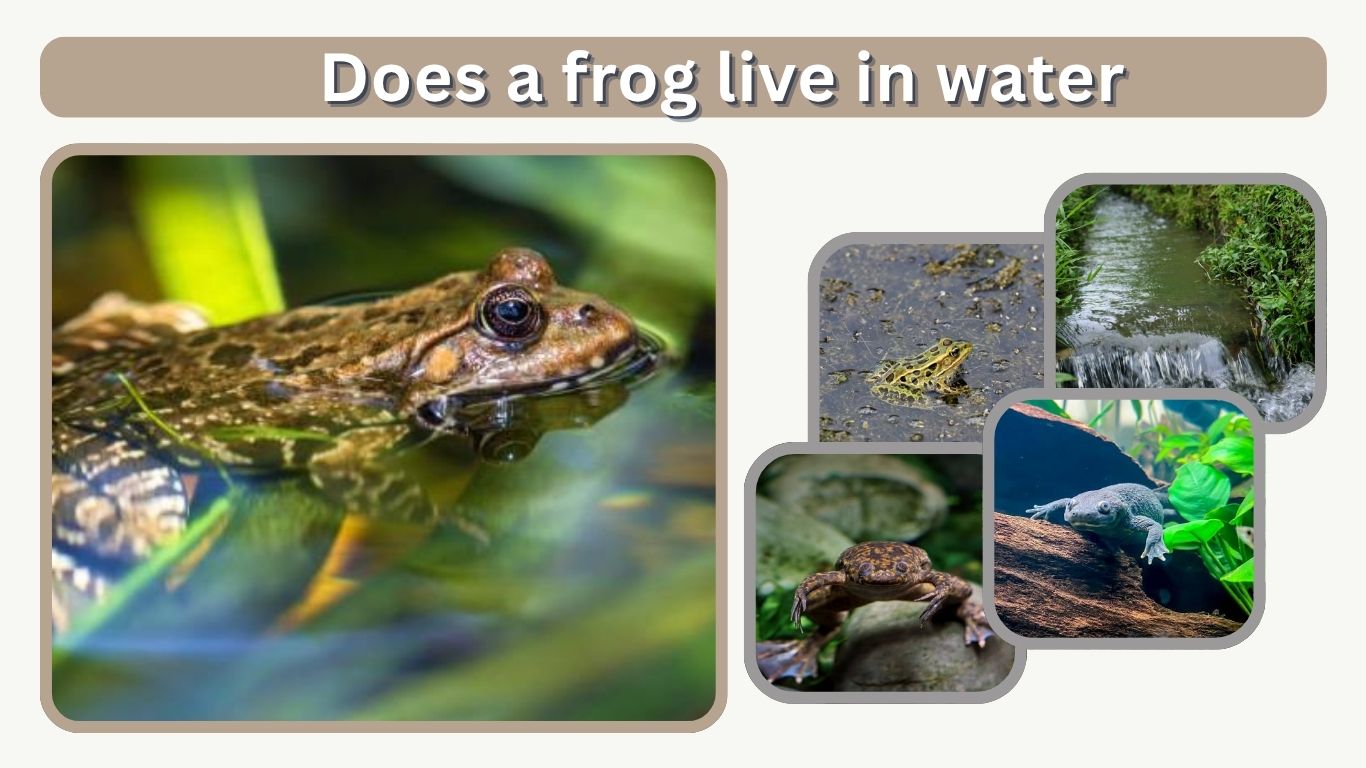
Frogs are fascinating creatures often seen both in ponds and hopping across land. This raises a common question: do frogs live in water or on land? The answer is not as simple as one or the other. Frogs are amphibians, meaning they are uniquely adapted to live in both environments—but how much they rely on each depends on the species.
In this guide, you’ll learn where frogs live, whether they need water to survive, and how different types of frogs adapt to their surroundings.
Do Frogs Live in Water or on Land?

Frogs live in both water and on land, which is why they are classified as amphibians. Their life cycle explains this dual lifestyle.
- Frogs begin life as tadpoles in water, breathing through gills
- As they grow, they develop lungs and legs
- Adult frogs can move between land and water depending on their needs
Some frogs spend most of their time in water, while others prefer land but stay close to moisture. So, if you’re wondering whether frogs live in water or land—the correct answer is both.
Do All Frogs Live in Water?
Not all frogs live in water all the time, but almost all frogs depend on water in some way.
Here’s how:
- Frogs need moist skin to breathe properly
- Most species lay eggs in water
- Many frogs stay near ponds, lakes, or wetlands
However, some frogs—like tree frogs—rarely enter water except during breeding. These frogs live mostly on land or in trees but still require a humid environment.
So while not all frogs live in water full-time, they cannot survive without it.
Can Frogs Live Only in Water?

Yes, some frogs can live almost entirely in water. These are known as aquatic frogs.
Examples include:
- African dwarf frogs
- African clawed frogs
These species:
- Spend nearly their entire lives underwater
- Swim instead of hopping on land
- Come to the surface occasionally to breathe air
Even though they live in water, they do not breathe like fish. They still need oxygen from the air, which is why they must surface regularly.
So, while some frogs can live only in water, they are still dependent on air to survive.
Can Frogs Live Without Water?
Frogs cannot live long without water because their bodies rely heavily on moisture.
Unlike many animals, frogs:
- Absorb water through their skin
- Use their skin for breathing
- Lose moisture quickly in dry conditions
Without access to water or humidity, a frog’s skin can dry out, which can be fatal.
How Long Can Frogs Live Without Water?
The survival time varies depending on the species and environment:
- Aquatic frogs: only a few hours outside water
- Land frogs: up to a few days in humid conditions
- Tree frogs: can survive slightly longer due to adaptations
In general, frogs can only live a short time without water, especially in hot or dry climates.
How Long Can Frogs Live in Water?
Frogs can live in water for very long periods—but it depends on the species.
- Aquatic frogs can live in water their entire lives
- Semi-aquatic frogs move between land and water
- Land frogs only enter water occasionally
However, water conditions matter a lot. Frogs need:
- Clean, oxygen-rich water
- Proper temperature
- No harmful chemicals
So while frogs can live in water for a long time, they cannot survive in poor-quality or polluted water.
Types of Frogs That Live in Water

There are many frogs that live in water, either fully or partially. These can be grouped into two main categories.
Fully Aquatic Frogs
These frogs live almost entirely in water:
- African dwarf frogs
- African clawed frogs
They are excellent swimmers and rarely leave the water.
Semi-Aquatic Frogs
These frogs split their time between land and water:
- Leopard frogs
- Wood frogs
They often live near ponds or wetlands and move between environments.
Mostly Land Frogs
Some frogs live mostly on land but still depend on water:
- Tree frogs
- Toad-like species
They only return to water for breeding or hydration.
Do Tree Frogs Live in Water?
Tree frogs are a good example of frogs that do not live in water full-time.
- They spend most of their lives in trees or vegetation
- They prefer humid environments rather than standing water
- They return to water mainly for laying eggs
While tree frogs can enter water, they are better adapted to life on land compared to fully aquatic frogs.
Do Frogs Live Underwater?
Frogs can stay underwater for a while, but they do not live underwater in the same way fish do.
Here’s how they manage:
- Frogs can absorb oxygen through their skin
- This allows them to stay submerged for some time
- However, they still need to surface to breathe air
Some species can remain underwater longer during colder months, especially in winter. Even then, they rely on a mix of skin breathing and occasional access to oxygen.
Why Do Frogs Need Water?
Water is essential for a frog’s survival, even for species that spend most of their time on land. Frogs are highly dependent on moisture because of how their bodies function.
Here are the main reasons frogs need water:
- Breathing through skin: Frogs absorb oxygen through their moist skin, a process known as cutaneous respiration
- Reproduction: Most frogs lay their eggs in water, where tadpoles develop
- Hydration: Frogs don’t drink water like humans—they absorb it directly through their skin
- Temperature control: Moist environments help frogs regulate their body temperature
Without access to water or humidity, frogs can quickly become dehydrated and unable to breathe properly.
Can Frogs Live in Tap or Chlorinated Water?
Not all water is safe for frogs. In fact, many common water sources can be harmful.
Tap Water
- Tap water often contains chlorine and other chemicals
- These chemicals can irritate or damage a frog’s skin
- It should be treated (dechlorinated) before use for pet frogs
Chlorinated or Pool Water
- Chlorine is toxic to frogs
- It can interfere with their ability to absorb oxygen
- Even short exposure can be dangerous
Best Water for Frogs
- Dechlorinated water
- Natural pond or rainwater
- Clean, chemical-free environments
So, frogs cannot safely live in untreated tap water or pool water. Water quality plays a major role in their survival.
Where Do Water Frogs Live?

Frogs that live in water are usually found in environments that provide both moisture and safety.
Common habitats include:
- Ponds and lakes: Calm, freshwater areas are ideal
- Wetlands and marshes: Rich in plants and insects
- Slow-moving streams: Provide oxygen and food sources
- Tropical regions: High humidity supports frog survival
Different species prefer different environments, but most frogs avoid fast-moving or polluted water.
How Long Do Frogs Live?
The lifespan of frogs varies widely depending on species, environment, and living conditions.
- Wild frogs: Typically live 3 to 10 years
- Aquatic frogs (like African dwarf frogs): Around 5 years on average
- Captive frogs: Often live longer with proper care
Factors that affect lifespan include:
- Availability of clean water
- Food supply
- Predators
- Climate conditions
Frogs that live in stable, clean environments generally live longer than those in harsh or polluted habitats.
FAQs
Do frogs have to live in water?
No, frogs do not have to live in water all the time. However, they depend on moisture to survive and usually stay near water sources. Most frogs also return to water for breeding and laying eggs, making water an essential part of their life cycle.
Can frogs live out of water completely?
Frogs cannot live completely without water or moisture. Even land-dwelling frogs need humid environments to keep their skin from drying out. Without access to moisture, their skin cannot function properly, which can quickly become life-threatening.
Do frogs live in water all the time?
No, only certain aquatic species live in water full-time. Most frogs divide their time between land and water depending on their species and life stage. Many frogs leave water as adults but remain close to moist environments.
Can frogs live in salt water?
Most frogs cannot live in salt water. Their bodies are not adapted to handle high salt levels, which can cause dehydration and disrupt their internal balance. Frogs are generally found in freshwater environments like ponds, lakes, and wetlands.
Do frogs live near water?
Yes, most frogs live near water sources. Even species that spend most of their time on land stay close to ponds, streams, or humid areas. This allows them to maintain moisture levels and return to water when needed for reproduction.
