
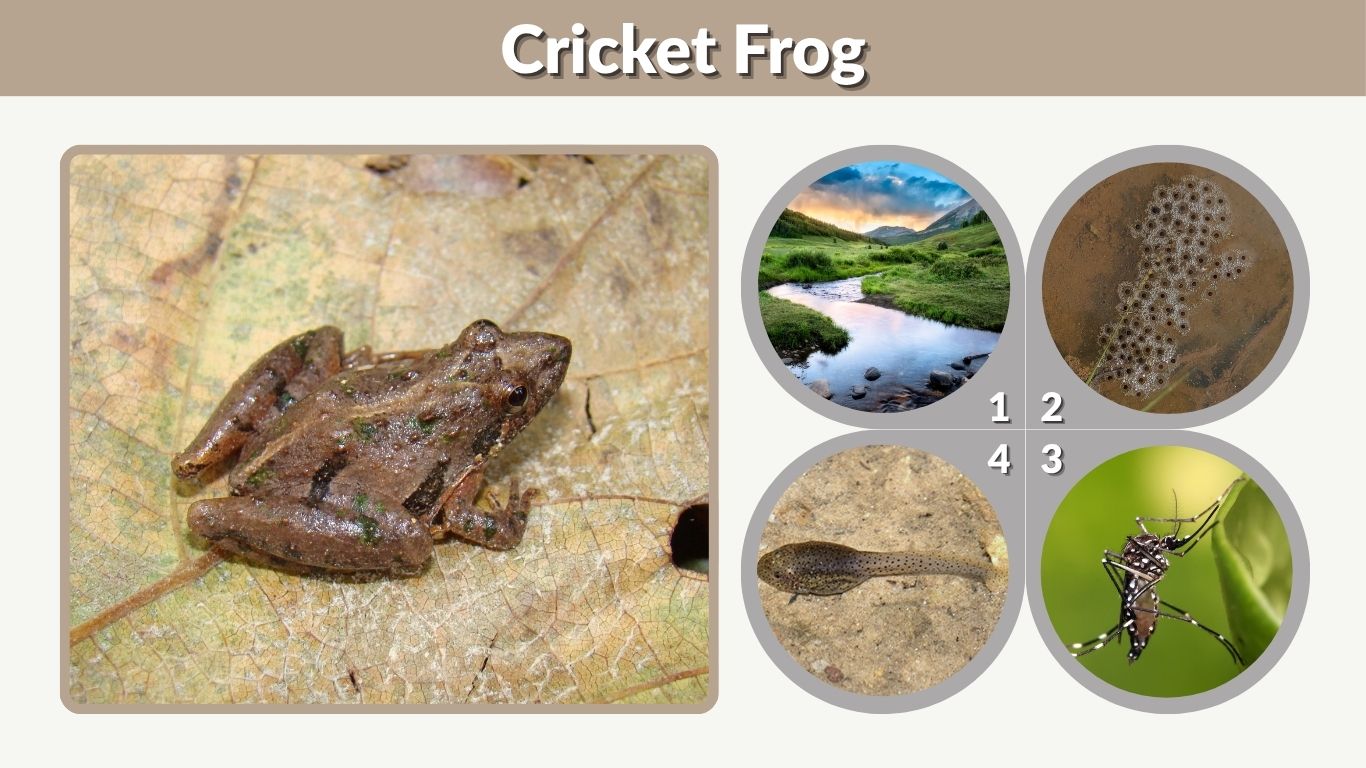
Cricket frogs are tiny amphibians known for their rapid jumping ability and insect-like nighttime calls. These frogs are commonly found near ponds, wetlands, streams, and marshy shorelines throughout parts of North America. Their name comes from the metallic clicking sound they produce, which closely resembles the chirping of crickets. Cricket frogs are active during warm months and are especially noticeable during breeding season when males gather near water to call. Understanding their habitat, feeding behavior, and care needs helps both wildlife enthusiasts and amphibian keepers properly appreciate these fascinating frogs.
What Is a Cricket Frog?
Cricket frogs belong to the Acris genus and are among the smallest frogs in North America. Several species exist, including the northern cricket frog, southern cricket frog, eastern cricket frog, and Blanchard’s cricket frog. Although small in size, these frogs are highly energetic and capable of making impressive jumps when disturbed.
Their rough skin patterns help them blend into muddy shorelines, rocks, and vegetation. Most cricket frogs measure between 0.6 and 1.5 inches long, making them much smaller than many common pond frogs.
Common Types of Cricket Frogs
- Northern cricket frog
- Southern cricket frog
- Eastern cricket frog
- Coastal cricket frog
- Blanchard’s cricket frog
Physical Features of Cricket Frogs
These frogs usually have brown, grey, green, or olive coloration with irregular markings across their backs. Many species also display a dark triangle between the eyes, which helps identify them in the wild.
Their long legs and lightweight bodies allow them to leap quickly into the water when threatened. Unlike tree frogs, cricket frogs spend much of their time near the ground or along shorelines instead of climbing vegetation.
Cricket Frog Sounds and Calls
Cricket frogs are famous for their unique calls, which often confuse people listening outdoors at night. Their sounds resemble metallic clicking stones or repetitive cricket chirps rather than traditional frog croaks.
Male cricket frogs produce these sounds mainly during breeding season to attract females and establish territory around shallow water sources.
Why Cricket Frogs Sound Like Crickets
The quick repetitive nature of their calls creates an insect-like sound that blends with nighttime cricket noises. Because of this similarity, many people wonder whether they are hearing insects or frogs after sunset.
Different cricket frog species also produce slightly different call speeds and tones depending on temperature and region.
Common Cricket Frog Call Behaviors
Mating Calls
Male frogs call most actively during warm evenings after rainfall to attract females near breeding ponds.
Territorial Signals
Calling males often compete with nearby frogs for space and mating opportunities.
Seasonal Activity
Calls become louder and more frequent during spring and summer breeding periods.
Frog Sounds vs Cricket Sounds
Although cricket frogs sound similar to insects, there are several noticeable differences between frog and cricket noises.
- Cricket frog calls are usually louder
- Frog calls often come from wetland areas
- Cricket sounds remain more consistent in rhythm
- Frog calls may vary with temperature and humidity
- Cricket frogs usually call in groups near water
These distinctions help nature observers identify the source of nighttime sounds more accurately.
Cricket Frog Habitat and Range

Cricket frogs prefer moist habitats close to permanent or temporary water sources. They are commonly found around ponds, marshes, lakeshores, slow-moving streams, and wet grassy areas.
Blanchard’s cricket frog is especially associated with shallow shorelines containing rocks, floating plants, and muddy banks. These environments provide protection from predators and access to breeding sites.
Where Cricket Frogs Live
Cricket frogs are distributed throughout many regions of the United States, though different species occupy different geographic ranges.
Northern cricket frogs are more common in the Midwest and northeastern areas, while southern species prefer warmer southeastern habitats. Texas cricket frogs and Florida cricket frogs are adapted to warmer climates with longer breeding seasons.
Habitat Conditions Cricket Frogs Prefer
- Shallow freshwater ponds
- Marshes and wetlands
- Rocky shorelines
- Floating vegetation
- Moist grassy edges
Cricket frogs are highly sensitive to environmental changes. Pollution, shoreline destruction, and wetland loss may significantly reduce local populations.
Cricket Frog Diet and Feeding
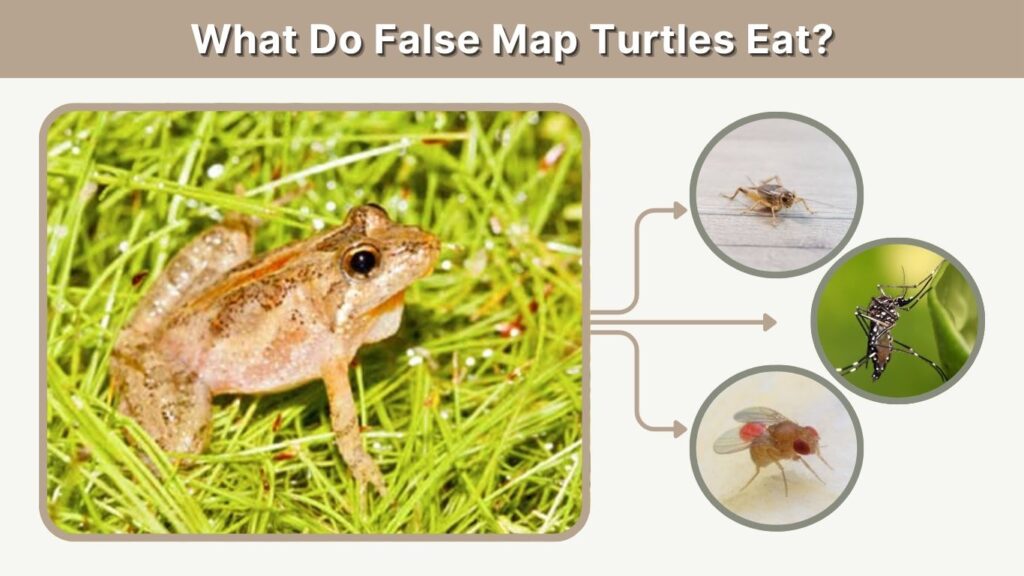
Cricket frogs are insectivores that feed on a variety of tiny invertebrates. They hunt mostly at night and rely on movement to locate prey. Their quick reflexes help them capture insects rapidly with sticky tongues.
In captivity, cricket frogs require live insects small enough to fit easily into their mouths. A varied diet helps maintain healthy growth and energy levels.
What Cricket Frogs Eat
- Small crickets
- Mosquitoes
- Tiny flies
- Ants
- Beetles and larvae
Young frogs usually eat more frequently than adults because they grow rapidly during early development stages.
Do Frogs Eat Crickets?
Yes, many frog species eat live crickets regularly. Crickets are one of the most common feeder insects used in amphibian care because they provide protein and are widely available.
Tree frogs, dart frogs, and pacman frogs may all consume crickets as part of a balanced diet. However, feeder insects should be properly sized and occasionally dusted with calcium supplements for better nutrition.
Cricket Frog Care Sheet

Cricket frogs can be kept in captivity, although they are more delicate than many larger frog species. Their small size and active nature mean they require carefully maintained environments with proper moisture and hiding areas.
A secure enclosure with both land and shallow water sections works best for these frogs. Good ventilation is also important because excessive humidity without airflow may encourage bacterial growth.
Cricket Frog Tank Setup
A small terrarium or paludarium with natural features helps recreate the frog’s wild habitat. Smooth rocks, moss, floating plants, and shallow water areas provide security and enrichment.
The enclosure should include plenty of hiding places because cricket frogs are naturally cautious animals. Clean dechlorinated water is essential since amphibians absorb moisture directly through their skin.
Temperature and Humidity Requirements
Cricket frogs generally thrive at temperatures between 70°F and 78°F. Mild nighttime temperature drops are usually acceptable and help mimic natural conditions.
Humidity should remain moderate without making the enclosure constantly wet. Light misting once or twice daily often provides enough moisture for healthy skin and hydration.
Feeding Captive Cricket Frogs
Captive frogs should receive live insects several times each week. Juveniles may need daily feeding, while adults usually eat every two or three days depending on activity levels.
Feeder insects should be appropriately sized and occasionally coated with calcium and vitamin supplements to prevent nutritional deficiencies.
Cricket Frog Life Cycle and Behavior
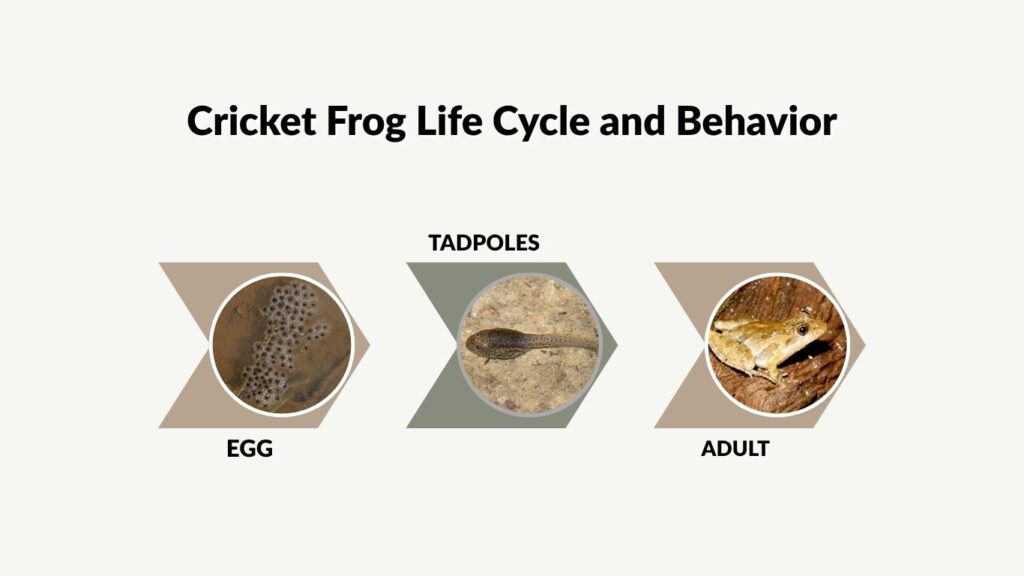
Like other amphibians, cricket frogs begin life as aquatic tadpoles before transforming into land-dwelling adults. Their development depends heavily on water temperature, food availability, and environmental conditions.
During breeding season, males gather near shallow water and call repeatedly to attract females. After mating, females deposit eggs in quiet freshwater habitats where tadpoles later hatch and develop.
Cricket Frog Eggs and Tadpoles
Eggs are typically attached to submerged vegetation or debris in calm water. Tadpoles hatch within days and spend several weeks feeding on algae and organic material before metamorphosis begins.
As the tadpoles grow, legs develop and tails gradually shrink until young froglets emerge from the water. These tiny frogs quickly begin hunting small insects along shorelines and moist vegetation.
Defensive Behavior and Jumping Ability
Cricket frogs are extremely agile and rely on fast jumping movements to escape predators. When threatened, they may leap multiple times in unpredictable directions before diving into shallow water.
Their camouflage coloration also helps them avoid detection while resting among rocks, mud, or shoreline plants during the daytime.
Are Cricket Frogs Poisonous?
Cricket frogs are not considered dangerous to humans. They do produce mild skin secretions that help discourage predators, but these substances are generally harmless when handled carefully.
Most people can safely observe or briefly handle cricket frogs without serious problems. However, washing hands afterward is still recommended to avoid irritation and protect the frog from chemicals on human skin.
Are Cricket Frogs Dangerous to Pets?
Dogs and cats may experience mild mouth irritation if they bite or lick a cricket frog, but severe poisoning is very uncommon. Pet owners should still discourage animals from interacting directly with wild frogs.
Using caution around all amphibians is important because their skin is highly sensitive and vulnerable to contamination.
Blanchard’s Cricket Frog Conservation
Blanchard’s cricket frog has experienced population declines in some areas due to habitat destruction and environmental pollution. Wetland drainage, shoreline development, and pesticide exposure all contribute to shrinking frog populations.
Conservation efforts often focus on protecting freshwater habitats and improving water quality. Healthy wetlands support not only cricket frogs but also many other amphibians, birds, and aquatic species.
Why Cricket Frog Populations Decline
Several environmental pressures affect cricket frog survival across parts of their range.
- Wetland habitat loss
- Water pollution
- Pesticide exposure
- Climate changes
- Shoreline development
Protecting natural ponds, marshes, and shallow wetlands remains essential for maintaining stable populations of these small amphibians.
Cricket Frog Trail in Covington, Georgia
The Cricket Frog Trail in Covington, Georgia, is a popular recreational trail named after the region’s native cricket frogs. Built along a former railway corridor, the trail provides walking and cycling access through scenic areas of the community.
Visitors use the trail for exercise, wildlife observation, and outdoor recreation throughout the year.
Features of the Cricket Frog Trail
The trail includes several amenities and scenic areas for visitors.
Walking and Cycling Paths
Paved routes allow safe walking, jogging, and biking through multiple connected sections.
Bridges and Nature Views
Trail bridges and natural areas provide opportunities for photography and wildlife observation.
Parking and Accessibility
Public parking areas and access points make the trail convenient for local residents and visitors.
FAQs
Are cricket frogs good pets?
Cricket frogs can be kept as pets, but they are more delicate than many larger frog species. They require proper humidity, clean water, and a secure enclosure with hiding places to remain healthy.
What do cricket frogs eat in captivity?
Captive cricket frogs usually eat small live insects such as crickets, flies, ants, and tiny beetles. Feeder insects should be appropriately sized and occasionally dusted with calcium supplements.
Why are cricket frogs called cricket frogs?
Cricket frogs get their name from their metallic chirping calls, which sound very similar to crickets calling at night near ponds and wetlands.
Can cricket frogs swim?
Yes, cricket frogs are excellent swimmers. They often jump into shallow water to escape predators and spend much of their time near ponds, marshes, and wet shoreline habitats.
How long do cricket frogs live?
Most cricket frogs live several years in the wild, though lifespan depends on habitat quality, predators, and environmental conditions. Proper care may help captive frogs live longer.
