
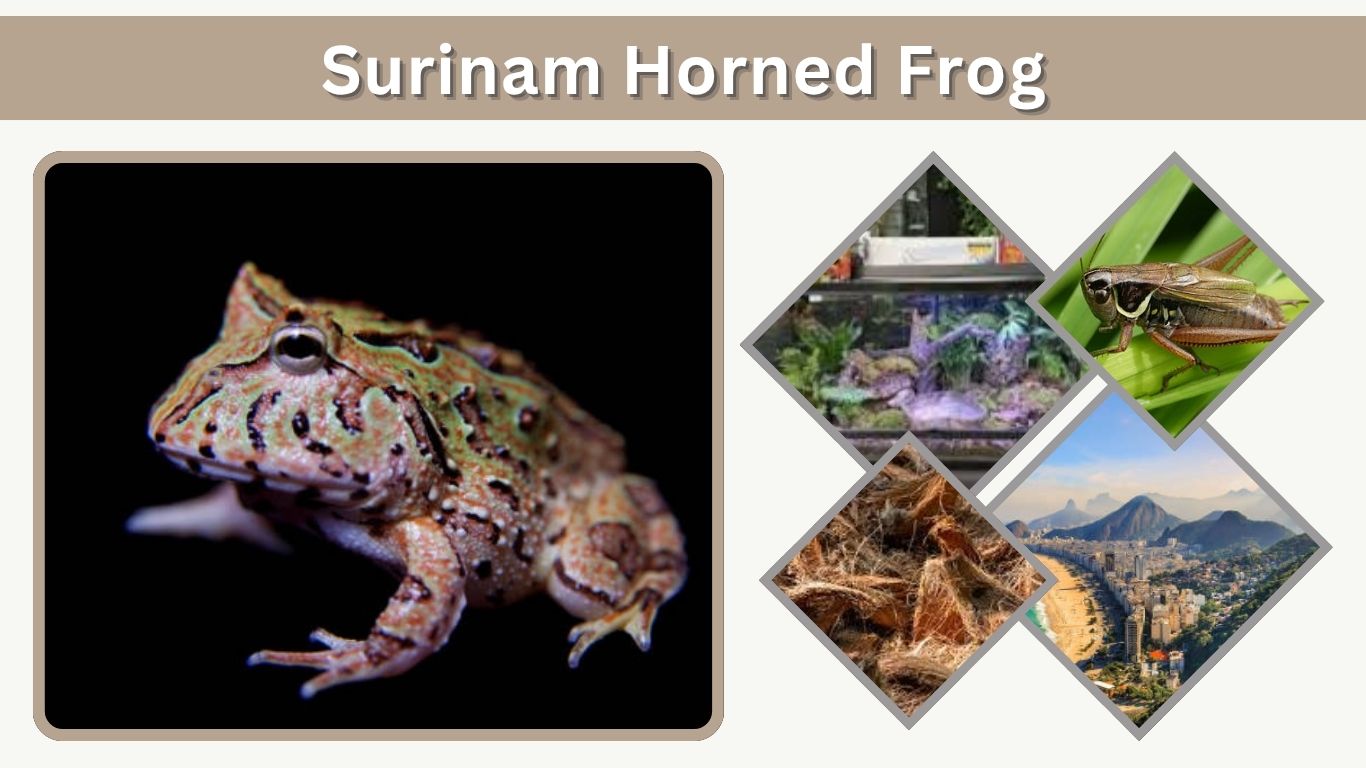
The Surinam horned frog is a large tropical amphibian known for its massive mouth, horn-like projections above the eyes, and powerful ambush hunting behavior. Often grouped with pacman frogs, this species is popular among amphibian keepers because of its unique appearance and relatively simple enclosure needs. Surinam horned frogs spend much of their time partially buried in moist substrate while waiting for prey to pass nearby. Understanding their habitat, feeding habits, environmental needs, and behavior is important for maintaining healthy frogs in captivity.
What Is a Surinam Horned Frog?
The Surinam horned frog is a South American species belonging to the Ceratophrys group, commonly called horned frogs or pacman frogs. These frogs are named for the pointed projections above their eyes, which resemble small horns and help break up their outline in leaf litter.
Their large rounded bodies and oversized mouths allow them to consume prey nearly as large as themselves. Unlike active climbing frogs, Surinam horned frogs are ground-dwelling ambush predators that rely on camouflage and patience while hunting.
Physical Characteristics
- Broad round body shape
- Horn-like ridges above the eyes
- Large mouth and powerful jaws
- Camouflage skin patterns
- Short but strong limbs
Common Color Variations
Surinam horned frogs display several natural and captive-bred color forms. These variations help make them popular in the exotic pet trade.
Green Surinam Horned Frog
Green forms usually feature olive or bright green coloration mixed with dark markings that resemble rainforest vegetation.
Red Surinam Horned Frog
Red varieties may show reddish-brown, orange, or rust-colored patterns across the back and sides.
Green Surinam Horned Pacman Frog
Some keepers use the term green Surinam horned pacman frog to describe bright green individuals with strong camouflage markings.
Surinam Horned Frog Habitat and Location
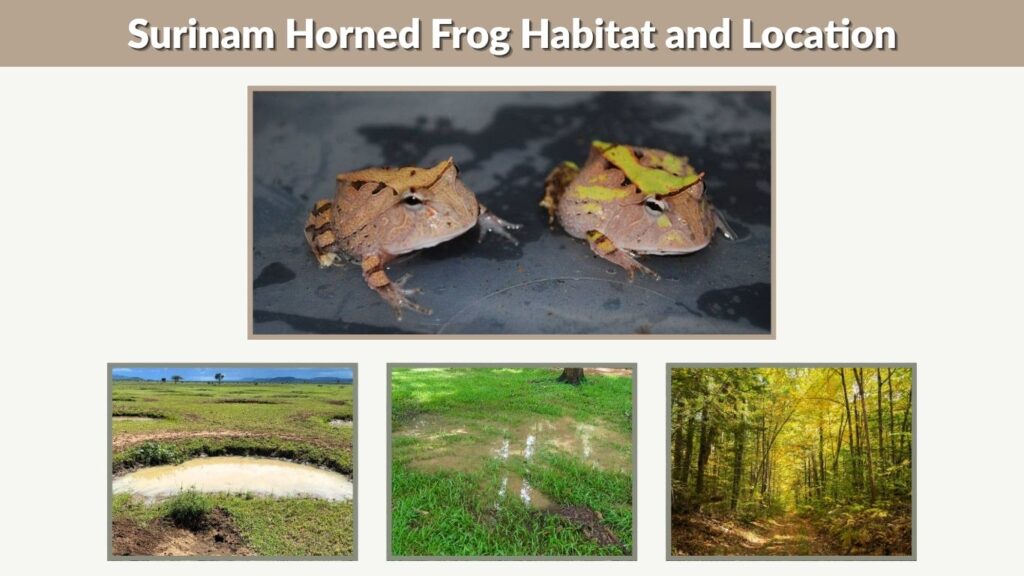
Surinam horned frogs naturally inhabit humid tropical rainforests in northern South America. They are commonly found in regions with dense vegetation, warm temperatures, and moist forest floors covered in fallen leaves.
These frogs spend most of their lives hidden among leaf litter or partially buried in damp soil where they remain concealed from predators and prey alike.
Where Surinam Horned Frogs Live
Their natural range includes several rainforest regions within northern South America.
- Suriname
- Brazil
- Guyana
- French Guiana
- Amazon basin forests
The warm and humid climate of these regions provides ideal conditions for amphibians that depend on constant moisture for healthy skin and normal biological functions.
Natural Habitat Conditions
Surinam horned frogs thrive in tropical environments with high humidity and stable temperatures throughout the year. Forest floors in these habitats remain shaded and moist because dense tree canopies block direct sunlight.
Small pools of rainwater, muddy areas, and decaying plant material support insects and other prey animals that horned frogs hunt during nighttime activity periods.
Surinam Horned Frog Care Sheet
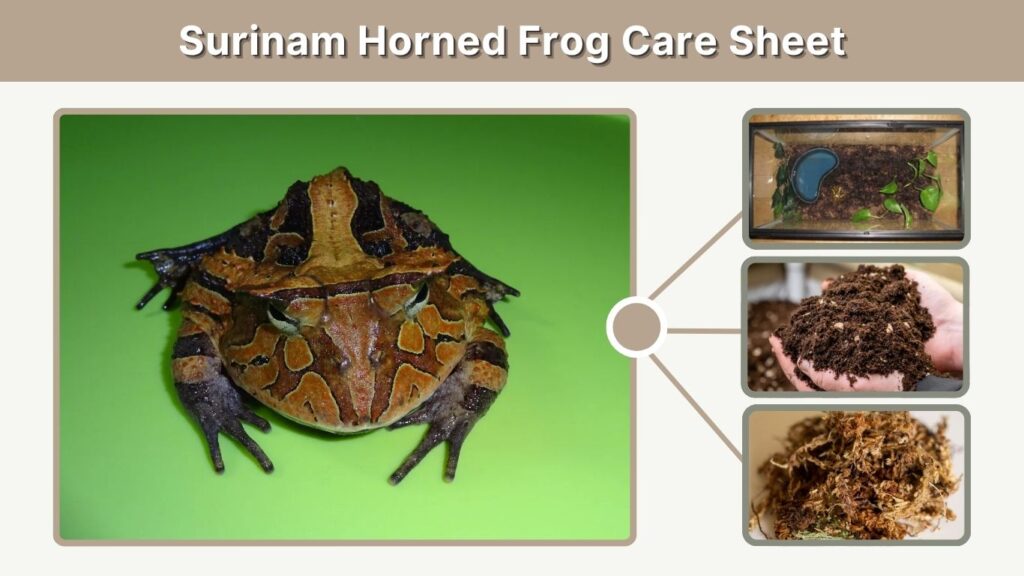
Surinam horned frogs are considered relatively manageable pets for amphibian keepers willing to maintain proper humidity and enclosure cleanliness. Their low activity level makes them easier to house than many active frog species, though they still require carefully controlled environmental conditions.
Enclosure Setup
A secure terrarium with sufficient floor space is important because these frogs spend most of their time on the ground rather than climbing. Moisture-retaining substrate helps support healthy skin and natural burrowing behavior.
Important Habitat Features
Moist Substrate
Coconut fiber, organic soil, or sphagnum moss mixtures help maintain humidity and allow burrowing.
Hiding Areas
Cork bark, leaf litter, and plants create secure hiding places that reduce stress.
Water Dish
A shallow dish of clean dechlorinated water allows soaking and hydration.
Temperature and Humidity
Surinam horned frogs require warm conditions similar to tropical rainforest environments. Daytime temperatures between 75°F and 82°F are usually ideal for healthy activity and digestion.
Humidity levels should generally remain between 70% and 80%. Regular misting helps maintain moisture without making the enclosure excessively wet or stagnant.
Good ventilation is still important because poor airflow may encourage mold growth and bacterial problems inside the terrarium.
Surinam Horned Frog Diet

Surinam horned frogs are carnivorous ambush predators with strong feeding responses. In the wild, they consume insects, worms, small reptiles, and even tiny mammals when opportunities arise.
Captive frogs require varied diets to maintain proper nutrition and prevent obesity or vitamin deficiencies.
Common Foods for Surinam Horned Frogs
- Crickets
- Roaches
- Earthworms
- Hornworms
- Small mice for large adults
Young frogs generally require more frequent feeding because of rapid growth during juvenile stages. Adult frogs usually eat larger meals less often than younger individuals.
Feeding Behavior
These frogs often remain motionless while waiting for prey to approach within striking distance. Once prey comes close enough, the frog lunges forward rapidly using powerful jaws to capture and swallow food.
Because of their aggressive feeding instincts, Surinam horned frogs may accidentally bite fingers during feeding time. Hand feeding should therefore be avoided whenever possible.
Surinam Horned Frog Size and Growth
Surinam horned frogs are known for their thick bodies and rapid growth rates. Juvenile frogs may grow quickly during the first year when provided with proper temperatures, humidity, and a balanced diet.
Females are usually larger and heavier than males. Adult females can become noticeably wider and bulkier, especially when fully mature.
Average Adult Size
Most adult Surinam horned frogs reach between 4 and 7 inches in length depending on sex, genetics, and overall care quality.
Growth Stages
Froglet Stage
Young froglets are tiny but highly aggressive feeders that require small insects several times per week.
Juvenile Development
During this stage, frogs develop stronger jaws, larger body mass, and improved camouflage patterns.
Adult Maturity
Fully mature adults become slower and heavier while relying mainly on ambush hunting behavior.
Proper feeding and enclosure maintenance are essential during all growth stages to support healthy development.
Surinam Horned Frog Lifespan
With proper care, Surinam horned frogs may live for many years in captivity. Stable temperatures, good hygiene, and balanced diets all contribute to long-term health and longevity.
Captive frogs often live longer than wild individuals because they face fewer predators, diseases, and environmental threats.
Factors That Affect Lifespan
Several conditions directly influence how long a Surinam horned frog may live.
- Proper humidity levels
- Clean enclosure conditions
- Balanced nutrition
- Safe temperature ranges
- Regular health monitoring
Common Health Problems
Poor husbandry may lead to serious medical issues in captive horned frogs.
Obesity
Overfeeding large prey too frequently can cause unhealthy weight gain.
Dehydration
Low humidity or inadequate water access may result in dry skin and lethargy.
Skin Infections
Dirty substrate and stagnant conditions increase the risk of bacterial or fungal infections.
Impaction
Swallowing loose substrate during feeding may cause digestive blockages.
Maintaining clean living conditions and appropriate feeding schedules greatly reduces these risks.
Surinam Horned Frogs as Pets
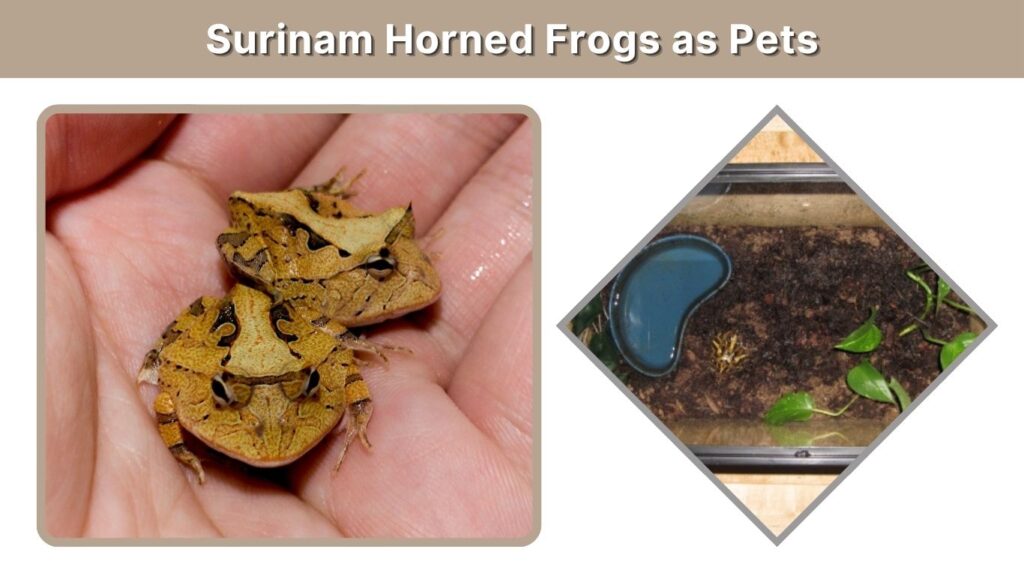
Surinam horned frogs are popular display animals because of their unusual appearance and strong feeding responses. Although they are not highly active pets, many amphibian enthusiasts enjoy observing their hunting behavior and camouflage abilities.
These frogs generally tolerate limited interaction better than frequent handling. Excessive handling may stress the frog and damage its sensitive skin.
Are Surinam Horned Frogs Good Pets?
Surinam horned frogs can be suitable for beginner or intermediate amphibian keepers who understand humidity management and feeding requirements.
Their care routine is usually simpler than that of highly active tropical frogs, but they still require regular enclosure maintenance and monitoring.
Things to Know Before Buying
Potential owners should understand several important responsibilities before purchasing a Surinam horned frog.
- Long-term care commitment
- Regular live food purchases
- Humidity management needs
- Limited handling suitability
- Space for a proper enclosure
Captive-bred frogs are usually healthier and adapt more successfully to terrarium life than wild-caught individuals.
Surinam Horned Frog Behavior
Surinam horned frogs are ambush predators that spend much of their time partially buried in substrate. Their camouflage helps them remain hidden while waiting for prey to approach.
Unlike climbing tree frogs, these frogs are primarily terrestrial and move relatively little outside feeding activities.
Hunting Behavior
Horned frogs rely on patience rather than speed while hunting. They often stay motionless for long periods before suddenly lunging at nearby prey with impressive force.
Their powerful jaws allow them to consume surprisingly large prey items compared to their own body size.
Defensive Behavior
When threatened, Surinam horned frogs may inflate their bodies, open their mouths, and attempt to bite. Although not dangerous to humans, their bite can be painful because of strong jaw pressure.
FAQs
Do Surinam horned frogs need high humidity?
Yes, Surinam horned frogs require high humidity levels, usually between 70% and 80%, to keep their skin healthy and prevent dehydration.
Are Surinam horned frogs aggressive?
Surinam horned frogs are known for strong feeding responses and may attempt to bite when they feel threatened or mistake movement for food.
Can Surinam horned frogs live together?
It is generally not recommended to house Surinam horned frogs together because they are territorial and may attempt to attack or eat one another.
How often should you feed a Surinam horned frog?
Juvenile frogs usually need feeding several times per week, while adults are commonly fed larger meals every few days depending on size and activity level.
What substrate is best for Surinam horned frogs?
Moisture-retaining substrates such as coconut fiber, sphagnum moss, or organic soil mixes work well because they support humidity and natural burrowing behavior.
