
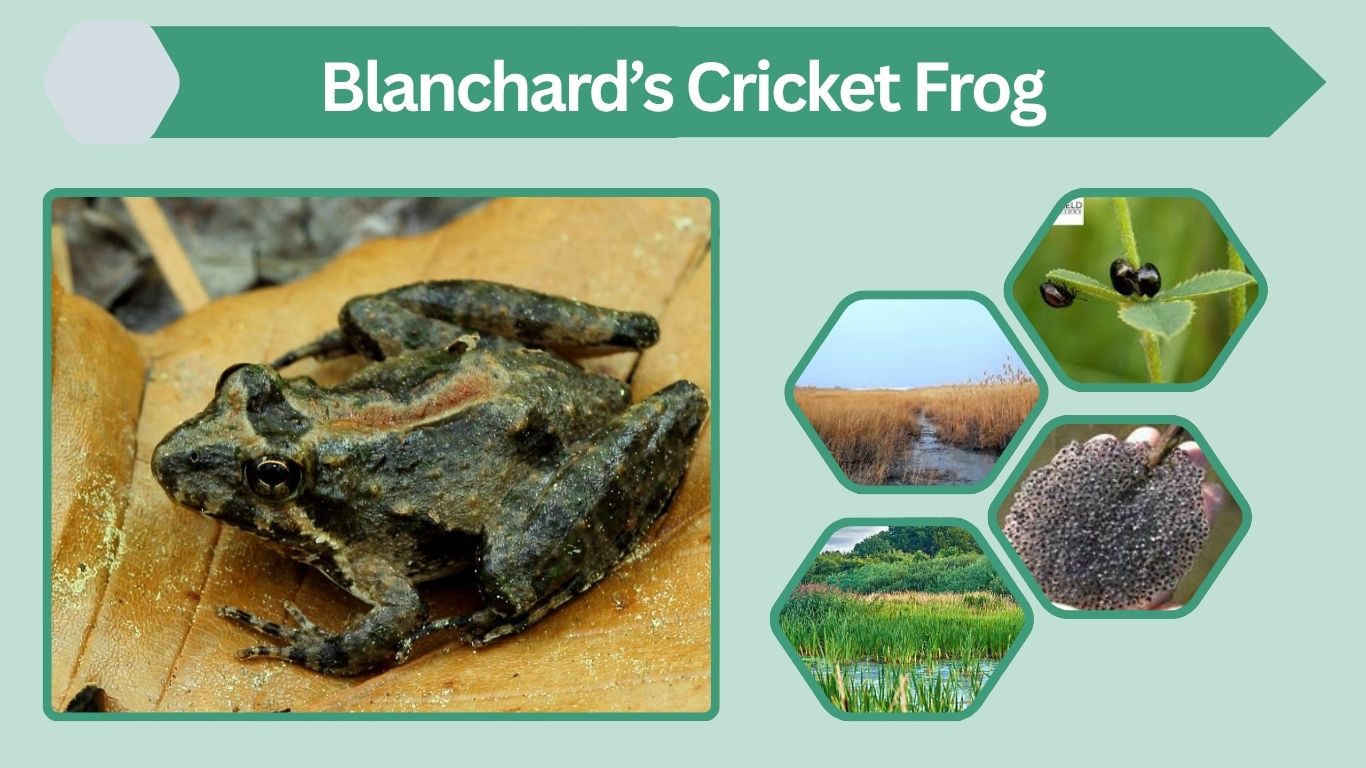
The Blanchard’s Cricket Frog is a tiny amphibian known for its loud metallic call and incredible jumping ability. Even though it is small, this frog is easy to notice near ponds, marshes, and wetland edges during warm evenings. Many people search for its sound, habitat, diet, and endangered status because the species has declined in some northern areas.
Blanchard’s Cricket Frog plays an important role in wetland ecosystems by eating insects and serving as prey for larger animals. Learning about its behavior, range, and habitat needs can help people better understand and protect this unique North American frog.
What Is Blanchard’s Cricket Frog?
Blanchard’s Cricket Frog is one of the smallest frogs found in North America. It belongs to the tree frog family, although it spends much of its time near shallow water instead of in trees. The species is active, quick-moving, and famous for producing cricket-like sounds during breeding season.
Scientific Classification
- Scientific name: Acris blanchardi
- Family: Hylidae
- Genus: Acris
- Common name: Blanchard’s Cricket Frog
- Native region: North America
Blanchard’s Cricket Frog Size
Adult Blanchard’s Cricket Frogs are very small and usually grow between 0.6 and 1.5 inches long. Females are often slightly larger than males. Their lightweight body and long back legs allow them to leap quickly away from predators along muddy shorelines.
Physical Appearance
These frogs can appear in shades of brown, green, gray, or reddish colors. Some individuals have spots or stripes across the back, while others appear plain. A dark stripe near the eye and rough-looking skin are common identification features. Their powerful legs help them jump several feet in a single movement.
Blanchard’s Cricket Frog Sound and Call
The sound of Blanchard’s Cricket Frog is one of the easiest ways to identify the species in the wild. During spring and summer evenings, males gather near water and make repeated clicking noises. The call sounds similar to metal pebbles tapping together or fast cricket chirps.
What Does Blanchard’s Cricket Frog Sound Like?
The frog’s call is sharp, metallic, and repeated rapidly. People often describe it as:
- Clicking stones
- Fast cricket noises
- Metal ticks
- Repeated “gick-gick” sounds
Why Do Blanchard’s Cricket Frogs Call?
Male frogs call mainly to attract females during breeding season. The calls also help warn other males to stay away from their territory. Calling activity usually increases after rainfall and during humid weather.
When Are They Most Vocal?
Blanchard’s Cricket Frogs are most vocal during late spring and summer. They usually call:
- During warm evenings
- Near shallow water
- After rainstorms
- Around sunset and nighttime
Blanchard’s Cricket Frog Habitat
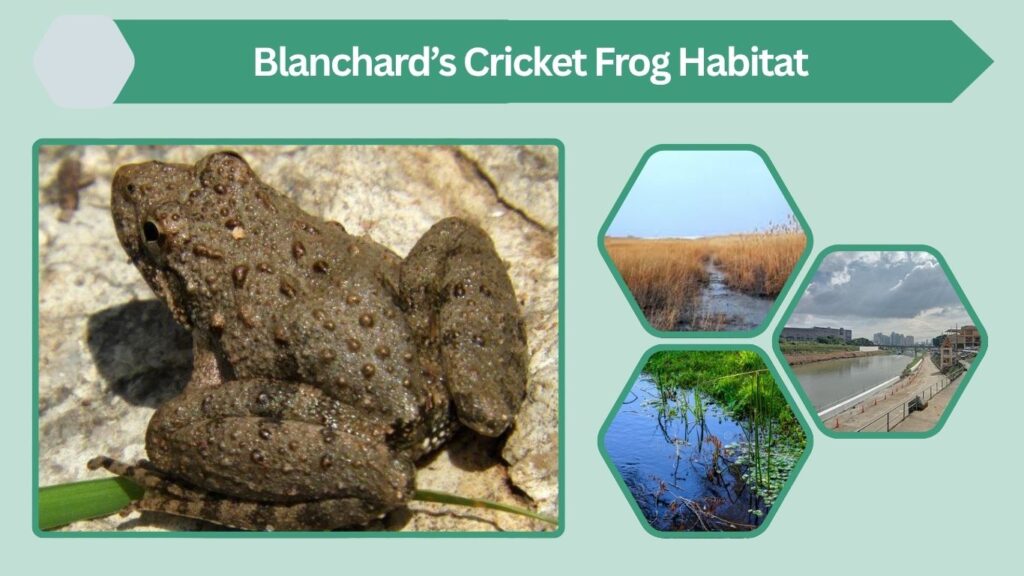
Blanchard’s Cricket Frogs prefer sunny wetland habitats with shallow water and muddy shorelines. They are commonly found near marshes, ponds, streams, and lakes where vegetation provides shelter and protection. Unlike many frogs, they often stay in open areas where they can quickly escape danger by jumping into water.
Preferred Habitats
- Marshes
- Pond edges
- Slow streams
- Wet grasslands
- Shallow wetlands
- Lake shorelines
Habitat Features They Need
Healthy wetlands are important for the survival of this species. Blanchard’s Cricket Frogs prefer habitats with clean shallow water, floating plants, muddy banks, and areas exposed to sunlight. Rocks, grasses, and aquatic vegetation provide safe resting and breeding spots.
Habitat Threats
Many populations have declined because wetlands continue to disappear. Pollution, pesticides, and urban development reduce breeding areas and contaminate the water these frogs depend on. Habitat fragmentation also makes it difficult for populations to remain connected.
Blanchard’s Cricket Frog Range and Distribution
Blanchard’s Cricket Frog is found across parts of the central and northern United States. Populations are especially common in the Midwest and Great Lakes regions, although some northern populations have decreased in recent decades because of environmental changes and habitat loss.
States With Known Populations
- Michigan
- Ohio
- Wisconsin
- Iowa
- Missouri
- Oklahoma
- Texas
Blanchard’s Cricket Frog in Michigan
Michigan contains several important populations of Blanchard’s Cricket Frog. Wetlands, shallow ponds, and marshes provide ideal habitat in the state. Conservation groups monitor these frogs closely because numbers have declined in some regions over time.
Population Declines in Northern Areas
Northern populations have experienced noticeable declines because of pollution, wetland destruction, and climate changes. Great Lakes states, especially Michigan and Wisconsin, have reported shrinking populations in areas where the species was once common.
Blanchard’s Cricket Frog Diet
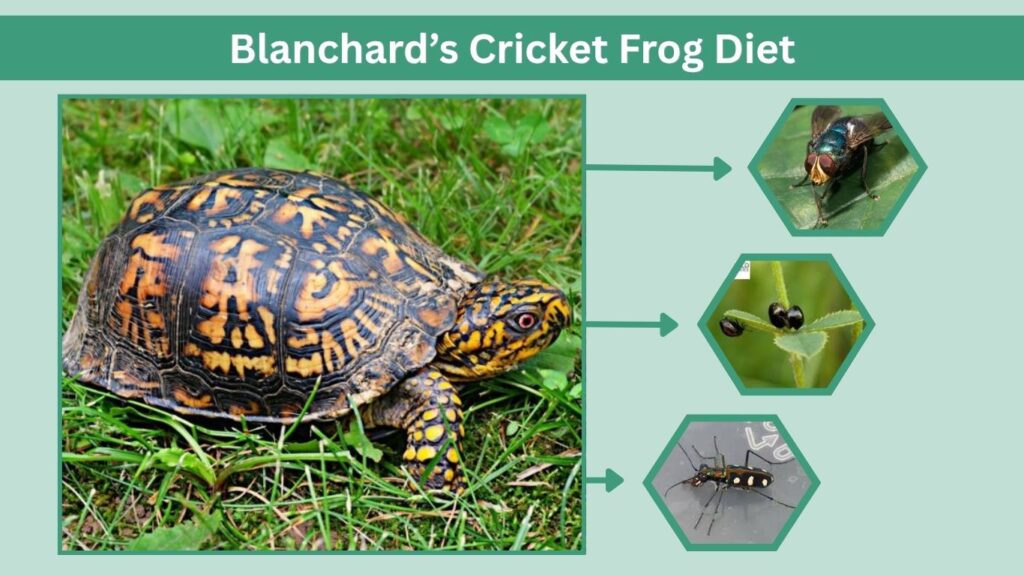
Blanchard’s Cricket Frogs are small predators that feed on insects and other tiny invertebrates. They usually hunt along wetland edges where insects are abundant. Their quick tongue strikes and fast jumping ability make them effective hunters despite their tiny size. By eating mosquitoes and flies, these frogs help maintain balance in wetland ecosystems and naturally reduce insect populations.
What Do Blanchard’s Cricket Frogs Eat?
- Mosquitoes
- Flies
- Beetles
- Ants
- Small spiders
- Tiny aquatic insects
Hunting Behavior
Blanchard’s Cricket Frogs often sit quietly and wait for prey to move nearby before suddenly leaping forward. They rely heavily on vision and movement detection when searching for food. Most feeding activity happens during warm daylight hours and early evenings near shallow water.
Tadpole Diet
Young tadpoles mostly feed on algae, plant material, and organic debris found in ponds and wetlands. This diet helps them grow rapidly before changing into small froglets.
Blanchard’s Cricket Frog Tadpoles and Life Cycle
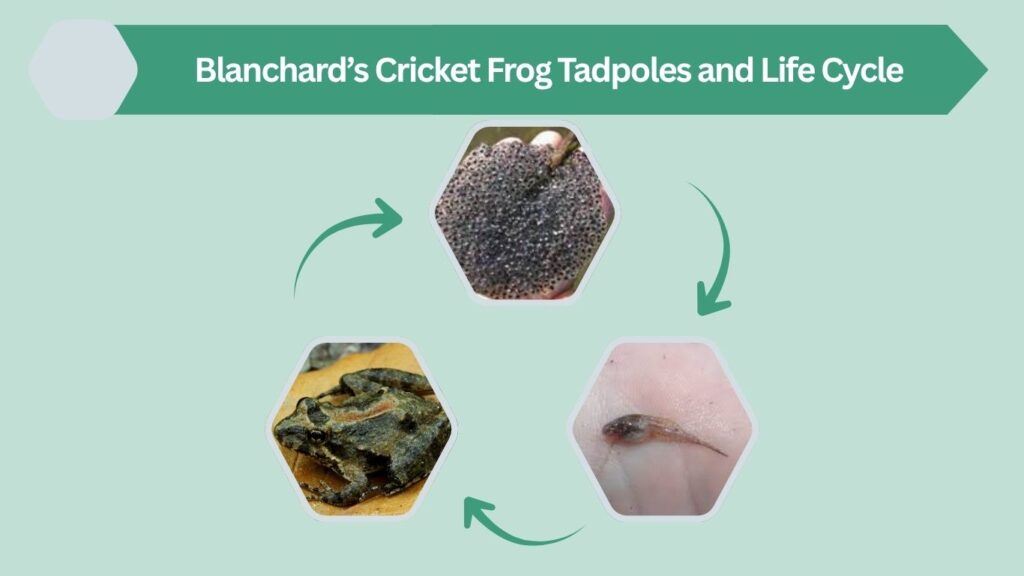
The life cycle of Blanchard’s Cricket Frog begins in shallow wetland water during the breeding season. Females lay eggs in calm ponds where tadpoles can safely grow. Warm temperatures and clean water are important for successful development. Compared to many larger frogs, this species develops quickly.
Breeding Season
Breeding usually occurs from late spring through summer. Male frogs gather near water and call repeatedly to attract females. Mating activity often increases after heavy rainfall and during humid weather conditions.
Blanchard’s Cricket Frog Eggs
- Small jelly-like eggs
- Attached to underwater plants
- Found in shallow calm water
- Hatch within several days
Blanchard’s Cricket Frog Tadpoles
Tadpoles are dark-colored with long tails designed for swimming. As they grow, legs begin to form while the tail slowly shrinks. Metamorphosis may occur within several weeks during warm weather conditions.
Transformation Into Adult Frogs
Young froglets leave the water after completing metamorphosis. They already resemble tiny adults but continue growing rapidly during the first months of life. Most individuals mature within one year.
Predators and Survival Threats
Blanchard’s Cricket Frogs face many threats because of their tiny size and wetland lifestyle. They are an important food source for birds, fish, snakes, and larger amphibians. Human-related environmental problems have also contributed to population declines in several regions.
Natural Predators
- Water snakes
- Herons
- Fish
- Turtles
- Larger frogs
Human-Caused Threats
Wetland destruction remains one of the biggest dangers to this species. Pollution, pesticides, road traffic, and agricultural runoff can damage breeding habitats and poison both tadpoles and adult frogs. Climate changes may also affect water levels in important wetlands.
Is Blanchard’s Cricket Frog Endangered?
Blanchard’s Cricket Frog is not globally endangered, but several local populations are considered threatened or declining. Conservation organizations continue monitoring the species in states where habitat loss has become severe.
Blanchard’s Cricket Frog vs Southern Cricket Frog
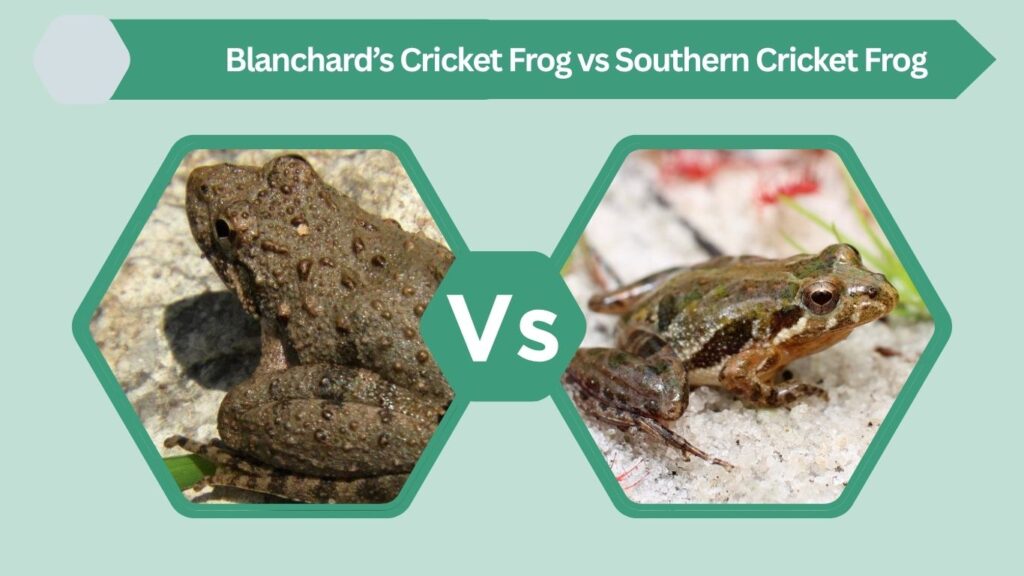
Blanchard’s Cricket Frog and Southern Cricket Frog share many similarities, but there are noticeable differences in appearance, range, and calls. Learning these differences helps wildlife watchers correctly identify each species in the field.
Physical Differences
| Feature | Blanchard’s Cricket Frog | Southern Cricket Frog |
| Size | Smaller | Slightly larger |
| Range | Midwest and Great Lakes | Southeastern states |
| Skin Pattern | Variable markings | Darker appearance |
| Call | Metallic clicking | Faster repeated notes |
Habitat Differences
Blanchard’s Cricket Frogs commonly live in northern wetlands, ponds, and marshes, while Southern Cricket Frogs are more common in warmer southeastern habitats and coastal areas.
Differences in Calls
The call of Blanchard’s Cricket Frog sounds metallic and sharp, while Southern Cricket Frogs often produce quicker and more repeated notes. Experienced frog listeners can usually tell the species apart by sound alone.
How to Identify Blanchard’s Cricket Frog
Identifying Blanchard’s Cricket Frog can be challenging because of its small size and changing colors. However, several physical traits make the species easier to recognize near ponds and wetlands.
Key Identification Features
- Tiny body size
- Rough-looking skin
- Dark stripe near the eye
- Long powerful legs
- Fast jumping movement
Blanchard’s Cricket Frog vs Toad
Although their skin may look rough, Blanchard’s Cricket Frogs are slimmer and more agile than true toads. They move with long quick jumps rather than short hops and usually stay closer to shallow water habitats.
FAQs
What does a Blanchard’s Cricket Frog sound like?
Blanchard’s Cricket Frog makes a sharp metallic clicking sound that resembles pebbles tapping together or fast cricket chirps. Male frogs call mostly during spring and summer evenings near ponds and wetlands to attract mates.
What do Blanchard’s Cricket Frogs eat?
These frogs mainly eat small insects and tiny invertebrates such as mosquitoes, ants, beetles, flies, and spiders. Tadpoles mostly feed on algae, plant matter, and organic material found in shallow water habitats.
Is Blanchard’s Cricket Frog endangered?
Blanchard’s Cricket Frog is not globally endangered, but some local populations are declining. Habitat destruction, pollution, pesticides, and wetland loss have caused population decreases in parts of the Midwest and Great Lakes regions.
Where does Blanchard’s Cricket Frog live?
Blanchard’s Cricket Frog lives in wetlands across parts of the central and northern United States. It is commonly found near marshes, ponds, lake edges, and slow-moving streams in states like Michigan, Ohio, Missouri, and Texas.
How big does a Blanchard’s Cricket Frog get?
Adult Blanchard’s Cricket Frogs are very small and usually grow between 0.6 and 1.5 inches long. Their tiny size and long back legs help them jump quickly to escape predators near wetland habitats.
