
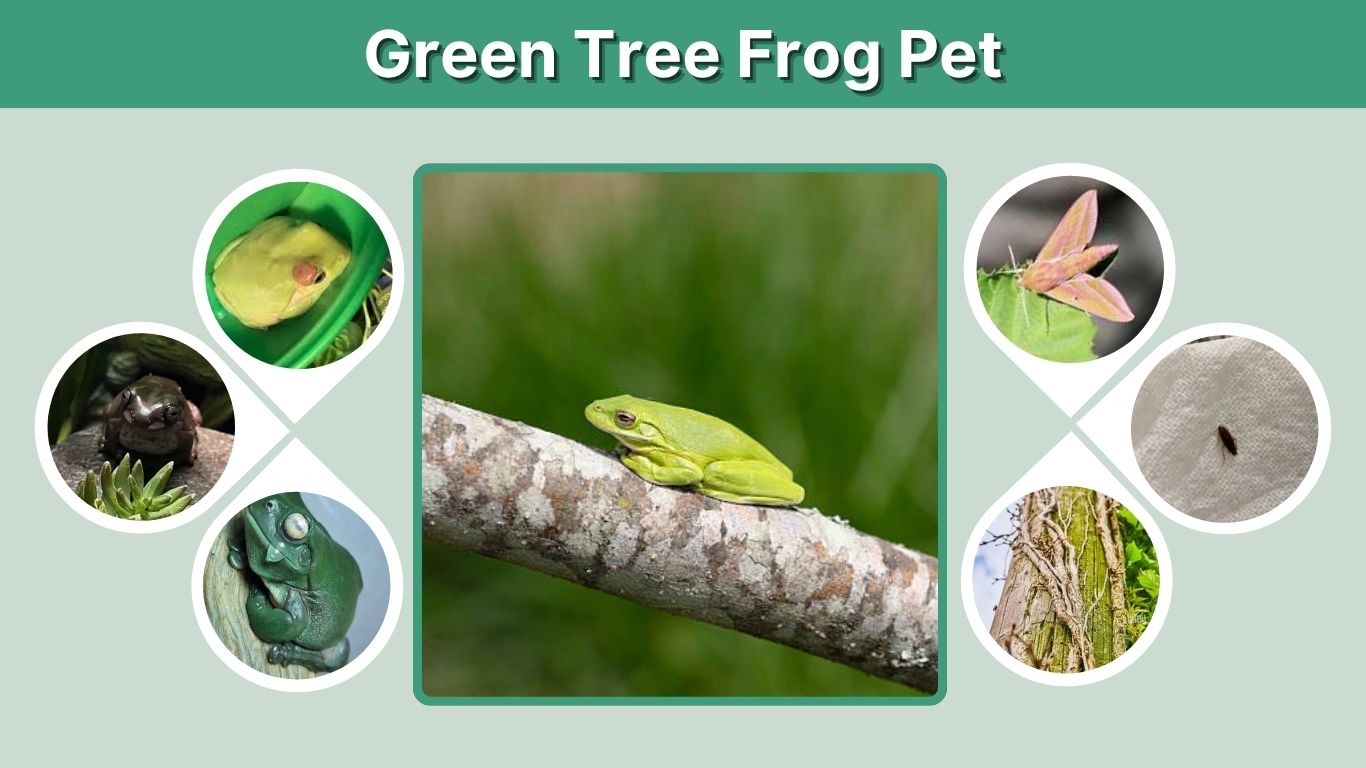
Green tree frogs can make interesting pets for people who enjoy watching animals rather than handling them often. They are small, attractive, and usually easier to care for than many exotic amphibians, but they still need the right habitat, humidity, diet, and cleaning routine. Before keeping a green tree frog as a pet, it is important to understand its daily care needs and long-term responsibility.
Are Green Tree Frogs Good Pets?
Green tree frogs can be good pets for beginners who want a display animal, not a cuddly companion. They are fun to watch, especially at night when they become active, climb around the enclosure, and hunt insects. However, they are delicate amphibians with sensitive skin, so they should not be handled frequently.
A green tree frog pet is best for someone who can maintain proper humidity, provide live insects, clean the enclosure regularly, and avoid unnecessary stress. They are not ideal for young children who want a pet they can hold often.
Green tree frogs are generally quiet during the day, but males may call or croak, especially at night or during breeding-related behavior. If noise is a concern, this is something to consider before bringing one home.
American Green Tree Frog vs Australian Green Tree Frog
The term “green tree frog” can refer to different species. The two most common pet species are the American green tree frog and the Australian green tree frog, also known as White’s tree frog or dumpy tree frog.
| Feature | American Green Tree Frog | Australian Green Tree Frog |
| Scientific name | Hyla cinerea | Litoria caerulea |
| Adult size | Smaller, usually around 1.5–2.5 inches | Larger, often around 3–5 inches |
| Temperament | Shy, active at night | Calm, hardy, often more tolerant |
| Handling | Minimal handling only | Minimal handling, but usually more tolerant |
| Enclosure size | Smaller vertical tank | Larger vertical tank |
| Lifespan | Often several years with good care | Can live much longer with proper care |
| Best for | Owners wanting a small display frog | Beginners wanting a hardy pet frog |
Both species need a secure, well-ventilated enclosure with climbing space, clean water, live insect food, and stable environmental conditions.
Can You Keep a Green Tree Frog as a Pet?
Yes, you can keep a green tree frog as a pet in many places, but you should check local laws first. Rules may vary depending on your country, state, or region. In some areas, it may be illegal to collect wild frogs, keep native species, or transport amphibians without permission.
It is always better to buy a captive-bred green tree frog from a reputable breeder or responsible pet shop. Captive-bred frogs are usually healthier, less stressed, and better adapted to life in captivity. Taking a wild green tree frog as a pet can harm local wildlife populations and may introduce parasites or disease into your home enclosure.
Green Tree Frog Pet Habitat
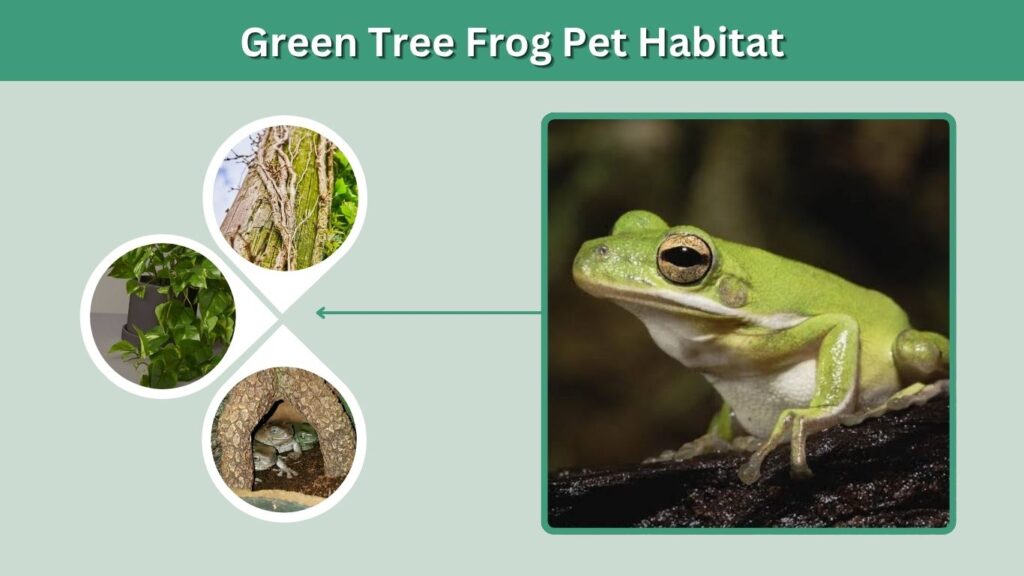
A proper green tree frog pet habitat should be tall rather than long because these frogs are arboreal, meaning they like to climb. A secure lid is essential because tree frogs can climb glass and escape through small gaps.
The enclosure should include branches, vines, cork bark, plants, hiding areas, and a shallow water dish. Live or artificial plants can help create cover and make the frog feel secure. Avoid sharp decorations, rough objects, or anything treated with chemicals.
For one American green tree frog, a small vertical terrarium may be enough if it provides climbing space. Australian green tree frogs are larger and need a bigger enclosure. If you keep more than one frog, the habitat must be large enough to prevent stress and competition.
Basic Habitat Needs
- Tall enclosure with secure lid
- Branches, vines, and climbing surfaces
- Safe plants or artificial foliage
- Shallow dish of dechlorinated water
- Proper humidity and ventilation
- Clean substrate that does not cause impaction
- Hiding spots for daytime rest
Temperature, Humidity, and Lighting
Green tree frogs need a stable environment. If the enclosure is too dry, too cold, too hot, or poorly ventilated, the frog can become stressed or sick.
Most green tree frogs do well with moderate warmth and regular humidity, but exact needs depend on the species. American green tree frogs and Australian green tree frogs do not have identical requirements, so always research the specific species you plan to keep.
Use a digital thermometer and hygrometer to monitor the enclosure. Guessing temperature and humidity is not reliable. The enclosure should also have a normal day and night cycle. Even though green tree frogs are nocturnal, they still benefit from a consistent light schedule.
Avoid placing the enclosure in direct sunlight. Glass tanks can overheat quickly, which can be dangerous for amphibians.
What Do Pet Green Tree Frogs Eat?
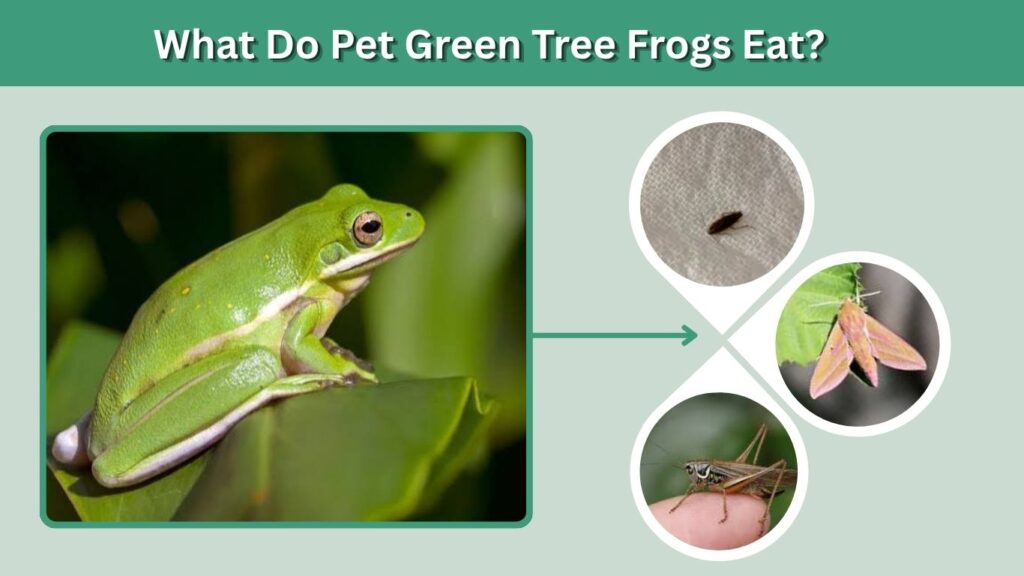
Pet green tree frogs are insectivores, which means they eat insects. They should be fed appropriately sized live prey. The food should be smaller than the space between the frog’s eyes to reduce choking risk.
Common foods include crickets, small roaches, flies, moths, and other safe feeder insects. The insects should be gut-loaded before feeding. Gut-loading means feeding the insects nutritious food before offering them to the frog.
Many pet frogs also need calcium and vitamin supplements. Insects are often dusted with calcium powder or reptile/amphibian vitamins according to the frog’s age, health, and feeding schedule.
Safe Feeding Tips
- Feed only appropriately sized insects
- Use captive-bred feeder insects when possible
- Gut-load insects before feeding
- Dust insects with calcium as needed
- Remove uneaten insects from the enclosure
- Avoid wild-caught insects because they may carry pesticides or parasites
Young frogs usually eat more often than adults. Adult green tree frogs may eat several times per week, depending on size, species, and body condition.
Do Green Tree Frogs Need Water?
Yes, green tree frogs need access to clean water at all times. They absorb moisture through their skin, so water quality is very important. Use dechlorinated water, not untreated tap water.
A shallow water dish should be available in the enclosure. The dish should be easy for the frog to enter and exit. It should also be cleaned often because frogs may soak, shed, or waste in the water.
Misting the enclosure can help maintain humidity, but the habitat should not stay constantly soaked. Too much moisture with poor ventilation can encourage mold, bacteria, and health problems.
Can You Hold a Green Tree Frog?
Green tree frogs should be handled as little as possible. Their skin is delicate and absorbent, meaning oils, soap, lotion, salt, and chemicals from human hands can harm them.
If handling is necessary, wash your hands thoroughly, rinse well, and make sure no soap residue remains. Some keepers use clean, wet, powder-free gloves for safety. Always keep handling brief and gentle.
These frogs are better suited for observation than physical interaction. If you want a pet you can regularly hold, a green tree frog may not be the best choice.
Are Green Tree Frogs Poisonous to Pets?
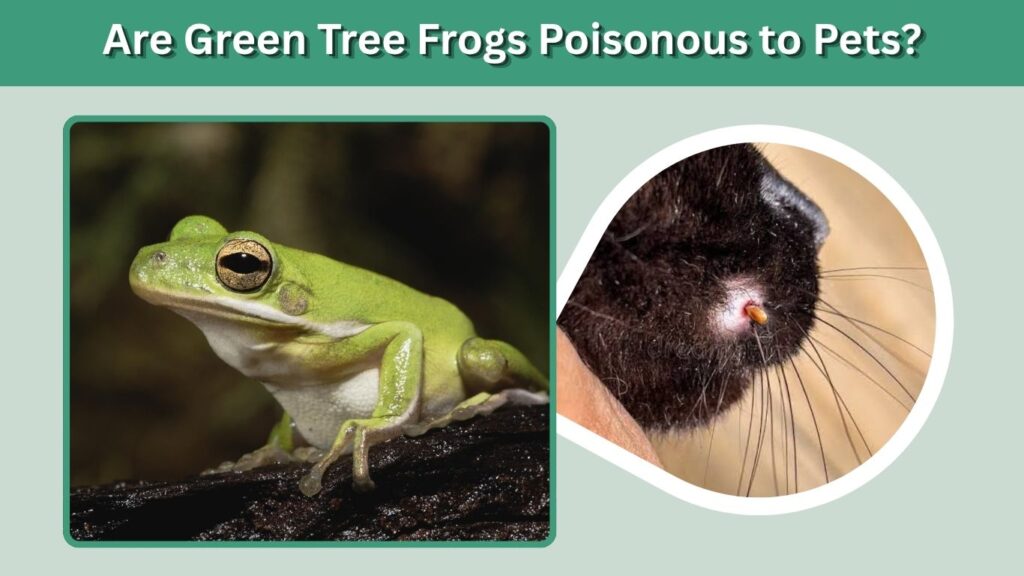
Green tree frogs can produce skin secretions that may irritate some animals. They are not a safe toy or snack for cats, dogs, or other pets. Dogs and cats may also injure or kill a frog very quickly.
Keep the enclosure secure and away from curious pets. If a dog or cat bites, licks, or eats a frog, contact a veterinarian. If the frog is injured, contact an exotic animal veterinarian.
Frogs can also carry bacteria such as Salmonella, so hygiene is important. Wash your hands after touching the enclosure, water dish, substrate, or feeding tools.
How Long Do Pet Green Tree Frogs Live?
The lifespan of a green tree frog pet depends on the species and quality of care. American green tree frogs may live several years in captivity with proper care. Australian green tree frogs can live much longer and may reach well over a decade in good conditions.
A long lifespan means ownership should not be an impulse decision. Before buying a frog, make sure you can provide food, supplies, cleaning, and veterinary care for years.
Green Tree Frog Pet Care Routine
A simple routine can help keep your frog healthy and reduce stress.
Daily Care
- Check temperature and humidity
- Replace dirty water
- Observe the frog’s behavior
- Remove uneaten insects
- Make sure the lid is secure
Weekly Care
- Clean water dish thoroughly
- Spot-clean waste and dirty areas
- Wipe enclosure surfaces if needed
- Check plants, branches, and substrate
- Inspect for mold or pests
Monthly Care
- Deep-clean parts of the enclosure as needed
- Replace or refresh substrate when necessary
- Review feeding schedule and body condition
- Check equipment such as lights, gauges, and misting tools
Avoid using harsh cleaners inside the enclosure. Any cleaning product used around amphibians must be safe and fully rinsed away.
Common Health Problems in Pet Green Tree Frogs
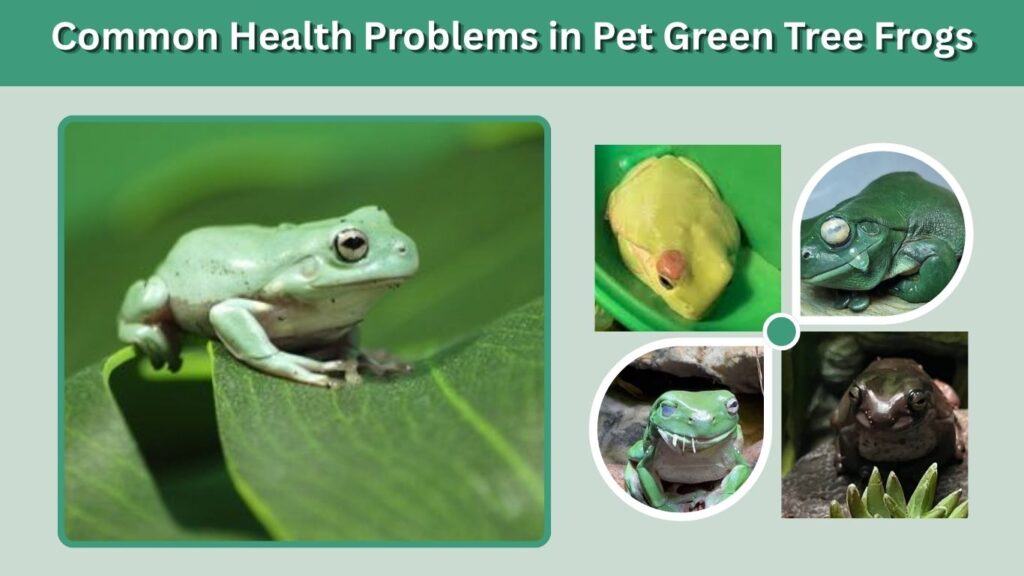
Green tree frogs can become sick if their habitat is too dirty, dry, cold, hot, or stressful. Poor diet and lack of supplements can also cause health problems.
Warning signs include:
- Loss of appetite
- Weight loss
- Lethargy
- Trouble climbing
- Red or irritated skin
- Swelling
- Cloudy eyes
- Sitting in water constantly
- Labored breathing
- Unusual spots or sores
If you notice these signs, contact an exotic pet veterinarian. Amphibians can decline quickly, so early care matters.
Green Tree Frog Pet Cost and Supplies
The cost of keeping a green tree frog depends on the species, enclosure, equipment, and local availability. The frog itself may not be the biggest expense. The habitat setup often costs more than the animal.
You may need to buy a terrarium, lid, thermometer, hygrometer, lighting, heating equipment, substrate, water conditioner, plants, branches, food, supplements, and cleaning tools.
Ongoing costs include feeder insects, supplements, replacement bulbs, substrate, and possible veterinary care. Anyone considering a green tree frog pet should plan for both setup and long-term care expenses.
Should You Get a Green Tree Frog Pet?
A green tree frog may be a good pet if you enjoy watching amphibians, can maintain a proper enclosure, and understand that handling should be limited. They are attractive, interesting, and usually not too demanding when their habitat is set up correctly.
However, they are not the right pet for everyone. They require live insects, careful humidity control, clean water, and gentle care. They are also more fragile than many traditional pets.
Choose a green tree frog only if you are ready to provide species-specific care and buy from a responsible captive-bred source.
FAQs
Are green tree frogs good pets?
Yes, green tree frogs can be good pets for beginners who want a low-handling display animal. They are interesting to watch and usually manageable with the right setup. However, they need proper humidity, clean water, live insects, and gentle care.
Can I keep a wild green tree frog as a pet?
It is usually better not to keep a wild green tree frog as a pet. Local laws may restrict collecting native frogs, and wild frogs may carry parasites or diseases. A captive-bred frog from a responsible source is safer and more ethical.
What do pet green tree frogs eat?
Pet green tree frogs eat live insects such as crickets, small roaches, flies, and other safe feeder insects. Their food should be appropriately sized, gut-loaded, and sometimes dusted with calcium or vitamin supplements depending on their needs.
Do green tree frogs like being held?
Green tree frogs do not need or enjoy frequent handling. Their skin is sensitive and can absorb oils, soap, lotion, and chemicals from human hands. They are best kept as observation pets, with handling limited to necessary care.
Are green tree frogs noisy pets?
Male green tree frogs can be noisy, especially at night, during breeding behavior, or when responding to environmental changes. Not every frog calls often, but noise is possible. If you need a silent pet, a green tree frog may not be ideal.
