
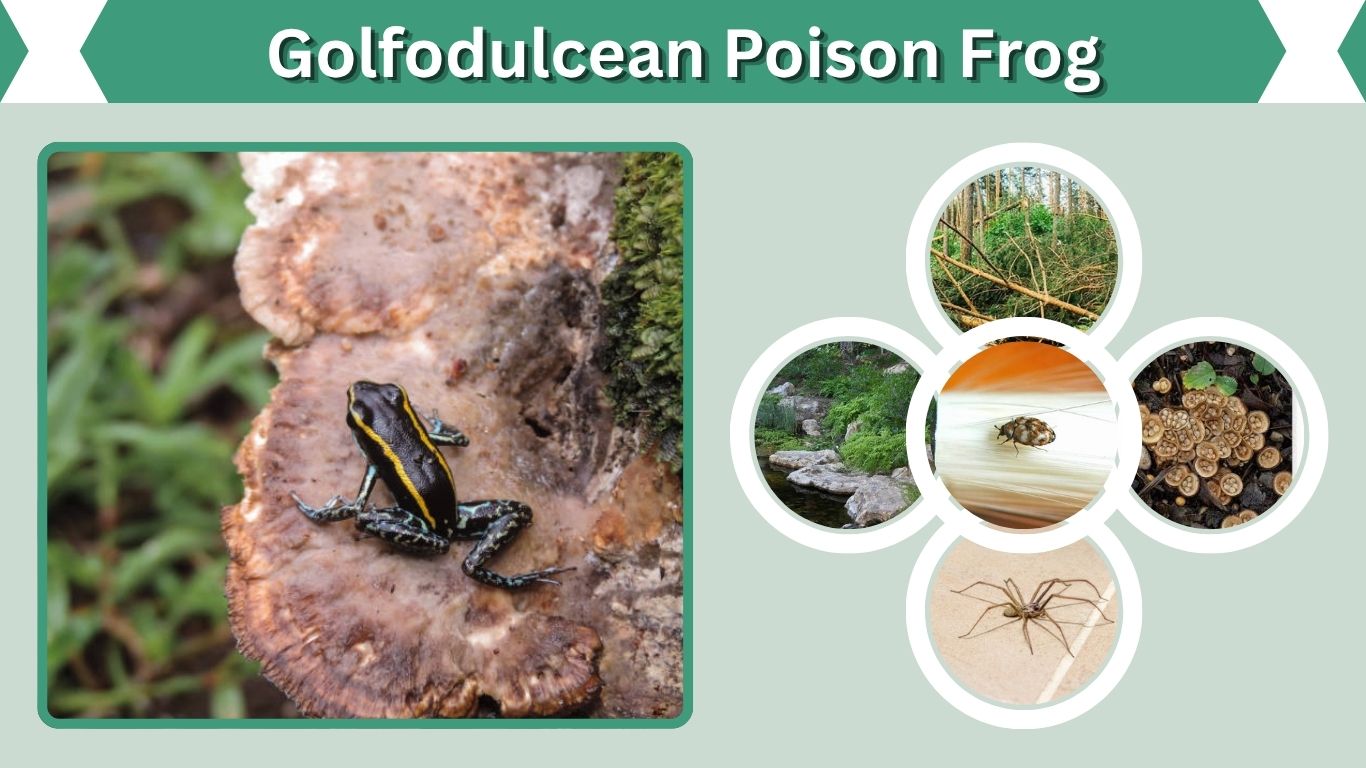
The Golfodulcean poison frog is a small, brightly marked amphibian found only in Costa Rica. Its glossy black body, orange or golden stripes, and blue-green legs make it one of Central America’s most distinctive poison frogs. It spends the day hunting tiny arthropods along humid rainforest streams. Although related to extremely toxic poison frogs, this species carries much lower toxin levels. Habitat loss, agricultural chemicals, and its limited geographic range remain important conservation concerns.
What Is a Golfodulcean Poison Frog?
The Golfodulcean poison frog, also called the Golfodulcean poison dart frog or poison-arrow frog, has the scientific name Phyllobates vittatus. It belongs to the family Dendrobatidae and the genus Phyllobates, which contains seven currently recognized species.
The name “Golfodulcean” refers to Costa Rica’s Golfo Dulce region, where much of its natural population occurs.
| Feature | Description |
| Scientific name | Phyllobates vittatus |
| Family | Dendrobatidae |
| Native country | Costa Rica |
| Adult size | Approximately 22.5–31 mm |
| Main habitat | Humid lowland forest near streams |
| Activity | Diurnal |
| Diet | Small arthropods |
| Conservation status | Vulnerable |
Golfodulcean Poison Frog Identification
This frog has a slender body, relatively long hind legs, and slightly expanded toe tips. Females are generally somewhat larger than males. Adults typically measure between 22.5 and 31 millimeters from the snout to the rear of the body.
Main Identification Features
- Glossy black head and back
- Orange, golden, red-orange, or yellow side stripes
- Stripes extending from the snout toward the thighs
- Blue-green or turquoise markings on the legs
- Pale blue or green speckles along the sides
- Dark eyes
- Slightly granular skin on parts of the back
- Females usually larger than males
Its vivid pattern is a form of warning coloration known as aposematism. The contrasting colors warn predators that the frog’s skin may contain unpleasant defensive chemicals.
Habitat and Natural Range
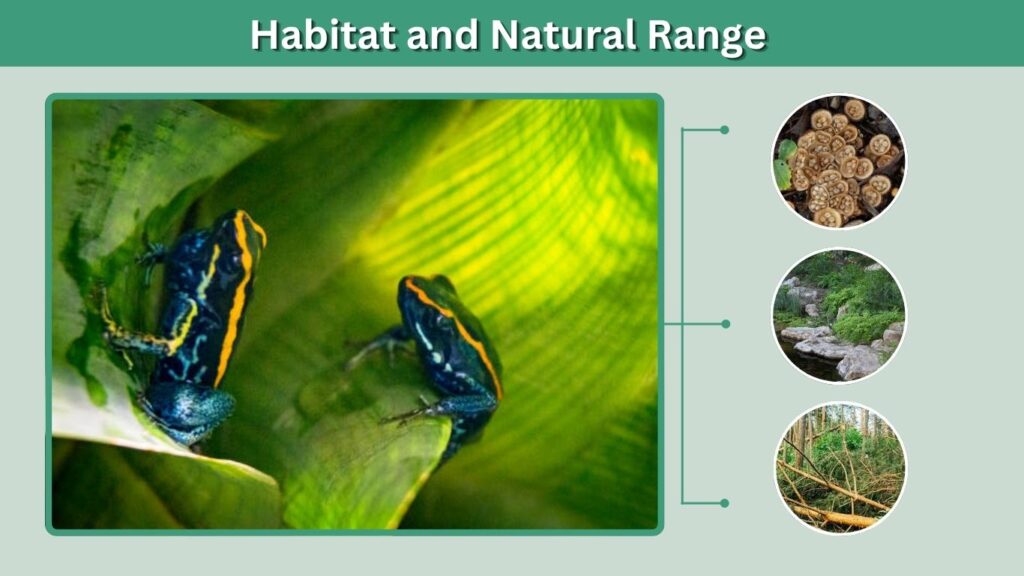
The Golfodulcean poison frog is endemic to Costa Rica. Its confirmed range includes humid forests along the country’s southern and central Pacific regions, especially around Golfo Dulce and the Osa Peninsula. Records place it at elevations of approximately 20–550 meters, and its presence is considered possible in immediately adjacent southwestern Panama.
Preferred Habitat
The species commonly occupies:
- Lowland tropical rainforest
- Moist and wet primary forest
- Mature secondary forest
- Forested valleys
- Stream edges
- Damp leaf litter
- Areas containing rocks and exposed tree roots
- Small pools and forest-floor cavities
It is primarily terrestrial and remains close to streams, where males can eventually deposit transported tadpoles. Individuals may hide in rock crevices, beneath roots, or among wet leaf litter when approached.
What Does a Golfodulcean Poison Frog Eat?
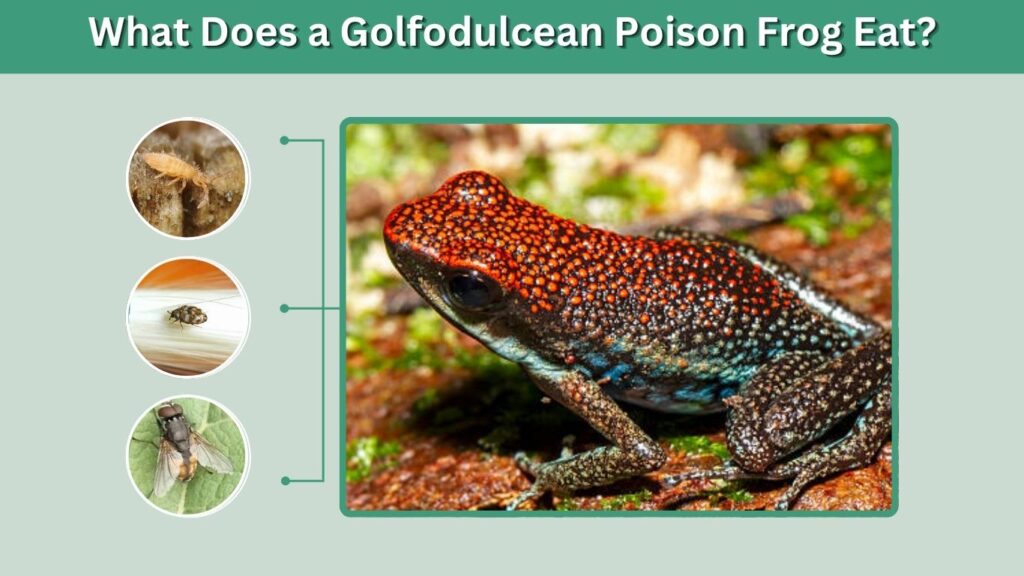
Adults are insectivores that hunt small arthropods during daylight hours. Their natural prey includes ants, mites, springtails, tiny beetles, termites, and other small invertebrates found in leaf litter.
The frog’s wild diet is closely connected to its chemical defenses. Poison frogs absorb particular alkaloids from prey and store them in glands within their skin. Research shows that poison frogs can selectively accumulate dietary alkaloids and retain them for extended periods.
Diet in Captivity
Captive frogs are commonly offered appropriately sized fruit flies, springtails, pinhead crickets, and other tiny live foods. Because these prey lack many of the alkaloids found in the wild diet, captive-bred individuals generally do not develop the same skin toxicity as wild frogs. Their food must also be nutritionally balanced because specific vitamin and carotenoid requirements can influence tadpole development and long-term health.
Is the Golfodulcean Poison Frog Dangerous?
The Golfodulcean poison frog is poisonous rather than venomous. It does not have fangs or a stinger for injecting toxins. Instead, defensive alkaloids may be present in its skin.
However, it is considerably less toxic than Colombian species such as the golden poison frog. A laboratory investigation of P. vittatus skin extracts detected several potentially toxic alkaloids and symptoms consistent with chemical toxicity, but no test animals died at the doses examined. Researchers concluded that the compounds probably provide defense against predators.
Can You Touch It?
Wild individuals should not be handled. Skin secretions could enter the eyes, mouth, cuts, or other sensitive areas. Handling is also dangerous to the frog because amphibian skin readily absorbs oils, soap, salt, lotion, and chemical residues from human hands.
Captive-bred frogs are normally much less toxic, but they should still be treated as display animals. Handling should be limited to situations involving veterinary care or essential enclosure management.
Golfodulcean Poison Frog Predators
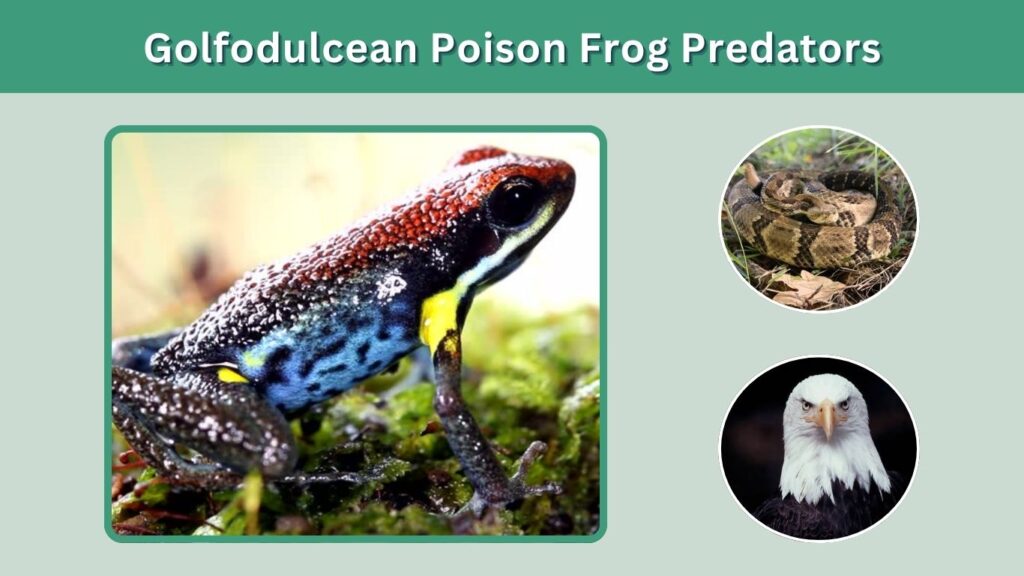
Specific predators of this species have not been documented extensively. Its potential enemies may include snakes, birds, spiders, and small mammals capable of finding frogs on the forest floor.
The frog relies on several defenses:
- Bright warning coloration
- Defensive skin alkaloids
- Rapid hopping
- Hiding among roots and rocks
- Remaining within dense leaf litter
- Daytime awareness and strong vision
Its toxins may not be powerful enough to kill every attacker, but an unpleasant taste or irritating reaction can discourage a predator from attacking similar frogs in the future. The frog’s skin alkaloids are considered primarily a defense against predation.
Behavior and Call
The Golfodulcean poison frog is active during the day. Males produce high-pitched calls from rocks, exposed roots, or other raised positions near streams. These calls help attract females and communicate with nearby males.
Males maintain home ranges connected to calling, feeding, and tadpole-depositing sites. A field study found that male home ranges could overlap, although aggressive encounters occasionally occurred. Territorial disputes may involve wrestling or one frog pressing its body against another.
Breeding and Life Cycle
Courtship may continue for several days. The female deposits a small group of eggs in moist leaf litter, tree holes, shallow ground cavities, or other protected locations. Clutches generally contain about 7–21 eggs.
Parental Care
The male guards the eggs and helps prevent them from drying out. When the eggs hatch, the tadpoles climb onto his back. He then carries them through the forest to a small pool, puddle, or slow-moving area near a stream.
The tadpoles complete their aquatic development before growing legs, absorbing their tails, and leaving the water as froglets. This male parental care increases the young frogs’ chances of reaching suitable water.
Conservation Status and Threats
The Golfodulcean poison frog is listed as Vulnerable. Its small natural range makes it particularly sensitive to environmental change, even where local populations appear stable.
Major threats include:
- Clearing rainforest for agriculture
- Fragmentation of streamside habitat
- Pesticide exposure
- Water pollution
- Climate-related changes in moisture
- Collection for the wildlife trade
- Amphibian diseases
Important populations occur in protected Costa Rican areas, including Corcovado National Park and the Golfo Dulce Forest Reserve. Continued protection of forests, streams, and habitat connections is essential for its survival. The species is also included in CITES Appendix II, which regulates international trade.
Can Golfodulcean Poison Frogs Be Kept as Pets?
Captive-bred individuals are kept by experienced amphibian enthusiasts and zoos. They require a secure tropical vivarium with stable humidity, ventilation, plants, leaf litter, clean water, and a regular supply of tiny live prey.
They are not suitable for frequent handling, and wild-caught specimens should never be purchased. Prospective keepers should confirm local ownership regulations and obtain only legally produced, traceable captive-bred frogs.
FAQs
What is the scientific name of the Golfodulcean poison frog?
Its scientific name is Phyllobates vittatus. It belongs to the poison frog family Dendrobatidae and is one of seven recognized species in the genus Phyllobates.
Where does the Golfodulcean poison frog live?
It lives in humid lowland forests along Costa Rica’s Pacific side, particularly around Golfo Dulce and the Osa Peninsula. It is usually found near streams at elevations of approximately 20–550 meters.
What does a Golfodulcean poison frog eat?
It eats ants, mites, springtails, small beetles, and other tiny arthropods. Some alkaloids obtained from wild prey are stored in its skin and contribute to its chemical defenses.
How poisonous is the Golfodulcean poison frog?
It has much lower toxicity than the golden poison frog. Studies have detected defensive alkaloids in its skin, but experimental doses did not cause mortality in the tested animals.
How big does a Golfodulcean poison frog get?
Adults generally measure approximately 22.5–31 millimeters, or around 0.9–1.2 inches. Females are usually slightly larger than males.
