
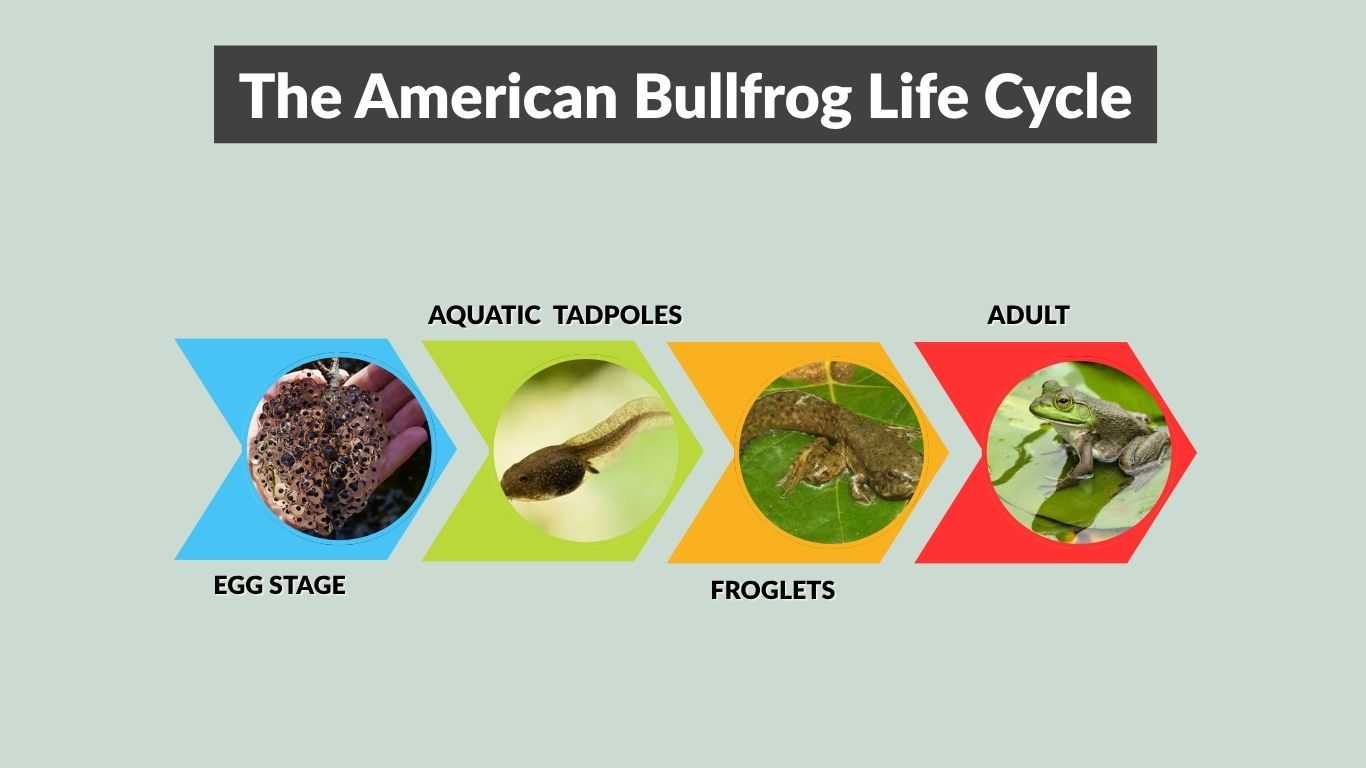
The American bullfrog life cycle has five main stages: egg, tadpole, tadpole with legs, froglet, and adult. Unlike many smaller frogs that transform within one season, American bullfrog tadpoles may remain in water for months or even several years. Development speed depends largely on water temperature, food, climate, and habitat quality. After metamorphosis, young bullfrogs continue growing until they reach reproductive maturity and begin the cycle again.
American Bullfrog Life Cycle at a Glance
| Life stage | Typical development |
| Breeding and fertilization | Occurs during warm months |
| Egg stage | Usually hatches within 2–5 days |
| Tadpole stage | About 4 months to 2–3 years |
| Metamorphosis | Legs develop, lungs mature, and tail is absorbed |
| Froglet stage | Small frog with a remaining tail |
| Juvenile stage | Grows and develops adult features |
| Sexual maturity | Commonly reached at about 2–5 years |
| Adult lifespan | Often around 7–9 years in the wild |
Timelines vary considerably across the bullfrog’s range. Tadpoles in warm southern habitats may transform more quickly, whereas those in cooler northern waters commonly overwinter and may not complete metamorphosis until their second or third summer.
Stage 1: Breeding and Mating
The life cycle begins when sexually mature bullfrogs gather around permanent ponds, lakes, reservoirs, marshes, and slow waterways. Breeding occurs during warm weather because egg and tadpole development depend on suitable water temperatures.
In northern regions, breeding commonly occurs from May through July. In warmer southern areas, the season may extend from February through October. Local rainfall, latitude, temperature, and water availability can shift these dates.
Male Calling and Territory
Adult males establish territories along the edges of permanent water. They produce the familiar deep “jug-o-rum” advertisement call to attract females and warn competing males.
Territorial males may wrestle, push, or chase rivals. Calling often becomes more frequent after dark, although males may also call during daylight at the height of the breeding season.
Amplexus and Fertilization
After approaching a male, the female is grasped behind the front legs in a mating position called amplexus. As she releases her eggs, the male releases sperm over them.
Fertilization occurs externally in the water. The adults do not build a nest or remain to care for the eggs or tadpoles after spawning.
Stage 2: American Bullfrog Eggs
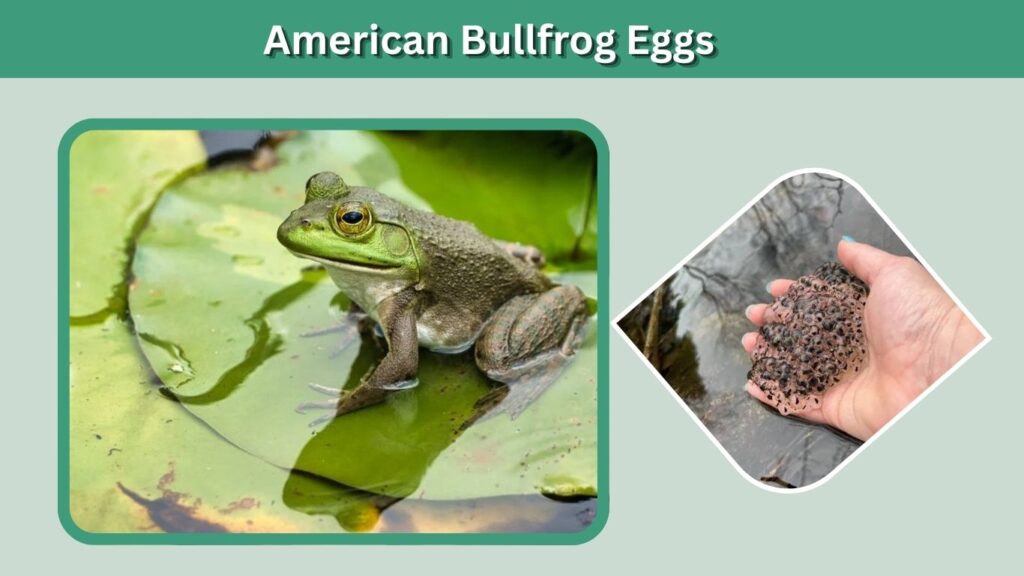
A female deposits thousands of eggs in a wide, thin film that floats on or near the water’s surface. The mass may cover more than 12 inches and is usually placed in quiet, shallow water where the developing embryos receive warmth and oxygen.
How Many Eggs Do Bullfrogs Lay?
A female may lay approximately 6,000–20,000 eggs during one spawning event. Some regional sources report a broader range of about 2,000–25,000 eggs, with larger, mature females generally capable of producing bigger egg masses.
Producing thousands of eggs does not mean thousands will become adults. Fish, aquatic insects, turtles, birds, other frogs, disease, poor water conditions, and drying habitat can destroy eggs or young tadpoles.
How Long Do Bullfrog Eggs Take to Hatch?
Bullfrog eggs usually hatch within two to five days, although cool water may extend development to approximately one week. Temperature and other conditions in the breeding pond influence the exact timing.
Tiny tadpoles emerge with tails and gills, beginning the longest and most variable part of the life cycle.
Stage 3: American Bullfrog Tadpole
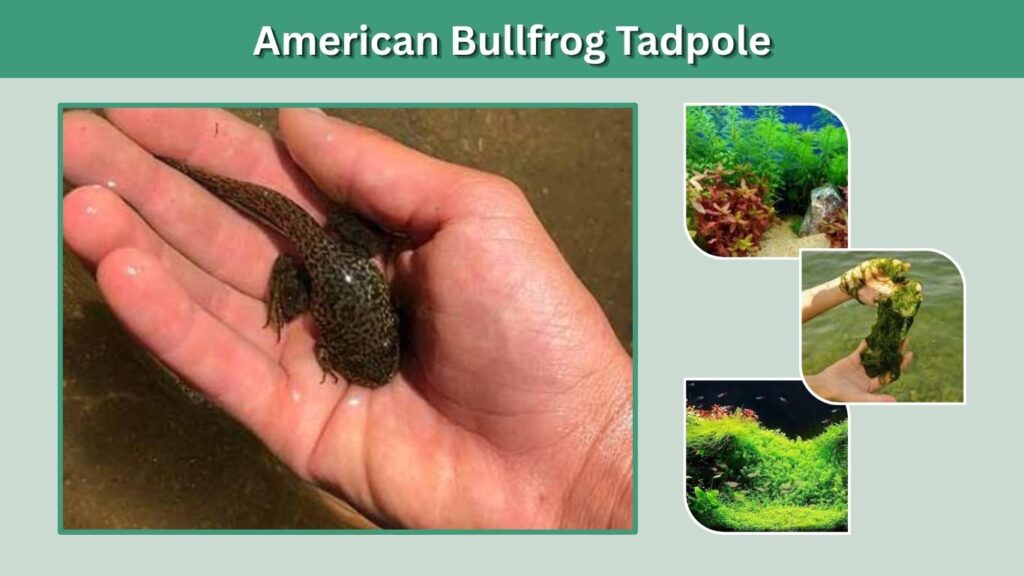
The tadpole is an aquatic larva designed for life underwater. Young bullfrog tadpoles have oval bodies, long finned tails, and gills that allow them to obtain oxygen from water.
Small tadpoles may appear dark with gold markings. As they grow, they generally become olive green or brownish with distinct black specks. Large bullfrog tadpoles can exceed four inches before metamorphosis.
What Do Bullfrog Tadpoles Eat?
Bullfrog tadpoles generally graze on algae, aquatic plants, microorganisms, decaying organic material, and other edible matter found on submerged surfaces. They may also consume small aquatic organisms or animal material when available.
Their feeding helps them accumulate the energy needed for growth, overwintering, and the major physical changes involved in metamorphosis.
How Long Is the Tadpole Stage?
The American bullfrog has an unusually long tadpole period. USGS reports that transformation may take from approximately four months to two years, while colder populations may remain tadpoles until their second or third summer.
In warm regions with abundant food, some tadpoles may transform during their first year. In northern ponds, they frequently overwinter beneath the water before continuing development when temperatures rise.
| Environmental condition | Likely effect |
| Warm water | Faster growth and development |
| Cold climate | Longer tadpole stage |
| Abundant food | Supports faster growth |
| Limited food | May delay development |
| Permanent deep water | Allows tadpoles to overwinter |
| Pond drying | Can kill tadpoles before transformation |
The long aquatic stage explains why bullfrogs depend heavily on permanent or long-lasting water. Seasonal ponds that dry before metamorphosis generally cannot support successful bullfrog reproduction.
Stage 4: Tadpole With Legs
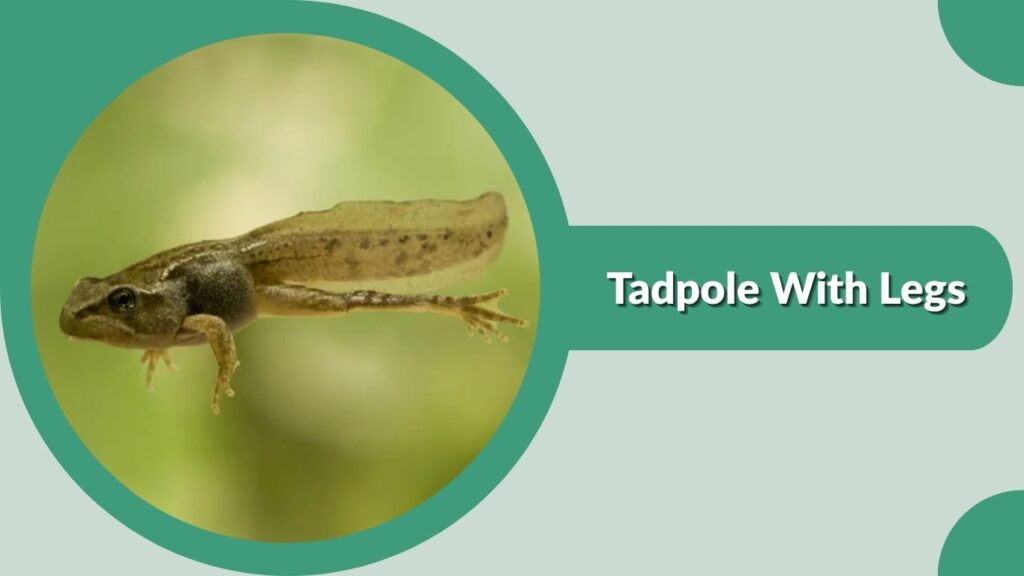
Metamorphosis begins as the tadpole’s body changes from an aquatic, gill-breathing larva into an air-breathing frog.
The hind legs normally become visible first. They grow longer and stronger while the front legs develop internally and later emerge. The lungs mature, the digestive system changes, the mouth widens, and the eyes become more prominent.
What Happens to the Tail?
The tail is not simply dropped. Its tissues are gradually broken down and absorbed by the developing frog, providing nutrients during a period when the animal may eat less.
As the tail shrinks, the young bullfrog spends more time near the surface and shoreline. Its lungs and legs increasingly allow it to breathe air, swim differently, and move onto land.
Stage 5: Bullfrog Froglet
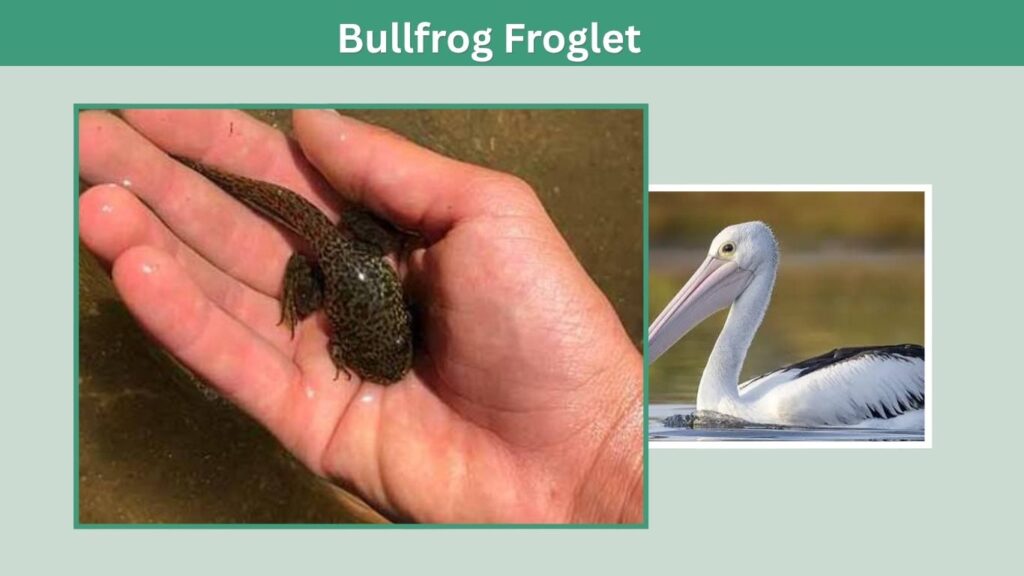
A froglet looks like a miniature adult but may still have a short tail. At this stage, it has four legs, functioning lungs, a wider mouth, and a body suited to capturing animal prey.
The remaining tail continues shrinking until it disappears. The froglet shifts from the largely plant- and detritus-based feeding habits of a tadpole toward the carnivorous diet of an adult.
Young froglets face heavy predation from fish, snakes, birds, turtles, mammals, and larger bullfrogs. They commonly remain near dense shoreline vegetation, shallow water, and other protective cover.
Stage 6: Juvenile American Bullfrog
Once the tail has been completely absorbed, the animal is considered a juvenile frog. It resembles an adult but remains smaller and is not yet capable of breeding.
Juvenile bullfrogs feed on insects and other animals that fit inside their mouths. As they grow, they begin taking larger prey and develop the heavy body, powerful hind legs, and broad head associated with adults.
Bullfrogs may require several years to become reproductively mature. Regional sources place breeding maturity broadly between two and five years of age, depending on growth, sex, climate, and location.
Stage 7: Adult American Bullfrog
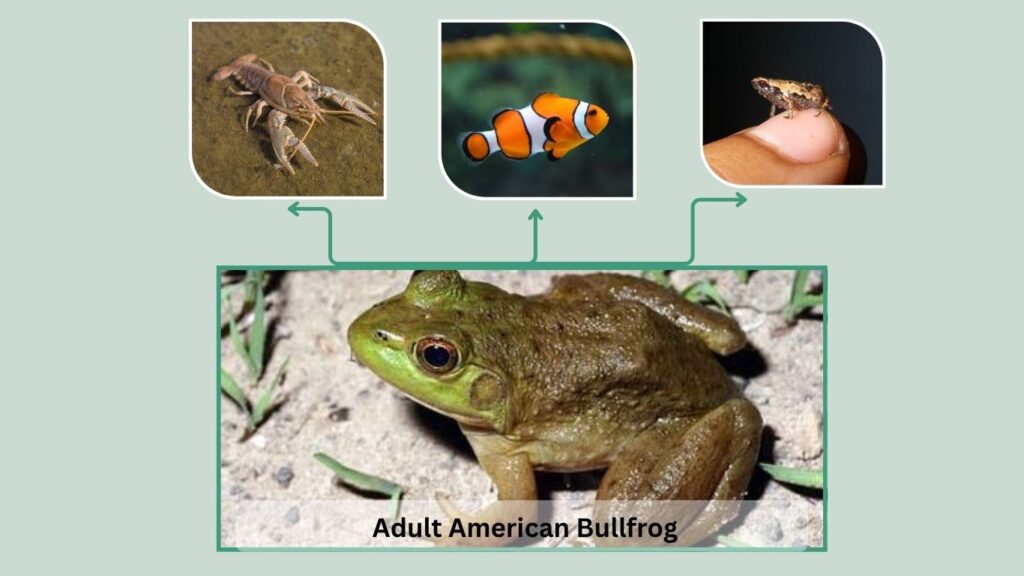
A mature American bullfrog is a large, primarily aquatic predator that remains close to ponds, lakes, marshes, reservoirs, and slow-moving waterways.
Adults use a sit-and-wait hunting strategy. They consume insects, crayfish, fish, smaller frogs, snakes, small mammals, birds, and other animals they can overpower and swallow. Cannibalism may occur, meaning large bullfrogs can eat younger members of their own species.
Adult Male vs Female
Adult males usually have eardrums larger than their eyes and develop yellow throats during the breeding season. Females generally have pale throats and eardrums approximately equal in size to their eyes.
Once mature adults reproduce, females lay new egg masses and the life cycle begins again.
How Long Do American Bullfrogs Live?
American bullfrogs commonly live about seven to nine years in the wild, although many die during the vulnerable egg, tadpole, froglet, or juvenile stages. A captive longevity record of approximately 16 years has been reported.
Climate, predators, food, disease, water quality, habitat stability, hunting, and competition all influence how long an individual survives.
FAQs
What are the stages of the American bullfrog life cycle?
The main stages are egg, tadpole, tadpole with legs, froglet, juvenile, and adult. The most dramatic change occurs during metamorphosis, when legs and lungs develop and the tail is absorbed.
How long does it take a bullfrog tadpole to become a frog?
Transformation may take approximately four months to two years, but tadpoles in cold northern habitats may not transform until their second or third summer.
How many eggs does an American bullfrog lay?
A female commonly lays thousands of eggs in a thin surface film. Reported egg counts range from approximately 2,000 to 25,000, depending partly on the female’s size and location.
Do bullfrog tadpoles survive winter?
Yes. Tadpoles living in permanent water may overwinter beneath the surface and resume development when the water warms. This allows the larval stage to continue for more than one year.
At what age do American bullfrogs reproduce?
American bullfrogs generally reach reproductive maturity between about two and five years of age. Development time differs with climate, growth rate, food availability, and regional conditions.
