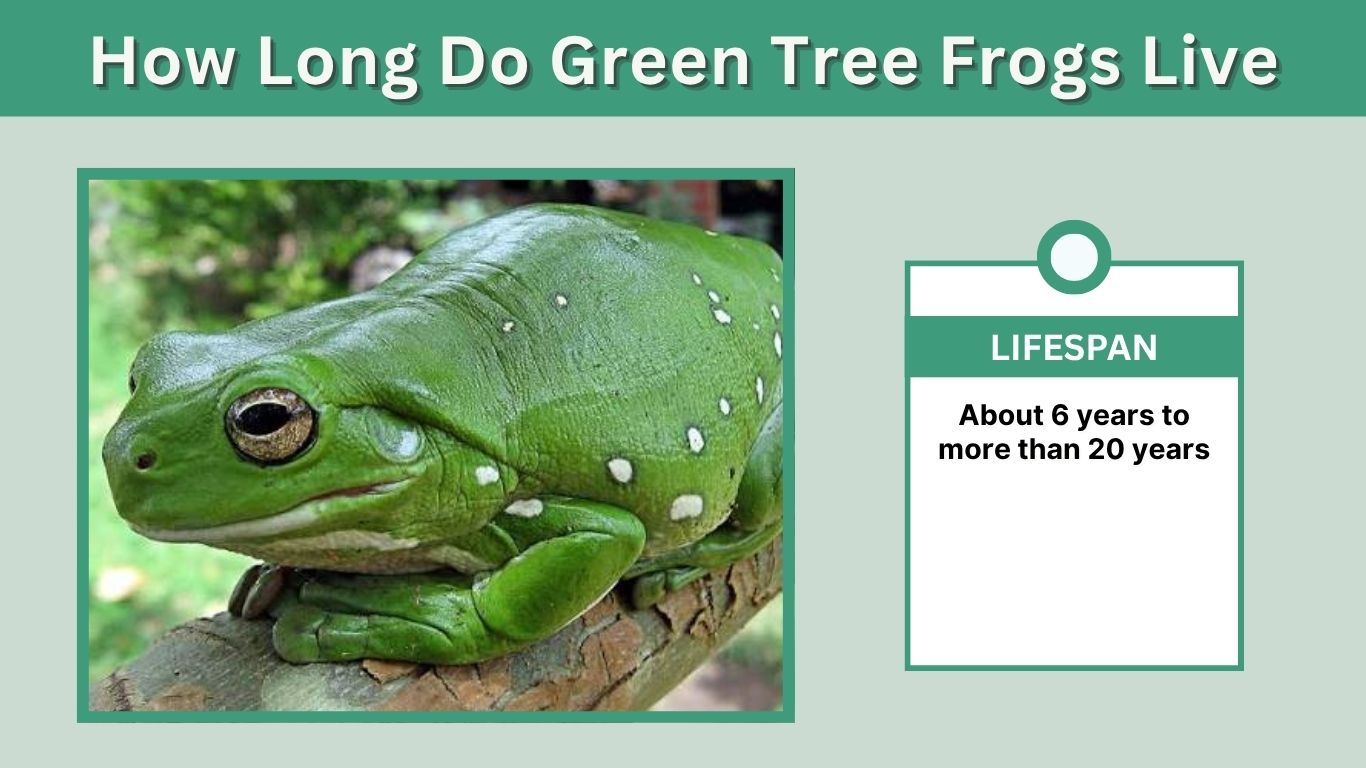
Green tree frogs may live from about 6 years to more than 20 years, depending on the species and living conditions. American green tree frogs can survive for approximately six years in captivity, while Australian green tree frogs commonly live much longer—often 8–16 years, with exceptional captive records reaching about 21 years. Wild lifespans are harder to measure because frogs face predators, disease, drought, severe weather, and habitat loss.
Green Tree Frog Lifespan at a Glance
| Green tree frog | Scientific name | Captive lifespan | Wild lifespan |
| American green tree frog | Hyla cinerea | Up to about 6 years | Not well documented |
| Australian green tree frog | Ranoidea caerulea or Litoria caerulea | Commonly 8–16 years; records near 21 | Not precisely documented |
| Red-eyed tree frog | Agalychnis callidryas | Separate species with different care needs | Varies |
The name “green tree frog” does not refer to just one animal. In the United States, it commonly means the American green tree frog. In Australia and the pet trade, it may refer to the much larger Australian green tree frog, also called White’s tree frog or the dumpy tree frog.
American Green Tree Frog Lifespan
The American green tree frog, Hyla cinerea, can live for approximately six years in captivity when kept under suitable conditions. Reliable estimates of its average wild lifespan are not currently available.
Wild individuals probably have shorter average lives because many die as eggs, tadpoles, froglets, or young adults. Fish, snakes, birds, mammals, larger frogs, drought, freezing weather, disease, and wetland destruction can all reduce survival.
What Affects an American Green Tree Frog’s Lifespan?
Important factors include:
- Stable temperature and humidity
- Clean, dechlorinated water
- Proper ventilation
- A nutritious insect-based diet
- Calcium and vitamin supplementation
- Adequate climbing and hiding areas
- Low stress and limited handling
- Protection from parasites and infections
- Regular enclosure cleaning
Amphibians have highly permeable skin and are sensitive to environmental instability. Incorrect temperatures, poor sanitation, nutritional deficiencies, and overcrowding can increase disease risk and shorten their lives.
Australian Green Tree Frog Lifespan
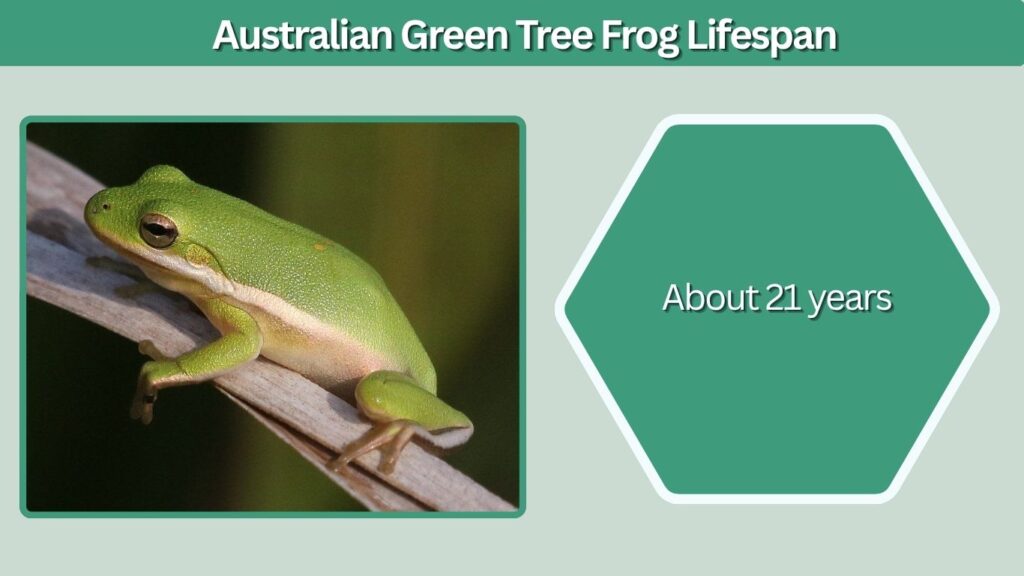
The Australian green tree frog generally lives considerably longer than the American species. Captive longevity records summarized by Animal Diversity Web include average lifespans of approximately 8.5 and 16 years, with an exceptional individual reportedly living for about 21 years.
These large, hardy frogs are popular pets, but longevity still depends on correct husbandry. Obesity, vitamin deficiency, dehydration, poor hygiene, overheating, skin infections, and inappropriate substrates can reduce their lifespan.
Wild vs Captive Lifespan
Captive frogs can live longer because they receive regular food and are protected from predators, drought, and severe weather. However, captivity only improves longevity when the enclosure closely matches the species’ biological needs.
| Condition | Wild frog | Captive frog |
| Food | Changes seasonally | Supplied regularly |
| Predators | Numerous | Usually absent |
| Temperature | Naturally fluctuates | Must be controlled |
| Water quality | Depends on habitat | Controlled by keeper |
| Disease | Difficult to observe | May be detected earlier |
| Stress | Predators and competition | Handling and poor housing |
| Lifespan records | Difficult to measure | Easier to document |
Captive amphibians require species-appropriate temperature, humidity, ventilation, water quality, and nutrition. Long life should not be expected when these basic requirements are missing.
Where Do American Green Tree Frogs Live?
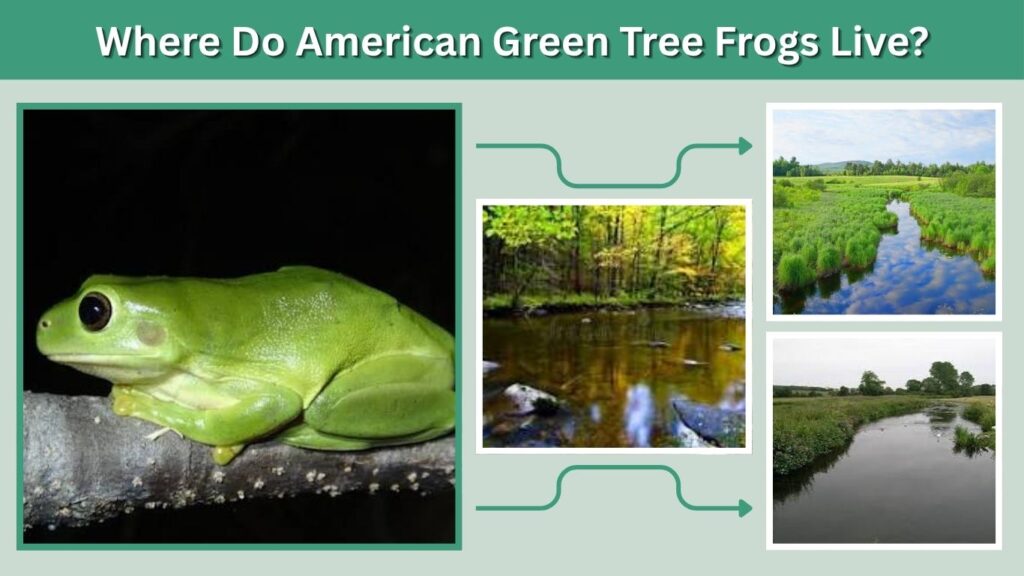
American green tree frogs occur across the central and southeastern United States. Their range extends from the eastern shores of Virginia through Florida and west to central Texas. They also occur as far north as Maryland and Delaware.
They commonly live around:
- Marshes and swamps
- Ponds and lakes
- Slow streams
- Wet ditches
- Cattail stands
- Reeds and tall grasses
- Shrubs beside water
- Flooded woodland
These frogs are excellent climbers, but they do not spend their entire lives high in trees. They frequently perch on reeds, grass stems, shrubs, branches, and other vegetation close to freshwater.
Where Do Australian Green Tree Frogs Live?
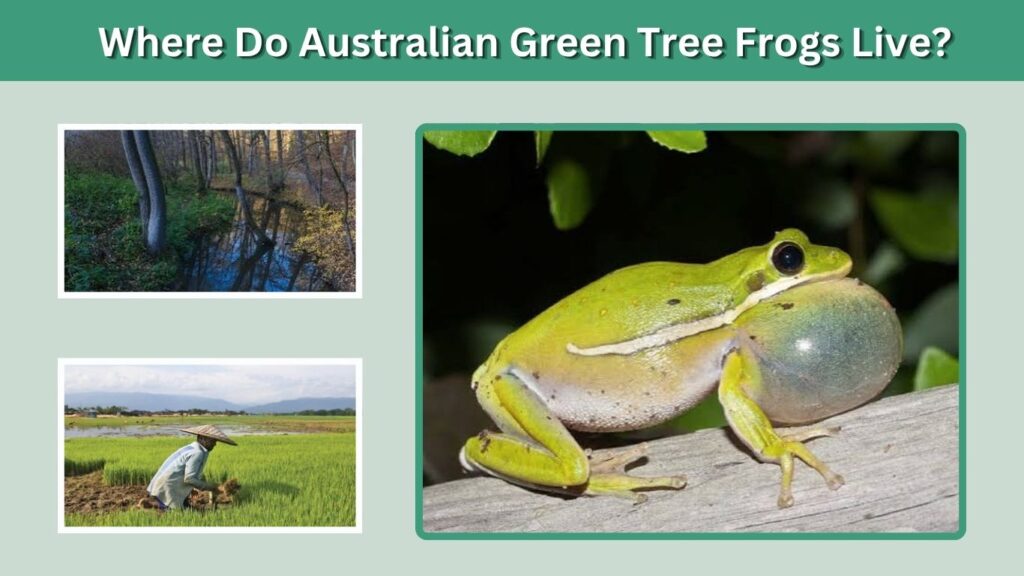
Australian green tree frogs occur across northern Western Australia, the Northern Territory, northeastern South Australia, Queensland, and much of New South Wales.
They inhabit moist forests, seasonally dry woodland, wetlands, agricultural areas, and suburban environments. They may shelter in hollow trees, water tanks, drainpipes, outdoor bathrooms, roof spaces, and other cool, damp places. Their ability to tolerate seasonally wet and dry environments helps them survive near people.
Do Green Tree Frogs Live in Water?
Adult green tree frogs do not live permanently underwater. They are climbing frogs that spend much of their time on vegetation or other raised surfaces. However, they remain closely associated with freshwater because they need moisture and usually reproduce in ponds, marshes, ditches, or temporary pools.
Their eggs and tadpoles are aquatic. After metamorphosis, young frogs develop lungs and climbing feet and begin spending more time outside the water.
A captive enclosure should therefore provide high climbing space and a shallow water container rather than functioning as a fully aquatic aquarium.
Where Do Green Tree Frogs Live During Winter?
American green tree frogs become less active when temperatures fall. They seek protected locations beneath bark, leaf litter, logs, vegetation, or other insulated cover. Their activity returns as warmer, wetter conditions arrive.
Australian green tree frogs living in dry or cool conditions may reduce activity and shelter in protected spaces. During dry periods, they can conserve moisture by forming a protective layer from mucus and shed skin.
Pet frogs should not be deliberately exposed to outdoor winter temperatures. Captive temperatures should remain within the appropriate range for the exact species.
Can Green Tree Frogs Live Alone?
Yes. An American green tree frog can live alone without becoming lonely. The species is solitary during most of the year, although adults may gather around breeding sites during favorable weather.
A single frog can thrive when it has:
- Enough vertical climbing space
- Dense plant cover
- Secure hiding places
- Suitable temperature and humidity
- Clean water
- Properly sized live insects
- A predictable light-and-dark cycle
Keeping one frog also makes it easier to monitor feeding, droppings, weight, and signs of illness.
Can Green Tree Frogs Live Together?
Green tree frogs of the same species and similar size may sometimes be housed together when the enclosure is large enough. Each frog must have access to food, water, perches, and hiding areas.
Crowding can create competition and chronic stress. Larger frogs may also eat much smaller frogs, especially when the smaller animal can fit inside their mouth.
New frogs should be quarantined before introduction. Veterinary guidance recommends quarantine for amphibians because apparently healthy animals can introduce parasites, fungal infections, bacterial disease, or viruses into an established enclosure.
Can Green Tree Frogs Live With Other Animals?
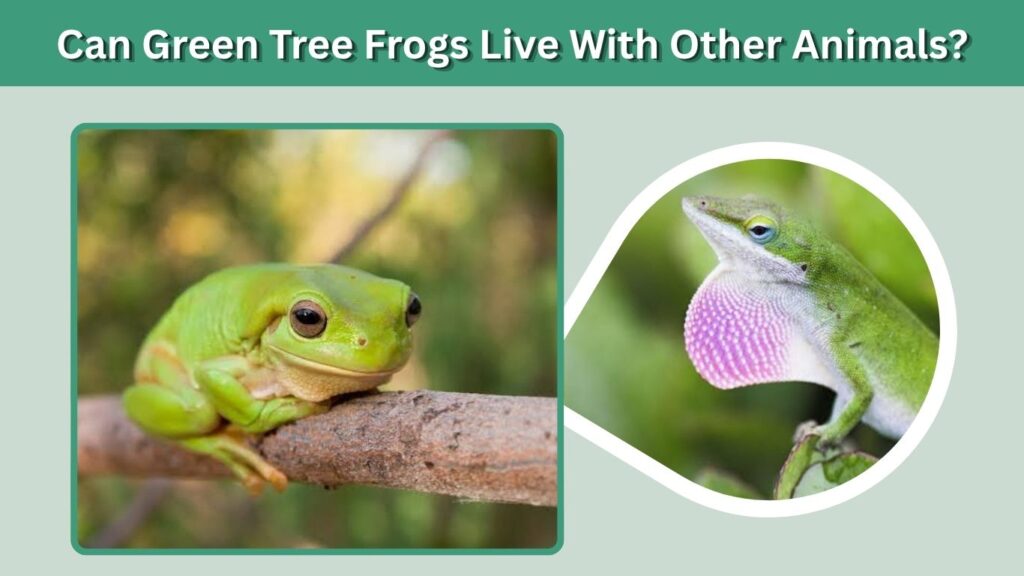
Keeping green tree frogs with geckos, anoles, fire-bellied toads, red-eyed tree frogs, or unrelated amphibians is not advisable for an ordinary home enclosure.
Different species may require different temperatures, humidity levels, diets, water depths, and activity spaces. They may also injure, eat, poison, or stress one another. Because amphibian diseases can spread through water, soil, equipment, and direct contact, a single-species enclosure is the safer choice. This recommendation follows from veterinary guidance emphasizing species-specific environments, sanitation, and quarantine.
How to Help a Pet Green Tree Frog Live Longer
Provide the Correct Environment
Use a secure, vertically oriented enclosure with branches, broad leaves, vines, and sheltered resting areas. Maintain the temperature and humidity recommended for the exact species rather than assuming all tree frogs require identical conditions.
Feed a Varied Diet
Adult tree frogs mainly eat moving invertebrates. Appropriate foods may include crickets, roaches, flies, moths, and other correctly sized feeder insects. Gut-loading and suitable calcium and vitamin supplementation help prevent nutritional disorders.
Use Safe Water
Provide clean, dechlorinated water in a shallow dish. Replace it regularly because frogs may soak, drink through their skin, and leave waste in the water.
Limit Handling
Frog skin readily absorbs oils, soap, lotion, chemicals, and other substances. Observe the frog without touching it unnecessarily. When handling is essential, use clean, wet, powder-free gloves.
Watch for Warning Signs
Seek advice from an experienced amphibian veterinarian when a frog develops persistent appetite loss, weight loss, bloating, red skin, sores, unusual shedding, difficulty climbing, abnormal posture, or breathing problems.
FAQs
How long do American green tree frogs live?
American green tree frogs can live for approximately six years in captivity with appropriate care. Their average lifespan in the wild has not been reliably established.
How long do Australian green tree frogs live?
Australian green tree frogs commonly survive for about 8–16 years in captivity. Exceptional individuals have reportedly lived approximately 21 years, making them a long-term commitment for pet keepers.
Can two male green tree frogs live together?
Two males of the same species may coexist when their enclosure is spacious and provides multiple feeding and hiding areas. Monitor them for competition, stress, injuries, or one frog preventing the other from eating.
Do green tree frogs need another frog for company?
No. American green tree frogs are solitary for much of the year and can live alone. Proper environmental conditions and nutrition are more important than providing another frog.
Can a red-eyed tree frog live with a green tree frog?
It is safer to keep them separately. Red-eyed and green tree frogs have different biological and husbandry requirements, while mixed housing increases the risks of stress, competition, injury, and disease transmission.
