
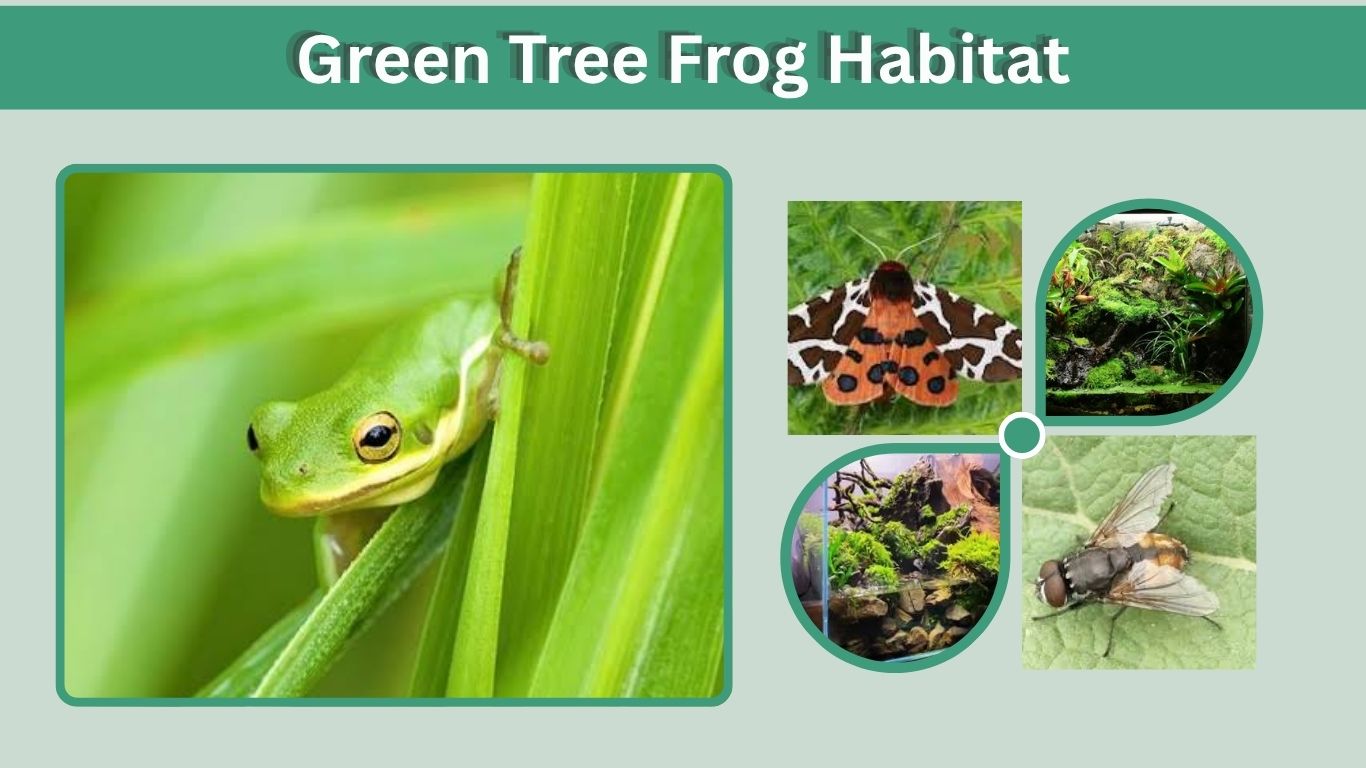
A green tree frog habitat usually combines vegetation, climbing surfaces, moisture, shelter, and access to clean water. However, “green tree frog” can describe several different species. The red-eyed tree frog lives in Central and South American rainforests, the American green tree frog occupies southeastern U.S. wetlands, and the Australian green tree frog prefers wooded habitats in Australia and New Guinea. Understanding these differences is essential when studying their natural environment or creating a safe pet habitat.
What Is the Natural Habitat of a Green Tree Frog?
Green tree frogs are primarily arboreal, meaning they spend much of their time above the ground. Most live on leaves, shrubs, branches, reeds, or tree trunks where they can hide, rest, hunt insects, and avoid predators.
Their exact natural habitat depends on the species.
Red-Eyed Tree Frog Habitat
The phrase “red-eyed green tree frog” normally refers to the red-eyed tree frog, Agalychnis callidryas. It is native to tropical areas from southern Mexico through Central America and into northern South America.
Red-eyed tree frogs inhabit humid forests close to ponds, streams, and other small freshwater areas. During hot or dry conditions, they may shelter beneath broad leaves in cooler parts of the forest.
These frogs are nocturnal. They usually sleep beneath leaves during the day and climb through vegetation to hunt after dark. Females deposit eggs on leaves hanging above water, allowing newly hatched tadpoles to fall into the pond below.
American Green Tree Frog Habitat
The American green tree frog, Dryophytes cinereus, lives mainly in the central and southeastern United States. It is especially associated with:
- Freshwater marshes
- Cypress swamps
- Vegetated ponds
- Lake edges
- Slow-moving streams
- Wet ditches and flooded fields
These frogs frequently cling to reeds, cattails, grasses, shrubs, and floating plants. During the breeding season, males gather around ponds and wetlands containing dense vegetation and call to females.
American green tree frogs may also appear around gardens, patios, drainage areas, and buildings near suitable wetlands.
Australian Green Tree Frog Habitat
The Australian green tree frog, also called White’s tree frog or Litoria caerulea, occurs naturally across Australia and southern New Guinea.
Unlike the red-eyed species, it can tolerate both seasonally wet and relatively dry conditions. It prefers moist, wooded environments but often lives away from permanent water. Rainwater trapped in tree hollows, leaf clusters, and plant cavities provides moisture while it remains in the trees.
Australian green tree frogs are also known to shelter around houses, sheds, water tanks, bathrooms, and other humid human-made structures.
Green Tree Frog Habitat Requirements
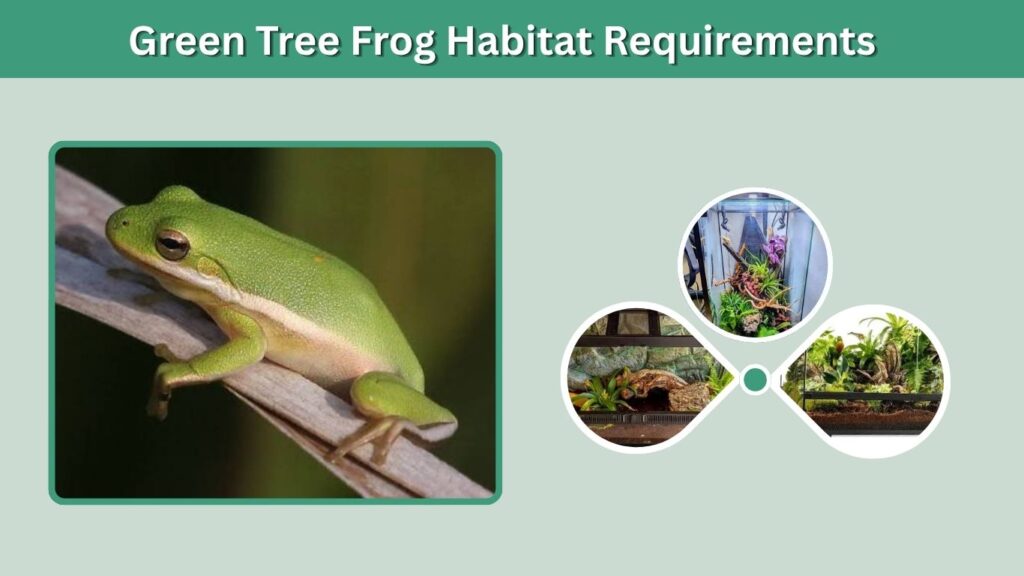
A captive habitat should recreate the most important features of the frog’s natural environment without becoming excessively wet, dirty, or poorly ventilated.
| Habitat feature | Recommended arrangement |
| Enclosure shape | A tall, securely covered terrarium |
| Climbing areas | Branches, vines, cork bark and sturdy plants |
| Hiding places | Broad leaves, foliage and elevated shelters |
| Water | A shallow dish containing clean, dechlorinated water |
| Substrate | Coconut fiber, suitable moss or another amphibian-safe material |
| Ventilation | Secure mesh or cross-ventilation |
| Lighting | A regular 10–12-hour daytime cycle |
| Monitoring | Digital thermometer and hygrometer |
Exact conditions must be matched to the species rather than applying one universal setting to every green frog.
Habitat Size and Shape
Because tree frogs climb more than they walk, enclosure height is generally more important than a large open floor.
A 15-gallon enclosure may serve as a starting point for American green tree frogs, but a taller and larger habitat provides more usable climbing room. The enclosure must also have a tightly fitted lid because tree frogs can climb glass and escape through small gaps.
The habitat should not be overcrowded. Frogs need enough open space to leap between branches and capture live insects.
Plants and Climbing Structures
Arrange branches at different heights and angles. Cork bark, bamboo, clean driftwood, vines, and sturdy plants can create elevated resting areas.
Suitable plants may include pothos, bromeliads, philodendrons, snake plants, and other non-toxic species capable of supporting the frog’s weight. Plants must be free from pesticides, fertilizers, and leaf-polishing chemicals.
Provide dense foliage near the upper part of the enclosure, where an arboreal frog is most likely to rest during daylight hours. Pet-care guidance also recommends elevated climbing décor and multiple sheltered areas.
Water and Humidity
Green tree frogs absorb water through their skin, so a shallow dish of dechlorinated water should always be available. Replace the water daily and wash the bowl regularly.
Humidity requirements vary considerably:
- Red-eyed tree frogs require a consistently humid tropical environment.
- American green tree frogs may benefit from moderate daytime humidity followed by a nighttime increase.
- Australian green tree frogs need moisture but should not be kept in a constantly saturated enclosure.
American green tree frog guidance suggests approximately 50–60% humidity during the day, rising to around 75–80% at night.
Misting can increase humidity, but the leaves and substrate should not remain waterlogged. Australian husbandry guidance emphasizes both daily light misting and adequate ventilation.
Habitat Temperature
Temperature should be measured inside the enclosure rather than estimated from room conditions.
American green tree frogs can be maintained with a daytime gradient of approximately 73–80°F, or 23–27°C, followed by a nighttime drop to 65–70°F, or 18–21°C.
For Australian green tree frogs, environmental guidance recommends approximately 20–25°C, or 68–77°F. Heat sources should be controlled by a thermostat and placed where the frog cannot touch a dangerously hot surface.
Red-eyed tree frogs require warm tropical conditions, but their exact range should follow a care plan specifically written for Agalychnis callidryas.
How to Make a Green Tree Frog Habitat
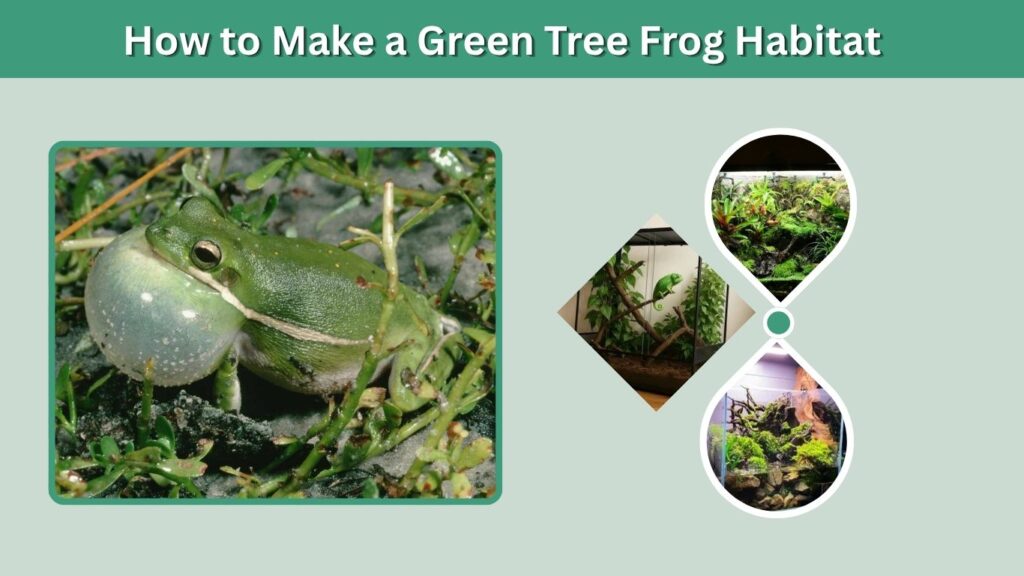
Begin with a tall glass or PVC terrarium with a secure, ventilated lid. Clean it thoroughly without leaving soap, disinfectant, or chemical residue.
Add a drainage layer when using a planted or bioactive setup. Cover it with a barrier before adding an amphibian-safe substrate. Keep the substrate slightly moist rather than soaking wet.
Install several sturdy branches from the lower portion of the enclosure to the top. Add broad-leaved plants, vines, cork bark, and at least two sheltered resting areas.
Place a shallow water bowl where it cannot easily be contaminated by falling substrate. Use dechlorinated or properly treated water.
Finally, install a thermometer, hygrometer, lighting timer, and thermostat-controlled heating equipment where necessary. Stabilize the temperature and humidity before introducing the frog.
Common Habitat Setup Mistakes
One common mistake is choosing a wide but short aquarium. Tree frogs need vertical climbing opportunities and elevated resting places.
Other mistakes include using untreated tap water, keeping the substrate constantly soaked, allowing waste to accumulate, and relying on inaccurate temperature gauges.
Avoid small gravel, loose bark chips, or decorations that can be swallowed with an insect. Pet-care guidance warns that ingestible substrate may cause dangerous digestive obstruction.
Different frog species should not be housed together. They can have incompatible environmental requirements and may expose one another to pathogens.
How Habitat Influences a Green Tree Frog’s Diet
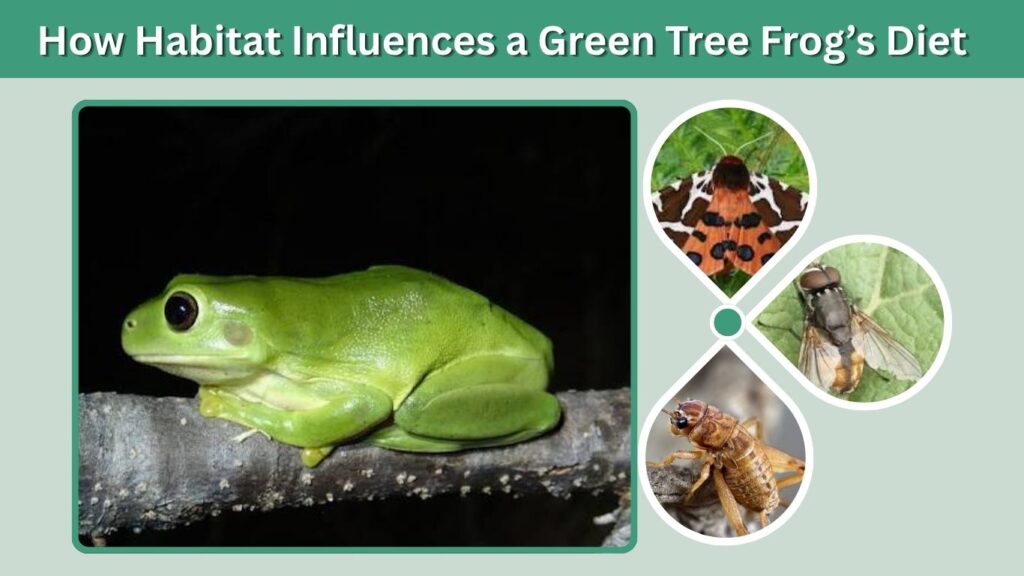
In the wild, vegetation gives green tree frogs access to moths, flies, mosquitoes, crickets, grasshoppers, and other small invertebrates.
A well-designed pet habitat allows the frog to climb, stalk, and capture live prey naturally. However, excessive decoration can make insects difficult to locate and may allow uneaten prey to hide.
Feed appropriately sized, gut-loaded insects and remove leftovers before they disturb or injure the frog. Keep feeding areas clean to prevent mold, mites, and unpleasant odors.
FAQs
Do green tree frogs live in rainforests?
Some species do. Red-eyed tree frogs inhabit humid tropical forests near freshwater, while certain Australian species occupy moist forests that may experience seasonal dryness. American green tree frogs are more strongly associated with wetlands, marshes, ponds, swamps, and vegetation along freshwater edges.
What size habitat does a green tree frog need?
The appropriate size depends on the frog’s species, age, and number. A tall enclosure is usually better than a short aquarium because tree frogs are active climbers. Provide sufficient height for branches, plants, hides, lighting equipment, and movement without overcrowding the interior.
Does a green tree frog habitat need water?
Yes. Provide a shallow bowl of clean, dechlorinated water even when the species is not primarily aquatic. The dish should allow the frog to soak without creating a drowning risk. Replace the water daily because frogs can absorb contaminants directly through their sensitive skin.
How humid should a green tree frog habitat be?
Humidity varies by species. Red-eyed tree frogs generally need tropical humidity, while American green tree frogs may experience moderate daytime humidity and higher nighttime levels. Australian green tree frogs require adequate moisture but also good airflow. Always use a hygrometer and follow species-specific recommendations.
Can I keep a wild green tree frog as a pet?
Removing wild frogs may be illegal and can damage local populations. Wild individuals may also carry parasites, diseases, or pesticide exposure. Choose a legally obtained, captive-bred frog from a responsible source and have access to a veterinarian experienced with amphibians before establishing the habitat.
