
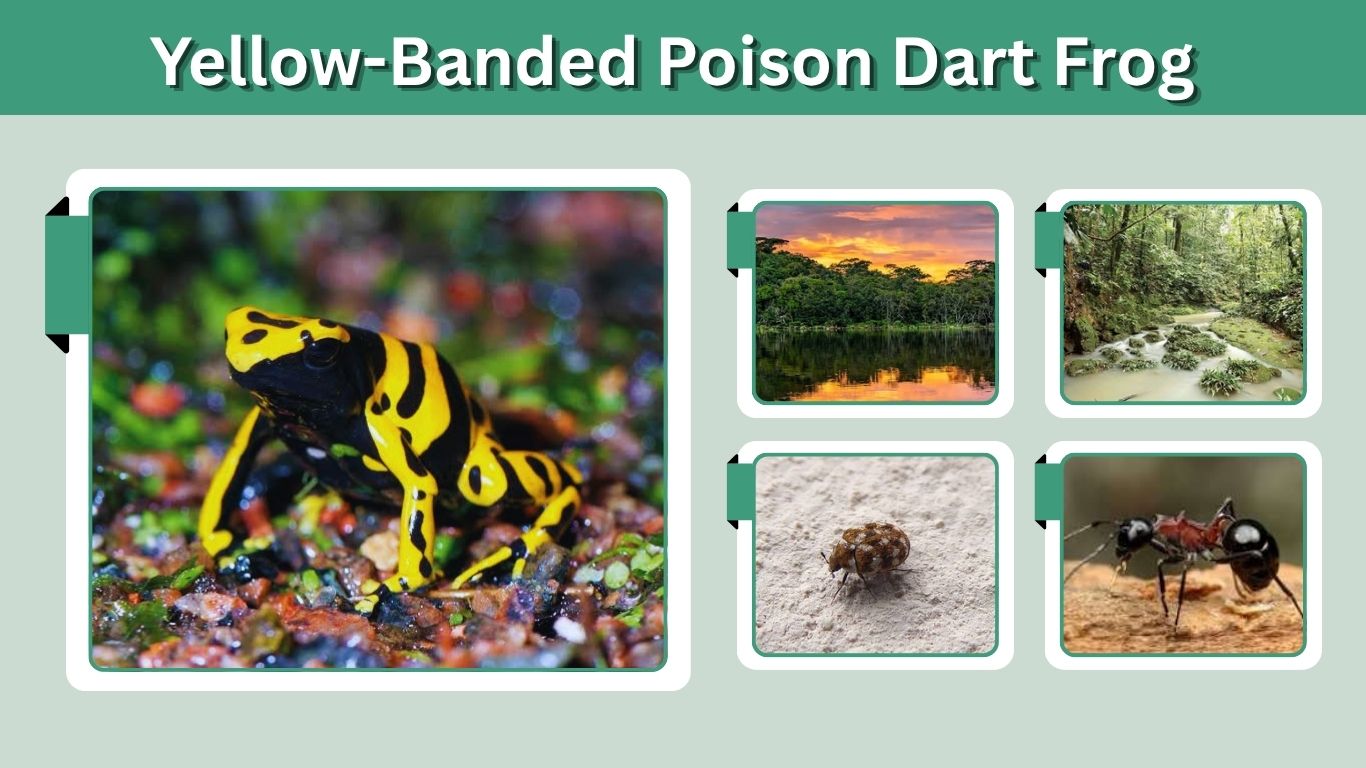
The yellow-banded poison dart frog (Dendrobates leucomelas), also called the bumblebee dart frog, is a small and striking amphibian recognized by its bold yellow-and-black coloration. Native to northern South America, this daytime-active frog lives mainly on humid rainforest floors, where it hunts ants and other tiny arthropods. Its bright colors serve as a warning to predators about toxic skin chemicals acquired largely from its natural diet. Captive-bred frogs generally lack these potent wild toxins, making the species popular among experienced amphibian keepers.
What Is a Yellow-Banded Poison Dart Frog?
The yellow-banded poison dart frog belongs to the poison frog family Dendrobatidae.
Its scientific name is Dendrobates leucomelas.
Other common names include:
- Bumblebee poison dart frog
- Bumblebee dart frog
- Yellow-banded poison frog
- Yellow-headed poison dart frog
The species is particularly easy to recognize because of its vivid yellow markings against a glossy black body.
Yellow-Banded Poison Dart Frog Classification
| Classification | Name |
| Kingdom | Animalia |
| Phylum | Chordata |
| Class | Amphibia |
| Order | Anura |
| Family | Dendrobatidae |
| Genus | Dendrobates |
| Species | Dendrobates leucomelas |
Its accepted scientific classification places it firmly within the genus Dendrobates.
What Does a Yellow-Banded Poison Dart Frog Look Like?
Adults generally have a black body crossed by vivid yellow bands and irregular spots.
The pattern can change as the frog ages. In some individuals, broad yellow-and-black bands become increasingly broken into spots.
Identification Features
Look for:
- Bright yellow bands
- Glossy black background color
- Yellow or spotted legs
- Small, compact body
- Rounded snout
- Large dark eyes
- Adhesive toe pads
- Individual variation in markings
The bright coloration is an example of aposematic coloration, meaning it serves as a warning to predators that the animal may be toxic or unpleasant to eat.
Yellow-Banded Poison Dart Frog Size
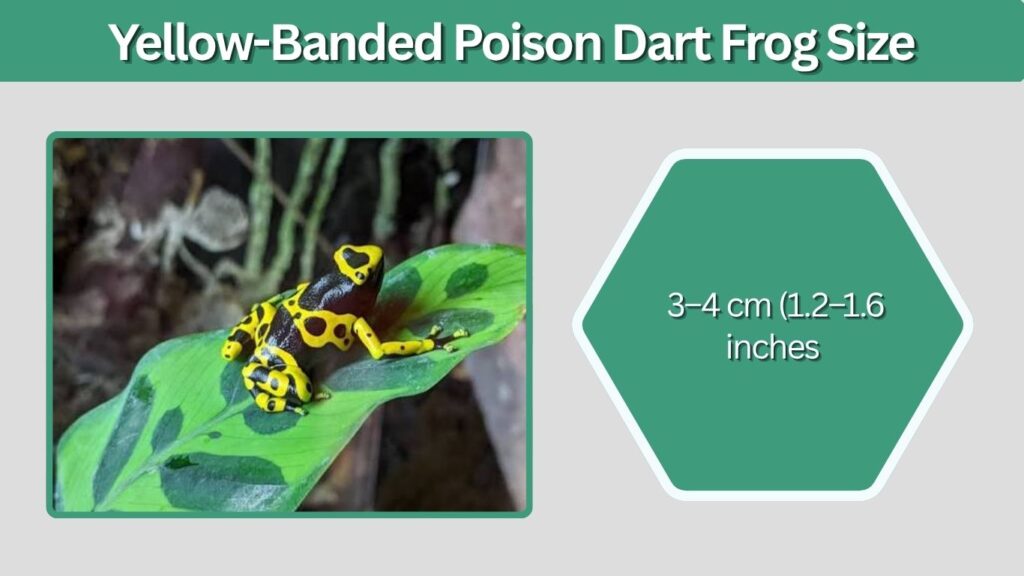
Yellow-banded poison dart frogs are small but are among the larger members of their genus.
Adults generally measure around 3–4 cm (1.2–1.6 inches) from snout to vent, although some individuals can approach 5 cm.
Females are usually slightly larger and more robust than males.
| Feature | Typical Information |
| Adult size | About 3–4 cm |
| Maximum reported size | Around 5 cm |
| Average weight | Around 3 g |
| Activity | Diurnal |
| Main color | Yellow and black |
| Diet | Small arthropods |
| Habitat | Tropical forest |
Where Do Yellow-Banded Poison Dart Frogs Live?
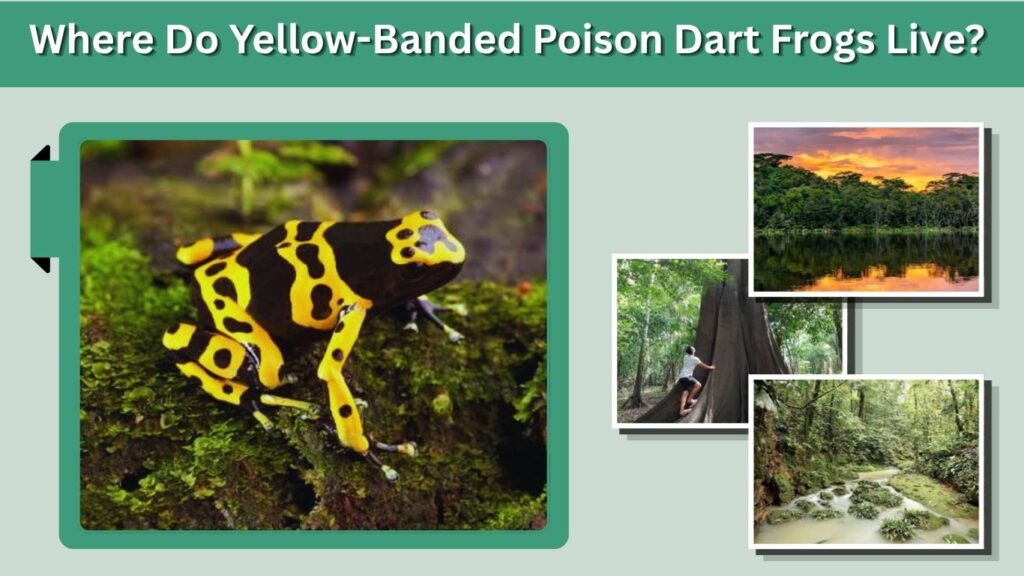
The yellow-banded poison dart frog is native to northern South America.
Its natural range includes:
- Venezuela
- Guyana
- Northern Brazil
- Southeastern Colombia
The species is especially associated with tropical areas of Venezuela.
Yellow-Banded Poison Dart Frog Habitat
These frogs favor humid tropical forests.
They spend much of their time close to the forest floor among:
- Leaf litter
- Wet rocks
- Fallen logs
- Tree roots
- Damp tree trunks
- Vegetation near streams
- Other humid hiding places
Although mainly terrestrial, they are capable climbers. Adhesive pads on their toes help them cling to vegetation and other surfaces.
They are generally active during daylight rather than being primarily nocturnal.
What Do Yellow-Banded Poison Dart Frogs Eat?
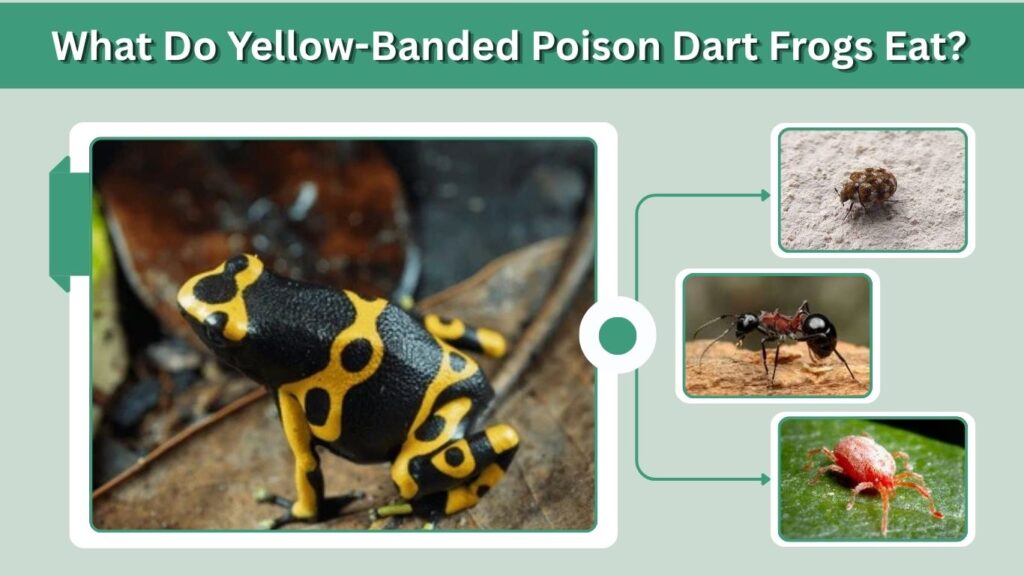
Yellow-banded poison dart frogs are primarily insectivores.
Their natural diet consists of very small arthropods, including:
- Ants
- Termites
- Tiny beetles
- Small crickets
- Mites
- Spiders
- Other tiny insects
Ants are particularly important because the frogs obtain many of the chemical compounds used in their skin defenses from their prey.
Diet in Captivity
Captive frogs are commonly offered appropriately sized foods such as:
- Flightless fruit flies
- Springtails
- Very small crickets
- Other cultured micro-invertebrates
Feeder insects also need appropriate nutritional supplementation as part of responsible captive care.
Is the Yellow-Banded Poison Dart Frog Poisonous?
Yes, wild yellow-banded poison dart frogs possess toxic skin secretions.
However, they do not inject venom through fangs or stingers. Their toxins are defensive chemicals stored in the skin.
Why Are Captive Frogs Less Toxic?
Their chemical defenses are strongly connected to diet.
Wild frogs consume ants and other arthropods containing alkaloids, which can then be stored and used as defensive skin chemicals.
Captive-bred frogs fed fruit flies and other ordinary feeder insects generally lose or never develop the potent toxin profile found in wild individuals.
Even so, frogs should be handled as little as possible because amphibian skin is delicate and can absorb substances from human hands.
Yellow-Banded Poison Dart Frog Adaptations
Several adaptations help this small frog survive in tropical forests.
Bright Warning Colors
Its yellow-and-black appearance warns potential predators that eating the frog may be unpleasant or harmful.
Toxic Skin
Wild individuals use defensive alkaloids to discourage predators.
Adhesive Toe Pads
Specialized toe pads allow the frog to climb vegetation, tree trunks, and other damp surfaces.
Daytime Activity
Unlike many frogs, D. leucomelas is active during the day, when its bright warning coloration is easy for predators to see.
Yellow-Banded Poison Dart Frog Predators
Toxicity provides substantial protection, but these frogs are not completely predator-proof.
Some snakes may be capable of eating poison frogs despite their chemical defenses.
Tadpoles face different predators. Aquatic insects such as damselfly nymphs can attack developing tadpoles in small water pools.
The combination of bright coloration and toxic skin helps reduce predation once the frogs reach adulthood.
Yellow-Banded Poison Dart Frog Call
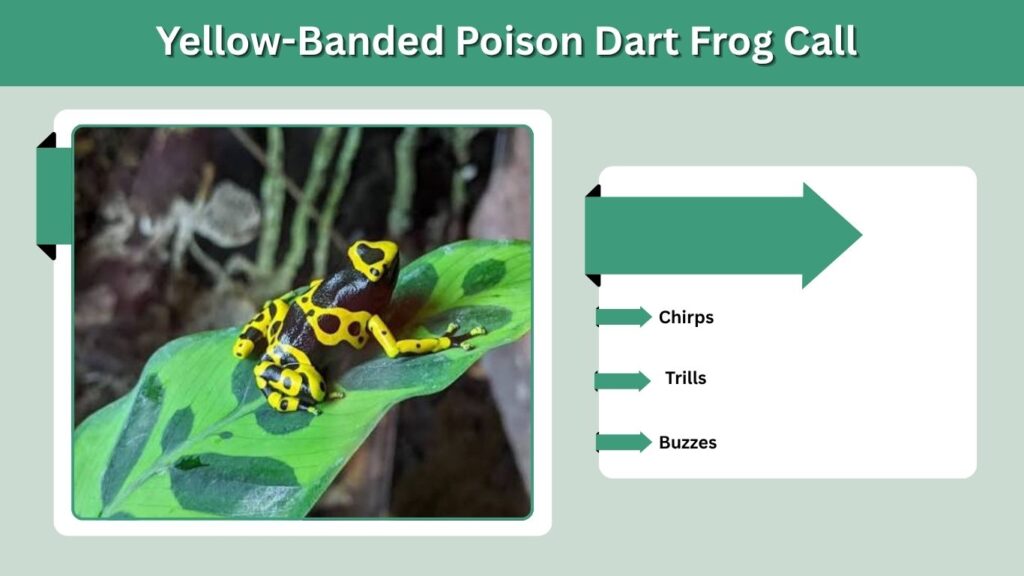
Male yellow-banded poison dart frogs are surprisingly vocal.
Their calls have been described as:
- Chirps
- Buzzes
- Trills
- Hums
The call may sound somewhat bird-like and can last for several seconds.
Males call primarily to attract females and advertise breeding territories. Calling activity may become particularly noticeable around morning and late afternoon.
Yellow-Banded Poison Dart Frog Reproduction
Breeding is strongly associated with humid or rainy conditions.
A male attracts a female through calling and courtship behavior. The female then deposits a small clutch of eggs in a moist, protected place, often on vegetation.
Eggs and Tadpoles
A clutch commonly contains only several eggs.
The male provides much of the parental care by guarding and moistening the developing eggs.
Eggs generally hatch after around 10–14 days.
After hatching, the male can transport tadpoles on his back to small pools of water, including water trapped in plants.
The tadpole stage lasts considerably longer, with metamorphosis into a froglet occurring after roughly 70–90 days under suitable conditions.
Yellow-Banded Poison Dart Frog Lifespan
These frogs can live considerably longer than their small size might suggest.
Available husbandry records suggest approximately:
- Wild: around 5–7 years
- Captivity: commonly 10–15 years
- Exceptional captive dendrobatids: potentially longer
Actual lifespan depends on genetics, nutrition, disease, temperature, humidity, and overall environmental conditions.
Yellow-Banded Poison Dart Frog Care
Captive-bred yellow-banded dart frogs are popular terrarium animals, but they require specialized care.
Terrarium Requirements
A suitable enclosure should provide:
- High humidity
- Good ventilation
- Live tropical plants
- Leaf litter
- Cork bark and hiding spaces
- Climbing surfaces
- Safe drainage
- Consistently appropriate temperatures
A naturalistic or bioactive vivarium can provide the humid, structurally complex environment these frogs need.
Feeding
Small live insects should form the foundation of their diet.
Flightless fruit flies and springtails are commonly used, with feeders appropriately dusted with calcium and vitamin supplements according to established amphibian husbandry practices.
Because frogs have permeable skin, enclosure cleanliness and safe water are particularly important.
Are Yellow-Banded Poison Dart Frogs Endangered?
The yellow-banded poison dart frog is currently categorized as Least Concern in IUCN listings, and its population trend is reported as stable. The species is also covered by CITES Appendix II, which regulates international trade.
Even species that are not currently endangered can be affected by habitat destruction, disease, and unsustainable wildlife collection.
Choosing legally obtained, captive-bred animals helps reduce pressure on wild populations.
Interesting Yellow-Banded Poison Dart Frog Facts
- Its scientific name is Dendrobates leucomelas.
- It is also called the bumblebee dart frog.
- Every individual can have a slightly different pattern.
- Females are generally larger than males.
- It is active mainly during daylight.
- Wild frogs obtain defensive chemicals largely through their diet.
- Captive-bred individuals generally lack strong wild-type toxicity.
- Males produce distinctive trilling and buzzing calls.
- Fathers provide important parental care.
- Males can carry tadpoles on their backs to water.
FAQs
1. Where does the yellow-banded poison dart frog live?
Yellow-banded poison dart frogs are native to northern South America, including Venezuela, Guyana, northern Brazil, and southeastern Colombia. They primarily inhabit warm, humid tropical forests and spend considerable time among leaf litter, rocks, logs, roots, and damp vegetation.
2. What does a yellow-banded poison dart frog eat?
Its diet consists mainly of tiny arthropods, particularly ants, termites, beetles, mites, small crickets, and spiders. Wild prey provides some of the alkaloids responsible for the frog’s defensive skin chemicals.
3. How poisonous is a yellow-banded poison dart frog?
Wild individuals possess defensive skin toxins, although they are not among the most toxic dart frogs. Captive-bred frogs generally lack potent wild toxins because their feeder insects do not contain the same alkaloids found in their natural prey.
4. How big do yellow-banded poison dart frogs get?
Adults commonly measure around 3–4 cm from snout to vent, with some individuals reaching approximately 5 cm. Females tend to be somewhat larger and more robust than males.
5. How long do yellow-banded poison dart frogs live?
Wild individuals may live roughly 5–7 years, while well-maintained captive dart frogs can commonly survive 10–15 years. Lifespan varies according to nutrition, genetics, enclosure conditions, disease, and overall quality of care.
