
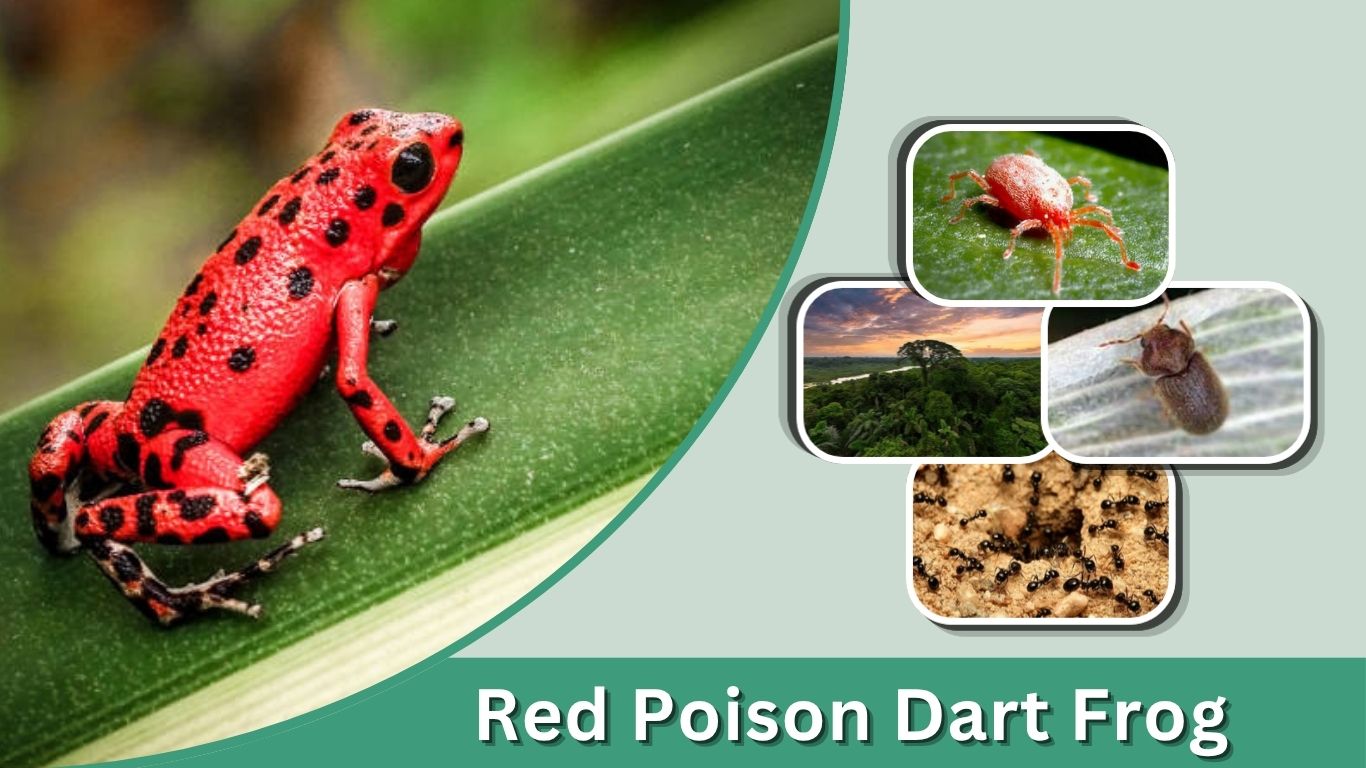
The red poison dart frog is not just one specific species. The name is commonly used for several brightly colored poison frogs with red, scarlet, orange-red, or red-and-black bodies. One of the best-known examples is the strawberry poison dart frog (Oophaga pumilio), which may have a brilliant red body with dark blue or black legs. Other red species include the red-backed poison frog (Ranitomeya reticulata) and several red-patterned Ranitomeya and Oophaga frogs. Their vivid colors serve as warning signals to predators.
What Is a Red Poison Dart Frog?
“Red poison dart frog” is a descriptive name rather than the scientific name of a single frog. Several members of the poison frog family Dendrobatidae display red coloration.
The strawberry poison frog, Oophaga pumilio, is particularly associated with bright red coloration. It is a small Central American species famous for its extraordinary variation in color between different populations.
Common Red Poison Dart Frog Types
Some frogs that may be described as red poison dart frogs include:
- Strawberry poison frog (Oophaga pumilio) – often red with blue, black, or dark legs
- Red-backed poison frog (Ranitomeya reticulata) – red back with dark, reticulated limbs
- Granular poison frog (Oophaga granulifera) – some populations have bright orange-red backs
- Red-patterned Ranitomeya – several species have red stripes, patches, or markings
- Blue-jeans strawberry frog – a famous red-bodied O. pumilio form with dark blue legs
The family includes many small, colorful Neotropical frogs whose warning coloration is associated with chemical defenses.
What Does a Red Poison Dart Frog Look Like?
Appearance varies significantly between species and even among populations of the same species.
A typical strawberry poison frog is small and compact, with smooth-looking moist skin, large dark eyes, and unwebbed toes. Adults of Oophaga pumilio measure approximately 17–24 mm, or about 0.7–0.9 inches, in body length.
| Feature | Typical Appearance |
| Body size | About 17–24 mm in O. pumilio |
| Main color | Red, scarlet, orange-red |
| Legs | Blue, black, mottled or patterned |
| Eyes | Large and dark |
| Skin | Moist and often glossy |
| Activity | Primarily daytime |
| Habitat | Humid tropical forest |
Red and Blue Poison Dart Frog
One of the most recognizable combinations is a bright red body with blue legs.
This appearance is particularly associated with certain populations of the strawberry poison frog, commonly called the “blue jeans” form. However, Oophaga pumilio is exceptionally variable and can also occur in orange, yellow, green, blue, black and other color combinations.
Red and Black Poison Dart Frog
Red-and-black coloration can occur in several poison frog species.
Some strawberry poison frogs have red bodies with black or heavily mottled legs. The red-backed poison frog can have a vivid red dorsal surface contrasting with black areas and pale blue-gray reticulation on its limbs and sides.
Red-Backed Poison Dart Frog
The red-backed poison frog (Ranitomeya reticulata) is a separate species from the strawberry poison frog.
It is a tiny Amazonian poison frog recognizable by a bright red back combined with a darker body and reticulated bluish-gray markings on the legs, sides and underside.
Where Do Red Poison Dart Frogs Live?
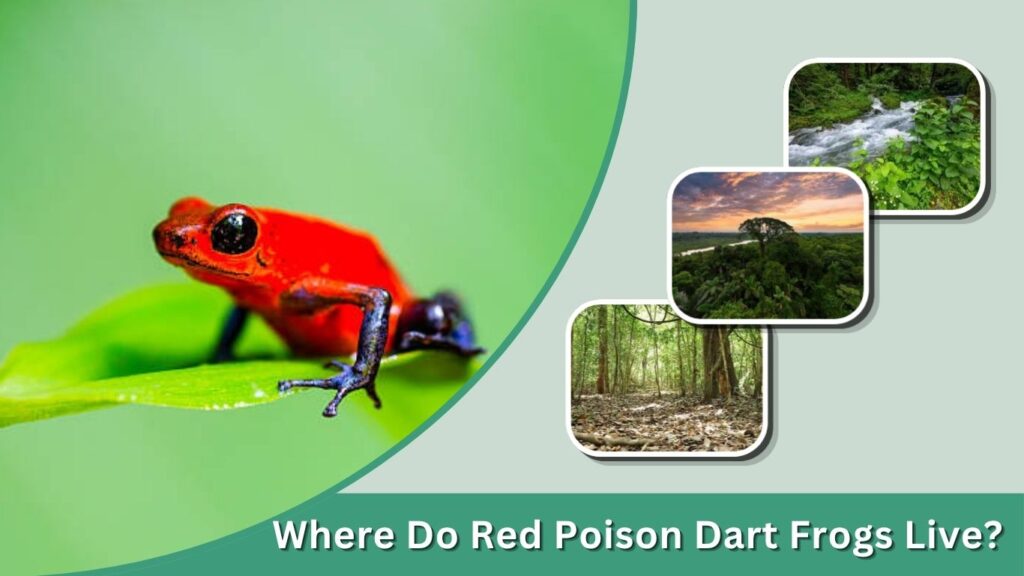
Habitat depends on the species.
The strawberry poison frog occurs along the Caribbean side of Central America, from Nicaragua through Costa Rica into Panama. It inhabits humid tropical environments from near sea level into lower-elevation forests.
Red Poison Dart Frog Habitat
Typical habitat includes:
- Tropical rainforest
- Moist forest floors
- Leaf litter
- Areas around bromeliads
- Low vegetation
- Tree roots and fallen branches
- Humid secondary forest
Oophaga pumilio is frequently found close to the forest floor but can climb vegetation and vines. Water-filled plants, especially bromeliads, are particularly important for reproduction.
The red-backed poison frog, meanwhile, is associated with tropical forests in Peru and belongs to a different South American lineage.
Are Red Poison Dart Frogs Poisonous?
Wild poison dart frogs can possess toxic skin alkaloids.
Instead of producing all of these chemicals entirely by themselves, many poison frogs obtain and accumulate defensive alkaloids from small arthropods in their natural diets, including particular ants and mites.
Why Are They Bright Red?
Their red coloration is an example of aposematism, or warning coloration.
Bright red, orange, yellow and blue colors can communicate to potential predators that an animal is chemically defended or unpleasant to eat. Strawberry poison frogs are particularly interesting because their warning colors vary dramatically between geographic populations.
Are Captive Red Poison Dart Frogs Poisonous?
Captive-bred poison dart frogs generally do not have the same potent chemical defenses as wild frogs because their captive diets lack many of the arthropods from which wild individuals obtain defensive alkaloids.
They should still be handled minimally. Amphibians have delicate, permeable skin that can be affected by oils, chemicals and other substances on human hands.
What Do Red Poison Dart Frogs Eat?
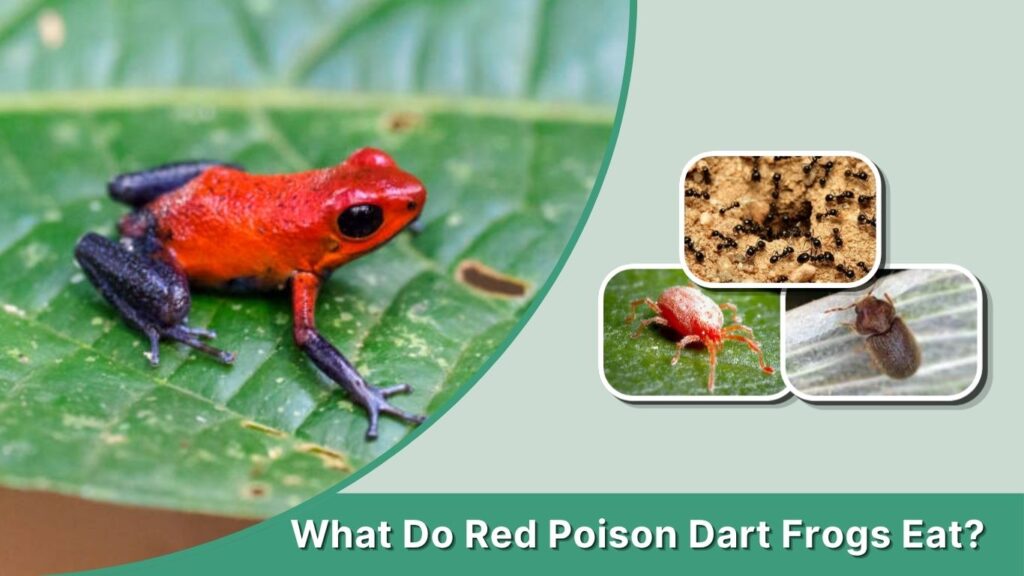
Wild poison dart frogs are insectivores that consume very small invertebrates.
Their foods can include:
- Tiny ants
- Mites
- Small beetles
- Springtails
- Small flies
- Other tiny arthropods
Diet is especially important because some of the chemical compounds used for defense are acquired through prey.
Red Poison Dart Frog Reproduction
The reproductive behavior of the strawberry poison frog is particularly unusual.
Eggs are deposited on land in moist locations. After tadpoles hatch, the female transports them individually to small pools of water held by plants such as bromeliads.
Red Poison Dart Frog Eggs
The eggs are much less colorful than the adults. They are laid in small, moist locations rather than large bodies of open water.
Once a tadpole has been placed into a water-filled plant, the female strawberry poison frog returns and provides unfertilized eggs as food. This specialized form of parental care is characteristic of Oophaga.
Red Poison Dart Frog Adaptations
These frogs possess several adaptations that help them survive tropical environments.
Warning Coloration
Bright red coloration can discourage predators by advertising chemical defenses.
Toxic Skin Secretions
Wild individuals can accumulate defensive alkaloids from their prey, making them less attractive to predators.
Small Body Size
Their tiny bodies allow them to move through leaf litter, vegetation and small spaces within tropical forests.
Sticky Toe Pads
Their toes help them move through vegetation and climb plants when necessary.
Parental Care
Transporting tadpoles to small water-filled plants can reduce some risks associated with larger aquatic environments.
Red Poison Dart Frog vs. Red-Eyed Tree Frog
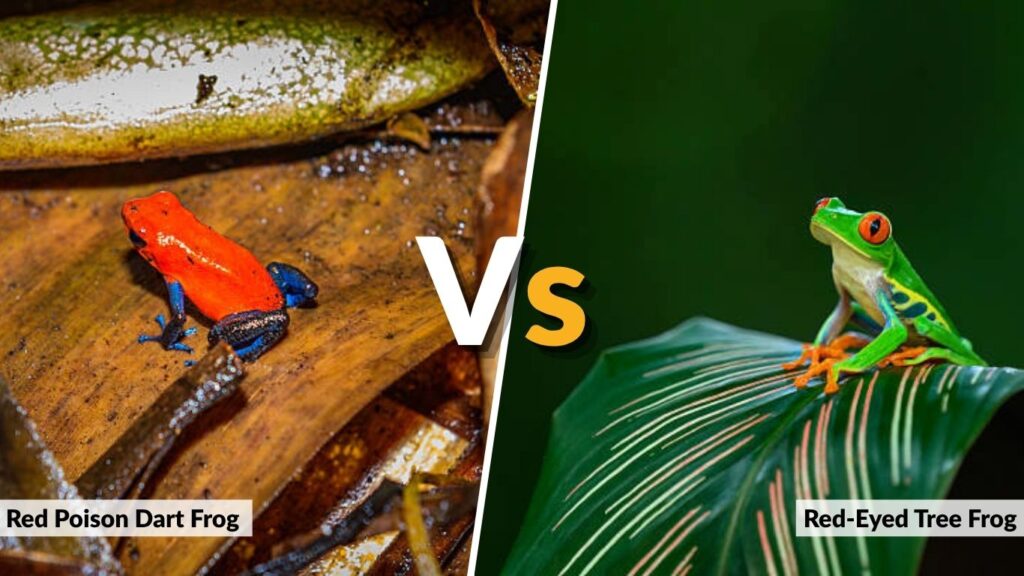
Despite occasionally being confused in searches, the red poison dart frog and red-eyed tree frog are completely different frogs.
| Feature | Red Poison Dart Frog | Red-Eyed Tree Frog |
| Family | Dendrobatidae | Phyllomedusidae |
| Typical size | Very small | Considerably larger |
| Red feature | Often body coloration | Primarily the eyes |
| Main lifestyle | Forest floor/low vegetation varies by species | Mainly arboreal |
| Warning toxins | Some wild species have defensive alkaloids | Not a poison dart frog |
A frog with a green body and dramatic red eyes is much more likely to be a red-eyed tree frog than a red poison dart frog.
Can You Keep a Red Poison Dart Frog as a Pet?
Captive-bred poison dart frogs are kept by experienced amphibian hobbyists, although individual species vary greatly in their difficulty.
They need a carefully maintained tropical vivarium with high humidity, suitable temperatures, plants, hiding areas and a continuous supply of appropriately tiny live foods.
Wild-caught animals should be avoided. Legal requirements and conservation restrictions can also vary according to species and location.
FAQs
What is the scientific name of the red poison dart frog?
There is no single scientific name because “red poison dart frog” can describe several species. One of the most commonly associated species is the strawberry poison frog, Oophaga pumilio. The red-backed poison frog is a different species, Ranitomeya reticulata.
Where does the red poison dart frog live?
Strawberry poison frogs live in humid tropical habitats from Nicaragua through Costa Rica to Panama. Other red-colored poison frogs occur in South America, so the exact geographic range depends on which species is being discussed.
Are red and blue poison dart frogs real?
Yes. Certain strawberry poison frogs have vivid red bodies combined with dark blue legs. This red-and-blue form is sometimes nicknamed the “blue jeans” poison frog, although coloration within the species varies substantially among populations.
What is the red-backed poison dart frog?
The red-backed poison frog is Ranitomeya reticulata, a tiny poison frog associated with Peru. It has a striking red back with contrasting dark areas and reticulated pale blue-gray markings, particularly across its limbs and sides.
Why are red poison dart frogs so brightly colored?
Their brilliant coloration functions primarily as a warning signal. Predators can learn to associate conspicuous colors with toxic or unpleasant prey. In wild poison frogs, defensive alkaloids are commonly obtained and accumulated from tiny arthropods in their diet.
