
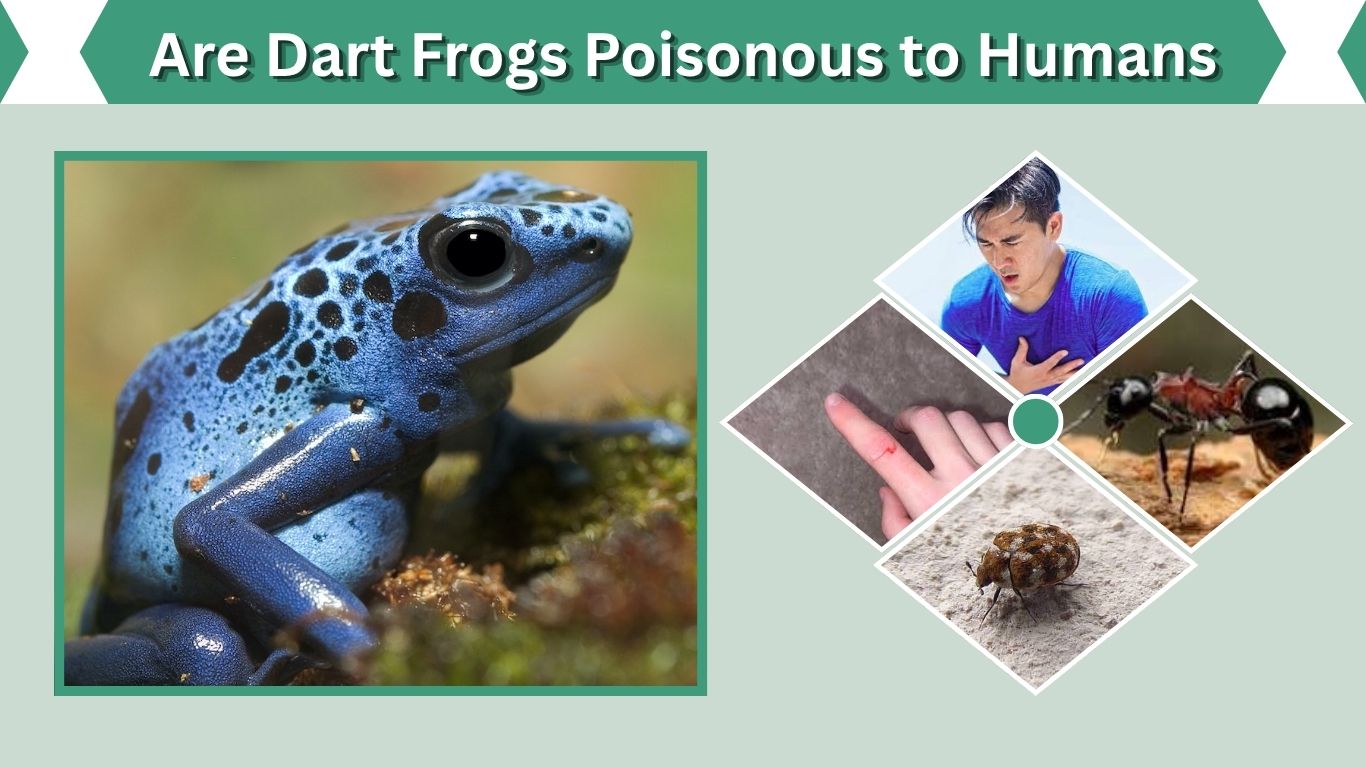
Yes, wild poison dart frogs can be poisonous to humans, but the level of danger varies greatly among species. Their defensive chemicals are stored in skin glands rather than injected through bites or stings. The golden poison frog is the most dangerously toxic species, while many other dart frogs carry much weaker skin alkaloids. An important distinction is that captive-bred poison dart frogs usually lose or never develop these potent toxins because the chemicals come largely from their natural diet of alkaloid-containing ants, mites, and other small arthropods.
Are Poison Dart Frogs Poisonous to Humans?
Wild poison dart frogs can be toxic to people. However, simply seeing or standing near one poses no danger.
The frogs are poisonous rather than venomous:
- Poison is harmful when touched, absorbed, or swallowed.
- Venom is actively injected through a bite, sting, or similar structure.
- Dart frogs have no venomous fangs or stingers.
- Their defensive alkaloids occur in secretions from their skin.
Risk varies dramatically depending on species, diet, whether the frog is wild or captive-bred, and the route of exposure.
Most poison dart frog species are nowhere near as dangerous as the exceptionally toxic golden poison frog.
How Do Poison Dart Frogs Poison Humans?
Poison dart frogs store defensive alkaloids in glands within their skin. When threatened, these chemicals can be released onto the skin surface.
The greatest concern is exposure involving:
- The mouth
- Eyes
- Other mucous membranes
- Open cuts or wounds
- Accidental ingestion
Their toxins evolved primarily as protection against predators rather than as weapons for attacking people.
Do Poison Dart Frogs Bite Humans?
They are not aggressive toward humans and do not deliver their poison through a bite.
Their small mouths are designed mainly for capturing tiny insects. A poison dart frog generally tries to escape rather than attack a person.
Can Poison Dart Frogs Kill Humans?
Certain wild species possess toxins capable of causing life-threatening poisoning, particularly members of the genus Phyllobates.
The best-known example is the golden poison frog (Phyllobates terribilis).
Its skin can contain batrachotoxin, an exceptionally potent alkaloid that interferes with voltage-gated sodium channels involved in nerve and muscle function.
However, statements such as “one frog can kill exactly X humans” should be treated cautiously. The toxin content of individual frogs varies, and actual human exposure depends on dose and route.
Serious human poisoning from casual encounters with poison dart frogs is uncommon.
What Does Poison Dart Frog Toxin Do to Humans?
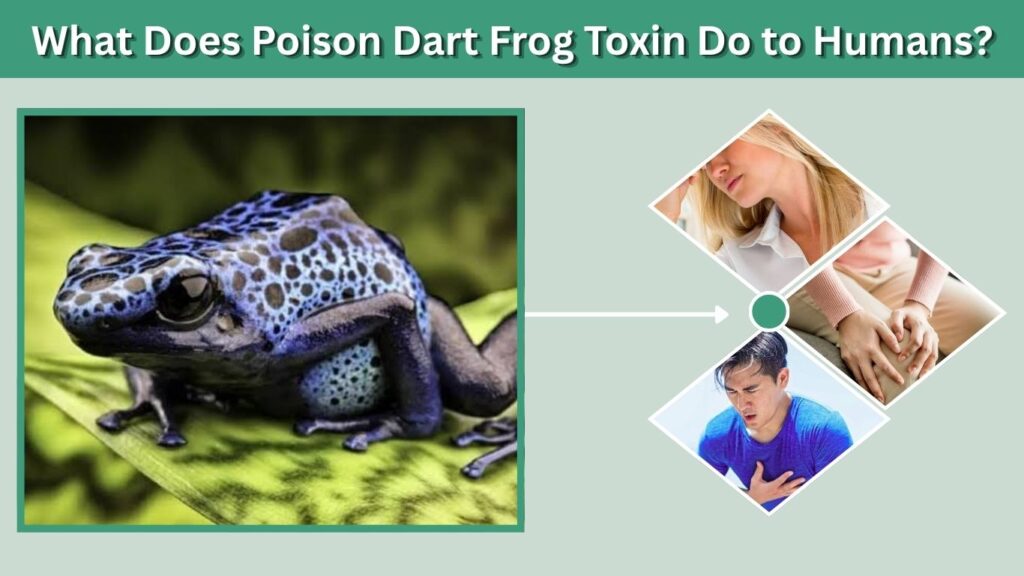
Different poison frog species contain different combinations and concentrations of alkaloids, so there is no single set of symptoms for every dart frog.
The particularly dangerous batrachotoxin associated with some Phyllobates frogs disrupts normal sodium-channel function in nerve and muscle cells. This can interfere with electrical signaling throughout the body.
Severe poisoning could potentially affect:
- Muscle function
- Nerve signaling
- Heart rhythm
- Breathing
Anyone who suspects significant exposure to a wild toxic frog—especially involving the mouth, eyes, or a wound—should seek appropriate medical or poison-control advice promptly.
Which Poison Dart Frog Is Most Dangerous to Humans?
The golden poison frog (Phyllobates terribilis) is generally regarded as the most toxic poison frog.
| Dart Frog | Wild Toxicity | Typical Captive-Bred Toxicity |
| Golden poison frog | Extremely high | Greatly reduced/absent when captive-bred |
| Blue poison dart frog | Toxic | Usually essentially non-toxic |
| Strawberry poison frog | Toxic | Usually essentially non-toxic |
| Green-and-black dart frog | Toxic | Usually essentially non-toxic |
| Bumblebee/yellow-banded dart frog | Toxic | Usually essentially non-toxic |
The important phrase here is captive-bred. Wild-caught frogs can retain stored alkaloids after entering captivity.
Research has found that alkaloids can persist for long periods, while frogs raised entirely in captivity without an alkaloid-rich natural diet do not develop the same chemical defenses.
Are Golden Poison Dart Frogs Dangerous to Humans?
Yes. Wild golden poison frogs deserve considerable caution.
They naturally contain batrachotoxin and belong to the group of Phyllobates frogs historically associated with indigenous use of frog toxins on hunting darts. Smithsonian notes that only three poison frog species have actually been documented for this practice.
The frog does not chase, attack, or intentionally poison humans. Danger comes from its skin toxins.
Are Blue Poison Dart Frogs Poisonous to Humans?
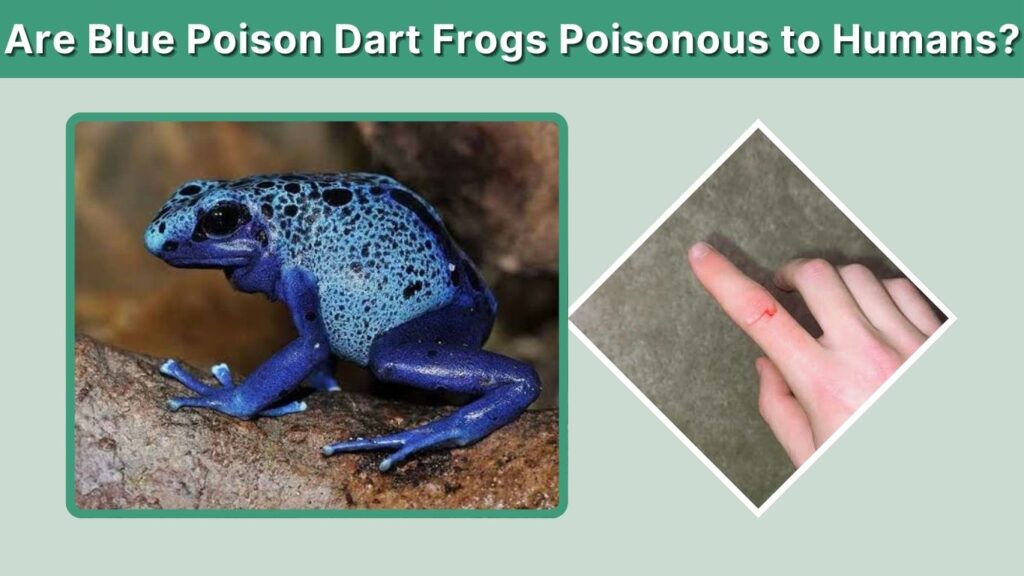
The blue poison dart frog, commonly treated as a form of Dendrobates tinctorius, can acquire defensive alkaloids in the wild.
It is not considered comparable in toxicity to the golden poison frog.
Captive-bred blue dart frogs typically lack significant skin toxicity because their diets consist of fruit flies, springtails, and other feeder insects without the wild alkaloids responsible for their chemical defenses.
Are Strawberry Poison Dart Frogs Dangerous?
Wild strawberry poison frogs (Oophaga pumilio) can carry a diverse collection of defensive alkaloids obtained through their diet.
Their brilliant red, orange, blue, or other color patterns act as warning coloration.
Although they should not be casually handled in the wild, they are not generally considered as dangerously toxic as wild golden poison frogs.
Captive-bred animals normally become effectively non-toxic when maintained on conventional captive diets.
Are Green-and-Black Dart Frogs Poisonous?
Wild green-and-black poison dart frogs (Dendrobates auratus) possess defensive alkaloids.
Like other dart frogs, much of their chemical protection is linked to what they eat in nature.
Captive-bred individuals fed standard feeder insects lack the potent alkaloid profile of wild animals and are commonly kept safely by experienced amphibian keepers.
Are Bumblebee Dart Frogs Poisonous?
The bumblebee or yellow-banded poison dart frog (Dendrobates leucomelas) is another chemically defended species in the wild.
Its bright yellow-and-black coloration warns predators.
Captive-bred bumblebee dart frogs normally do not carry dangerous concentrations of wild skin alkaloids because those chemicals originate from specialized prey unavailable in ordinary captive diets.
Why Aren’t Captive Dart Frogs Poisonous?
This is one of the most interesting aspects of poison dart frog biology.
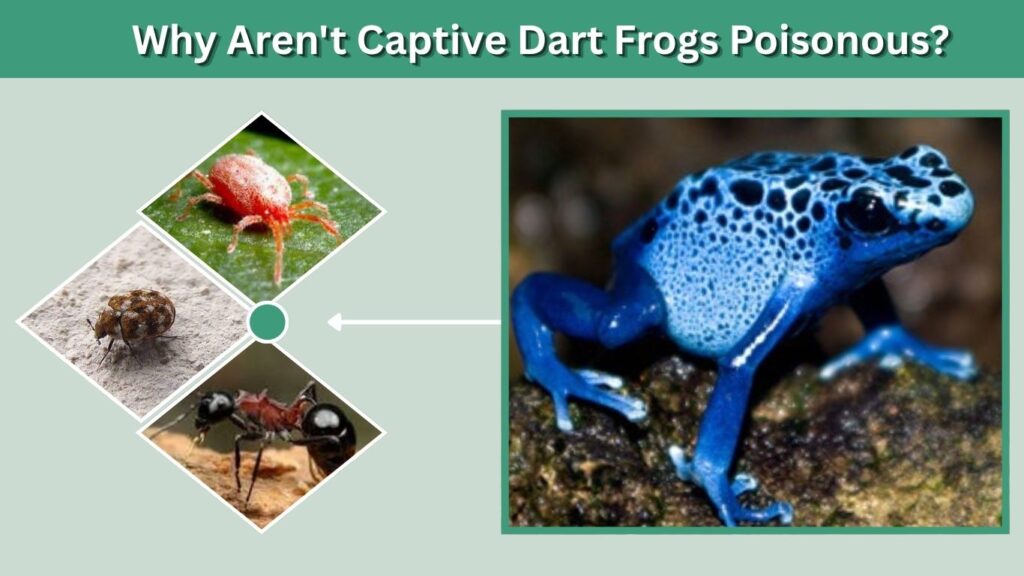
They generally do not manufacture their defensive alkaloids entirely by themselves. Instead, they obtain and sequester many of these chemicals from tiny arthropods they consume.
Important prey can include:
- Ants
- Mites
- Small beetles
- Other alkaloid-containing arthropods
Research has demonstrated a strong relationship between specialized arthropod diets and chemical defenses in poison frogs.
Captive frogs are usually fed fruit flies, springtails, crickets, and similar foods that lack the necessary alkaloids.
As a result, captive-bred poison dart frogs are generally considered effectively non-poisonous to humans. Smithsonian similarly notes that poison frogs maintained on non-toxic captive feeder insects do not develop their wild toxicity.
What About Wild-Caught Dart Frogs?
Wild-caught animals require more caution.
Stored alkaloids do not necessarily disappear immediately after changing the frog’s diet. Research has shown that some toxins can persist for months or even years in frogs that previously acquired them in nature.
Never assume a recently captured wild frog is safe simply because it has started eating captive food.
Can You Touch a Poison Dart Frog?
It is best not to touch wild poison dart frogs.
Avoiding handling protects you and the frog. Amphibian skin is extremely delicate and permeable, and oils, salts, soaps, lotions, pesticides, and other substances on human hands can harm them.
Captive-bred dart frogs are far less concerning from a toxin standpoint, but unnecessary handling should still be minimized.
If handling is required for animal care, follow appropriate amphibian-handling practices recommended by a veterinarian or experienced keeper.
Why Are Poison Dart Frogs So Brightly Colored?
Their brilliant colors are not simply decorative.
Bright yellow, orange, red, blue, green, and black patterns can function as aposematic coloration—a warning to predators that an animal may taste unpleasant or contain harmful chemicals.
A predator that has a bad experience with a colorful toxic frog may learn to avoid frogs with similar patterns.
This natural warning system helps explain why some of the world’s most chemically defended frogs are also among its most visually striking.
FAQs
1. Are poison dart frogs deadly to humans?
Some wild poison dart frogs contain potent toxins, and the golden poison frog is particularly dangerous. However, most species are substantially less toxic, and serious human poisoning is rare. Captive-bred dart frogs usually lack their wild chemical defenses because their captive diet does not supply the necessary alkaloids.
2. Can touching a poison dart frog kill you?
Casual contact does not mean a person will automatically die, but touching wild poison dart frogs is not recommended. Risk depends on the species, toxin concentration, amount transferred, and whether toxins reach the eyes, mouth, broken skin, or other vulnerable tissues.
3. Do poison dart frogs attack humans?
No. Poison dart frogs are small, defensive animals that typically escape when threatened. They do not inject venom, deliberately attack humans, or use their skin toxins to hunt. Their poisonous secretions primarily protect them from predators.
4. Are pet poison dart frogs poisonous?
Captive-bred pet dart frogs are generally effectively non-toxic because they do not consume the wild arthropods from which poison frogs obtain their defensive alkaloids. Wild-caught individuals are different because previously accumulated toxins may remain in their skin for a considerable period.
5. Which dart frog is most poisonous to humans?
The golden poison frog (Phyllobates terribilis) is considered the most toxic poison frog. Wild individuals can contain powerful batrachotoxin in their skin. Other dart frog species can also possess defensive alkaloids, but their toxicity varies considerably by species and diet.
