
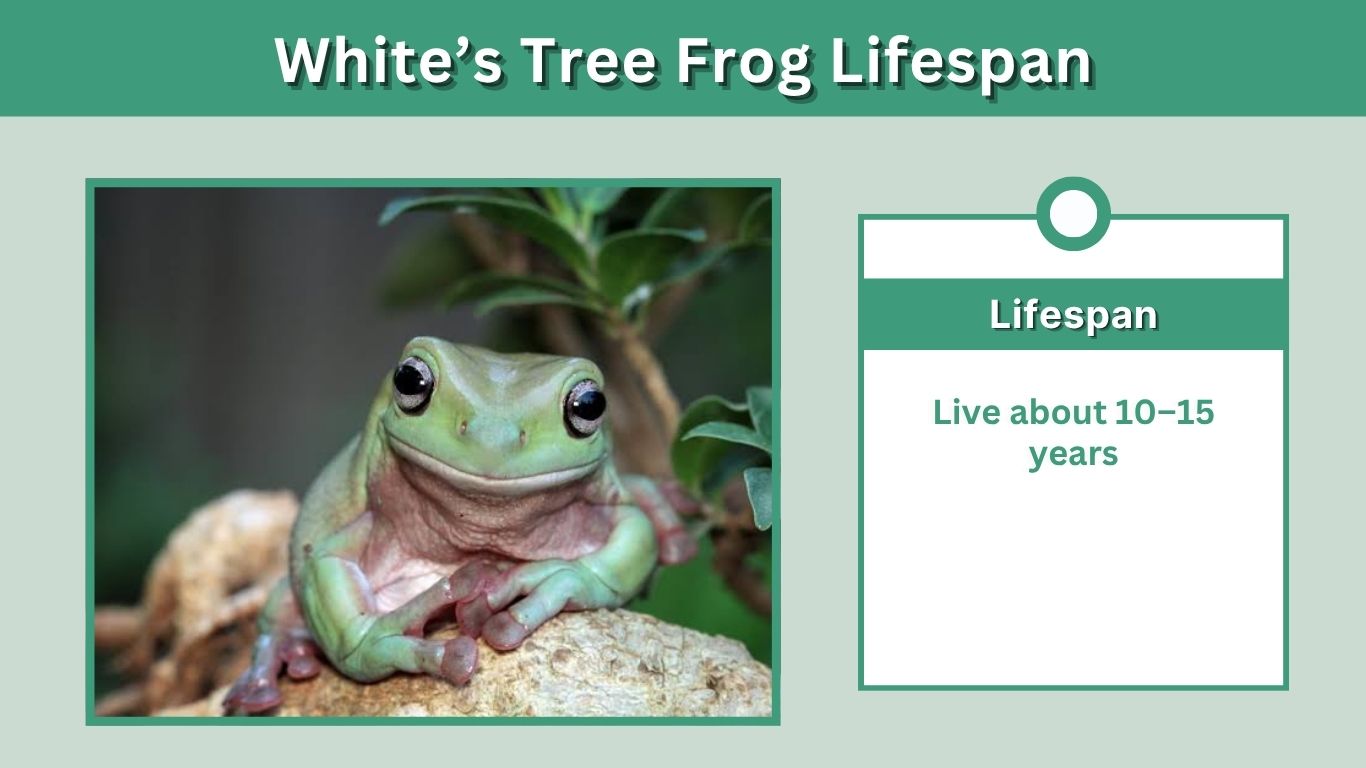
The White’s tree frog lifespan is remarkably long compared with many other frogs. Also known as the Australian green tree frog or dumpy tree frog, Ranoidea caerulea can commonly live about 10–15 years in captivity when given proper housing, nutrition, temperature, and veterinary care. Some well-cared-for individuals may survive for 20 years or longer. Lifespan in the wild is generally less predictable because these frogs face predators, disease, weather changes, food shortages, and other environmental challenges throughout their lives.
How Long Do White’s Tree Frogs Live?
White’s tree frogs are considered relatively long-lived amphibians. Their exact lifespan varies between individuals and depends strongly on environmental conditions. Captive frogs generally have an advantage because they receive regular food and protection from predators. However, poor husbandry can significantly shorten their lives, making proper temperature, humidity, nutrition, and enclosure cleanliness essential.
Average White’s Tree Frog Lifespan
A White’s tree frog commonly lives around:
- Captivity: Approximately 10–15 years
- Excellent captive care: Potentially 15–20+ years
- Wild populations: Often shorter and more variable
- Juvenile stage: Several years of growth before full maturity
- Healthy adults: Capable of remaining active for many years
Individual frogs can fall outside these ranges. Genetics, disease exposure, diet, and long-term husbandry all influence longevity.
Maximum Lifespan
Some captive White’s tree frogs have reportedly lived beyond 20 years. These exceptionally long lifespans should not be considered guaranteed, but they demonstrate how long the species may survive when conditions remain favorable.
A frog reaching advanced age usually requires consistent care throughout its life. Proper nutrition, a clean enclosure, safe temperatures, good hydration, and early attention to health problems all become especially important as the animal grows older.
Why They Live So Long
White’s tree frogs have a relatively slow lifestyle compared with many smaller amphibians. Adults spend much of the daytime resting and become more active after dark.
Their sturdy bodies, adaptability, and ability to tolerate moderate environmental variation contribute to their success in captivity. However, being hardy does not mean they can tolerate consistently poor conditions. Long-term stress, obesity, overheating, and dirty water can gradually reduce their lifespan.
White’s Tree Frog Lifespan in Captivity
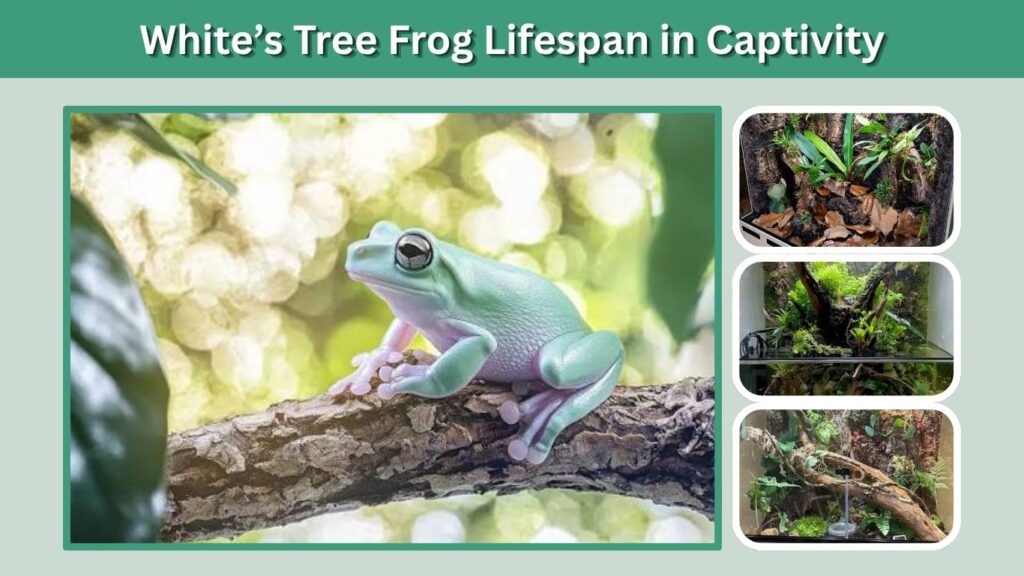
Captivity can allow White’s tree frogs to live considerably longer because many natural dangers are removed. They no longer need to avoid predators or search constantly for food and water. However, their longevity depends entirely on the quality of their care. A carefully maintained captive environment can support a frog for well over a decade.
Proper Enclosure Conditions
Several enclosure factors directly affect long-term health:
- Provide a tall enclosure with climbing room.
- Maintain appropriate daytime temperatures.
- Allow a mild nighttime temperature decrease.
- Keep humidity moderate rather than constantly saturated.
- Provide good ventilation.
- Offer sturdy branches and elevated resting areas.
- Supply clean, dechlorinated water.
- Remove waste regularly.
- Avoid exposure to household chemicals.
Stable conditions are generally more beneficial than repeated extreme changes in temperature or humidity.
Diet and Nutrition
White’s tree frogs need a varied diet of appropriately sized insects. Crickets, roaches, flies, and other suitable feeder insects can form part of a balanced feeding routine.
Feeders should be nutritious and appropriately supplemented with calcium and vitamins when necessary. Avoid excessive feeding because White’s tree frogs have a reputation for readily becoming overweight.
Obesity can place unnecessary stress on the body and may contribute to long-term health problems. Adult frogs usually require less frequent feeding than rapidly growing juveniles.
Veterinary and Preventive Care
Monitoring your frog regularly makes it easier to notice changes before a problem becomes severe.
Watch for unusual weight loss, persistent refusal to eat, swelling, difficulty climbing, skin abnormalities, abnormal posture, or changes in behavior.
Amphibians can hide illness surprisingly well. When persistent symptoms occur, an exotic veterinarian experienced with amphibians is the safest source of diagnosis and treatment.
Factors That Affect White’s Tree Frog Lifespan
Simply keeping a White’s tree frog in captivity does not guarantee a long lifespan. Long-term health depends on multiple factors working together. Husbandry mistakes may initially appear harmless but become important after months or years. Maintaining appropriate environmental conditions and observing the frog’s behavior are therefore essential throughout its life.
Temperature and Humidity
Excessively hot, cold, dry, or constantly wet environments can place a frog under unnecessary stress.
White’s tree frogs generally do well with moderate humidity and warm daytime temperatures while still having access to cooler locations.
Their enclosure should not remain soaking wet. Constant dampness combined with poor airflow can encourage microbial growth and create unhealthy conditions.
Digital thermometers and hygrometers make it easier to monitor changes rather than relying on guesswork.
Major Lifespan Factors
Important influences include:
- Genetics: Some individuals naturally have greater longevity.
- Nutrition: Balanced feeding supports healthy development.
- Body weight: Obesity can negatively affect long-term health.
- Water quality: Contaminated water can expose frogs to harmful substances.
- Temperature: Extreme temperatures cause stress.
- Humidity: Both excessive dryness and constant wetness can create problems.
- Cleanliness: Waste buildup increases exposure to bacteria.
- Stress: Excessive handling can disturb the frog.
- Disease: Early treatment improves outcomes for many health problems.
Good care focuses on all of these factors rather than any single one.
Handling and Stress
White’s tree frogs may appear calm around people, but frequent handling is unnecessary.
Amphibians have delicate, permeable skin that can absorb substances from human hands. Oils, lotions, soaps, sanitizers, and other chemicals may irritate their skin.
Observe them primarily inside the enclosure and handle them only when necessary. When handling cannot be avoided, clean wet hands or suitable disposable gloves can reduce contamination.
White’s Tree Frog Life Cycle
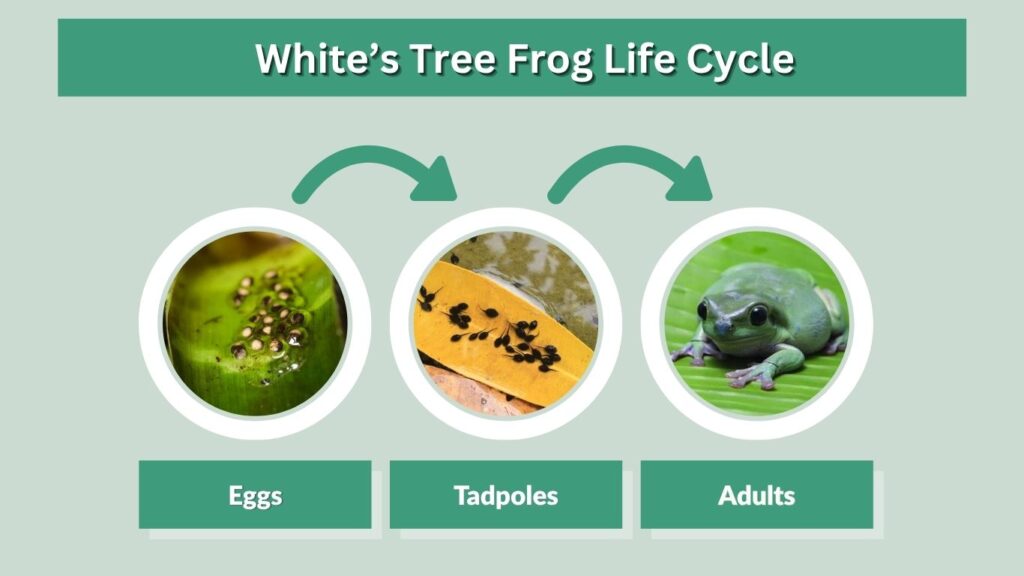
A White’s tree frog undergoes an extraordinary transformation before becoming the familiar chunky adult kept as a pet. Its life begins as an egg in water, followed by an aquatic tadpole stage. Metamorphosis gradually produces a small froglet capable of living primarily on land and climbing vegetation. The young frog then continues growing until it reaches adulthood.
From Egg to Tadpole
Female White’s tree frogs lay eggs in water. After development, the eggs hatch into small aquatic tadpoles.
At this stage, the animals look very different from adult frogs. Tadpoles have tails and remain dependent on aquatic environments while their bodies continue developing.
Food availability, temperature, water quality, and other conditions affect early development.
Froglet to Adult
During metamorphosis, several major changes occur:
- Hind legs develop.
- Front legs emerge.
- The tail becomes progressively shorter.
- Lungs become increasingly important.
- The frog begins leaving the water.
- Climbing behavior develops.
- The body gradually takes on the adult form.
Young frogs grow rapidly compared with mature adults and therefore require appropriately sized food and careful nutrition.
Adult and Senior Years
Adult White’s tree frogs become stockier and generally less rapidly growing than juveniles.
With age, some frogs may become less active or require adjustments to their enclosure. Senior frogs should have easy access to water and sturdy resting locations.
Monitoring body weight becomes increasingly useful because unexplained weight loss or significant changes in activity can indicate an underlying health problem rather than simply normal aging.
How to Help a White’s Tree Frog Live Longer
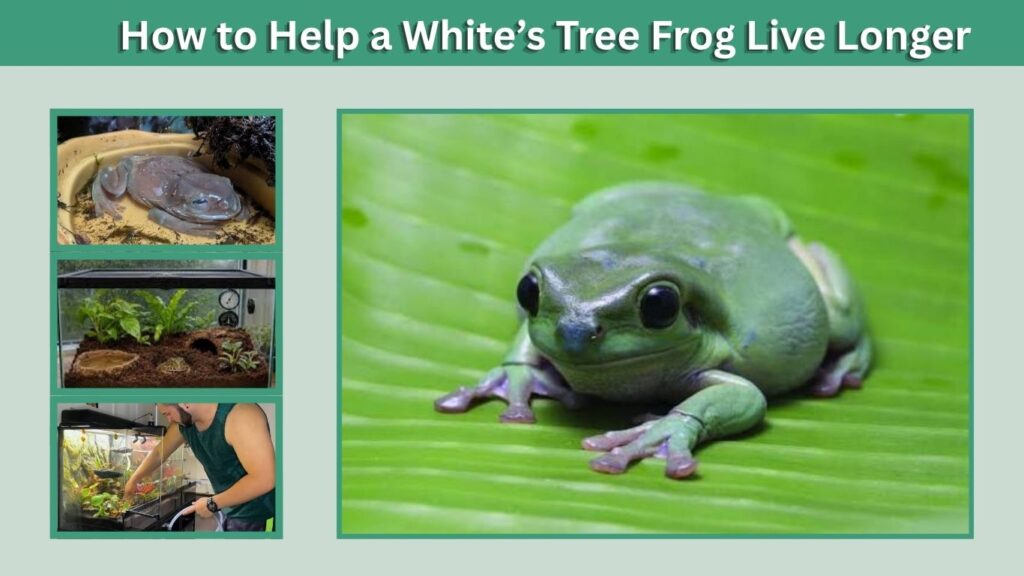
There is no way to guarantee that a White’s tree frog will reach a particular age. However, consistent husbandry dramatically improves its chances of enjoying a long and healthy life. Rather than frequently changing the setup, focus on providing stable environmental conditions, nutritious food, clean water, adequate climbing opportunities, and routine observation throughout the frog’s lifetime.
Daily and Weekly Care
A good long-term routine includes:
- Replace contaminated water every day.
- Remove feces and uneaten insects promptly.
- Check temperature and humidity regularly.
- Inspect the frog’s appearance and behavior.
- Feed an appropriate amount for its age.
- Keep enclosure surfaces clean.
- Maintain good ventilation.
- Examine equipment for damage.
- Avoid unnecessary handling.
Small preventive tasks can help keep minor problems from developing into larger ones.
Prevent Obesity
White’s tree frogs often eagerly accept food even when they have already eaten enough.
Adults do not usually require large meals every day. Feeding frequency should reflect age, body condition, feeder size, and activity level.
A healthy frog should look naturally rounded without becoming excessively bulky. If its body condition continually increases, reducing feeding frequency or portion size may be appropriate.
Reduce Environmental Stress
Keep the enclosure in an area without constant vibration, excessive noise, cigarette smoke, cleaning sprays, or sudden temperature fluctuations.
Provide foliage and elevated hiding spots so the frog can retreat whenever it feels threatened.
A predictable light-dark cycle is also beneficial. White’s tree frogs are primarily nocturnal, so nighttime darkness allows them to follow their normal activity pattern.
White’s Tree Frog vs Similar Species Lifespan
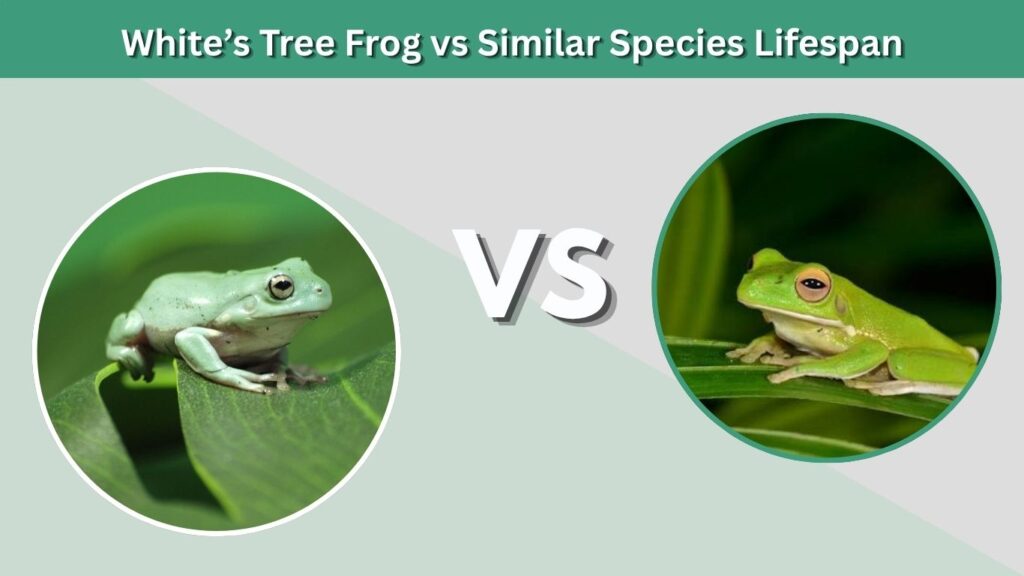
Common names sometimes create confusion when researching frog lifespan. White’s tree frog, White-lipped tree frog, and other green tree frogs are different animals and should not automatically be expected to have identical longevity or care requirements. Identifying the actual species is particularly important before applying information about enclosure conditions, diet, temperature, or expected lifespan.
White’s Tree Frog vs White-Lipped Tree Frog
The White’s tree frog (Ranoidea caerulea) and White-lipped tree frog are different species.
White’s tree frogs are commonly called dumpy tree frogs or Australian green tree frogs. Their recognizable features include a broad body, large toe pads, and green-to-blue-green coloration.
White-lipped tree frogs are generally larger and have a noticeable pale stripe along the lower lip. Their husbandry requirements also differ in several respects.
Names Used for White’s Tree Frogs
Common names you may encounter include:
- White’s tree frog
- Dumpy tree frog
- Australian green tree frog
- Australian White’s tree frog
- Smiling tree frog
These names generally refer to Ranoidea caerulea. Checking the scientific name prevents confusion with unrelated species that share similar common names.
FAQs
What is the average lifespan of a White’s tree frog?
White’s tree frogs commonly live around 10–15 years in captivity with appropriate care. Some individuals may live considerably longer and potentially exceed 20 years. Diet, genetics, enclosure conditions, disease, and long-term husbandry all influence the actual lifespan of an individual frog.
How long do White’s tree frogs live as pets?
Pet White’s tree frogs can frequently live more than a decade. Providing appropriate temperatures, moderate humidity, nutritious insects, clean water, good ventilation, and a properly sized enclosure gives them a better chance of reaching 10–15 years or longer.
Can a White’s tree frog live for 20 years?
Yes. Some well-cared-for White’s tree frogs may reach approximately 20 years or potentially longer. However, this represents exceptional longevity rather than a guaranteed lifespan. Consistent husbandry and good health throughout life are essential for reaching such an advanced age.
How long do White’s tree frogs live in the wild?
Their exact wild lifespan is difficult to predict because individuals face predators, diseases, drought, food shortages, environmental changes, and other natural threats. Wild frogs may therefore have shorter and much more variable lifespans than well-protected animals maintained in captivity.
Is a dumpy tree frog the same as a White’s tree frog?
Yes. Dumpy tree frog is a common name for the White’s tree frog, Ranoidea caerulea. It is also commonly called the Australian green tree frog. The name comes partly from the species’ characteristic chunky, rounded appearance, particularly in mature adults.
