
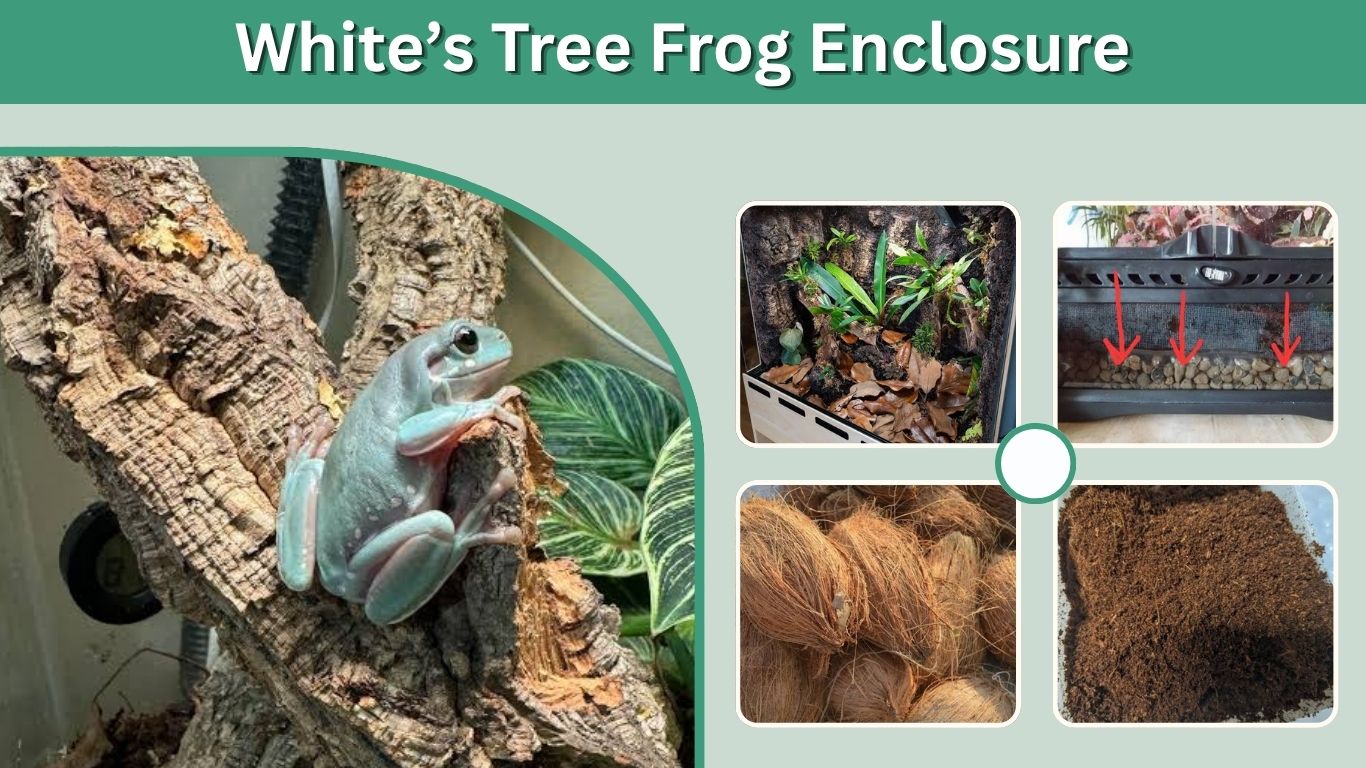
A White’s tree frog enclosure should provide enough vertical space for climbing while maintaining safe temperatures, moderate humidity, and good ventilation. Also called the Australian green tree frog, White’s tree frogs are large, calm, arboreal frogs that spend much of their time resting on branches and elevated hides. A properly designed enclosure should include climbing structures, foliage, clean water, suitable substrate, lighting, and secure ventilation. Choosing the correct enclosure size and setup helps keep these frogs active, comfortable, and healthy throughout their long lives.
White’s Tree Frog Enclosure Size
White’s tree frogs are bulky arboreal frogs, so enclosure height is especially important. Although they are not constantly active, they need enough room to climb, change resting locations, and move between warm and cool areas. Bigger enclosures also make it easier to provide branches, plants, water, hides, and proper environmental gradients without creating an overcrowded setup.
Minimum Enclosure Size
For one adult White’s tree frog, a good starting enclosure is approximately:
- Minimum dimensions: 18 × 18 × 24 inches
- Preferred style: Tall, front-opening terrarium
- Orientation: More vertical than horizontal
- Ventilation: Screen top or well-ventilated design
- Door: Secure and escape-resistant
- Space: Enough for several climbing levels
Larger enclosures are always beneficial when they are furnished correctly.
Young frogs can temporarily live in smaller setups, but upgrading as they grow prevents crowding.
Enclosure Size for Two White’s Tree Frogs
Two adult frogs require considerably more room than a single frog. An enclosure measuring around 24 × 18 × 24 inches or larger provides additional climbing space and allows both frogs to choose separate resting positions.
When keeping multiple frogs together, make sure they are similar in size. Large White’s tree frogs may attempt to swallow animals considerably smaller than themselves.
More frogs also produce more waste, making frequent cleaning and strong ventilation increasingly important.
Is a 40-Gallon Enclosure Good?
A 40-gallon enclosure can work very well for White’s tree frogs when it has suitable dimensions.
A tall 40-gallon terrarium is generally preferable to a long, shallow aquarium because these frogs naturally use elevated spaces.
Rather than focusing only on gallon capacity, consider height, usable climbing area, ventilation, and how easily branches and foliage can be arranged.
An appropriately furnished 40-gallon enclosure provides excellent space for one or possibly a small compatible group, depending on its dimensions.
How to Set Up a White’s Tree Frog Enclosure
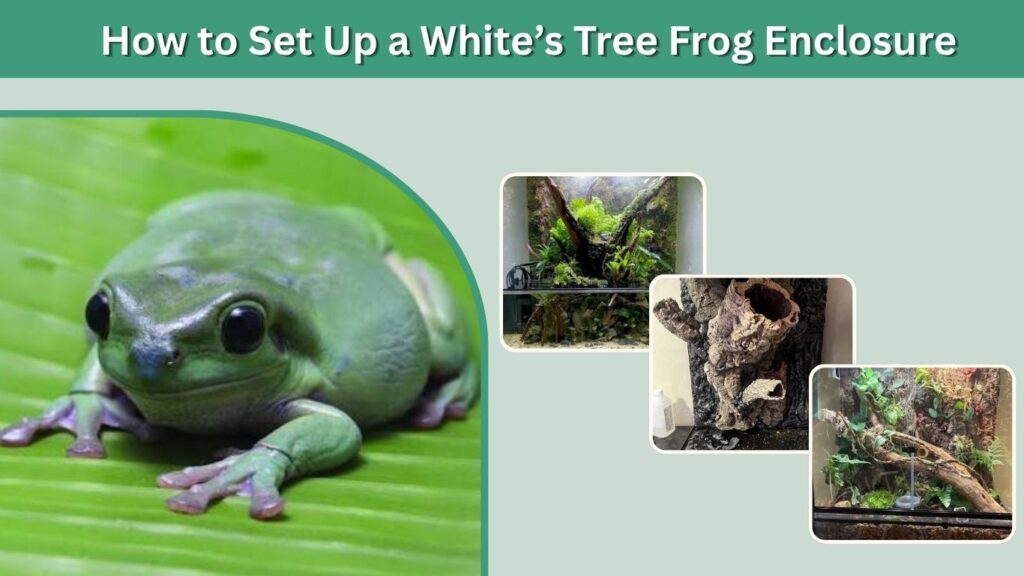
A successful White’s tree frog enclosure should imitate the basic structure of an arboreal environment without becoming overly wet or difficult to clean. Frogs need multiple elevated resting spots, sturdy branches, foliage, and easy access to water. Every decoration should be securely positioned because adult White’s tree frogs are surprisingly heavy and can dislodge weak branches.
Essential Enclosure Supplies
A basic White’s tree frog setup should contain:
- Tall glass or PVC enclosure
- Secure ventilated lid
- Horizontal and diagonal branches
- Cork bark
- Artificial or live plants
- Large water bowl
- Safe substrate
- Digital thermometer
- Digital hygrometer
- Low-level UVB lighting
- Suitable daytime heat source
- Elevated hiding areas
Avoid sharp decorations or narrow openings where a frog could become trapped.
Branches and Climbing Areas
White’s tree frogs spend considerable time sitting above the enclosure floor. Provide thick branches that comfortably support their weight.
Arrange some branches horizontally because these frogs frequently prefer broad resting surfaces instead of thin vertical twigs. Cork bark, vines, bamboo-like perches, and sturdy natural branches can create several climbing levels.
Do not overcrowd the enclosure. Frogs should be able to jump between locations without continually hitting decorations or walls.
Plants and Hiding Places
Plants help frogs feel secure and provide natural resting surfaces.
Strong plants with broad leaves are particularly useful because White’s tree frogs are heavier than many smaller tree frog species. Artificial foliage is also acceptable and often easier to maintain.
Create several shaded areas where frogs can retreat during the day. Hides positioned above ground are particularly valuable because some individuals rarely use shelters placed directly on the substrate.
Temperature, Humidity, and Lighting
Environmental conditions are just as important as enclosure size. White’s tree frogs tolerate a relatively broad range compared with many tropical amphibians, but constantly high temperatures or excessive moisture can cause problems. The enclosure should provide a gentle temperature gradient, moderate humidity, clean air circulation, and a predictable day-and-night lighting schedule.
Temperature Range
Daytime temperatures should generally remain around 75–82°F, with a slightly warmer area that can reach approximately 82–85°F.
At night, temperatures can fall into the upper 60s or low 70s without difficulty for healthy adults.
Important temperature practices include:
- Provide a warmer upper area.
- Maintain cooler areas elsewhere.
- Measure temperature digitally.
- Connect heating equipment to a thermostat.
- Never use heat rocks.
- Keep frogs from touching hot bulbs.
- Allow a modest nighttime temperature drop.
Heat lamps should always be positioned outside the enclosure where the frog cannot contact them.
Ideal Humidity
White’s tree frogs do not need a constantly soaked enclosure.
Humidity around 40–60% works well in many situations, with temporary increases after light misting. The enclosure should then have an opportunity to dry partially before being misted again.
Constant humidity of 80–100% combined with poor airflow can encourage bacterial and fungal growth.
Good ventilation is therefore just as important as maintaining adequate moisture.
UVB and Lighting
White’s tree frogs can benefit from low-level UVB exposure when it is provided safely.
Use gentle UVB designed for shade-dwelling reptiles or amphibians rather than powerful desert lighting. Provide foliage and shaded areas so frogs can move away from the light whenever they choose.
Keep lights on approximately 10–12 hours per day, followed by complete darkness at night. Avoid colored red or blue nighttime bulbs because frogs benefit from a natural dark period.
Substrate and Water Requirements

The bottom of the enclosure should remain clean, safe, and easy to maintain. White’s tree frogs absorb substances through their skin, making chemical-free materials and clean water particularly important. Substrate choice depends partly on whether the enclosure is simple, naturalistic, or bioactive, but loose materials that could cause problems when accidentally swallowed should be used carefully.
Best Substrate Options
Common substrate choices include:
- Coconut fiber
- Organic topsoil without fertilizers
- Soil and coconut fiber mixtures
- Reptile-safe soil substrates
- Moist paper towels for temporary setups
- Bioactive substrate mixtures
- Leaf litter over naturalistic substrate
Paper towels are particularly useful for newly acquired frogs because droppings and health changes are easy to monitor.
Natural substrates look better but require more maintenance.
Water Bowl Setup
Every enclosure should include a clean bowl large enough for the frog to sit comfortably inside.
White’s tree frogs frequently soak, especially at night. Because frogs may also defecate in their water, change it every day or immediately when contaminated.
Use dechlorinated water rather than untreated chlorinated tap water.
The bowl should be shallow enough for easy entry and exit without creating a drowning risk.
Keeping the Enclosure Clean
Remove waste and contaminated substrate whenever it appears.
A practical routine includes:
- Change drinking and soaking water daily.
- Spot-clean feces promptly.
- Remove dead insects.
- Replace dirty substrate when needed.
- Wash water bowls regularly.
- Clean enclosure surfaces periodically.
- Avoid strong household chemicals.
- Rinse cleaned decorations thoroughly.
A clean enclosure greatly reduces odors and microbial buildup.
White’s Tree Frog Enclosure Ideas
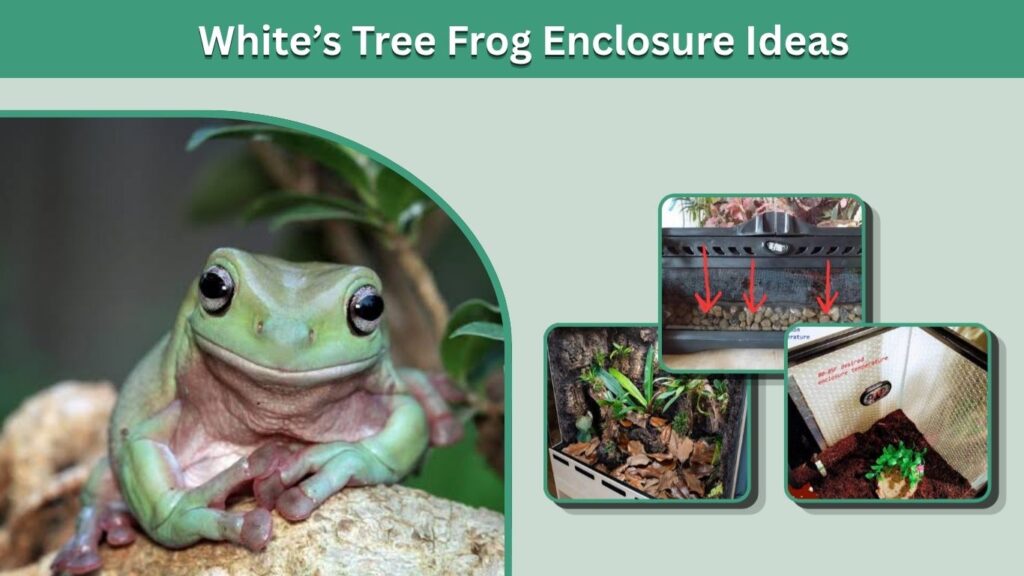
White’s tree frog setups can range from simple and functional to elaborate planted habitats. The best design is not necessarily the most decorative one. Frogs need usable climbing surfaces, adequate airflow, accessible water, and safe resting areas. Designing several levels allows the frog to choose between warmer, cooler, brighter, and more sheltered locations throughout the day.
Naturalistic Enclosure
A naturalistic setup uses cork bark, branches, soil, leaf litter, and live plants to create a forest-like appearance.
Large-leaved plants can provide comfortable elevated resting locations while branches create movement routes throughout the enclosure.
Naturalistic enclosures look attractive, but they require careful monitoring because hidden waste, excess moisture, and plant soil can make maintenance more complicated.
Bioactive White’s Tree Frog Enclosure
Bioactive enclosures contain living plants and small cleanup organisms such as springtails and isopods.
A typical bioactive setup may contain:
- Drainage layer
- Barrier mesh
- Bioactive soil
- Leaf litter
- Springtails
- Suitable isopods
- Live plants
- Cork bark and branches
Bioactive does not mean maintenance-free. Water still needs changing, visible waste should be removed, and environmental conditions must remain suitable.
Simple Enclosure Setup
A simpler enclosure is often easier for beginners.
Use safe substrate or paper towels, several sturdy branches, artificial foliage, a large water bowl, and elevated resting areas. This arrangement makes cleaning and health monitoring straightforward while still providing everything the frog needs.
Once proper temperature, humidity, feeding, and cleaning routines are established, additional natural decorations can be introduced gradually.
FAQs
What size enclosure does a White’s tree frog need?
One adult White’s tree frog should generally have an enclosure around 18 × 18 × 24 inches or larger. Since these frogs are arboreal, vertical space is particularly valuable. Larger setups provide more room for branches, plants, hides, and environmental gradients.
Can two White’s tree frogs live together?
Yes, similarly sized White’s tree frogs can usually live together when provided with sufficient space, food, and resting areas. A larger enclosure around 24 × 18 × 24 inches or more is preferable. Avoid housing dramatically different-sized frogs together because smaller animals may be viewed as prey.
How humid should a White’s tree frog enclosure be?
Moderate humidity around 40–60% is suitable for many White’s tree frog enclosures. Humidity can temporarily rise after misting, but the enclosure should not remain constantly saturated. Strong ventilation and periods of partial drying help maintain healthier conditions.
What should I put inside a White’s tree frog enclosure?
Include sturdy branches, broad resting surfaces, foliage, hides, safe substrate, a large clean water bowl, thermometer, hygrometer, appropriate heating, and low-level UVB lighting. Arrange decorations at several heights so the frog can choose different temperature and light conditions.
Why is my White’s tree frog not moving in a new enclosure?
A newly introduced White’s tree frog may remain still or hidden while adjusting to unfamiliar surroundings. These frogs are also primarily active during the evening and night. Minimize handling, maintain correct temperature and humidity, and allow several days for adjustment while monitoring feeding and overall condition.
