
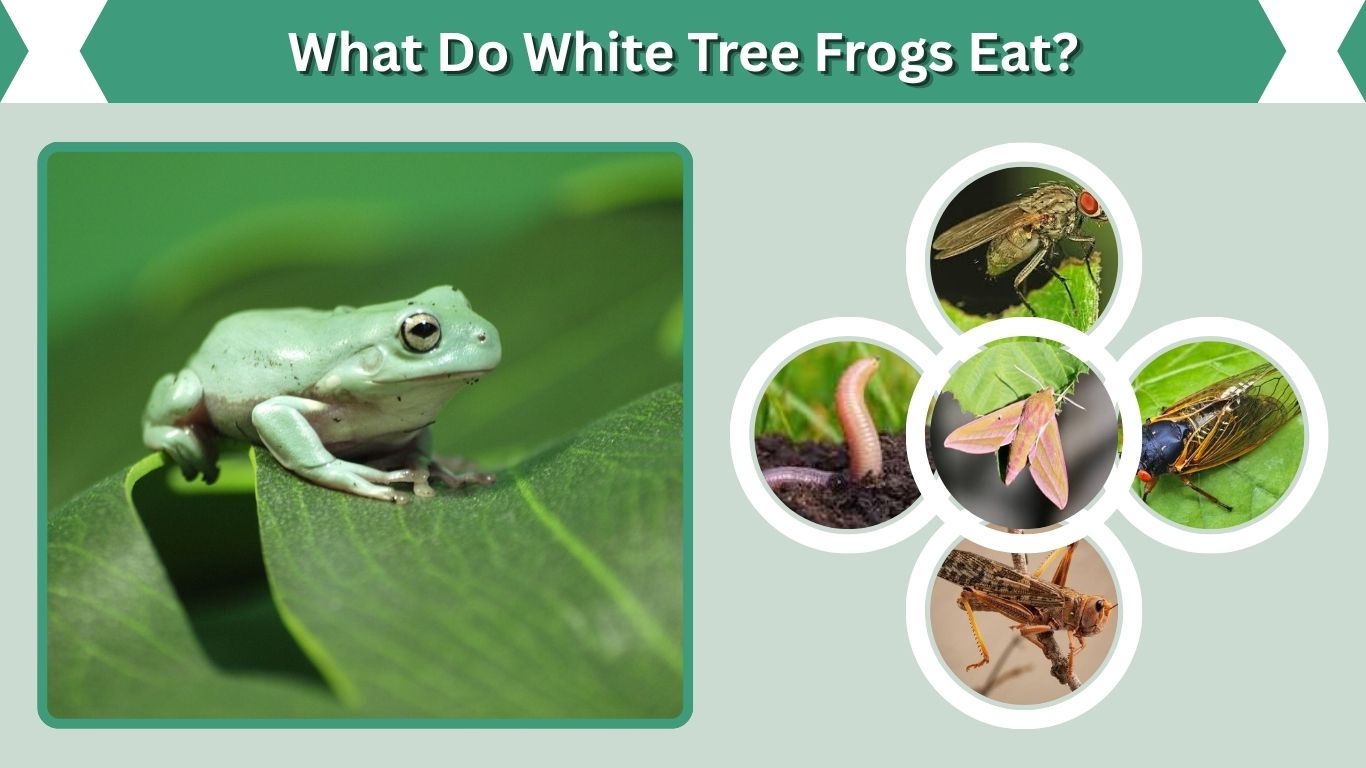
What do white tree frogs eat? White’s tree frogs, also called Australian green tree frogs or dumpy tree frogs, are mainly insect-eating amphibians with surprisingly large appetites. In the wild, they consume insects and other small animals they can catch, while pet frogs thrive on a varied diet of properly sized feeder insects. Crickets, roaches, locusts, worms, and moths can all be suitable choices. Here are 10 foods White’s tree frogs eat, plus feeding frequency, portion size, and foods you should avoid.
What Do White Tree Frogs Eat?
White’s tree frogs (Ranoidea caerulea) are primarily insectivores and opportunistic carnivores. They usually wait for suitable prey to come close before striking quickly with their mouths. Captive frogs should receive a varied diet rather than depending on one feeder insect. Proper calcium and vitamin supplementation is also important for maintaining healthy bones and normal growth.
White Tree Frog Diet at a Glance
- Crickets
- Dubia roaches
- Locusts
- Silkworms
- Hornworms
- Mealworms
- Waxworms
- Earthworms
- Flies
- Moths
The size of each feeder is important. As a general rule, prey should not be much wider than the space between the frog’s eyes.
10 Foods White Tree Frogs Eat
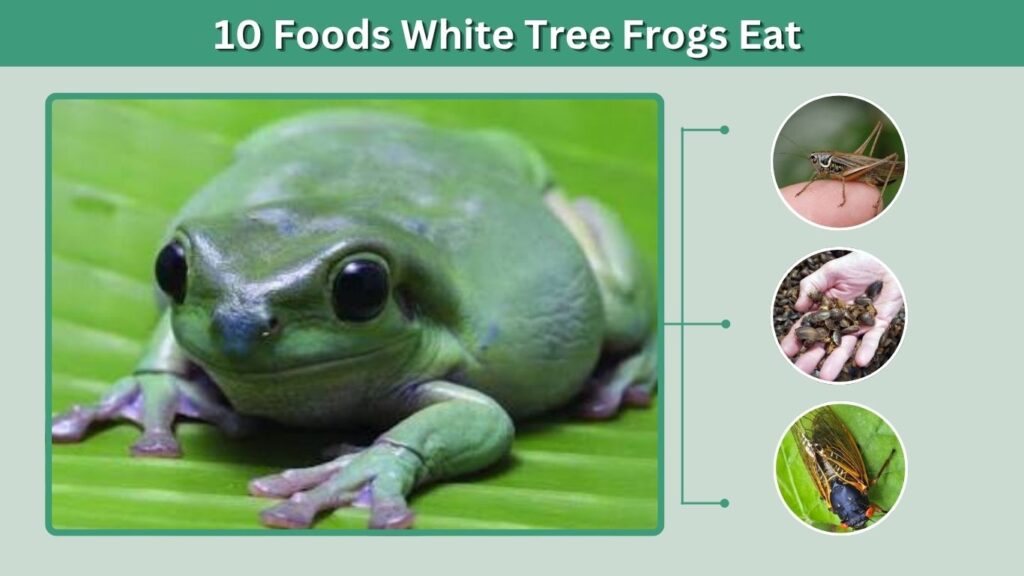
A varied White’s tree frog diet provides better nutrition than feeding the same insect every day. Staple insects should make up most meals, while fatty worms and similar treats should be offered less frequently. Gut-loading feeder insects before offering them can also improve their nutritional value.
1. Crickets
Crickets are one of the most common foods for White’s tree frogs and can work well as a regular staple.
They are widely available, easy to gut-load, and come in different sizes for juvenile and adult frogs. Offer crickets appropriately sized for your frog and dust them with calcium according to an appropriate supplementation schedule.
Remove uneaten crickets rather than allowing large numbers to remain in the enclosure, especially overnight.
2. Dubia Roaches
Dubia roaches are another excellent feeder for pet White’s tree frogs. They contain useful protein and generally have a better meat-to-shell ratio than some other feeder insects.
They also move enough to trigger a frog’s feeding response without being especially difficult to manage. Choose small or medium roaches appropriate for the frog’s size.
Dubia roaches can be gut-loaded with nutritious foods before feeding, making them especially useful as part of a varied staple diet.
3. Locusts
Locusts can provide both nutrition and enrichment because their movement encourages White’s tree frogs to hunt.
They are particularly popular as feeder insects in regions where captive-bred locusts are readily available. Select individuals small enough for the frog to swallow safely.
Locusts can be alternated with crickets and roaches rather than becoming the only food offered.
4. Silkworms
Silkworms are soft-bodied feeders that many White’s tree frogs readily accept. Their soft bodies make them relatively easy to digest compared with insects that have harder exoskeletons.
They also contain plenty of moisture, which can complement the frog’s regular hydration.
Silkworms can be rotated into the diet alongside crickets, roaches, and other feeder insects to provide greater nutritional variety.
5. Hornworms
Hornworms are large, soft-bodied caterpillars containing a high amount of moisture. Appropriately sized hornworms can occasionally be offered to White’s tree frogs.
Because hornworms grow extremely quickly, owners should check their size carefully before feeding them. A worm that was suitable several days earlier may become too large.
Their soft texture and movement often make them attractive to frogs.
6. Mealworms
White’s tree frogs can eat mealworms, but they are better used as part of a varied diet rather than as the primary everyday feeder.
Mealworms possess a comparatively hard outer covering, so feeding large quantities may not be ideal. Choose appropriately sized worms and combine them with softer or more nutritionally balanced feeder insects.
Juvenile frogs in particular should receive properly sized, easily swallowed prey.
7. Waxworms
Waxworms are readily eaten by many frogs because they are soft and energy-rich. However, their high fat content means they should generally be treated as an occasional food.
Offering waxworms too frequently can contribute to unnecessary weight gain, especially because White’s tree frogs are already prone to becoming overweight in captivity.
They work better as an occasional treat than as a staple feeder.
8. Earthworms
Appropriately sized earthworms can add useful variety to a White’s tree frog’s diet. They are soft-bodied and provide animal protein without a hard exoskeleton.
Larger worms can be cut into appropriately sized sections before being offered.
Use worms obtained from a safe captive source rather than collecting them from areas where pesticides, fertilizers, parasites, or other contaminants may be present.
9. Flies
White’s tree frogs naturally respond strongly to moving insects, making various feeder flies another potential food.
Smaller flies can be particularly useful for young frogs, while larger captive-bred feeder flies may interest adults. Their movement encourages natural hunting behavior.
Because flies alone do not provide everything a frog needs, they should be included as part of a broader rotation of feeder insects.
10. Moths
Wild White’s tree frogs may catch moths and other flying insects that become active around vegetation at night.
Captive frogs may also eagerly hunt suitable feeder moths. However, collecting random moths outdoors is generally not recommended because they could have contacted pesticides or other harmful substances.
Captive-bred or otherwise reliably safe feeders are a better choice for pet frogs.
How Often Should You Feed a White Tree Frog?
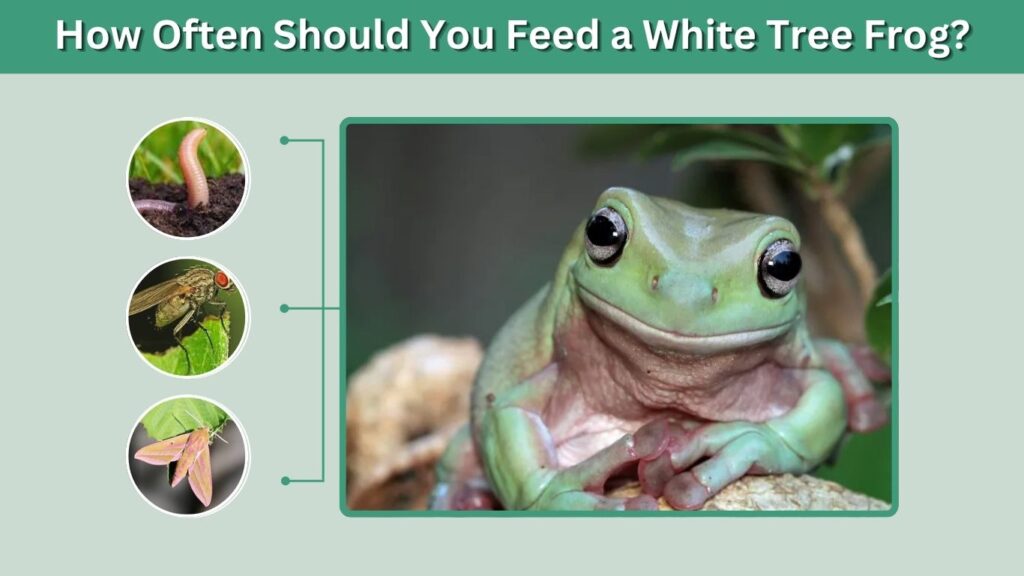
Feeding frequency depends heavily on the frog’s age, body condition, feeder size, and overall health. Young frogs are growing rapidly and normally need food more frequently than fully grown adults.
Feeding Juvenile White Tree Frogs
Juveniles typically require smaller meals more frequently. Young frogs may be offered appropriately sized insects daily or nearly daily depending on their age and growth.
The prey should be small enough to swallow easily. Monitoring body condition is important because both inadequate feeding and excessive feeding can create problems.
Feeding Adult White Tree Frogs
Adult White’s tree frogs generally do not need to eat every day. Feeding several appropriately sized insects every few days is often sufficient, although the exact amount depends on the individual.
These frogs have a reputation for eating enthusiastically even when they do not need additional calories. Their appetite should therefore not be the only guide to portion size.
Do White Tree Frogs Need Calcium?
A captive insect diet may not naturally provide the ideal balance of calcium and other nutrients. Feeder insects are therefore commonly gut-loaded and dusted with calcium and vitamin supplements as part of proper husbandry.
Calcium and Vitamin Supplementation
The appropriate supplementation routine depends on the frog’s age, diet, and enclosure setup. Calcium is particularly important for maintaining healthy bones and helping prevent nutritional deficiencies.
A reptile or amphibian supplement intended for captive insectivores is generally preferable to random human supplements. Avoid excessive supplementation because more is not always better.
What Do White Tree Frogs Eat in the Wild?
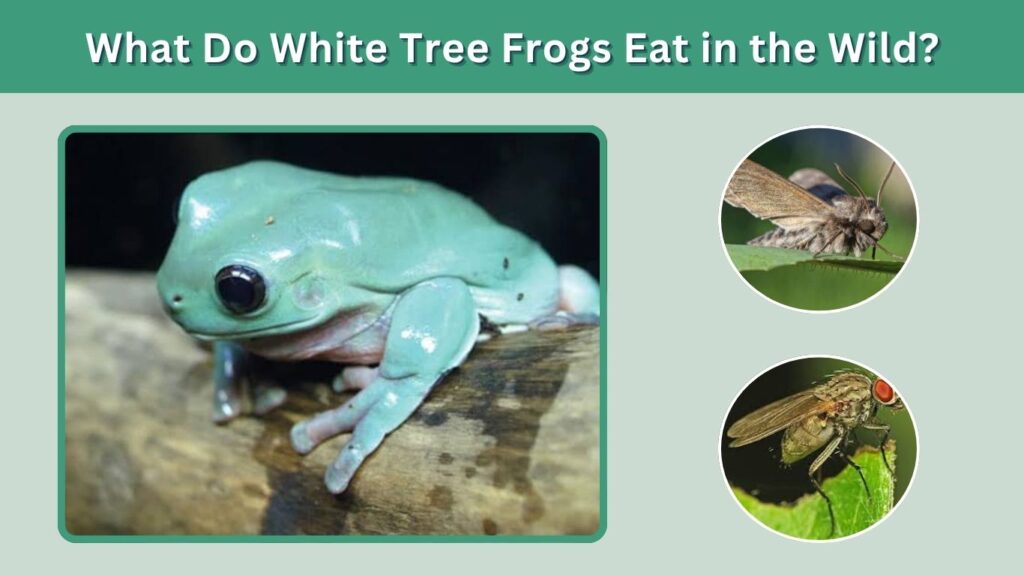
Wild White’s tree frogs are opportunistic hunters. Instead of following a fixed menu, they consume animals that are small enough to overpower and swallow.
Their natural prey consists mainly of insects and other invertebrates. Large adults may occasionally take other small animals, but insects form a much more practical and appropriate basis for captive feeding.
Wild frogs commonly hunt at night, waiting on branches, walls, vegetation, or other elevated surfaces for prey to move within striking distance.
Foods White Tree Frogs Should Avoid
White’s tree frogs may attempt to swallow many moving objects, so owners cannot assume that something is safe simply because the frog wants to eat it.
Foods Not Recommended
- Wild insects exposed to pesticides
- Fireflies and other potentially toxic insects
- Insects that are too large
- Human food
- Processed meat
- Dog or cat food
- Large amounts of fatty feeder worms
- Food caught in chemically treated gardens
- Prey with potentially dangerous defensive structures
- Vertebrate prey as a routine food
Overfeeding should also be avoided. White’s tree frogs can become overweight relatively easily in captivity.
Can White Tree Frogs Eat Mice?
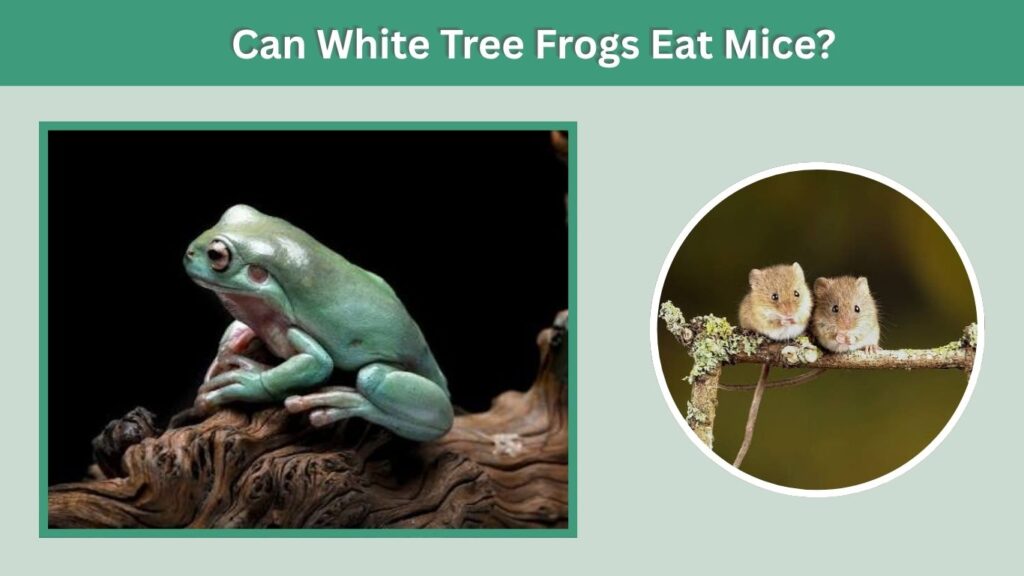
Large White’s tree frogs are physically capable of swallowing surprisingly large prey, and vertebrate prey is sometimes discussed in connection with their opportunistic feeding habits.
However, mice are not necessary for a normal captive White’s tree frog diet. Regularly feeding high-calorie vertebrate prey can contribute to obesity and provides little advantage when appropriately varied feeder insects are available.
Crickets, roaches, worms, and other suitable invertebrates are better routine choices.
FAQs
1. What is the best food for White’s tree frogs?
Crickets and appropriately sized captive-bred roaches can make useful staple foods for White’s tree frogs. However, variety is preferable. Locusts, silkworms, hornworms, earthworms, and other suitable feeders can be rotated into the diet.
2. Can White’s tree frogs eat mealworms?
Yes, White’s tree frogs can eat mealworms. However, mealworms have a harder exoskeleton than many soft-bodied feeders, so they are better included as one part of a varied diet rather than being used as the frog’s only food.
3. How many crickets should a White’s tree frog eat?
There is no single number suitable for every frog. The correct quantity depends on the frog’s age, size, body condition, and cricket size. Juveniles generally eat smaller meals more frequently, while healthy adults can be fed less often.
4. How long can White’s tree frogs go without food?
Healthy adults can tolerate periods without eating better than growing juveniles, but deliberately withholding food for long periods is not appropriate routine care. A frog that suddenly refuses food repeatedly may be affected by temperature, stress, illness, or husbandry problems.
5. Do White’s tree frogs eat fruit?
White’s tree frogs are primarily insect-eating carnivores and do not need fruit as part of their normal diet. Their digestive system is adapted mainly for animal prey. Fruit and vegetables are better used for gut-loading certain feeder insects before those insects are offered to the frog.
