
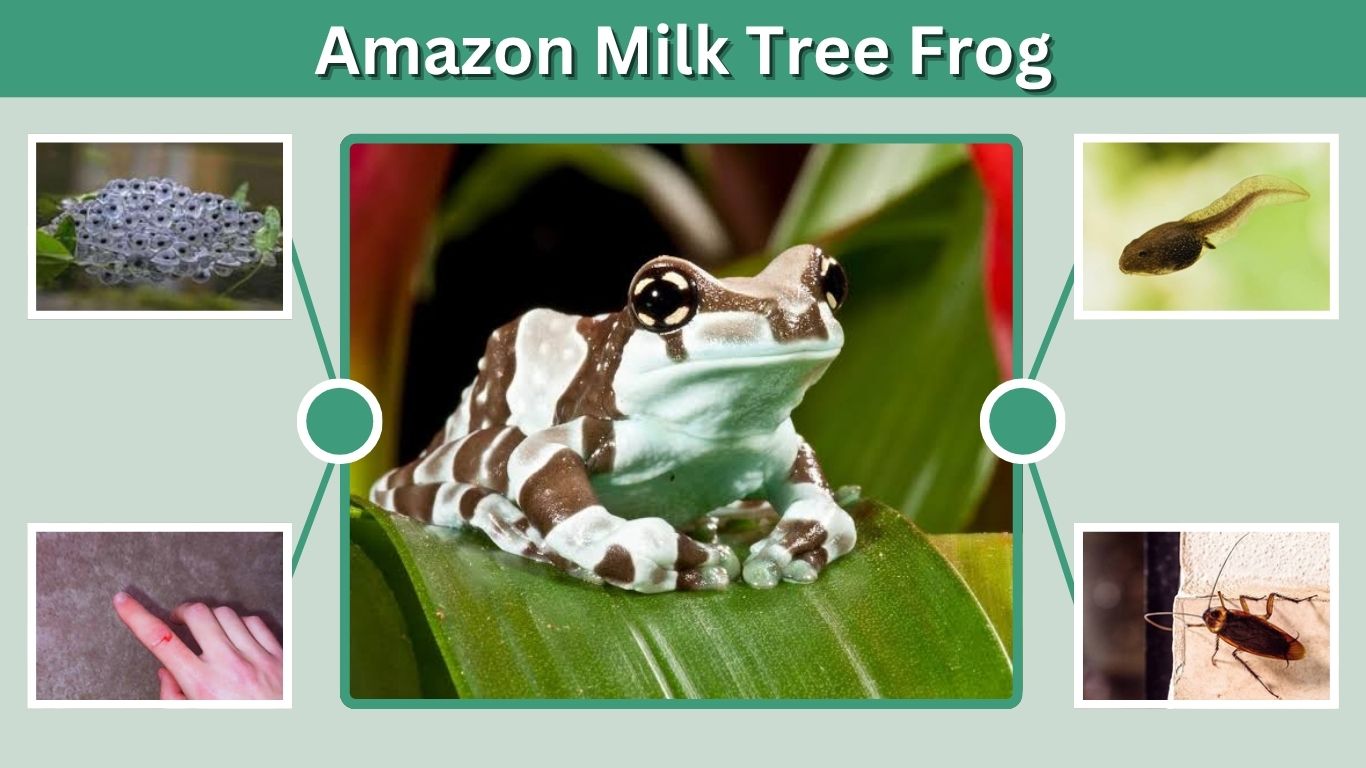
The Amazon milk tree frog is a fascinating tropical amphibian known for its blue-gray body, dark brown patterns, and large golden eyes. Native to South America’s rainforests, this tree-dwelling species is popular among amphibian enthusiasts because of its unusual appearance and interesting behaviors. Also called the blue milk tree frog, it produces a milky defensive secretion when threatened. Understanding its natural habitat, diet, lifespan, breeding habits, and care requirements is essential for anyone interested in this species. This guide covers everything you should know about Amazon milk tree frogs.
What Is an Amazon Milk Tree Frog?
The Amazon milk tree frog (Trachycephalus resinifictrix) is a tropical amphibian belonging to the family Hylidae. It is also known as the Mission golden-eyed tree frog or blue milk frog. This species lives primarily in rainforest trees and is most active during the evening and nighttime.
Why Is It Called a Milk Frog?
Amazon milk frogs receive their name from the sticky, milky-white substance they release through their skin when threatened.
This defensive secretion helps discourage predators from attacking. It contains irritating compounds that can affect animals attempting to eat the frog.
Although this secretion provides protection, milk frogs generally rely on camouflage and hiding to avoid danger.
Amazon Milk Tree Frog Appearance and Size

Amazon milk tree frogs have distinctive colors and body structures that separate them from many other tree frog species. Their broad heads, large eyes, and strong climbing abilities make them well-adapted to life in tropical forests.
Key Identification Features
- Scientific name: Trachycephalus resinifictrix.
- Adult size: Approximately 2.5–4 inches long.
- Body color: Pale blue-gray with dark brown markings.
- Eye color: Golden with distinctive dark pupils.
- Skin texture: Slightly rough and bumpy.
- Toe pads: Large adhesive pads for climbing.
- Body shape: Broad head and sturdy limbs.
- Activity: Primarily nocturnal.
How Big Do Amazon Milk Tree Frogs Get?
Adult females can reach approximately four inches in length, while males are generally smaller.
Juveniles usually display brighter colors and stronger pattern contrasts. As they mature, their coloration may become more muted, although individual appearances vary.
Where Do Milk Tree Frogs Live?

Amazon milk tree frogs are native to northern South America, particularly the Amazon Basin. They inhabit tropical rainforests in countries including Brazil, Colombia, Ecuador, Peru, Guyana, and Venezuela.
These amphibians spend much of their lives above the forest floor, where vegetation provides protection and feeding opportunities.
Natural Habitat and Living Conditions
Milk frogs prefer warm, humid rainforest environments with abundant climbing surfaces.
They commonly occupy tree branches, hollow trunks, and vegetation near freshwater habitats. Water-filled tree cavities are especially important during breeding.
Their large toe pads provide excellent grip, allowing them to climb branches and other surfaces with remarkable ease.
What Do Amazon Milk Tree Frogs Eat?

Amazon milk tree frogs are primarily insectivorous, feeding on insects and other small invertebrates. They usually hunt at night, capturing prey from branches and leaves using quick movements and sticky tongues.
Common Foods in Their Diet
- Crickets: A common source of protein.
- Moths: Flying insects caught during nighttime hunting.
- Cockroaches: Small species consumed in the wild.
- Beetles: Suitable insects found around vegetation.
- Spiders: Occasional invertebrate prey.
- Caterpillars: Soft-bodied insects consumed opportunistically.
Feeding Milk Frogs in Captivity
Captive milk frogs require a varied diet of appropriately sized, gut-loaded live insects.
Young frogs generally need more frequent meals than adults. Calcium and vitamin supplements should be provided according to an amphibian veterinarian’s recommendations.
Overfeeding should be avoided because captive frogs can become overweight.
Amazon Milk Tree Frog Care Requirements
Milk tree frog care involves providing appropriate temperatures, humidity, climbing opportunities, and nutritious food. These frogs can adapt to captivity when their environmental needs are consistently maintained.
A well-designed vertical terrarium should resemble their natural rainforest habitat while allowing proper ventilation.
Essential Care Requirements
- Enclosure: A spacious, vertically oriented terrarium with a secure lid.
- Temperature: Generally around 75–82°F during the day, with a slightly cooler nighttime environment.
- Humidity: Moderate-to-high humidity with regular ventilation.
- Climbing structures: Strong branches, plants, and suitable hiding places.
- Water: Fresh, dechlorinated water in a shallow soaking dish.
- Lighting: A regular day-and-night cycle with suitable low-level UVB provision.
- Food: Gut-loaded live insects with appropriate supplementation.
- Cleaning: Regular waste removal and enclosure maintenance.
Can You Handle a Milk Tree Frog?
Amazon milk frogs should not be handled frequently.
Their delicate skin can absorb oils, chemicals, and other substances from human hands. Handling can also cause stress and trigger defensive secretions.
When contact is necessary, use clean, powder-free, moistened gloves and wash your hands afterward.
Are Amazon Milk Tree Frogs Poisonous?

Yes, Amazon milk tree frogs produce a mildly toxic skin secretion that helps protect them from predators. However, they are not generally considered dangerously poisonous to humans through ordinary contact.
Their secretions can irritate sensitive skin, eyes, or mucous membranes. Direct contact with the eyes or mouth should be avoided.
Are Milk Tree Frogs Dangerous to Humans?
Milk frogs are not aggressive and rarely attempt to bite people.
Their main defense involves releasing irritating secretions when frightened. Like other amphibians, they may also carry Salmonella bacteria.
Proper handwashing and avoiding unnecessary handling significantly reduce potential risks.
Blue Milk Tree Frog vs. Amazon Milk Tree Frog
The blue milk tree frog and Amazon milk tree frog are different common names for the same species, Trachycephalus resinifictrix. Both names describe the distinctive appearance of this South American amphibian.
Why Do Their Colors Look Different?
Young milk frogs often have pale blue-gray bodies with sharply contrasting dark markings.
As they mature, their colors may become duller, appearing grayish, brownish, or slightly greenish under different lighting conditions.
These variations are normal and do not necessarily indicate separate species.
Amazon Milk Tree Frog Eggs and Breeding
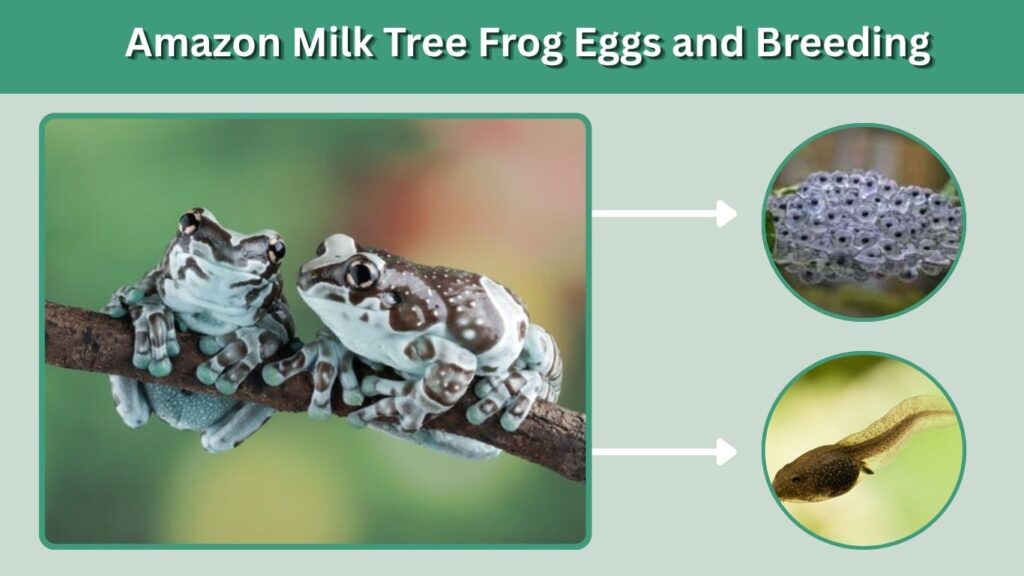
Amazon milk tree frogs typically reproduce during rainy conditions in their natural habitat. Males call to attract females, often from water-filled tree cavities that provide suitable breeding locations.
Females can deposit large numbers of eggs, sometimes reaching approximately 2,000 in a single clutch.
How Do Milk Frog Eggs Develop?
Eggs are deposited in water-filled cavities, where they can hatch into tadpoles within approximately one day under favorable conditions.
The tadpoles remain in water while developing and eventually transform into small frogs.
Development depends on water conditions, temperature, food availability, and other environmental factors.
How Long Do Amazon Milk Tree Frogs Live?
Amazon milk tree frogs commonly live around 8–12 years in well-maintained captivity, although individual lifespans vary. Some individuals may survive longer with excellent conditions and appropriate veterinary care.
Reliable lifespan information for wild populations is more limited because tracking individual frogs over many years is difficult.
Factors Affecting Their Lifespan
Proper nutrition, stable temperatures, clean water, adequate ventilation, and sufficient enclosure space all support long-term health.
Poor hygiene, improper humidity, excessive handling, and nutritional deficiencies may contribute to illness.
Regular observation helps owners identify changes in appetite, activity, or skin condition.
Amazon Milk Tree Frog for Sale: What to Know
Amazon milk tree frogs are available through some specialist amphibian breeders and reptile retailers. However, buying one requires preparation because these animals need specialized living conditions and long-term care.
Captive-bred frogs are preferable to wild-caught specimens.
Things to Check Before Buying
- Legal ownership: Confirm local wildlife and import regulations.
- Breeder reputation: Choose a reliable captive-breeding source.
- Health condition: Look for alert behavior, clear eyes, and healthy skin.
- Feeding history: Confirm that the frog accepts suitable live insects.
- Enclosure readiness: Prepare the habitat before bringing the frog home.
- Long-term commitment: Consider its potential lifespan and ongoing care expenses.
FAQs
1. Are Amazon milk tree frogs poisonous?
Yes, Amazon milk tree frogs produce a mildly toxic, milky secretion when threatened. This substance helps discourage predators and may irritate human skin or eyes. However, these frogs are not generally considered dangerously poisonous to humans through ordinary contact.
2. How big do Amazon milk tree frogs get?
Adult Amazon milk tree frogs typically grow between 2.5 and 4 inches long. Females are generally larger than males. Their broad heads, sturdy bodies, and large adhesive toe pads make them well-suited for climbing rainforest vegetation.
3. Can Amazon milk tree frogs live together?
Amazon milk tree frogs can sometimes live together in appropriately sized enclosures. However, sufficient space, climbing opportunities, and food must be provided. Frogs should be similar in size to reduce competition and the possibility of smaller individuals being eaten.
4. What do Amazon milk tree frogs eat?
Amazon milk tree frogs primarily eat insects and small invertebrates, including crickets, moths, beetles, and cockroaches. Captive frogs require varied, appropriately sized live insects supplemented with essential nutrients to support healthy growth and development.
5. Where do Amazon milk tree frogs live?
Amazon milk tree frogs inhabit tropical rainforests across northern South America, particularly within the Amazon Basin. They spend much of their time in trees and commonly use water-filled tree cavities for reproduction during suitable rainy conditions.
