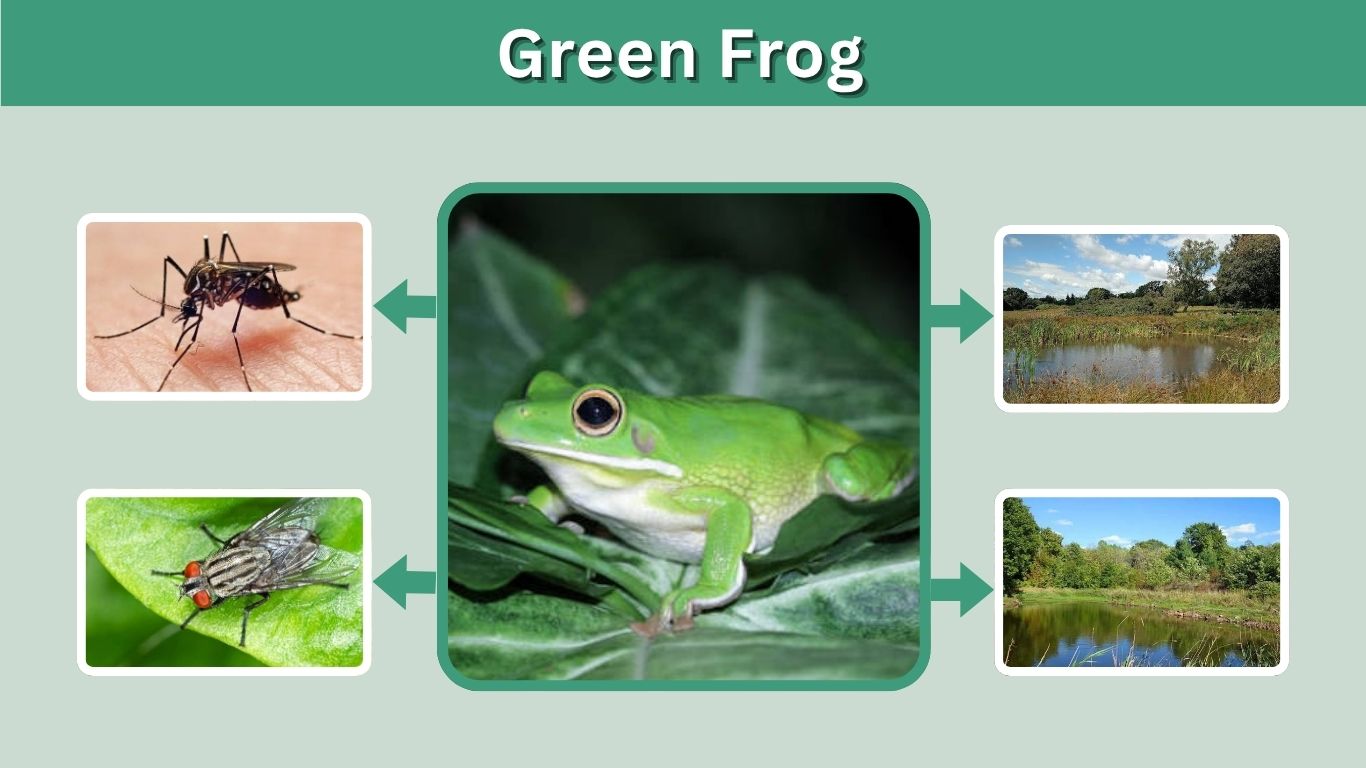
The green frog is a common freshwater amphibian found throughout much of eastern North America. Known for its greenish-brown body, powerful hind legs, and distinctive call, this frog lives near ponds, lakes, marshes, and slow-moving streams. Despite its name, a green frog is not always green. Some have brown, olive, or bronze-colored skin that helps them blend into their surroundings. Learning about green frog identification, habitat, diet, behavior, and reproduction can help you recognize this fascinating amphibian and understand its important role in freshwater ecosystems.
What Is a Green Frog?
The green frog (Lithobates clamitans) is a medium-sized amphibian belonging to the family Ranidae. It is native to North America and commonly inhabits freshwater environments. Green frogs spend much of their lives near water, where they hunt insects, escape predators, and reproduce. Their adaptable nature allows them to survive in various aquatic environments, including natural ponds and human-made wetlands.
Green Frog Scientific Classification
- Common Name: Green Frog
- Scientific Name: Lithobates clamitans
- Family: Ranidae
- Order: Anura
- Class: Amphibia
- Average Size: 2–4 inches
- Diet: Carnivorous
- Habitat: Ponds, lakes, marshes, and streams
- Native Range: Eastern North America
Green Frog Characteristics
Green frogs have smooth, moist skin, strong hind legs, and large eyes positioned near the top of their heads. Their bodies are adapted for swimming and jumping.
Unlike many tree frogs, green frogs spend most of their time near water rather than climbing trees. Their coloration provides effective camouflage among aquatic plants and muddy shorelines.
How to Identify a Green Frog
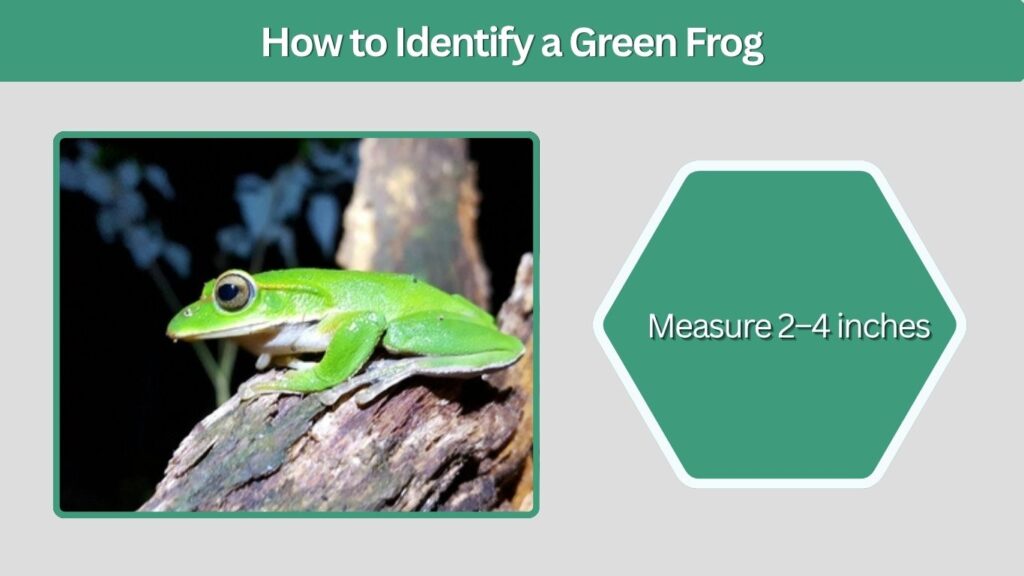
Green frogs have several physical characteristics that distinguish them from other North American frogs. Although their coloration varies, most individuals have greenish heads, brown or olive bodies, and noticeable ridges along their backs. Examining their size, skin patterns, eardrums, and body shape can help you identify them correctly, particularly when comparing them with bullfrogs and tree frogs.
Green Frog Size and Appearance
Adult green frogs typically measure 2–4 inches from snout to vent. Females may grow slightly larger than males.
Their bodies are usually green, olive, bronze, or brown, sometimes with darker markings across the back and legs.
The underside is generally white or cream-colored. Their large hind legs allow them to make powerful jumps when escaping danger.
Distinctive Physical Features
- Dorsolateral Ridges: Raised skin folds extend along both sides of the back.
- Large Eardrums: Circular tympanums are visible behind the eyes.
- Strong Hind Legs: Muscular legs support jumping and swimming.
- Webbed Feet: Webbing between the hind toes improves movement through water.
- Variable Coloration: Green, brown, and olive patterns provide natural camouflage.
Male vs. Female Green Frog
Male green frogs usually have yellowish throats and eardrums noticeably larger than their eyes.
Females generally have lighter-colored throats, with eardrums approximately equal in size to their eyes.
These differences become more apparent during the breeding season, when males establish territories and begin calling to attract females.
Where Do Green Frogs Live?
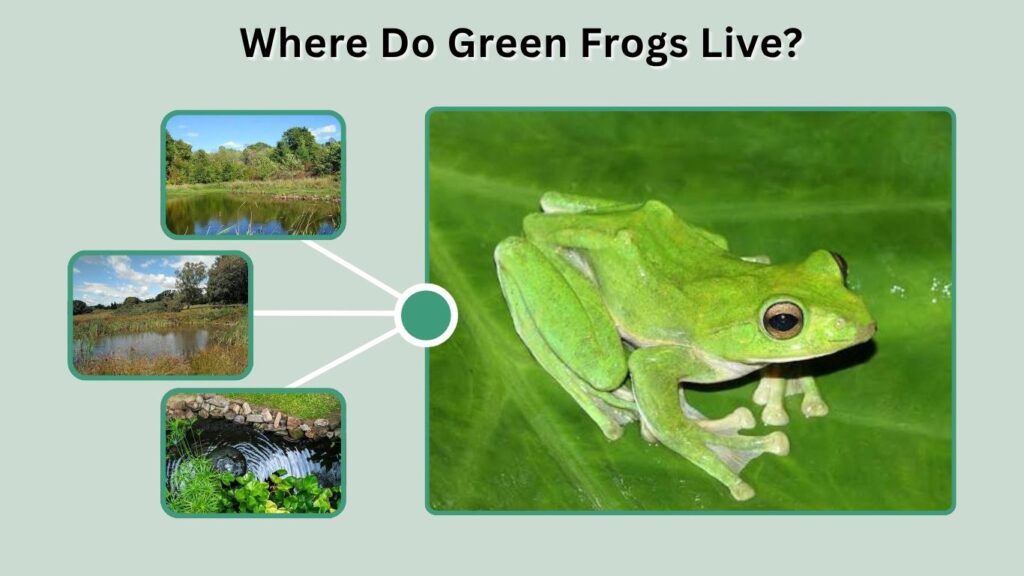
Green frogs prefer freshwater habitats with abundant vegetation, suitable shelter, and reliable food sources. They are especially common around permanent water bodies that remain wet throughout the year. Their habitat provides protection from predators and appropriate conditions for reproduction. Although green frogs occasionally travel onto land, they generally remain close to ponds, streams, and other freshwater environments.
Common Green Frog Habitats
- Ponds: Shallow edges provide food, shelter, and breeding areas.
- Lakes: Vegetated shorelines offer suitable resting and hunting locations.
- Marshes: Wetland plants protect frogs from predators.
- Slow-Moving Streams: Gentle currents create favorable living conditions.
- Swamps: Shallow freshwater supports both adults and tadpoles.
- Woodland Pools: Forested wetlands provide moisture and seasonal shelter.
Green Frog Geographic Distribution
Green frogs are widely distributed across eastern North America, including much of the eastern United States and southeastern Canada.
Their natural range extends from southern Canada toward the Gulf Coast. They also occur in certain western areas where populations have been introduced.
Green frogs are commonly observed resting on rocks, floating vegetation, submerged logs, and muddy banks.
What Do Green Frogs Eat?
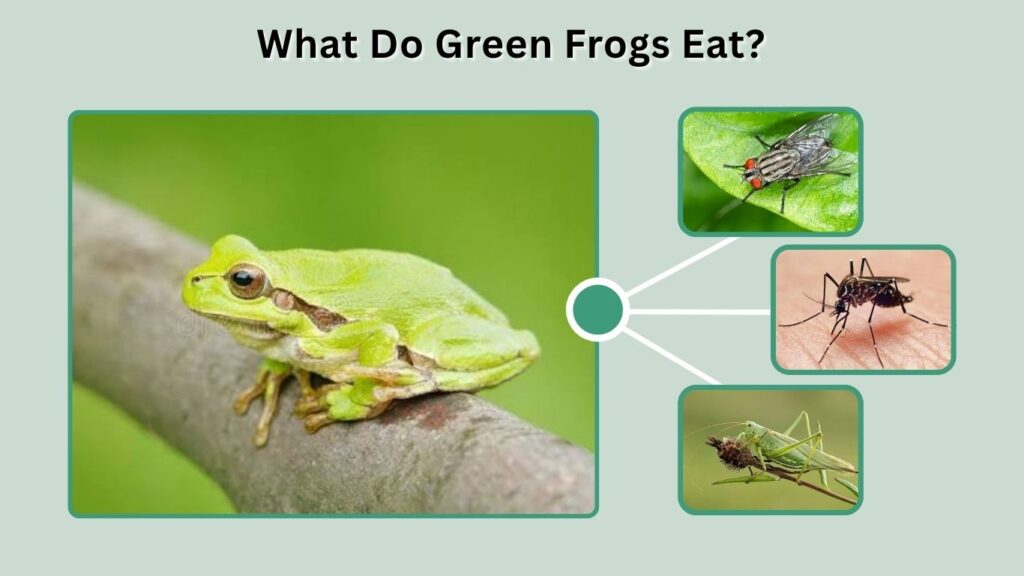
Green frogs are opportunistic carnivores that eat various small animals. Their diet depends on their age, body size, habitat, and available food sources. Adult frogs mainly consume insects and other invertebrates, although larger individuals occasionally capture small vertebrates. Tadpoles have different feeding habits, relying primarily on algae and organic materials until they gradually develop into young frogs.
Common Foods Green Frogs Eat
- Insects: Flies, mosquitoes, beetles, crickets, and grasshoppers.
- Spiders: Small spiders found near freshwater habitats.
- Worms: Earthworms and other soft-bodied invertebrates.
- Aquatic Animals: Small aquatic insects and other invertebrates.
- Small Fish: Occasionally captured by larger frogs.
- Other Amphibians: Small frogs and tadpoles may sometimes become prey.
What Do Green Frog Tadpoles Eat?
Green frog tadpoles primarily consume algae, diatoms, and organic material found in freshwater environments.
They graze on underwater surfaces and aquatic vegetation, helping process nutrients within ponds and wetlands.
As tadpoles develop legs and transform into young frogs, their diet gradually changes toward small insects and other animal prey.
How Do Green Frogs Catch Their Food?
Green frogs generally use a sit-and-wait hunting strategy. They remain motionless until suitable prey moves within striking distance.
When an insect approaches, the frog quickly extends its sticky tongue to capture it.
Their sharp vision, fast reactions, and effective camouflage make them successful predators in freshwater habitats.
Green Frog Sounds and Behavior
Green frogs are known for their distinctive vocalizations and semi-aquatic behavior. They spend considerable time resting near water, where they can quickly escape danger. Males become particularly vocal during the breeding season, producing recognizable sounds to attract females and communicate with competing males. Their activity patterns vary according to temperature, weather, habitat conditions, and seasonal changes.
What Does a Green Frog Sound Like?
The green frog’s call resembles the sound of a loose banjo string being plucked.
It is commonly described as a short, hollow “glunk” or “boink.” Males may repeat this sound several times, with each note becoming softer.
These calls are frequently heard around ponds during late spring and summer, especially when breeding activity increases.
Green Frog Daily Behavior
Green frogs may be active during both daytime and nighttime, depending on weather and environmental conditions.
They often remain partially hidden among shoreline plants while watching for insects and other prey.
When disturbed, they quickly leap into the water and swim toward deeper areas or underwater hiding places.
Their main predators include snakes, birds, raccoons, larger fish, and other amphibians.
Green Frog Reproduction and Life Cycle
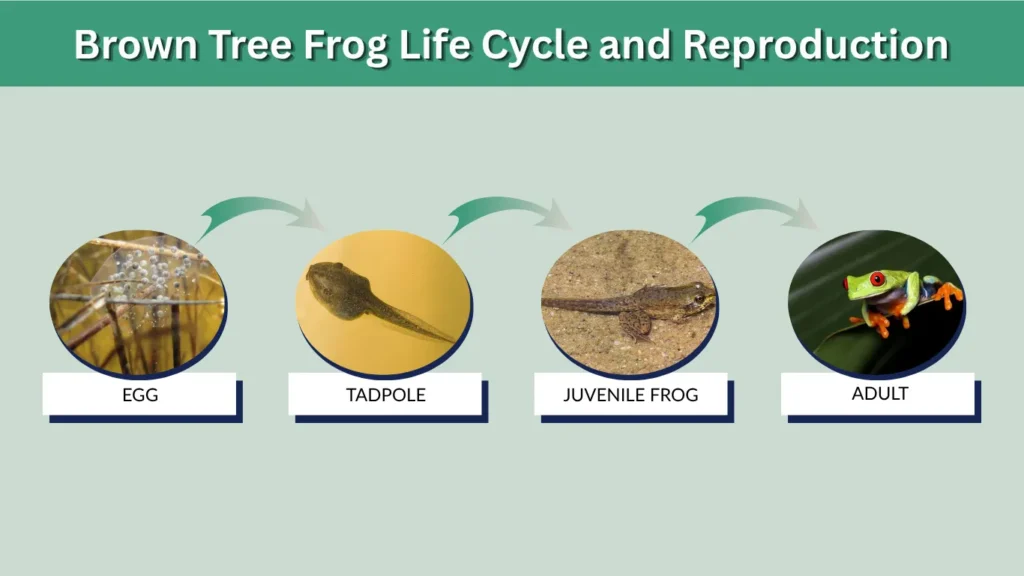
Green frogs reproduce in freshwater, where females deposit eggs that develop into aquatic tadpoles. Their breeding season generally occurs from late spring through summer, although the timing depends on geographic location and temperature. Like other frogs, they undergo metamorphosis, gradually changing from water-dwelling larvae into air-breathing adults capable of living both in and around freshwater environments.
Green Frog Mating and Eggs
During the breeding season, male green frogs establish territories and attract females using their distinctive calls.
After mating, females deposit large jelly-like egg masses on or near the water’s surface, often among aquatic vegetation.
A female may lay several thousand eggs. Depending on water temperature, the eggs typically hatch within several days.
Green Frog Tadpole Development
Newly hatched tadpoles live entirely underwater and breathe through gills.
They gradually develop hind legs, followed by front legs. During metamorphosis, their tails shrink while their lungs become functional.
Green frog tadpoles often spend the winter underwater before completing their transformation the following year.
How Long Do Green Frogs Live?
Green frogs can survive for several years in the wild, although their lifespan varies with environmental conditions.
Predators, diseases, food availability, and habitat quality all influence survival.
Many individuals do not survive the egg and tadpole stages, but those reaching adulthood may live through several breeding seasons.
Green Frog vs. Bullfrog vs. Green Tree Frog
Green frogs are sometimes confused with American bullfrogs and American green tree frogs because these species share similar coloration. However, they differ in body size, physical structures, habitat preferences, and vocalizations. Understanding these differences is particularly useful when identifying frogs near backyard ponds, lakes, and wetlands throughout eastern North America.
Green Frog vs. Bullfrog
American bullfrogs are generally larger and heavier than green frogs.
The easiest identification difference involves the raised ridges along the back. Green frogs have dorsolateral ridges, while bullfrogs lack these long back ridges.
Bullfrogs also produce deeper, more resonant calls, commonly described as “jug-o-rum.”
Green Frog vs. Green Tree Frog
American green tree frogs are usually smaller and more slender than green frogs.
They have expanded toe pads that help them climb vegetation and other surfaces. Many also display pale stripes along their sides.
Green frogs are more closely associated with water edges, while green tree frogs frequently rest on plants above the ground.
FAQs
1. Are Green Frogs Poisonous?
North American green frogs are not considered dangerously poisonous to humans. However, they can carry bacteria, including Salmonella, like other amphibians. Their delicate skin can also be harmed by unnecessary handling. It is best to observe wild frogs without touching them and wash your hands after unavoidable contact.
2. Do Green Frogs Bite Humans?
Green frogs rarely bite humans and are generally not aggressive. They may attempt to bite when frightened or improperly handled, but their mouths are mainly adapted for capturing small prey. Avoid handling wild frogs whenever possible, as this reduces stress and helps protect their sensitive skin.
3. Are Green Frogs Good for Backyard Ponds?
Green frogs can benefit backyard pond ecosystems by consuming insects and other small invertebrates. Their tadpoles also graze on algae and organic material. They provide food for native predators and contribute to the natural food web. Healthy vegetation and clean freshwater help support local frog populations.
4. Do Green Frogs Hibernate in Winter?
Green frogs become much less active during cold weather and typically overwinter underwater. They often shelter near pond bottoms or other protected aquatic locations. Because frogs can absorb oxygen through their skin, suitable oxygenated water helps them survive periods when they remain submerged.
5. Are Green Frogs Endangered?
North American green frogs are not currently considered globally endangered. They remain widespread throughout much of their native range. However, local populations may experience declines because of wetland destruction, water pollution, habitat fragmentation, and introduced predators. Protecting freshwater ecosystems helps maintain healthy green frog populations.
