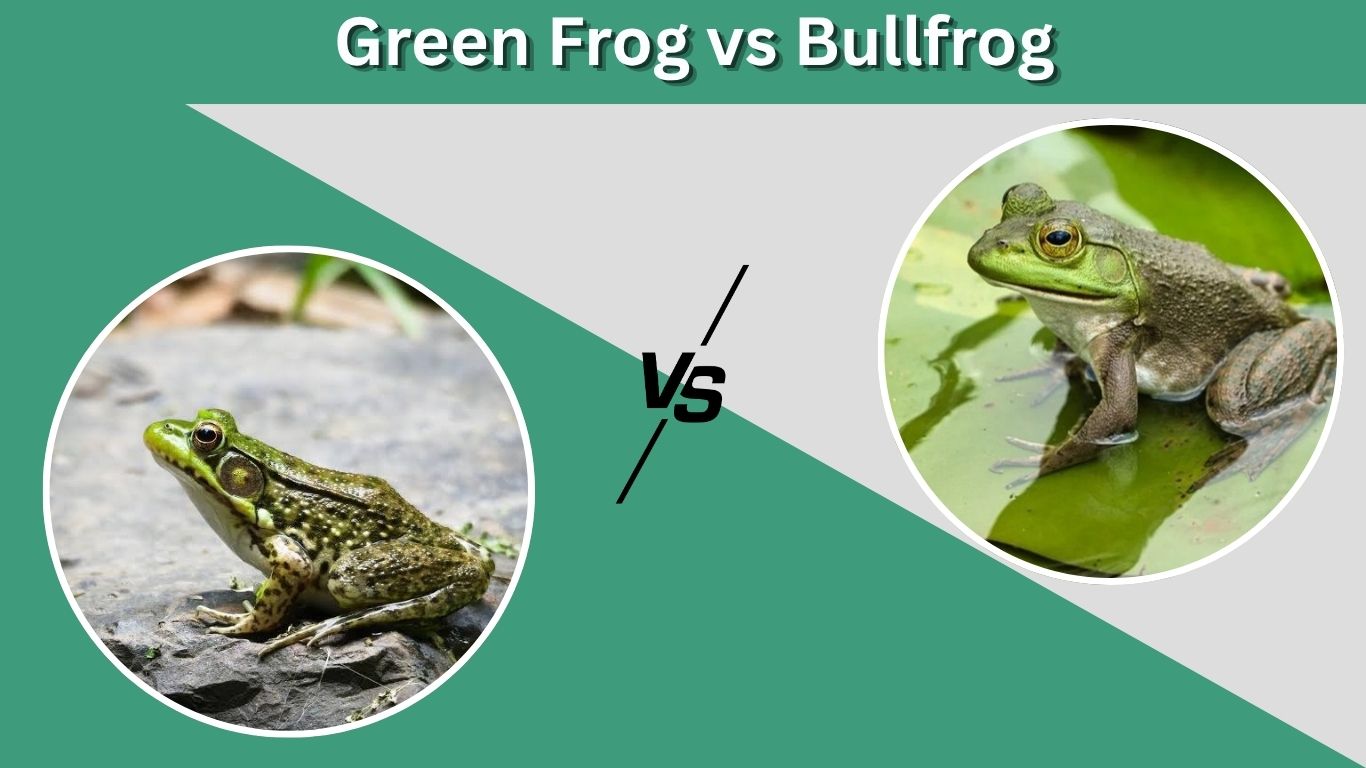
Green frogs and bullfrogs are two common freshwater amphibians found throughout eastern North America. Although they look similar, several physical characteristics help distinguish them. The green frog (Lithobates clamitans) is generally smaller and has raised ridges along its back, while the American bullfrog (Lithobates catesbeianus) is larger and lacks these prominent ridges. Their calls, tadpole appearances, feeding habits, and breeding behaviors also differ. Understanding these differences makes identifying frogs around ponds, lakes, wetlands, and backyard water gardens much easier, even for beginners.
Green Frog vs. Bullfrog: Quick Comparison
Green frogs and American bullfrogs belong to the family Ranidae, commonly known as true frogs. Both have powerful hind legs, webbed feet, and greenish-brown coloration. However, body size, skin folds, and vocalizations provide reliable identification clues. The most useful difference is the presence of dorsolateral ridges along the green frog’s back.
| Feature | Green Frog | American Bullfrog |
| Scientific name | Lithobates clamitans | Lithobates catesbeianus |
| Adult size | 2–4 inches | 3.5–8 inches |
| Body shape | Medium, relatively slender | Large, broad, muscular |
| Back ridges | Present | Absent along the back |
| Color | Green, bronze, or brown | Olive-green, brown, or grayish |
| Call | Plucked banjo string | Deep “jug-o-rum” |
| Tadpoles | Generally smaller | Often larger |
| Habitat | Ponds, streams, wetlands | Permanent ponds, lakes, rivers |
| Diet | Insects and small animals | Insects and larger animal prey |
Physical Differences Between Green Frogs and Bullfrogs
The easiest way to distinguish a green frog from a bullfrog is by examining its body structure. Both species may have green heads, brown bodies, and prominent circular eardrums. However, their back ridges, adult sizes, and proportions differ. These features are generally more dependable than color alone, especially when identifying juvenile frogs.
1. Dorsolateral Ridges
Green frogs have two raised skin folds called dorsolateral ridges. These begin behind the eyes and extend partway down the back, usually ending before the groin.
American bullfrogs lack these long back ridges. Instead, a skin fold curves around each eardrum without continuing down the body. This is the most reliable external difference between the two species.
2. Body Size and Shape
Green frogs typically measure approximately 2–4 inches from snout to vent. Their bodies are moderately robust, with long hind legs and relatively narrow heads.
American bullfrogs usually measure 3.5–6 inches, although exceptionally large individuals can reach approximately 8 inches. Their bodies are broader and heavier. However, young bullfrogs may be smaller than adult green frogs.
3. Color and Skin Texture
Green frogs can appear bright green, olive, bronze, or brown. Their heads are often greener than their bodies, and some individuals have irregular spots or markings.
Bullfrogs display similar colors, making color alone unreliable for identification. Both species have relatively smooth skin, although green frogs may have slightly more noticeable texture and raised folds.
Green Frog vs. Bullfrog Call and Sound
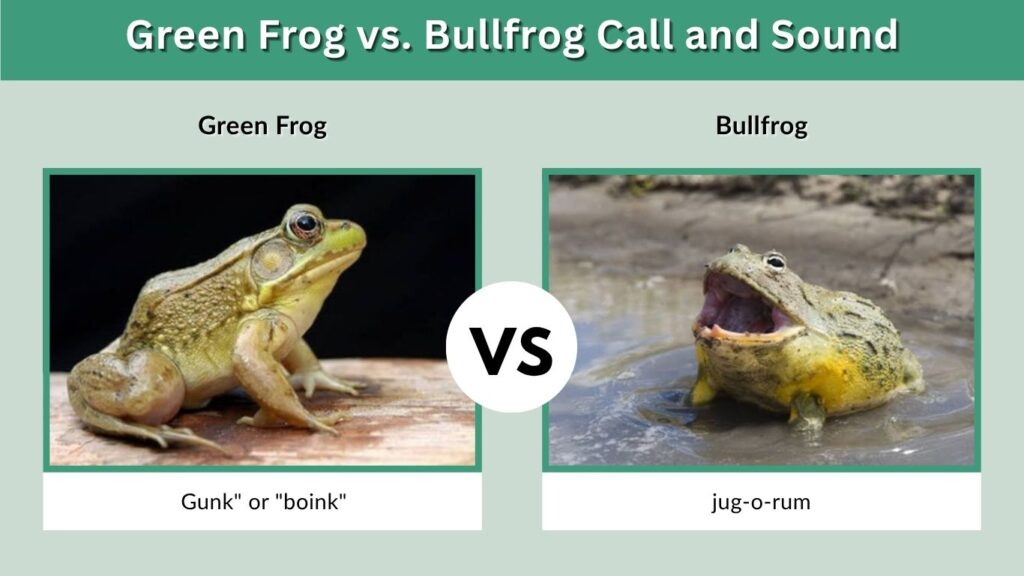
Green frogs and bullfrogs produce distinctive vocalizations during their breeding seasons. Male frogs use these calls to attract females and communicate with rivals. Their sounds differ noticeably in pitch, rhythm, and duration. Listening carefully around ponds can help identify these species even when the frogs remain hidden among aquatic vegetation.
Green Frog Call
The green frog produces a short, resonant call resembling a loose banjo string being plucked. It is commonly described as a “gunk” or “boink” sound.
Males may repeat the call several times, sometimes with decreasing volume. Green frogs can vocalize during daylight and nighttime, particularly throughout the warmer breeding season.
American Bullfrog Call
The American bullfrog produces a deeper, louder call commonly described as “jug-o-rum.” Its resonant vocalization resembles a distant bellow.
Male bullfrogs may repeat these deep notes during warm evenings and nighttime. Their calls can carry across considerable distances, making them noticeable around large ponds and lakes.
| Sound Feature | Green Frog | Bullfrog |
| Typical sound | “Boink” or “gunk” | “Jug-o-rum” |
| Pitch | Short, twanging | Deep, bass-like |
| Duration | Brief notes | Longer resonant notes |
| Main purpose | Attract mates, defend territory | Attract mates, defend territory |
Green Frog Tadpole vs. Bullfrog Tadpole
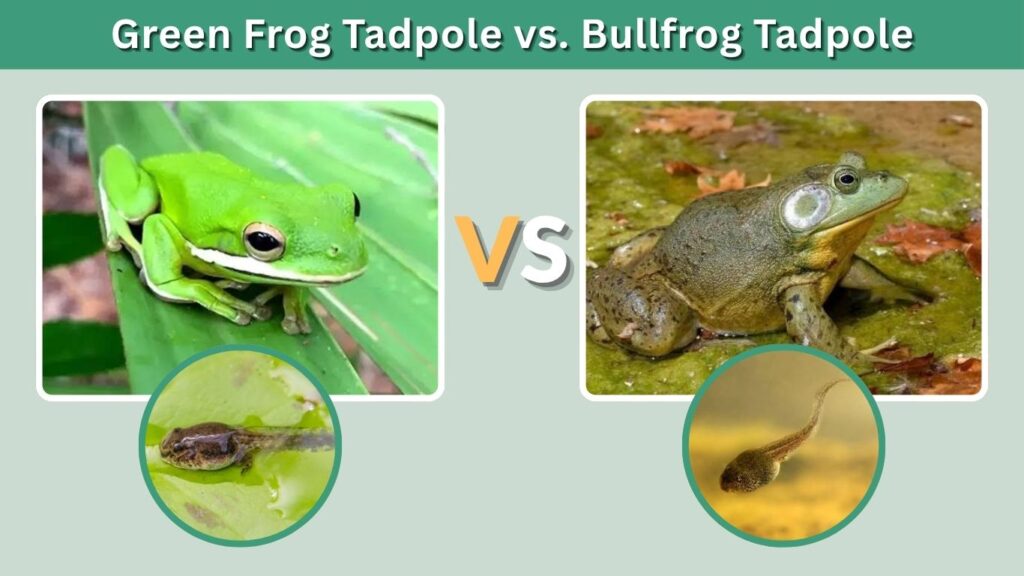
Green frog and bullfrog tadpoles can be difficult to distinguish because both have olive-green or brownish bodies, long tails, and dark markings. Their sizes overlap during development, so identifying them requires examining several features together. Body proportions, spotting patterns, and tail structure provide useful clues, particularly when comparing well-developed tadpoles.
Green Frog Tadpole Identification
Green frog tadpoles generally have oval-shaped bodies with greenish or olive coloration. Their markings often appear diffuse rather than sharply defined.
- Body shape: Relatively oval and rounded
- Color: Olive-green, brown, or yellowish
- Spots: Small, often blurry dark markings
- Tail: Relatively well-developed fin
- Size: Commonly around 3–4 inches at advanced stages, sometimes larger
Green frog tadpoles frequently remain in water throughout their first winter before transforming into juvenile frogs.
Bullfrog Tadpole Identification
Bullfrog tadpoles can become substantially larger than green frog tadpoles. Their bodies may appear more elongated, and their black spots are often more clearly defined.
- Body shape: Broad, sometimes more arrowhead-shaped
- Color: Olive-green to brownish-green
- Spots: More distinct dark spots
- Tail: Long, muscular tail with a relatively low dorsal fin
- Size: Can reach approximately 5–6 inches in some populations
Bullfrog tadpoles may take one to several growing seasons to complete metamorphosis, depending on climate.
Tadpole Comparison Table
| Characteristic | Green Frog Tadpole | Bullfrog Tadpole |
| Typical body outline | Oval | More elongated |
| Spots | Often diffuse | Often sharply defined |
| Maximum size | Generally smaller | Generally larger |
| Tail fin | Relatively higher | Relatively lower |
| Development | Often overwinters once | May overwinter multiple times |
Tadpole identification should never depend on size alone because young bullfrog tadpoles can be smaller than mature green frog tadpoles.
Habitat and Diet Differences
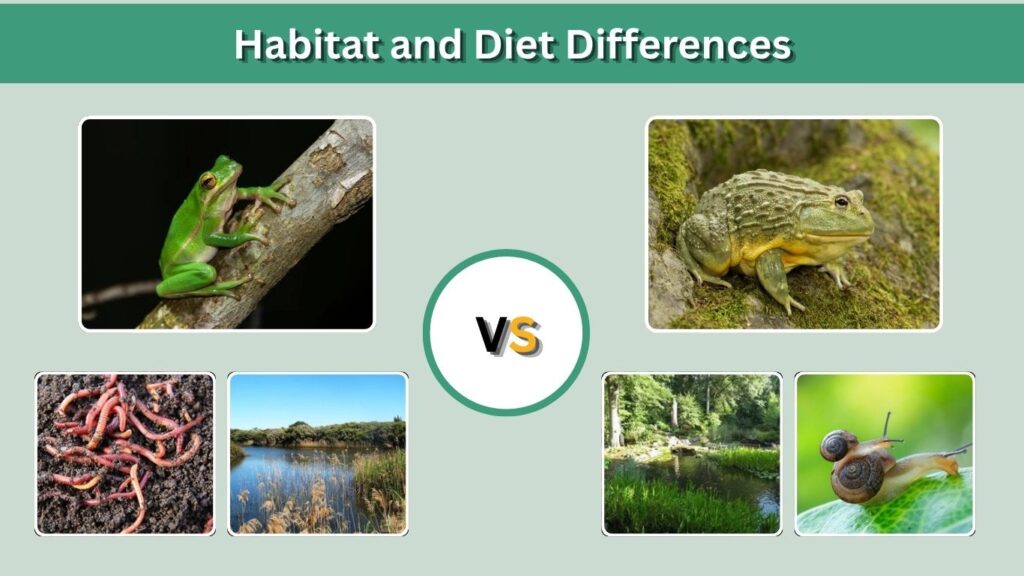
Both green frogs and bullfrogs inhabit freshwater environments, but their habitat preferences and feeding behavior are not identical. Green frogs frequently occupy shallow pond margins, streams, and small wetlands. Bullfrogs favor larger permanent water bodies with enough vegetation and suitable breeding conditions. Their larger size also allows them to capture relatively large prey.
Green Frog Habitat and Food
Green frogs live around ponds, lakes, marshes, slow-moving streams, and shallow wetlands. They often rest along shorelines and quickly jump into water when threatened.
Their diet mainly includes insects, worms, spiders, snails, and other invertebrates. Larger green frogs occasionally consume small fish or other amphibians.
Bullfrog Habitat and Food
Bullfrogs commonly inhabit permanent ponds, lakes, river backwaters, and marshes. They require suitable aquatic conditions for their often lengthy tadpole development.
Bullfrogs are opportunistic predators that consume insects, crayfish, fish, smaller frogs, snakes, and occasionally small mammals or birds. Their broader mouths and larger bodies allow them to swallow substantial prey.
Green Frog vs. Bullfrog Breeding and Life Cycle
Both species reproduce in freshwater and undergo metamorphosis from aquatic tadpoles into adult frogs. However, their egg production, breeding periods, and larval development can differ. Environmental conditions, particularly water temperature and season length, strongly influence how quickly young frogs mature.
Green Frog Reproduction
Green frogs generally breed from spring through late summer, depending on geographic location.
Females may deposit approximately 1,000–5,000 eggs in floating masses or thin films near the water’s surface. Tadpoles often complete metamorphosis after their first winter, although some develop faster.
Bullfrog Reproduction
Bullfrogs typically breed during warmer months, with timing varying by location.
Females may produce several thousand to more than 20,000 eggs in a floating surface mass. Tadpoles commonly overwinter, sometimes remaining aquatic for two years or longer in cooler environments.
How to Tell a Green Frog From a Bullfrog
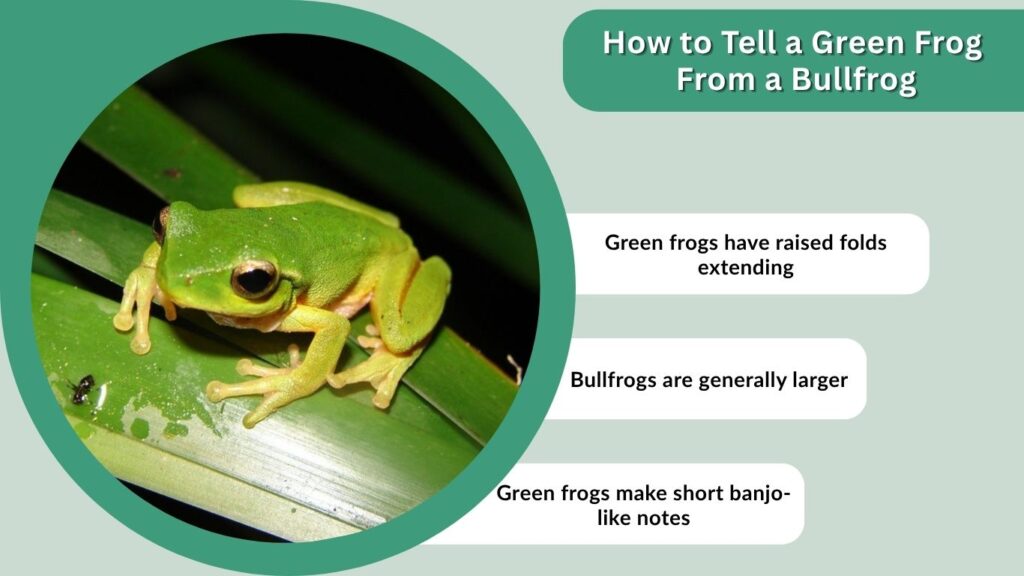
Identifying these frogs becomes easier when several physical and behavioral clues are considered together. Dorsolateral ridges are particularly useful, while body size and calls provide additional evidence. Because juvenile bullfrogs may resemble adult green frogs, checking more than one characteristic improves identification accuracy.
Five Easy Identification Tips
- Check the back ridges: Green frogs have raised folds extending behind their eyes along the back. Bullfrogs lack these long folds.
- Compare body size: Bullfrogs are generally larger, although juvenile sizes overlap.
- Listen to the calls: Green frogs make short banjo-like notes, while bullfrogs produce deep bellowing sounds.
- Examine body proportions: Bullfrogs typically have broader heads and heavier bodies.
- Observe the eardrum fold: Bullfrogs have a curved skin fold around the tympanum rather than ridges extending along their backs.
FAQs
1. Is a Green Frog the Same as a Bullfrog?
No. Green frogs (Lithobates clamitans) and American bullfrogs (Lithobates catesbeianus) are different species. Although they have similar colors and aquatic habitats, green frogs possess prominent back ridges, while bullfrogs lack these structures.
2. Which Is Bigger, a Green Frog or a Bullfrog?
American bullfrogs are generally larger than green frogs. Adult bullfrogs commonly measure 3.5–6 inches and may reach 8 inches, while green frogs usually measure approximately 2–4 inches. However, an adult green frog can be larger than a juvenile bullfrog.
3. Do Green Frogs and Bullfrogs Live Together?
Yes, green frogs and bullfrogs can inhabit the same ponds, wetlands, and lakes. However, larger bullfrogs may prey on smaller green frogs. Both species compete for food and suitable habitat, particularly in environments with limited resources.
4. Are Green Frogs and Bullfrogs Poisonous?
Neither green frogs nor American bullfrogs are considered dangerously poisonous to humans. They do not have venomous bites or stingers. However, amphibians may carry bacteria such as Salmonella, so washing hands after contact is important.
5. How Can You Identify a Baby Bullfrog vs. a Green Frog?
Young bullfrogs and green frogs can look similar because their sizes and colors overlap. The most reliable distinction is the presence of dorsolateral ridges on green frogs. Bullfrogs lack these extended back ridges, even when they are young.
