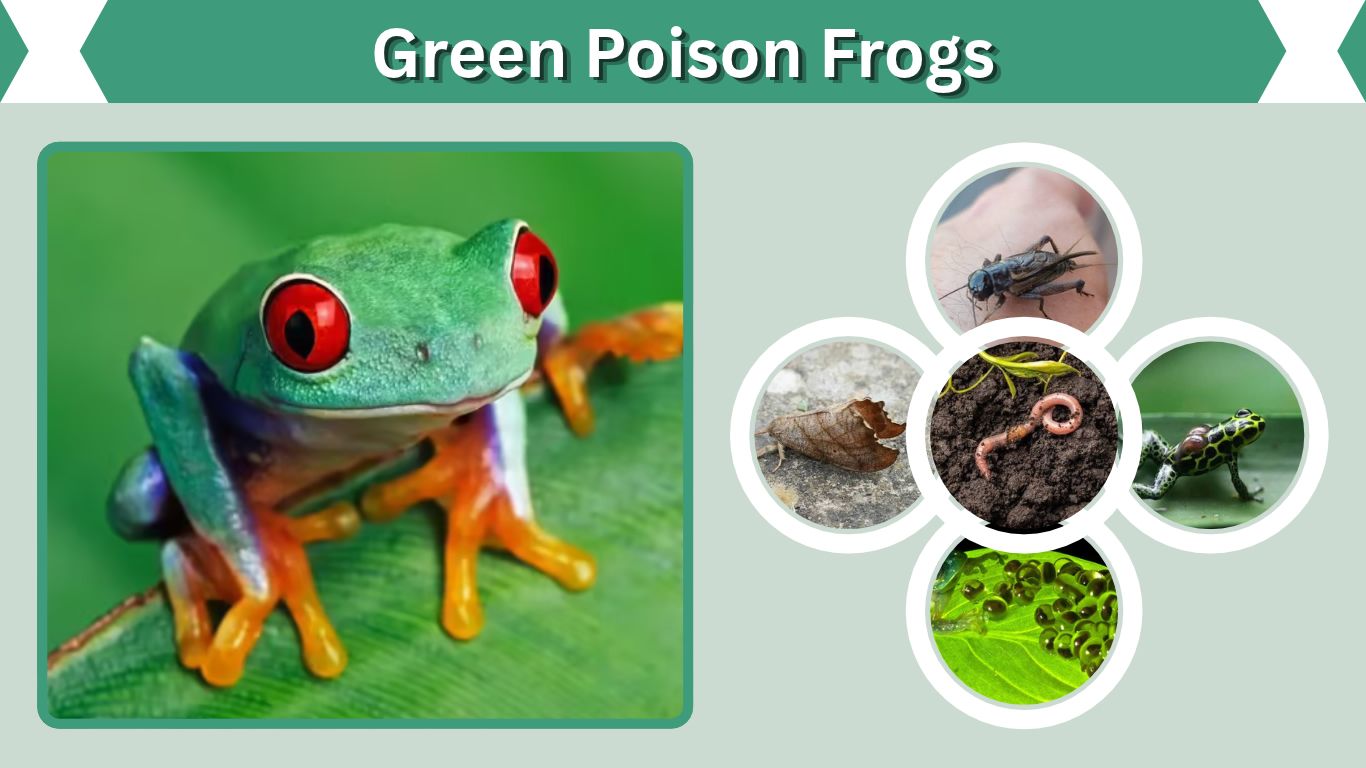
Green poison frogs are small, brightly colored amphibians known for their striking green and black patterns and chemical defenses. These fascinating frogs inhabit tropical forests, where their vivid coloration warns potential predators about their toxic skin secretions. The green-and-black poison dart frog is among the best-known examples, although other poison dart frogs also display green coloration. Understanding their appearance, natural habitat, diet, reproduction, and toxicity helps explain how these remarkable amphibians survive in the wild and why they attract attention from wildlife enthusiasts.
What Are Green Poison Frogs?
Green poison frogs are poison dart frogs belonging to the family Dendrobatidae. The term describes several green-colored varieties rather than one scientifically recognized species. Most commonly, people use the name to describe the green-and-black poison dart frog, Dendrobates auratus, which occurs naturally in parts of Central America and northern South America.
These frogs are primarily terrestrial, spending much of their time among rainforest leaves, roots, and vegetation. Their distinctive coloration helps discourage predators, while their small size allows them to move through dense forest-floor habitats.
Green Poison Frog Appearance and Size
Green poison dart frogs have smooth skin decorated with contrasting green, turquoise, black, or dark brown markings. Depending on the species and geographic population, their patterns may resemble irregular stripes, patches, or interconnected bands.
Adult green-and-black poison dart frogs typically measure approximately 1–1.7 inches (2.5–4.2 cm) in body length. Their compact bodies, slender legs, and rounded toes help them navigate moist vegetation and forest debris.
Why Are Green Poison Frogs Brightly Colored?
The bright coloration of green poison frogs is an example of aposematism, also called warning coloration. These colors advertise their chemical defenses to potential predators.
Birds and other predators may learn to avoid frogs displaying these distinctive patterns after unpleasant encounters. However, green coloration alone does not establish whether a frog is poisonous. Many completely different amphibian species have green skin.
Types of Green Poison Dart Frogs
Green poison dart frogs display considerable variation in color, pattern, and body size. Some have metallic green markings against black skin, while others feature turquoise patches or dark spots across a green background. Although many varieties look similar, they can belong to different species. Identifying the exact species is important for understanding its habitat, behavior, and toxicity.
1. Green and Black Poison Dart Frog
The green-and-black poison dart frog (Dendrobates auratus) is one of the most recognizable green poison frogs. Its body usually features dark black or brown coloring with bright green, blue-green, or turquoise patches.
This species naturally inhabits tropical forests from southern Nicaragua through Costa Rica and Panama into northern Colombia. It is active during daylight and spends considerable time hunting tiny invertebrates among fallen leaves and vegetation.
2. Green Sipaliwini Poison Dart Frog
The Green Sipaliwini poison dart frog is a geographic color variety of Dendrobates tinctorius, commonly called the dyeing poison dart frog. It is associated with the Guiana Shield region of South America and is recognized for its distinctive green and black appearance.
Compared with Dendrobates auratus, this variety often has a larger, more robust body. Its markings vary between individuals, and it belongs to a different species despite its similar coloration.
Where Do Green Poison Frogs Live?
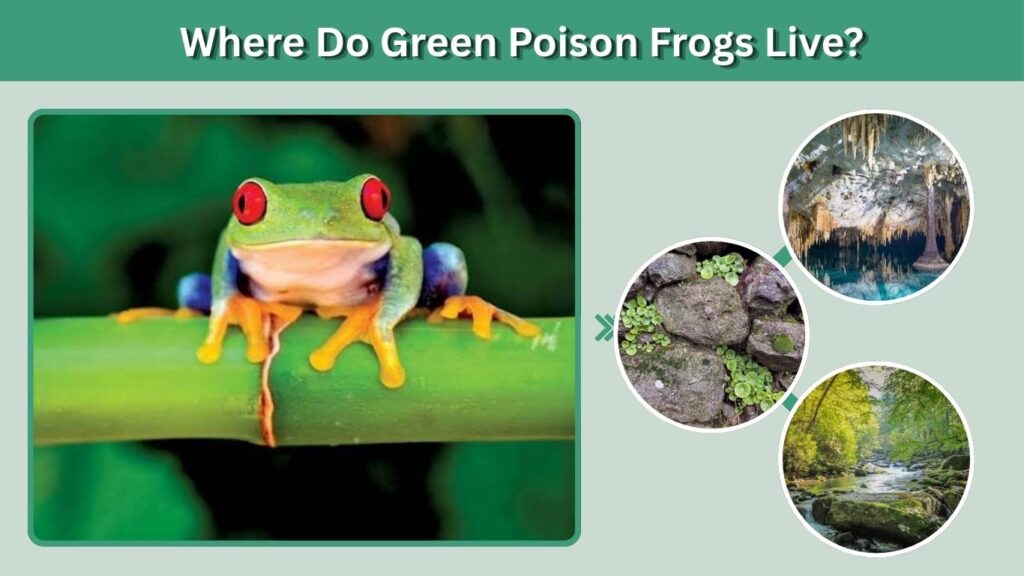
Green poison frogs primarily inhabit warm, humid tropical rainforests in Central and South America. They prefer environments with dense vegetation, moist leaf litter, and reliable sources of humidity. These conditions protect their sensitive skin from drying out while providing abundant food. Although frogs are often associated with ponds, adult poison dart frogs spend much of their lives on land.
Natural Habitat and Geographic Distribution
Green-and-black poison dart frogs occur naturally in countries such as Nicaragua, Costa Rica, Panama, and Colombia. They occupy rainforest floors, shaded vegetation, and moist areas near small pools or streams.
Populations of Dendrobates auratus have also become established in Hawaii following human introduction. However, Hawaii is not part of their native geographic range.
Temperature and Humidity Requirements
Green poison frogs depend on moist environments because their skin is highly permeable. Rainforest humidity helps maintain hydration and supports their normal physiological functions.
For captive green-and-black poison dart frogs, temperatures around 68–78°F (20–26°C) and relative humidity of approximately 70–90% are commonly recommended. Extreme heat, dehydration, and poor ventilation can be dangerous.
Are Green and Black Poison Frogs Poisonous?
Yes, wild green-and-black poison dart frogs possess toxic skin secretions that help protect them against predators. Their chemical defenses contain alkaloids obtained from certain small arthropods in their natural diet. The toxicity of these frogs is generally less extreme than that of the golden poison frog, but wild individuals should never be handled casually.
How Do Green Poison Frogs Become Toxic?
Poison dart frogs acquire important defensive alkaloids through their food. Certain ants, mites, and other tiny arthropods contain chemical compounds that frogs can accumulate in specialized skin glands.
These toxins make the frogs unpleasant or harmful to predators that attempt to consume them. Their bright green and black markings reinforce this defense by providing a visible warning.
Are Captive Green Poison Dart Frogs Dangerous?
Captive-bred poison dart frogs maintained on ordinary feeder insects generally lack the toxic alkaloid levels found in wild frogs. Their captive diet does not provide the same chemical compounds required for strong skin defenses.
Nevertheless, handling should be avoided because amphibians have delicate, absorbent skin. Wild-caught individuals may retain toxins after entering captivity, and hygiene precautions remain necessary for every frog.
What Do Green and Black Poison Dart Frogs Eat?
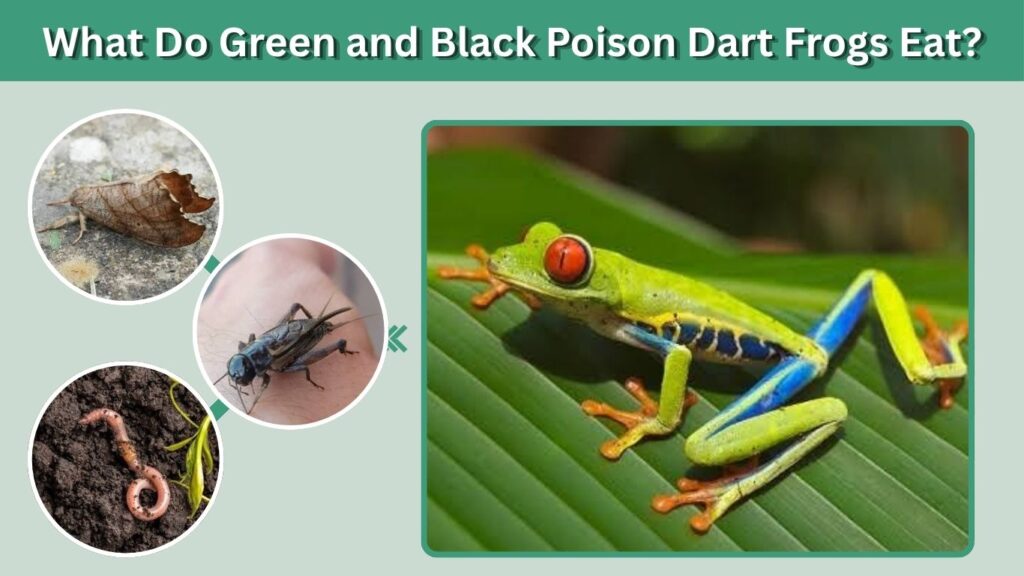
Green poison dart frogs are carnivorous amphibians that primarily consume tiny invertebrates. Their diet includes ants, mites, termites, and other small arthropods found throughout the rainforest floor. These frogs hunt during daylight, using their sharp eyesight and sticky tongues to capture moving prey. Their feeding habits also contribute directly to their chemical defenses.
Natural Diet of Green Poison Frogs
Common prey includes:
- Small ants
- Mites
- Termites
- Tiny beetles
- Other small insects and arthropods
Green-and-black poison dart frogs are especially associated with diets rich in ants and mites. These small prey animals provide essential nutrients and, in some cases, the alkaloids responsible for the frogs’ defensive toxicity.
Feeding Green Poison Dart Frogs in Captivity
Captive frogs commonly consume flightless fruit flies, springtails, and appropriately sized pinhead crickets. Their food should be varied and supplemented with suitable calcium and vitamins according to amphibian husbandry recommendations.
Wild-caught insects are generally unsuitable because they may carry pesticides or parasites. Providing properly raised feeder insects is safer and allows owners to maintain better dietary control.
Green Poison Frog Reproduction and Life Cycle
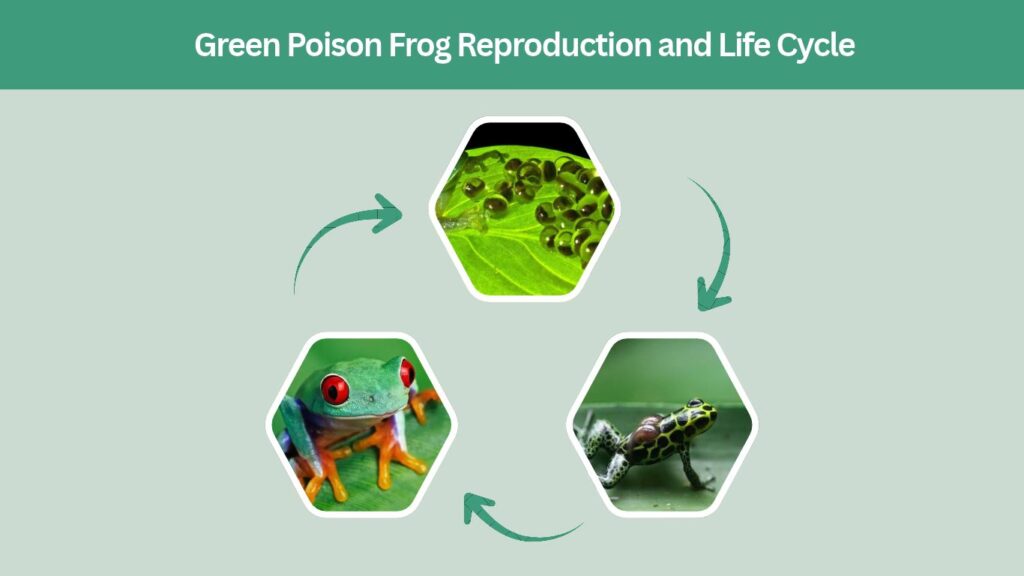
Green poison dart frogs reproduce by laying eggs in sheltered, humid locations rather than directly in large bodies of water. Their breeding behavior is particularly interesting because adults provide parental care. In Dendrobates auratus, males guard developing eggs and transport newly hatched tadpoles to suitable aquatic habitats, improving their chances of survival.
Mating and Egg Laying
During courtship, males use vocalizations and behavioral displays to attract females. After selecting a suitable location, the female deposits a small clutch of eggs on moist leaves or other protected surfaces.
The male fertilizes the eggs and helps protect them from drying out. Development time varies depending on environmental conditions, especially temperature and humidity.
Tadpole Development
After hatching, tadpoles climb onto the male’s back. He transports them to small pools, water-filled cavities, or other suitable locations where they can continue developing.
Tadpoles feed on available organic material and small aquatic organisms. Over time, they develop legs, absorb their tails, and transform into juvenile frogs capable of living on land.
Green Poison Dart Frogs vs. Green Tree Frogs
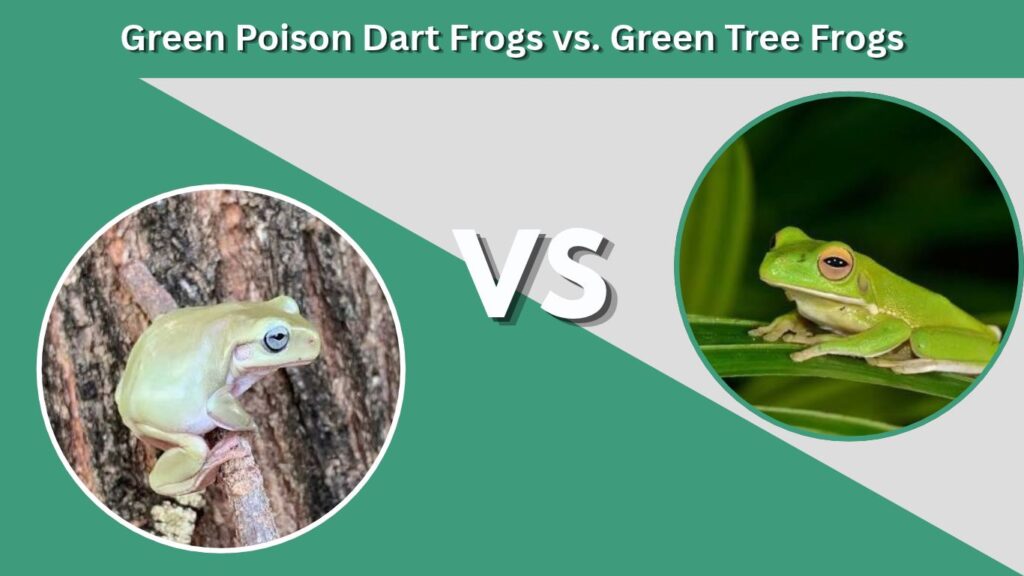
Green poison dart frogs and ordinary green tree frogs are different amphibians, even though both may have bright green coloration. Poison dart frogs belong to the family Dendrobatidae, while green tree frogs belong to other families depending on their species.
Green tree frogs generally have different body proportions, climbing adaptations, and defensive chemicals. Most are not highly poisonous like wild poison dart frogs, although their skin secretions can still cause irritation when animals attempt to eat them. Identifying a frog by species is more reliable than judging its toxicity by color alone.
FAQs
1. Can Green Poison Frogs Kill Humans?
Green-and-black poison dart frogs possess toxic skin secretions in the wild, but they are not regarded as among the most dangerously toxic poison frogs. Serious poisoning depends on the species, exposure route, and toxin quantity. Avoid touching or ingesting wild frogs.
2. Can Green Frogs Poison Dogs?
Some frogs and toads can cause poisoning or mouth irritation when dogs bite or swallow them. Risk depends on the species. If a dog mouths an unidentified frog and develops drooling, vomiting, weakness, or other symptoms, contact a veterinarian immediately.
3. Are Green Poison Dart Frogs Good Pets?
Captive-bred green-and-black poison dart frogs can be maintained successfully by knowledgeable keepers. However, they require controlled humidity, suitable temperatures, live insects, and specialized enclosures. They are primarily display animals rather than pets intended for regular handling.
4. How Long Do Green Poison Dart Frogs Live?
Green-and-black poison dart frogs may live for more than ten years under appropriate captive conditions, with some individuals reaching considerably older ages. Their actual lifespan depends on species, nutrition, environmental conditions, and veterinary care.
5. Are All Green Poison Frogs the Same Species?
No. Green-colored poison dart frogs can belong to different species or geographic varieties. For example, the green-and-black poison dart frog is Dendrobates auratus, while the Green Sipaliwini variety belongs to Dendrobates tinctorius. Their similar colors do not make them identical species.
