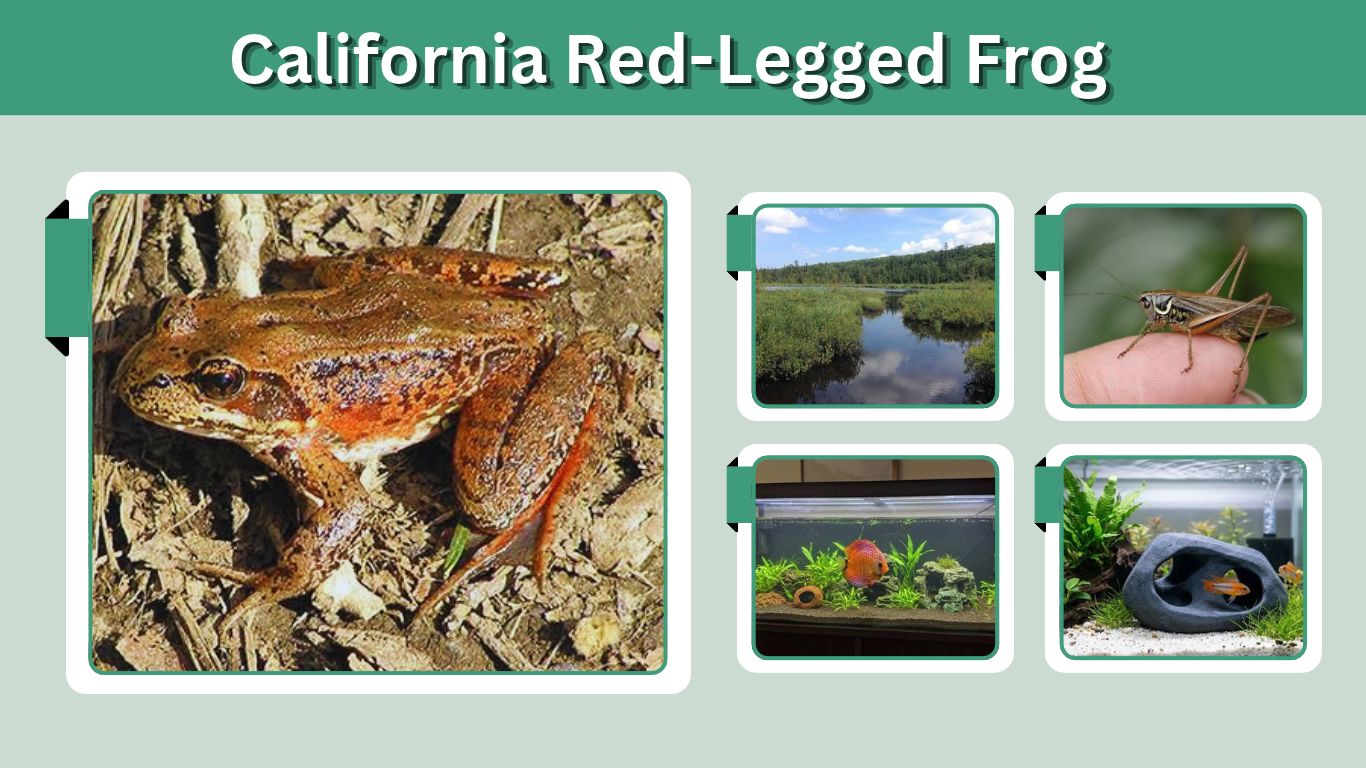
The California red-legged frog (Rana draytonii) is a native amphibian known for its reddish hind legs, spotted back, and close connection to wetlands. It is the largest native frog in the western United States, but habitat loss and introduced predators have reduced its numbers across much of its historic range. This frog plays an important role in freshwater ecosystems by feeding on insects and other small animals. In this guide, learn how to identify a California red-legged frog, where it lives, what it eats, how its tadpoles develop, and why its conservation matters.
What Is the California Red-Legged Frog?
The California red-legged frog belongs to the family Ranidae, often called the true frogs. Its scientific name is Rana draytonii. Older publications sometimes identify it as Rana aurora draytonii, when it was treated as a subspecies of the northern red-legged frog. Today, the two are recognized as separate species with partly different ranges.
California Red-Legged Frog Identification
Look for several features together rather than relying only on leg color. Individual frogs vary, and other species may also show reddish skin.
- Back: Brown, gray, olive, or reddish-brown with irregular dark blotches.
- Hind legs: Often salmon pink or red on the underside.
- Body: Broad head, relatively smooth skin, and long hind legs.
- Size: Females can reach about 5.4 inches, while males reach about 4.5 inches.
- Behavior: Adults are often most active at night or during damp weather.
Because other frogs may also have reddish skin, identification should consider location, body pattern, and habitat.
Where Do California Red-Legged Frogs Live?
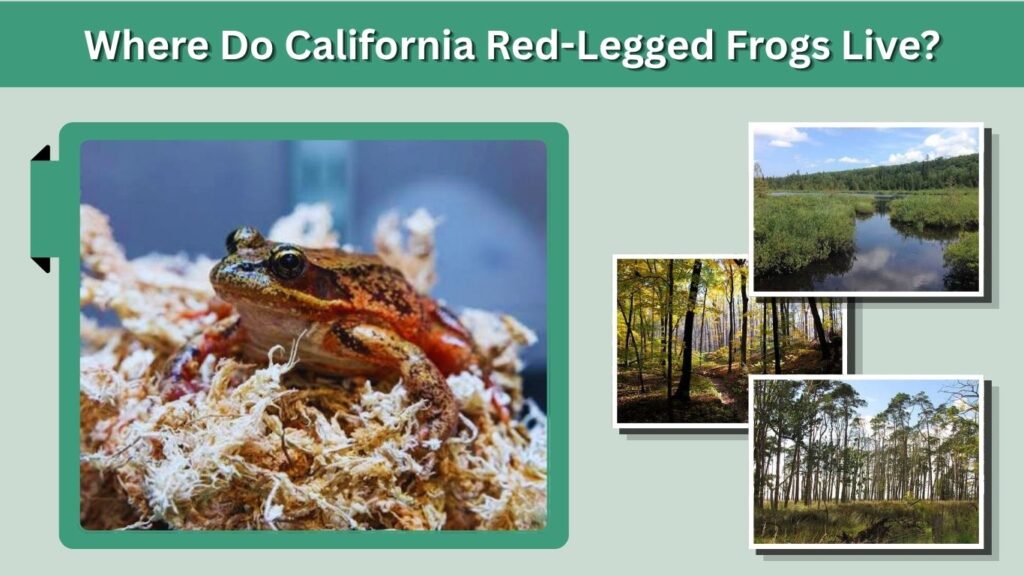
California red-legged frog habitat includes more than the water where adults breed. These frogs also use nearby land to hunt, hide from heat, and travel between ponds. Suitable locations often combine still or slow-moving freshwater with protective vegetation, moist hiding places, and connected upland habitat.
Habitat and Geographic Range
The species occurs primarily in coastal and central California, with remnant or restored populations in other parts of its former range. Its broader historic distribution extended farther through California and into northern Baja California, Mexico.
Important habitat features include:
- Ponds, marshes, lagoons, and slow-moving stream pools.
- Cattails, bulrushes, willows, and other waterside plants.
- Seasonal waters that remain wet long enough for tadpoles to develop.
- Grasslands, woodlands, and riparian areas near breeding sites.
- Rocks, leaf litter, and animal burrows that provide shelter.
Why Habitat Connectivity Matters
These frogs move overland between breeding pools and sheltering areas, especially during wet conditions. Roads and development can isolate otherwise suitable ponds. Protecting connected landscapes helps frogs find shelter during droughts and reach new breeding sites.
What Do California Red-Legged Frogs Eat?
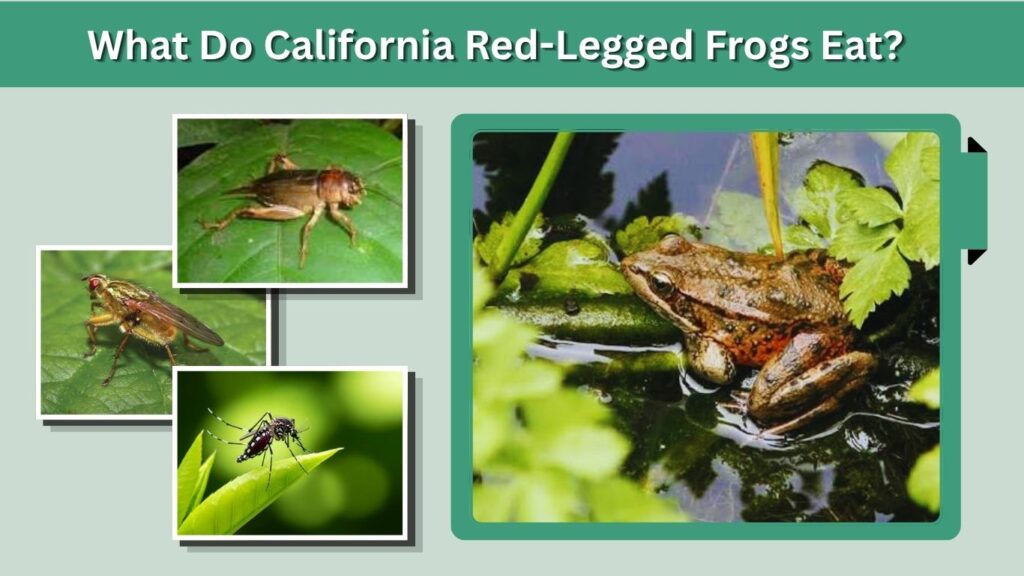
The California red-legged frog diet changes as the animal grows. Tadpoles feed mainly on algae and other organic material on submerged surfaces. After metamorphosis, young frogs begin eating animal prey. Adults are opportunistic predators, catching animals they can overpower and swallow, often near the edge of water.
Adult Frog Diet
Common food sources include:
- Beetles, flies, crickets, and other insects.
- Spiders and small terrestrial invertebrates.
- Aquatic insects and their larvae.
- Small frogs and other vertebrates, particularly when the predator is large enough.
Ecological Niche and Predators
This frog connects aquatic and terrestrial food webs as both predator and prey. Birds, snakes, mammals, and larger amphibians may eat it. Introduced American bullfrogs can prey on red-legged frogs and compete for resources, making invasive species a major conservation concern.
California Red-Legged Frog Life Cycle
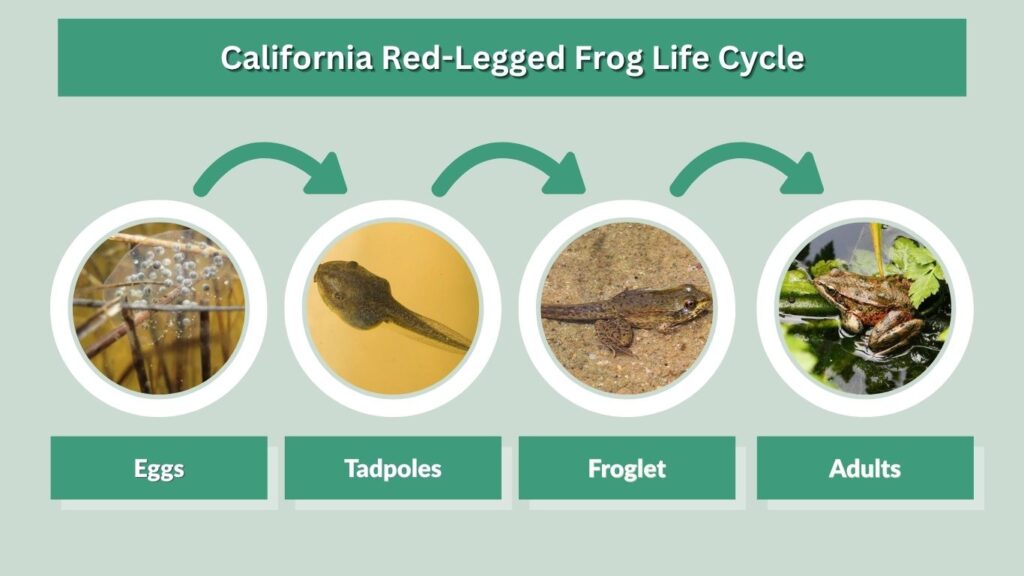
The life cycle begins when adults gather at aquatic breeding sites during the rainy season. The eggs hatch into swimming tadpoles, which develop into froglets before leaving the water more regularly. Successful reproduction depends on water lasting long enough for that transformation to occur, so changes in rainfall and pond conditions can affect survival.
Breeding Season, Calls, and Eggs
Breeding generally occurs between November and May, depending on weather and elevation. Males make short, quiet calls to attract females, often from the water. Their calls are less obvious than the loud choruses of many treefrogs.
Females attach gelatinous egg masses to vegetation. Each may contain roughly 300–4,000 eggs, but few offspring reach adulthood. Predators and drying ponds can greatly reduce survival.
California Red-Legged Frog Tadpole Identification
California red-legged frog tadpoles have rounded bodies and swimming tails. Their color and size change, making identification difficult. Location, season, egg masses, and nearby adults offer useful clues. Do not collect or relocate tadpoles; this may harm protected wildlife and spread disease.
As tadpoles grow, hind legs emerge first, followed by forelegs. Their tails gradually disappear as they develop the body and feeding habits of juvenile frogs.
Are California Red-Legged Frogs Endangered?
The California red-legged frog has been federally listed as threatened under the U.S. Endangered Species Act since 1996. California classifies it as a Species of Special Concern, not as a state-listed endangered species. Its total population is difficult to estimate because surviving groups are scattered.
Why Populations Have Declined
Important threats include:
- Wetland loss: Development and drainage remove breeding and shelter areas.
- Habitat fragmentation: Roads and land conversion disrupt movement between ponds.
- Introduced predators: American bullfrogs and some fish threaten eggs, tadpoles, and adults.
- Water changes: Drought, diversion, and poor water quality can disrupt breeding.
Critical Habitat and Recovery Efforts
Critical habitat identifies areas important for the species’ conservation, including freshwater sites and surrounding land. Not every designated pond is necessarily occupied. Recovery work includes habitat restoration, invasive predator control, monitoring, and reintroduction. In Yosemite Valley, restoration has helped establish multiple generations after the frog’s local disappearance.
California Red-Legged Frog vs. Northern Pacific Treefrog
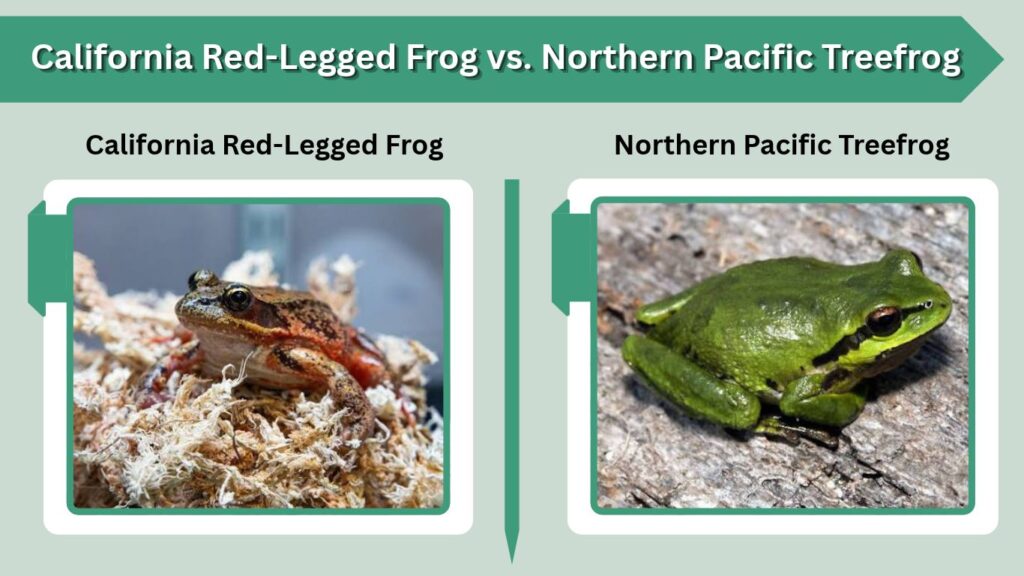
The California red-legged frog and northern Pacific treefrog, also called the Pacific chorus frog, may share wetlands. The treefrog is smaller, often has a dark eye stripe, climbs with adhesive toe pads, and produces a louder two-part call.
Their ecological niches overlap because both use wetlands and eat invertebrates. Yet red-legged frogs are larger predators, while chorus frogs use varied small breeding pools and may themselves become prey. Sharing a pond does not mean these species have identical ecological roles.
FAQs
Are California red-legged frogs poisonous?
No. California red-legged frogs are not classified as poisonous frogs, and their red coloring is not a warning of dangerous toxins. Still, they are wild amphibians with sensitive skin. Observe them without handling whenever possible, and wash your hands after any unavoidable contact with amphibians or their habitats.
What is the scientific name of the California red-legged frog?
Its accepted scientific name is Rana draytonii. Some older resources use Rana aurora draytonii because the California population was previously classified with northern red-legged frogs. Scientific names are especially useful when searching for reliable identification guides, conservation reports, and research on this particular species.
How big does a California red-legged frog get?
It is the largest native frog in the western United States. Adult females can reach approximately 5.4 inches in body length, while males reach about 4.5 inches. Individual size varies with age and condition. Females are generally larger, but size alone cannot confirm an identification.
Do bullfrogs eat California red-legged frogs?
Yes. Introduced American bullfrogs are predators of native California red-legged frogs, particularly when they can swallow smaller individuals. They may also compete for food and habitat. Removing bullfrogs from priority recovery sites can benefit native amphibians, but control work should be coordinated with wildlife professionals.
How can people help protect California red-legged frogs?
Protect ponds, seasonal wetlands, and surrounding natural vegetation. Avoid releasing pet frogs or aquarium animals into waterways, and never relocate wild frogs or egg masses. Report sightings through appropriate local wildlife programs, follow posted habitat restrictions, and support restoration projects that reconnect breeding sites with nearby upland habitat.
