
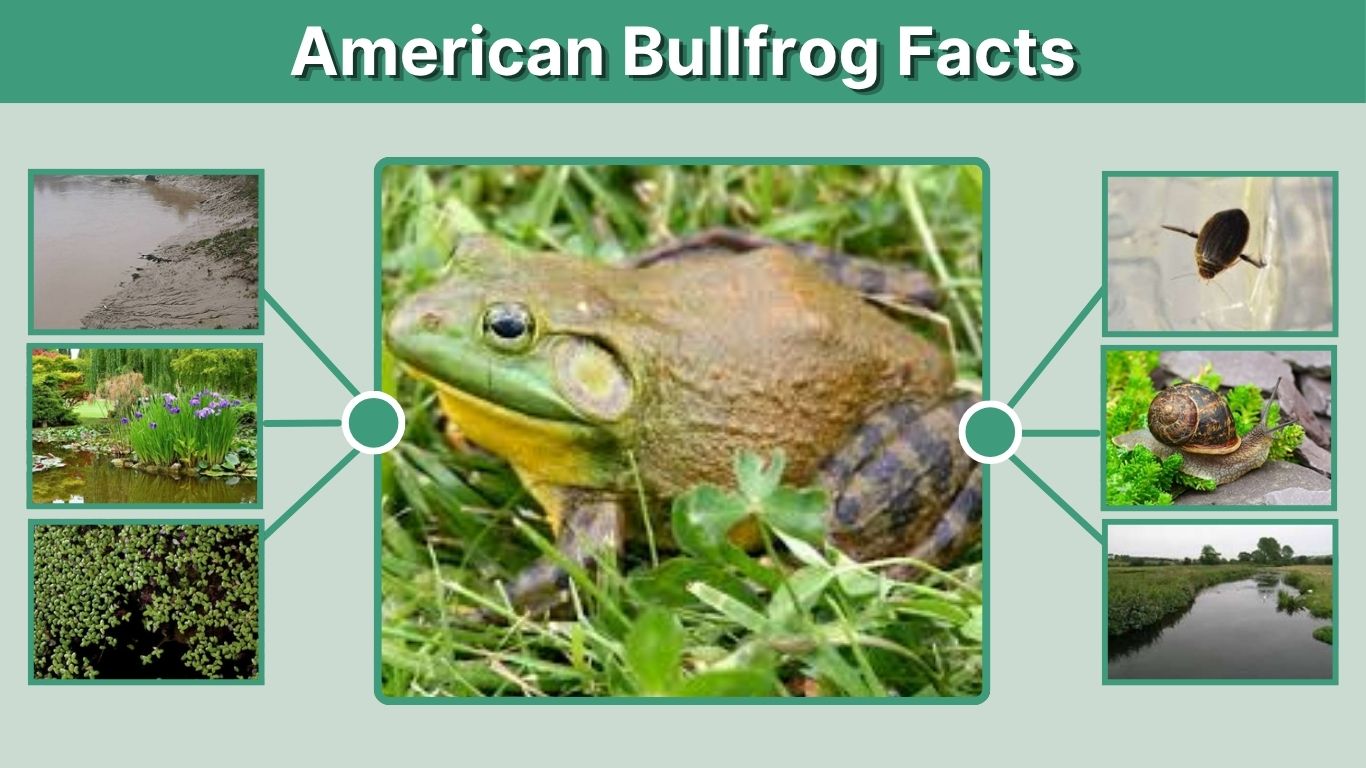
The American bullfrog is one of the most recognizable frogs in North America. It is famous for its deep “jug-o-rum” call, large body, powerful jump, and appetite for almost anything it can swallow. This frog lives around ponds, lakes, marshes, rivers, and other freshwater habitats. It is native to eastern North America, but it has also been introduced widely, where it can become a serious invasive species.
1. American Bullfrogs Are the Largest Frogs in the U.S.
The American bullfrog is the largest frog species in the United States. Adults can grow up to about 8 inches long and weigh more than 1 pound, which makes them much bigger than many common pond frogs. The USGS also describes it as the largest true frog native to eastern North America.
| Feature | American Bullfrog Fact |
| Scientific name | Lithobates catesbeianus |
| Animal type | Amphibian |
| Diet | Carnivore |
| Main habitat | Freshwater ponds, lakes, rivers, marshes |
| Native range | Eastern North America |
| Call | Deep “jug-o-rum” sound |
| Lifespan | Usually 7–9 years in the wild |
2. They Live Near Freshwater
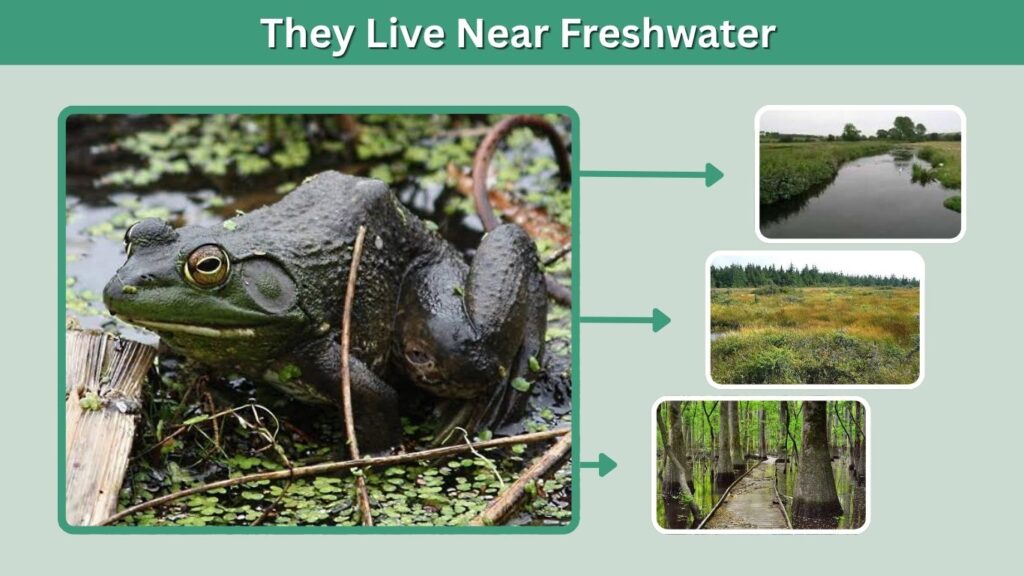
American bullfrogs need water nearby. Their favorite habitat includes warm, calm, shallow freshwater such as ponds, lakes, rivers, bogs, marshes, and swamps. Aquatic plants are also important because they provide cover, hunting areas, and hiding places from predators.
Common American Bullfrog Habitats
They are often found in:
- Ponds
- Lakes
- Marshes
- Swamps
- Bogs
- Slow rivers
- Reservoirs
- Wet ditches
- Human-made ponds
Bullfrogs can also do well in habitats changed by people, especially where warmer water and thick aquatic plants create good feeding and breeding conditions.
3. They Are Native and Invasive
American bullfrogs are native to eastern North America. BioKIDS lists their natural range from Nova Scotia to central Florida, from the East Coast to Wisconsin, and across the Great Plains toward the Rockies. However, they have also been introduced to places far beyond their native range, including parts of the western U.S., southern Europe, South America, and Asia.
In introduced areas, bullfrogs can become invasive. USGS explains that they may compete with native species for food and space, eat smaller animals, and spread disease in invaded habitats.
4. Male Bullfrogs Make the Famous “Jug-o-Rum” Call
Only male bullfrogs make the loud breeding call. The sound is often described as a deep “jug-o-rum.” Males call during spring and summer to attract females and defend territory. According to BioKIDS, the call is low-frequency and can be heard from more than one kilometer away.
Why Do Bullfrogs Croak?
Male bullfrogs croak mainly to:
- Attract mates
- Warn other males
- Defend breeding territory
- Communicate during mating season
A pond with several calling males can become very noisy at night.
5. They Are Carnivores With Huge Appetites
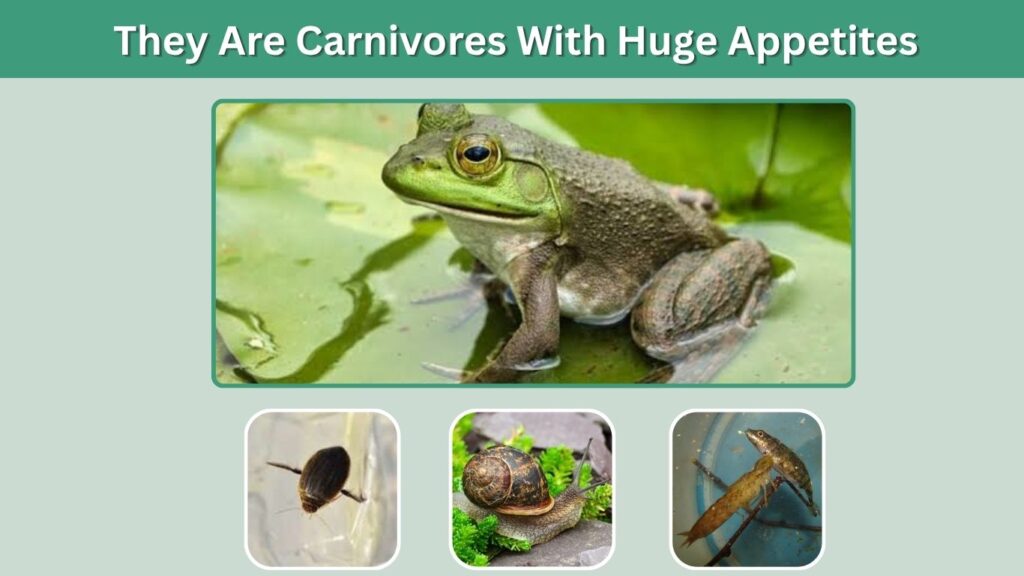
American bullfrogs are carnivores. They eat many animals, including crayfish, water beetles, snails, dragonfly larvae, small fish, and sometimes small birds. They are sit-and-wait hunters, meaning they stay still until prey comes close, then strike quickly.
Large bullfrogs may also eat smaller frogs, tadpoles, snakes, insects, and even other bullfrogs. This wide diet helps them survive in many habitats, but it also makes them dangerous to native wildlife in places where they are introduced.
6. Bullfrog Tadpoles Can Stay Tadpoles for Years
One interesting American bullfrog fact is that their tadpole stage can last a long time. After eggs hatch, tadpoles may take one to three years before transforming into young frogs, depending on climate and water conditions. In colder northern areas, development is often slower.
This long tadpole stage is one reason bullfrogs prefer permanent or semi-permanent water. Temporary puddles may dry up before tadpoles finish growing.
7. A Female Can Lay Thousands of Eggs
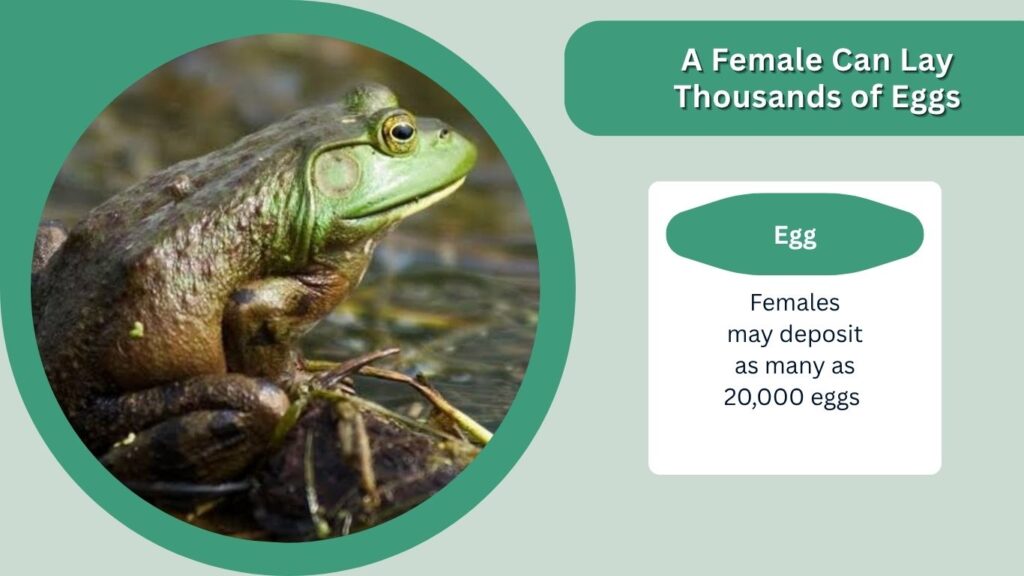
Female American bullfrogs can lay very large egg masses. BioKIDS reports that females may deposit as many as 20,000 eggs in a foamy film on quiet, protected water. The tadpoles may emerge about four days after fertilization.
Bullfrog Life Cycle
The basic life cycle includes:
- Egg mass floating on water
- Tadpole with gills and tail
- Growing tadpole stage
- Froglet with developing legs
- Adult bullfrog
This high egg number helps bullfrogs spread quickly when habitat conditions are favorable.
8. Males and Females Look Different
Male and female bullfrogs can look slightly different. The National Park Service notes that males may have yellow throats, while females usually have white throats. Males also often have a large round tympanum, or eardrum, behind the eye.
The tympanum is useful for identification. In many males, it is larger than the eye, while in females it is closer to eye size. This makes adult bullfrogs easier to sex than many smaller frog species.
9. They Use Camouflage to Hide
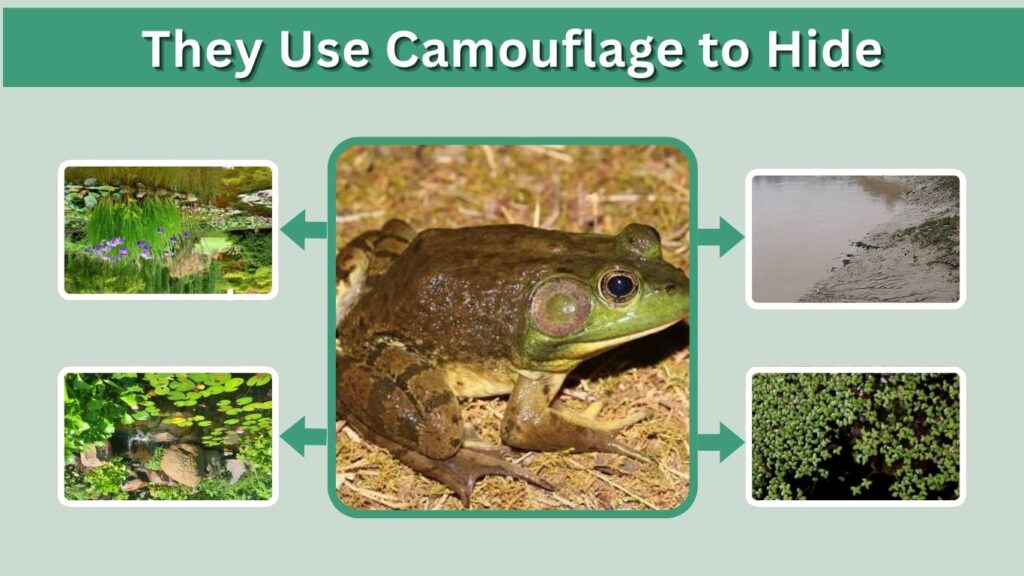
American bullfrogs are usually green, olive, brown, or mottled. Their colors help them blend with pond plants, muddy banks, duckweed, and shallow water. The National Park Service explains that their green and brown coloration helps them camouflage among pond plants and hide from predators.
Camouflage is important because bullfrogs have many predators, especially when they are eggs, tadpoles, or young frogs. Herons, raccoons, snapping turtles, snakes, large fish, and larger frogs may eat them.
10. They Breathe in More Than One Way
Like other amphibians, American bullfrogs can breathe through their lungs, but they can also absorb oxygen through moist skin. The National Park Service explains that frogs do not breathe exactly like humans; they rely on throat movement to push air and can also absorb oxygen through wet skin.
This is one reason bullfrogs must stay near water or moist habitat. If their skin dries out too much, they cannot function normally.
11. Bullfrogs Hibernate in Cold Weather
American bullfrogs are more active in warm, moist weather. During cold weather, they may hibernate by burying into mud and creating a small cave-like space for winter. BioKIDS notes that bullfrogs prefer warm weather and may bury themselves in mud during colder months.
They are active both during the day and at night, but many people notice them most at night because males call loudly around breeding ponds.
12. They Can Live Several Years
American bullfrogs can live for years if they avoid predators and survive harsh weather. BioKIDS reports that the average bullfrog lives about 7 to 9 years in the wild, while the record lifespan in captivity is 16 years.
Their long lifespan, large egg masses, adaptable habitat use, and broad diet help explain why bullfrogs can become so successful in both native and introduced environments.
Quick American Bullfrog Facts
| Fact | Details |
| Largest U.S. frog | Can reach about 8 inches |
| Main sound | Deep “jug-o-rum” call |
| Caller | Only males call |
| Diet | Carnivorous |
| Eggs | Up to about 20,000 in one mass |
| Tadpole stage | Can last 1–3 years |
| Habitat | Warm, calm freshwater |
| Lifespan | Often 7–9 years in the wild |
| Native area | Eastern North America |
| Problem areas | Invasive outside native range |
FAQs
What is the most interesting fact about American bullfrogs?
One of the most interesting facts is that bullfrog tadpoles can stay in the tadpole stage for one to three years before becoming frogs. This is much longer than many small pond frogs.
What do American bullfrogs eat?
American bullfrogs are carnivores. They eat insects, crayfish, snails, small fish, smaller frogs, tadpoles, and sometimes small birds or other small animals.
Where do American bullfrogs live?
American bullfrogs live near freshwater, including ponds, lakes, marshes, swamps, bogs, slow rivers, and wet ditches. They prefer warm, calm, shallow water with plants.
Why are American bullfrogs invasive?
They can become invasive because they reproduce quickly, eat many types of animals, compete with native species, and may spread disease in habitats where they were introduced.
How long do American bullfrogs live?
American bullfrogs usually live around 7 to 9 years in the wild. In captivity, some have lived longer, with records reaching about 16 years.
