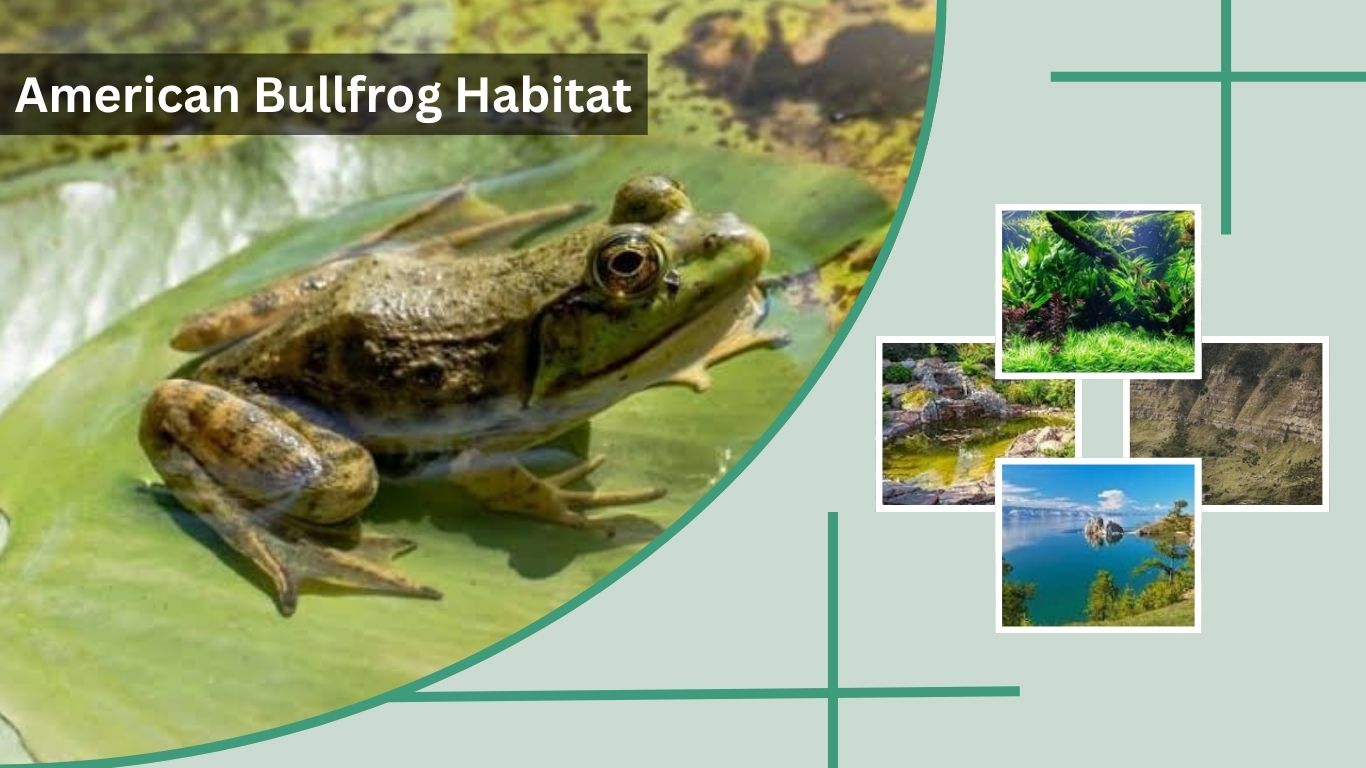
The American bullfrog is a large aquatic frog that lives close to water for most of its life. Its best habitat includes warm, calm, shallow freshwater with plants, muddy edges, and places to hide. In its native range, it is common around ponds, lakes, marshes, swamps, bogs, slow rivers, and wet ditches. Outside its native range, it can become invasive and harm local amphibians, so habitat information is also important for conservation.
American Bullfrog Native Habitat
The American bullfrog, also called the North American bullfrog, is native to eastern North America. The USGS describes it as the largest true frog native to Eastern North America, with a native range in the eastern United States. BioKIDS lists its range from Nova Scotia to central Florida, from the East Coast to Wisconsin, and across the Great Plains toward the Rockies.
Today, American bullfrogs are also found in many places outside their original habitat. They have been introduced into the western United States and other parts of the world, often through human activities such as the pet trade, bait release, and movement between aquatic habitats. USGS notes that introduced bullfrogs can compete with native species, eat smaller animals, and spread disease in invaded areas.
| Habitat Topic | American Bullfrog Preference |
| Main habitat | Freshwater wetlands |
| Favorite water | Warm, calm, shallow water |
| Common places | Ponds, lakes, marshes, swamps, bogs |
| Cover | Aquatic plants, muddy edges, logs |
| Breeding habitat | Quiet, protected water |
| Native range | Eastern North America |
| Introduced range | Western U.S. and many global regions |
What Habitat Do American Bullfrogs Live In?
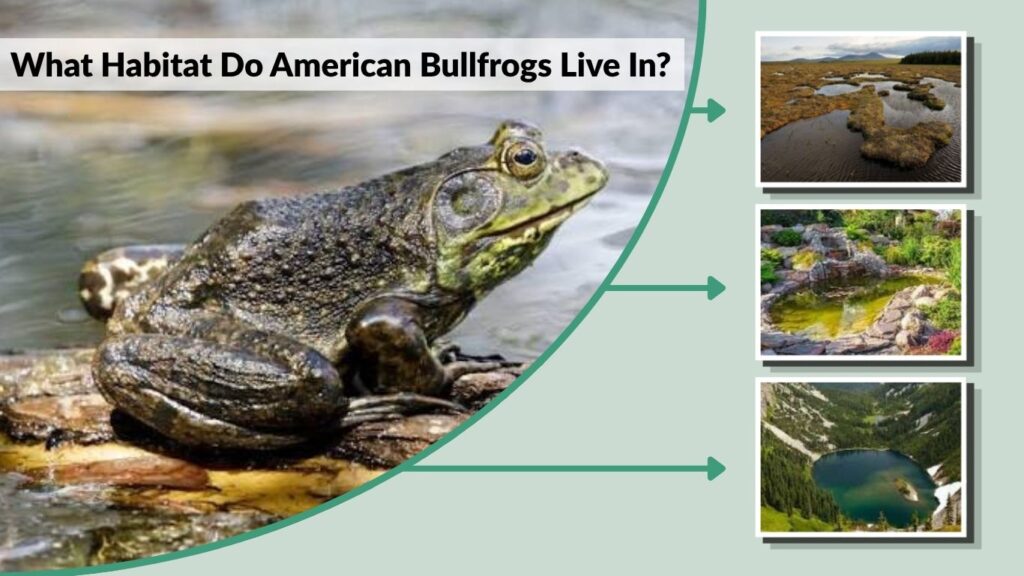
American bullfrogs live in freshwater habitats where water is available for long periods. They are usually found near lakes, ponds, rivers, bogs, marshes, and swamps. BioKIDS explains that bullfrogs need to live in water and prefer warm, calm, shallow waters.
NatureServe lists many possible habitats for bullfrogs, including ponds, swamps, lakes, reservoirs, marshes, stream margins, irrigation ditches, and places with floating, emergent, or submerged vegetation.
Common American Bullfrog Habitats
American bullfrogs are often found in:
- Farm ponds
- Lakes and reservoirs
- Marshes and swamps
- Slow rivers and stream edges
- Bogs and wet meadows
- Irrigation canals and ditches
- Park ponds and golf course ponds
- Wetlands with cattails, reeds, and duckweed
They usually avoid very dry places because their skin must stay moist. They may move away from water during wet weather, but they normally stay close to a permanent water source.
Why Bullfrogs Like Ponds and Wetlands
Ponds and wetlands are ideal because they provide food, shelter, breeding space, and protection from drying out. Bullfrogs sit along the water edge and wait for prey. They can quickly jump into the water when threatened.
Aquatic plants are also important. Floating plants, reeds, grasses, cattails, and submerged plants help bullfrogs hide from predators and ambush insects, fish, smaller frogs, and other prey. BioKIDS notes that warmer water and increased aquatic plants can favor bullfrogs by giving them good places for growth, reproduction, and predator escape.
American Bullfrog Habitat Map and Range
An American bullfrog habitat map usually shows a strong native presence in eastern North America, with introduced populations in the western United States and other regions. The western limit of the original range is harder to define now because bullfrogs have been moved by people and established in many non-native areas.
The species has also been introduced beyond North America. BioKIDS reports introductions into southern Europe, South America, and Asia, while USGS states that American bullfrogs are native to eastern North America but widely introduced around the world.
American Bullfrog Breeding Habitat
American bullfrogs breed in quiet, protected water. Still ponds, marsh pools, lake edges, and slow backwaters are good breeding areas because eggs and tadpoles are safer from strong currents. BioKIDS says females may lay up to 20,000 eggs in quiet, protected waters, and tadpoles may remain in the tadpole stage for almost three years before becoming frogs.
Because tadpoles can take a long time to develop, permanent or semi-permanent water is better than short-lived puddles. Temporary pools may dry out before tadpoles finish growing.
American Bullfrog Habitat in Captivity
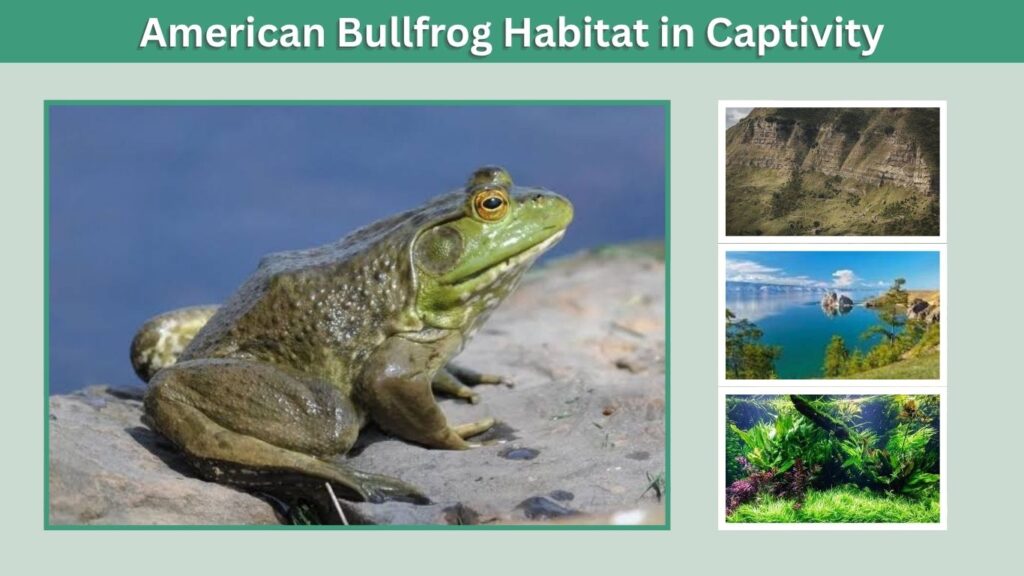
A captive American bullfrog habitat should copy a pond-edge environment. It needs both water and land, with enough space for swimming, resting, and hiding. However, people should check local laws before keeping bullfrogs because they are invasive or regulated in some places.
A basic captive habitat setup may include:
- Large water area
- Dry or semi-dry land area
- Filtered, dechlorinated water
- Smooth rocks, cork bark, or floating platforms
- Aquatic plants or artificial cover
- Secure lid to prevent escape
- Easy cleaning access
- No sharp gravel or small swallowable stones
Do not release a pet bullfrog into the wild. USGS says bullfrogs are often introduced into new habitats through human activities, including the pet trade and bait use, and can harm native species where they invade.
Ideal Outdoor Habitat for American Bullfrogs
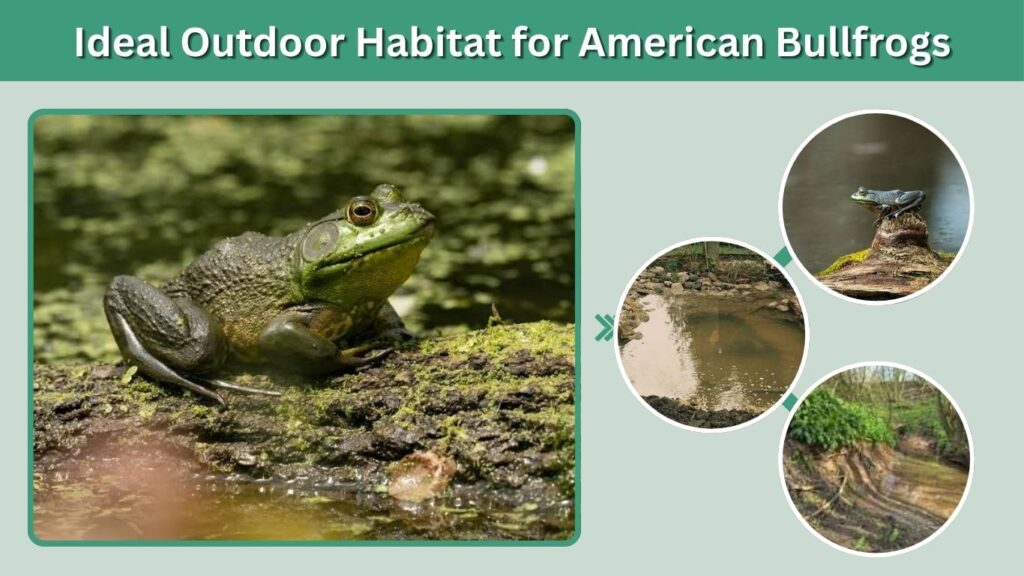
An ideal outdoor bullfrog habitat is a natural pond or wetland with shallow edges, warm water, muddy banks, aquatic vegetation, and nearby cover. The best sites are not fast-moving streams or dry lawns. Bullfrogs do especially well in still or slow water with plenty of plants.
Good outdoor habitat features include:
- Shallow pond edges
- Emergent plants like cattails or reeds
- Floating plants like duckweed or lily pads
- Muddy or soft banks
- Logs or rocks for resting
- Insects and other small prey
- Low disturbance
- Permanent water through the breeding season
In areas where American bullfrogs are not native, creating ideal habitat for them may not be recommended because they can spread and affect native frogs, salamanders, and aquatic ecosystems.
American Bullfrog Habitat Facts
American bullfrogs are highly adaptable. They can live in natural wetlands, human-made ponds, reservoirs, canals, and ditches. This adaptability is one reason they spread successfully outside their native range. USGS explains that after introduction, bullfrogs can thrive and reproduce quickly in many habitats.
Quick Habitat Facts
- They spend most of their time in or near water.
- Warm, calm, shallow freshwater is their favorite habitat.
- They use aquatic plants for cover and hunting.
- They breed in quiet, protected water.
- Tadpoles may need more than one year to develop.
- They can live in natural and human-made water bodies.
- They are invasive in many places outside eastern North America.
FAQs
What is the habitat of an American bullfrog?
The American bullfrog lives in freshwater habitats such as ponds, lakes, marshes, swamps, bogs, slow rivers, reservoirs, and wet ditches. It prefers warm, calm, shallow water with plants and muddy edges.
Where is the American bullfrog native?
The American bullfrog is native to eastern North America. It has also been introduced to many western U.S. areas and other parts of the world.
Do American bullfrogs live in ponds?
Yes. Ponds are one of the most common American bullfrog habitats. They like ponds with shallow edges, aquatic plants, warm water, and places to hide.
What does an American bullfrog need in captivity?
A captive American bullfrog needs a large water area, a land area, clean dechlorinated water, hiding places, secure cover, and enough space to move. Owners should also check local laws before keeping one.
Why are American bullfrogs invasive in some habitats?
American bullfrogs can become invasive because they reproduce quickly, eat many types of prey, compete with native frogs, and can spread disease. They are a problem in many places outside their native range.
