
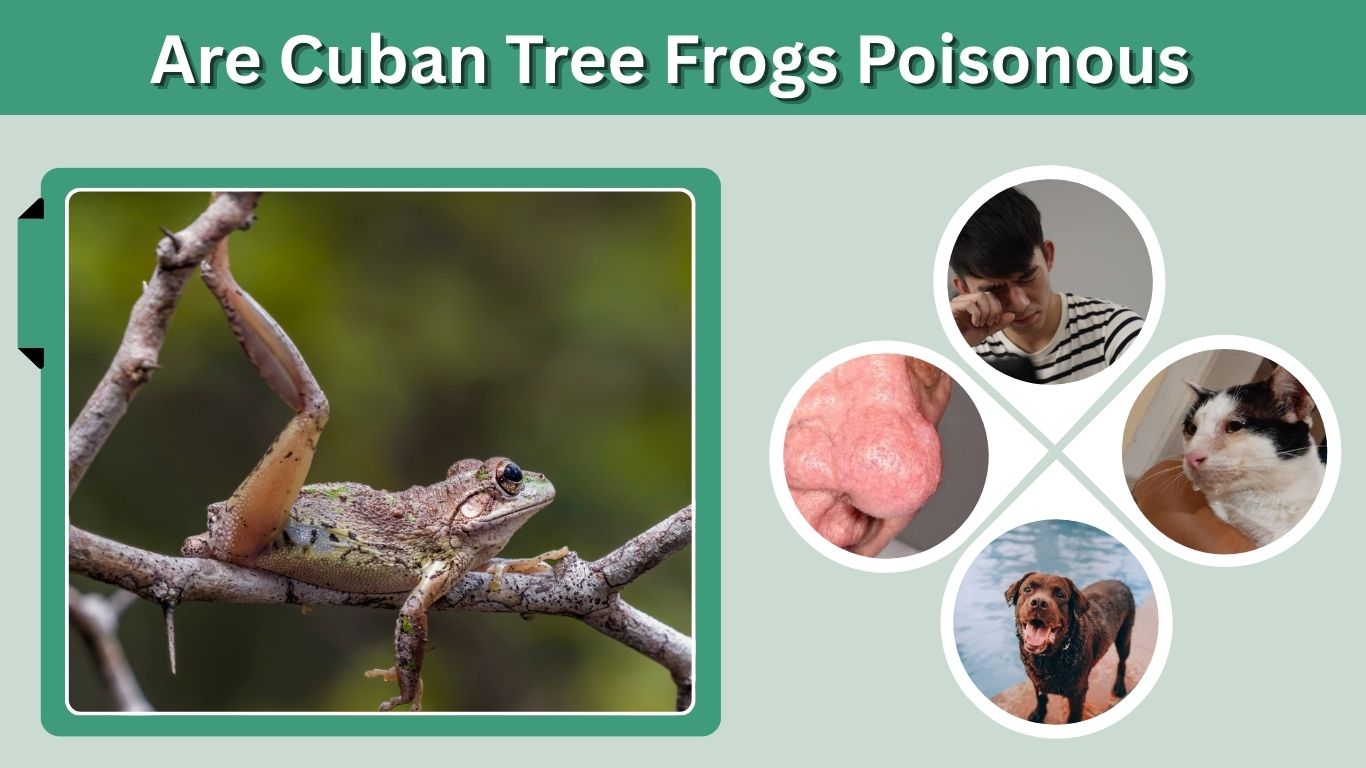
Yes, Cuban tree frogs are poisonous in the sense that their skin produces irritating toxic secretions, especially when they are handled or threatened. However, they are much less dangerous than highly toxic amphibians such as cane toads. Their sticky skin secretion can irritate human eyes, nose, and other mucous membranes, while dogs and cats that bite a frog may experience excessive drooling and discomfort. Cuban tree frogs are particularly common in Florida, where they are considered an invasive species.
Are Cuban Tree Frogs Poisonous?
Cuban tree frogs (Osteopilus septentrionalis) have numerous small glands in their skin that produce a defensive secretion. The frog releases more of this sticky substance when it is grabbed, harassed, or threatened by a predator. The secretion makes the frog less appealing to predators and can cause uncomfortable reactions in humans and household pets.
How Poisonous Are Cuban Tree Frogs?
Cuban tree frogs are mildly toxic rather than dangerously venomous. They do not inject venom through fangs or stingers. Instead, the irritating substance is released from their skin.
Possible effects of exposure include:
- Burning or itching around the eyes
- Irritation of the nose
- Irritation of other mucous membranes
- Skin discomfort in sensitive people
- Allergic reactions in susceptible individuals
- Asthma-like reactions in some people
UF/IFAS notes that their mucus can cause intense burning if it reaches the eyes and may trigger allergic or asthmatic reactions.
Are They as Poisonous as Cane Toads?
No. Cuban tree frogs are significantly less toxic than cane toads.
Cane toads produce potent toxins capable of causing severe poisoning and potentially killing pets. Cuban tree frog secretions are primarily irritating and are not generally considered lethal to dogs or cats, although pets can become noticeably ill after mouthing one.
Are Cuban Tree Frogs Poisonous to Humans?
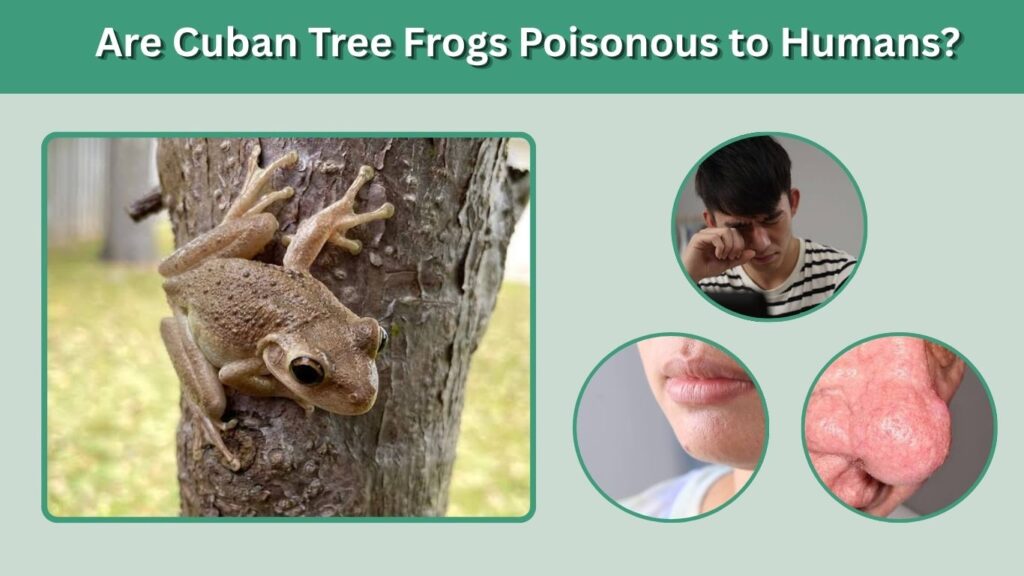
Cuban tree frogs are not normally life-threatening to humans, but direct exposure to their skin secretions should be avoided. The greatest problem occurs when someone handles a frog and then touches their eyes, nose, or mouth. The mucus can produce intense irritation that may persist for an hour or longer.
Are Cuban Tree Frogs Poisonous to Touch?
Simply touching a Cuban tree frog does not mean a person will become seriously poisoned. However, handling one with bare hands is discouraged because its defensive secretions can get onto the skin.
The risk becomes greater if contaminated fingers touch:
- Eyes
- Nose
- Lips or mouth
- Cuts or irritated skin
UF/IFAS recommends wearing rubber gloves or using another protective barrier when capturing Cuban tree frogs and thoroughly washing your hands afterward.
What Happens If the Secretion Gets in Your Eyes?
The eyes are especially sensitive to Cuban tree frog secretions.
Exposure can cause an intense burning sensation and irritation. Their secretions are described as extremely irritating to mammalian mucous membranes.
If frog secretion gets into the eyes, rinse them promptly with plenty of clean water and avoid rubbing them. Persistent or severe symptoms warrant medical advice.
Are Cuban Tree Frogs Poisonous to Dogs?
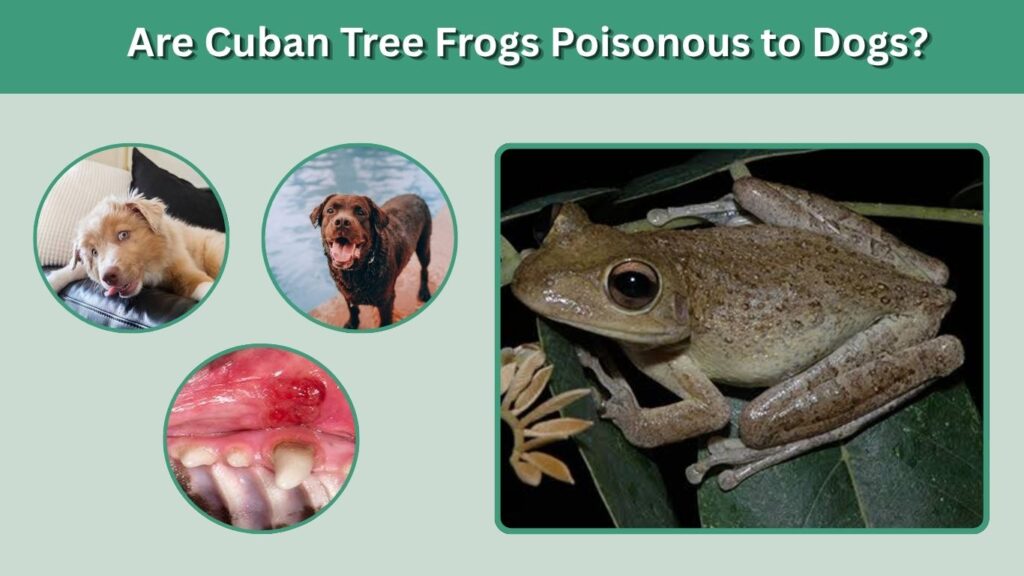
Dogs are more likely than people to experience problems because they may chase, bite, or pick up frogs with their mouths. When a Cuban tree frog is bitten, defensive mucus can contact the dog’s gums, tongue, and other sensitive tissues.
UF/IFAS reports that these secretions can irritate a pet’s mouth and cause excessive salivation.
Signs After a Dog Bites a Cuban Tree Frog
Possible reactions include:
- Excessive drooling
- Foaming or increased saliva
- Mouth irritation
- Pawing at the mouth
- Visible discomfort
- Repeated licking
Rare reports of seizures after pet encounters have also been noted by UF/IFAS, although Cuban tree frog toxin is not regarded as normally lethal to pets.
Because several different frogs and toads occur in Florida—and some, such as cane toads, are considerably more dangerous—contact a veterinarian promptly if a dog develops significant symptoms after mouthing an unidentified amphibian.
Can a Cuban Tree Frog Kill a Dog?
Cuban tree frogs are not generally considered lethal to dogs. UF/IFAS specifically distinguishes their toxicity from that of cane toads and notes that Cuban tree frog secretions typically cause discomfort and oral irritation rather than fatal poisoning.
Nevertheless, keeping dogs away from these frogs is the safest approach.
Are Cuban Tree Frogs Poisonous to Cats?
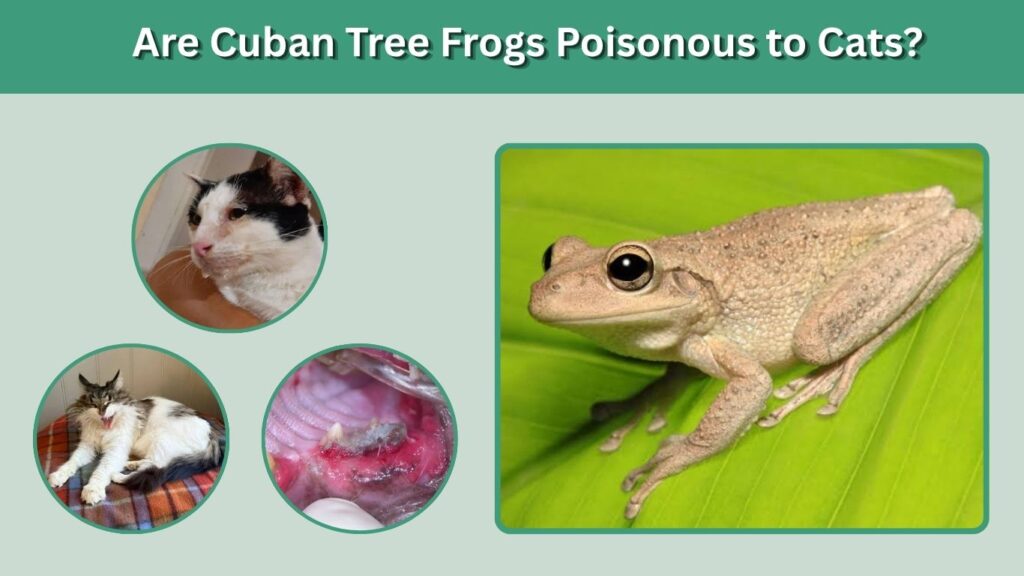
Cats can also experience irritation if they bite, lick, or play with Cuban tree frogs. Curious outdoor cats may encounter the frogs at night when Cuban tree frogs become active around buildings and lights.
The same defensive secretion that affects dogs can irritate a cat’s mouth and mucous membranes.
Signs in Cats
After interacting with a Cuban tree frog, a cat may show:
- Excessive salivation
- Mouth irritation
- Pawing at the face
- Repeated licking
- General discomfort
UF/IFAS recommends keeping both dogs and cats away from Cuban tree frogs because of their irritating secretions.
A veterinarian should evaluate severe, persistent, or unusual symptoms, especially when the exact frog or toad species is uncertain.
Why Are Cuban Tree Frogs Poisonous?
Their toxic mucus is primarily a defense against predators. When threatened or physically handled, glands distributed across the frog’s skin release an unpleasant sticky secretion.
This adaptation can make predators less willing to bite or swallow the frog. The skin secretions may also help reduce water loss, which is useful for an amphibian living in warm environments.
Do Cuban Tree Frogs Spray Poison?
Cuban tree frogs do not normally spray poison toward people.
Instead, defensive substances are secreted through glands in their skin. Contact usually occurs when someone grabs the frog or when an animal bites it.
This differs from venomous animals, which actively inject venom through specialized structures.
Poisonous Cuban Tree Frogs in Florida
Cuban tree frogs are invasive in Florida. They are native to Cuba, the Cayman Islands, and the Bahamas but became established in Florida after being introduced. They now occur widely in peninsular Florida and have also been documented farther north.
How to Identify a Cuban Tree Frog
Important identification features include:
- Exceptionally large toe pads
- Large, prominent eyes
- Warty or bumpy skin
- Color ranging from green to gray, brown, or creamy white
- Dark bands or markings on some individuals
- Yellowish coloration where the legs meet the body
- Adults that can become considerably larger than many native Florida tree frogs
Because native tree frogs can look similar, positive identification is important before attempting invasive-species management.
How to Handle a Cuban Tree Frog Safely
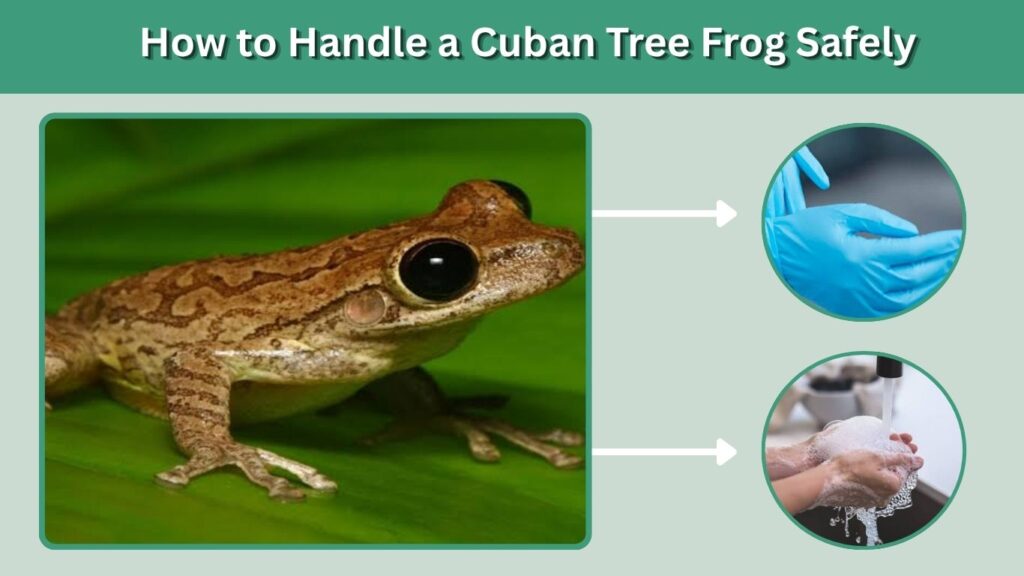
Handling should be minimized because contact increases the chance of exposure to defensive mucus. UF/IFAS recommends using gloves or a plastic bag as a barrier if a Cuban tree frog must be captured.
Safety Tips
When dealing with a Cuban tree frog:
- Do not handle it with bare hands when avoidable.
- Wear disposable or rubber gloves.
- Keep your hands away from your eyes and face.
- Wash your hands thoroughly afterward.
- Keep children from playing with the frog.
- Prevent dogs and cats from biting it.
- Correctly identify the species before attempting removal.
Never use household poisons, bleach, insecticides, or similar chemicals on Cuban tree frogs. UF/IFAS advises specific humane management methods for confirmed invasive individuals.
FAQs
Are Cuban Tree Frogs Poisonous to Humans?
Cuban tree frogs produce toxic skin mucus that can irritate humans, particularly if it contacts the eyes, nose, or other mucous membranes. Serious poisoning is uncommon, but their secretions can cause intense burning and may trigger allergic or asthmatic reactions in susceptible people.
Are Cuban Tree Frogs Poisonous to Dogs?
Their skin secretion can irritate a dog’s mouth if the dog bites or grabs a Cuban tree frog. Excessive salivation and discomfort can occur. They are not considered normally lethal to pets, but dogs should still be prevented from interacting with them.
Are Cuban Tree Frogs Poisonous to Cats?
Yes, their defensive secretions can irritate cats that bite or lick the frogs. Oral discomfort and excessive salivation may occur. Keeping cats away from Cuban tree frogs is recommended, particularly because identifying different frog and toad species can be difficult.
Can You Touch a Cuban Tree Frog?
It is better not to handle one with bare hands. If handling is necessary, UF/IFAS recommends gloves or another protective barrier. Wash your hands thoroughly afterward and avoid touching your eyes, mouth, or nose until your hands are clean.
Can Cuban Tree Frog Poison Kill You?
Cuban tree frog secretions are irritating but are not considered comparable to the potent toxins of cane toads. UF/IFAS describes them as capable of causing burning, itching, and allergic or asthmatic reactions rather than being normally lethal to humans.
