
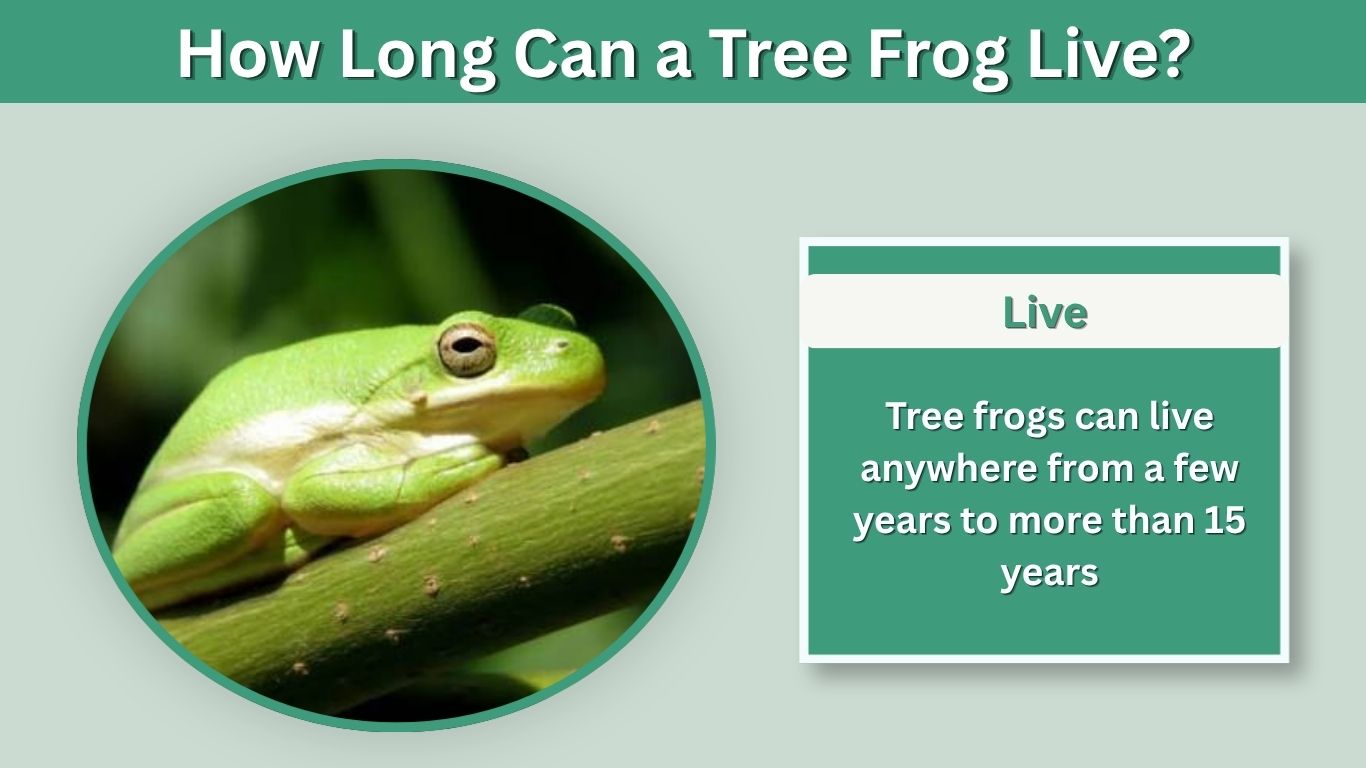
Tree frogs can live anywhere from a few years to more than 15 years, depending on the species, environment, diet, predators, and overall health. Wild tree frogs generally have shorter lives because they face predators, disease, drought, and changing temperatures. Pet species such as White’s tree frogs can live considerably longer when provided with proper housing and nutrition. Understanding their lifespan also means knowing how they eat, swim, grow, live together, and respond to handling.
How Long Can a Tree Frog Live?
There is no single lifespan for every tree frog because the term includes hundreds of species. Smaller wild species may survive only a few years, while larger species kept under excellent captive conditions can live for well over a decade.
Average Tree Frog Lifespan
Approximate lifespans include:
- Small wild tree frogs: around 2–5 years
- American green tree frogs: commonly around 5–8 years
- Gray tree frogs: roughly 7–9 years or sometimes longer
- Red-eyed tree frogs: often around 5–10 years in captivity
- White’s tree frogs: commonly 10–15 years
- Exceptionally well-cared-for pet frogs: potentially more than 15 years
Captive frogs often outlive wild individuals because they receive regular food and protection from predators.
What Affects a Tree Frog’s Lifespan?
Several factors determine how long an individual survives.
Important influences include genetics, nutrition, temperature, humidity, enclosure cleanliness, disease, stress, predators, and exposure to chemicals.
Wild frogs must also survive seasonal changes, habitat loss, parasites, and periods when food is difficult to find.
How Long Do White’s Tree Frogs Live?
White’s tree frogs, also called Australian green tree frogs or dumpy tree frogs, are among the longer-lived tree frogs commonly kept as pets. With appropriate care, they can remain healthy for many years.
White’s Tree Frog Lifespan
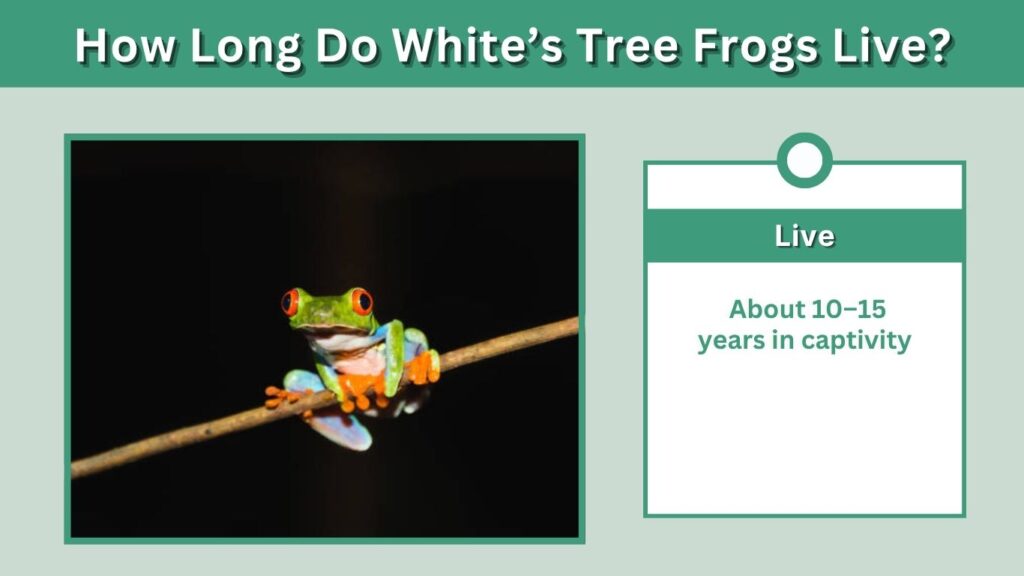
A well-cared-for White’s tree frog commonly lives about 10–15 years in captivity, although some individuals may survive longer.
Their relatively long lifespan means keeping one is a significant commitment rather than a short-term pet project.
Good husbandry throughout the frog’s life is particularly important because obesity, poor nutrition, incorrect temperatures, and dirty environments can gradually cause health problems.
Can You Keep a Tree Frog as a Pet?
Yes, several tree frog species can be kept successfully as pets. White’s tree frogs are particularly popular because of their manageable care requirements, calm appearance, and relatively large size.
However, frogs are primarily observation pets rather than animals that should be handled frequently.
What Tree Frogs Need in Captivity
A suitable setup generally requires:
- A vertically oriented enclosure
- Appropriate temperature
- Suitable humidity
- Branches and climbing surfaces
- Plants or hiding areas
- Clean water
- Good ventilation
- Appropriate substrate
- Live insect foods
- Calcium and vitamin supplementation
Exact requirements depend on the species, so care should always be adjusted to the particular frog.
Can White’s Tree Frogs Live Alone?
Yes. A White’s tree frog can live alone without becoming lonely in the way a social mammal might.
Keeping a single frog also simplifies feeding and health monitoring.
Several White’s tree frogs can sometimes be housed together when they are similar in size and have enough space, but overcrowding should be avoided.
How Big Can Tree Frogs Get?
Tree frogs vary tremendously in size. Some adults remain only a few centimeters long, while larger species can grow several times that size.
White’s tree frogs are among the larger species commonly kept in captivity.
How Big Can a White’s Tree Frog Get?
Adult White’s tree frogs generally reach approximately 3–4.5 inches in body length, with females usually becoming larger than males.
Their rounded body and thick appearance can make them look even larger.
Healthy frogs should appear robust without becoming excessively overweight, as obesity is a common concern in captive White’s tree frogs.
Can Tree Frogs Live in Water?
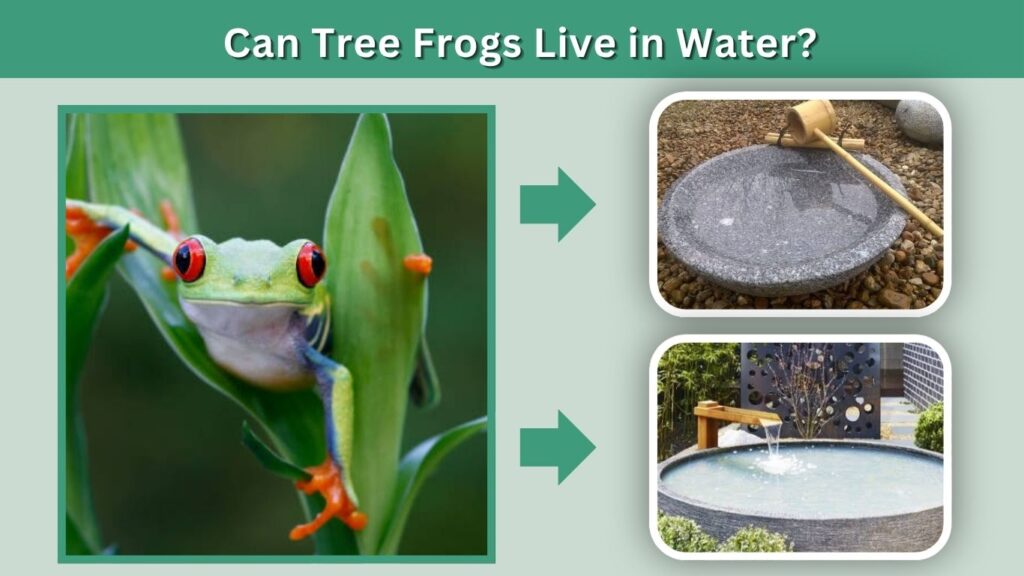
Tree frogs are amphibians, but adults usually cannot live permanently underwater. Most spend considerable time climbing vegetation, resting on branches, or hiding above ground.
Water remains essential for hydration and reproduction.
Can White’s Tree Frogs Swim?
Yes, White’s tree frogs can swim if necessary.
However, they are not aquatic frogs and should not be kept in a water-filled enclosure. They need mostly terrestrial and climbing space with access to a shallow water dish.
The dish should allow the frog to enter and exit easily because deep water can create unnecessary risks.
What Can White’s Tree Frogs Eat?
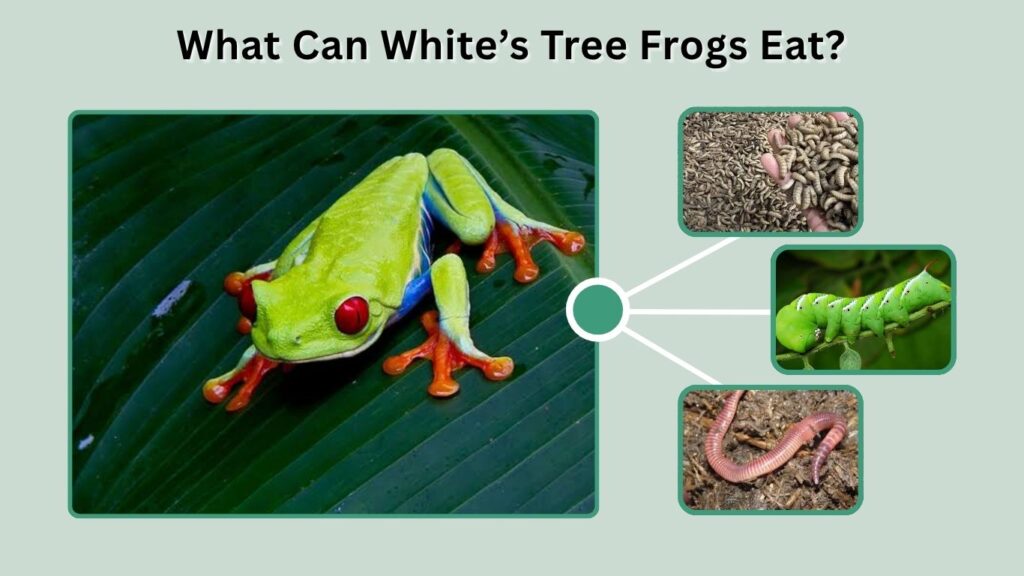
White’s tree frogs are insectivores and naturally consume many small invertebrates. Captive frogs should receive appropriately sized prey rather than human food, fruit, or heavily processed foods.
Variety helps provide balanced nutrition.
Good Foods for White’s Tree Frogs
Suitable foods can include:
- Crickets
- Dubia roaches
- Black soldier fly larvae
- Hornworms
- Earthworms
- Nightcrawlers cut to appropriate size
- Mealworms occasionally
- Superworms occasionally
- Waxworms occasionally
Staple feeders such as crickets and appropriately sized roaches are generally better than relying heavily on fatty worms.
Can White’s Tree Frogs Eat Mealworms?
Yes, but mealworms are best offered as part of a varied diet rather than as the only food.
Their relatively tough exoskeleton makes them less ideal as a staple compared with softer, nutritionally balanced feeder insects.
Can White’s Tree Frogs Eat Fruit?
No. White’s tree frogs are not fruit-eating animals.
They primarily consume live animal prey. Fruit does not provide the nutrition they require and should not replace insects.
How Long Can a Tree Frog Go Without Eating?
How long a tree frog can survive without food depends on its age, health, species, temperature, and body condition. A healthy adult can usually tolerate a brief period without eating better than a juvenile.
Adult vs. Young Frogs
Healthy adult frogs may occasionally refuse food for several days without immediately becoming ill.
Young growing frogs need more frequent meals and should not routinely go long periods without eating.
A frog refusing food for an extended period may be experiencing stress, improper temperatures, illness, dehydration, or another husbandry problem.
Persistent appetite loss deserves attention rather than simply assuming the frog can survive without food.
Can White’s Tree Frogs Live Together?
White’s tree frogs are sometimes successfully kept in small groups. Their calm behavior can make group housing possible, but appropriate conditions are essential.
Rules for Housing White’s Tree Frogs Together
For safer group housing:
- Keep frogs of similar size together.
- Provide sufficient enclosure space.
- Offer multiple resting locations.
- Provide several feeding opportunities.
- Watch for competition.
- Quarantine new frogs first.
- Monitor each frog’s body condition.
- Avoid mixing very small frogs with large adults.
A large White’s tree frog may attempt to swallow an animal small enough to fit into its mouth.
Can White’s Tree Frogs Live With Other Species?
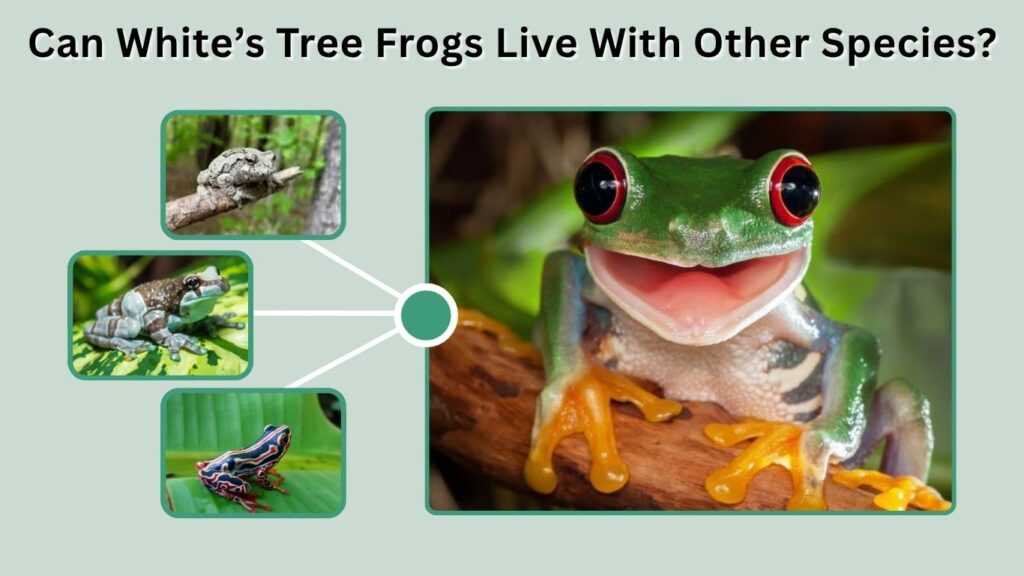
Mixing different frog, reptile, or amphibian species is generally not recommended. Species may have different environmental requirements and can expose one another to stress, parasites, pathogens, or defensive skin secretions.
Why Mixed-Species Housing Can Be Risky
White’s tree frogs should generally not share an enclosure with:
- Red-eyed tree frogs
- Green tree frogs of unrelated species
- Gray tree frogs
- Milk frogs
- Reed frogs
- Fire-bellied toads
- Crested geckos
- Other reptiles or amphibians
Even when two species require similar temperatures, their behavior, diet, humidity needs, and disease risks may be different.
Species-specific enclosures are usually easier and safer.
Can You Handle a White’s Tree Frog?
White’s tree frogs may tolerate occasional careful handling, but frequent handling is unnecessary. Amphibians have delicate, permeable skin that can absorb substances from human hands.
Safe Handling Tips
When handling is necessary:
- Wash your hands thoroughly first.
- Rinse away soap residue.
- Keep your hands slightly damp.
- Avoid lotions and sanitizers.
- Support the frog rather than squeezing it.
- Keep handling brief.
- Wash your hands afterward.
For routine enclosure maintenance, moving the frog with minimal direct contact is generally preferable.
Can White’s Tree Frogs Change Color?
Yes. White’s tree frogs can change their appearance to some degree. Individuals may shift between shades of green, brown, gray-green, or bluish-green.
Color changes can be associated with temperature, lighting, activity, surroundings, and stress.
A temporary color change is therefore not automatically a sign of illness. However, unusual discoloration accompanied by lethargy, sores, swelling, or appetite loss may indicate a health problem.
How to Help a Pet Tree Frog Live Longer
Good husbandry can greatly influence the lifespan of a captive frog. Consistency is especially important because many health problems develop gradually after months or years of unsuitable conditions.
Important Lifespan Factors
To support a long life:
- Maintain species-appropriate temperature.
- Provide suitable humidity.
- Keep the enclosure clean.
- Supply fresh, safe water.
- Feed varied live insects.
- Use appropriate calcium supplementation.
- Avoid chronic overfeeding.
- Provide climbing and hiding areas.
- Minimize unnecessary handling.
- Watch for changes in appetite or behavior.
A properly maintained environment allows a tree frog to spend more energy on normal growth and activity rather than coping with constant stress.
FAQs
How Long Can a Tree Frog Live as a Pet?
Pet tree frogs commonly live around 5–15 years depending on the species. White’s tree frogs are particularly long-lived and may survive around 10–15 years or longer when provided with suitable temperatures, nutrition, humidity, and veterinary care when needed.
Can You Keep a White’s Tree Frog as a Pet?
Yes. White’s tree frogs are popular captive amphibians and can adapt well to properly maintained enclosures. They require vertical climbing space, suitable humidity and temperature, fresh water, hiding places, and a varied diet of appropriately sized live insects.
Can Two White’s Tree Frogs Live Together?
Yes, similarly sized White’s tree frogs can often live together when the enclosure is spacious enough. Owners should provide multiple hiding and resting locations and monitor feeding carefully. Very different-sized frogs should not be housed together because larger frogs may attempt to eat smaller animals.
How Long Can a White’s Tree Frog Go Without Eating?
A healthy adult may occasionally go several days without eating, but intentionally withholding food is not recommended. Juveniles require meals more frequently. Persistent refusal to eat can indicate stress, unsuitable environmental conditions, dehydration, or illness and should be investigated.
Can White’s Tree Frogs Swim?
Yes, White’s tree frogs can swim, but they are primarily terrestrial and arboreal frogs rather than aquatic animals. Their enclosure should provide climbing areas and only a shallow, easily accessible water container instead of deep permanent water.
