
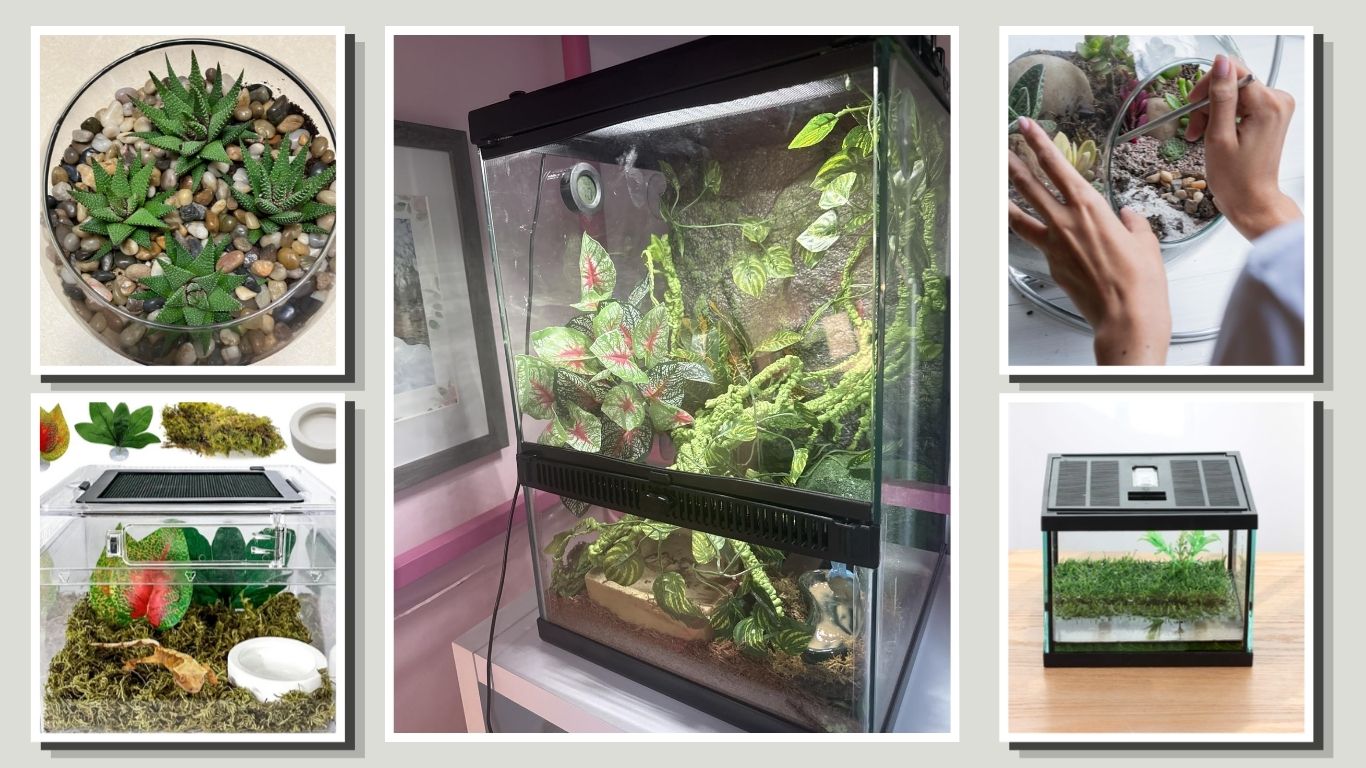
Choosing the best terrarium starter kit can make setting up a reptile, amphibian, or plant habitat much easier, especially for beginners. A good kit should include a practical enclosure, proper ventilation, useful accessories, and materials that simplify the initial setup process. Some kits are designed for frogs and reptiles, while others focus on DIY plant terrariums and decorative indoor displays. In this guide, we review 5 useful terrarium starter kits based on setup convenience, included accessories, design quality, versatility, and overall suitability for first-time users.
1. Zilla Tropical Reptile Vertical Starter Kit
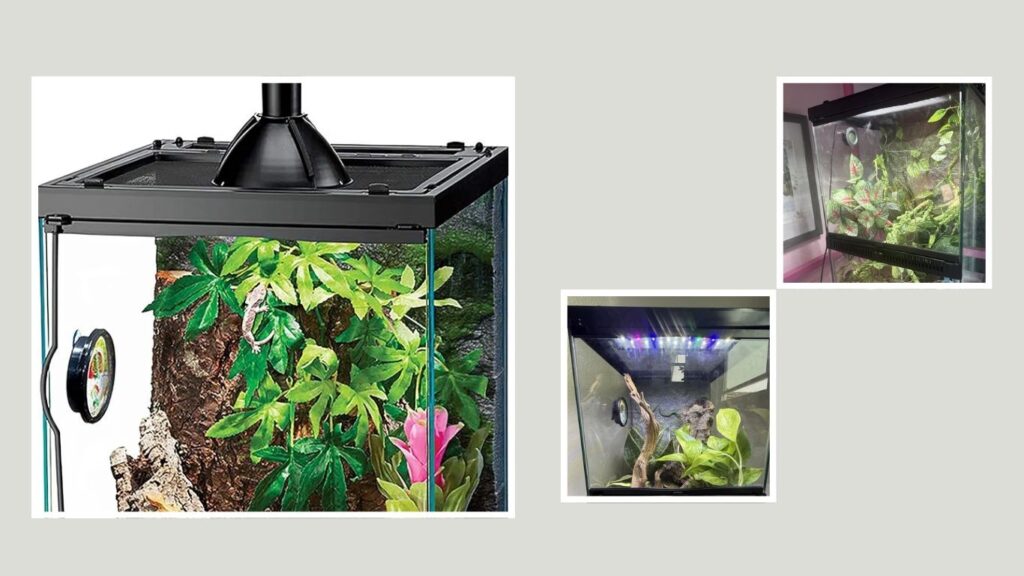
The Zilla Tropical Reptile Vertical Starter Kit is the most complete animal-focused option on this list. Its tall glass enclosure is designed for small arboreal reptiles and amphibians, providing more vertical climbing room than a traditional low terrarium. The kit combines the enclosure with several important habitat accessories, making initial setup much easier for beginners who want a coordinated starting point rather than purchasing every component separately.
Key Features
- 12 x 12 x 18-inch vertical glass terrarium
- Front-opening glass door
- Locking latch and locking pin
- Hinged screen top for ventilation
- Water-tight lower section
- Rock-style background
- Coconut husk bedding
- Feeding dish
- Humidity and temperature gauge
- Mini halogen dome and bulb
- Designed for small arboreal reptiles and amphibians
Why It’s Best for Tropical Reptiles and Amphibians
The vertical layout makes this kit particularly attractive for animals that naturally spend significant time climbing. Tree frogs and crested geckos are examples specifically associated with the enclosure by Zilla.
The front-opening design also makes routine feeding and cleaning easier because users do not always have to disturb the entire top of the enclosure. Meanwhile, the screen top improves ventilation and provides another access point.
Performance, Setup & Durability
Glass construction gives the habitat a solid, premium appearance while providing excellent visibility. The water-tight bottom can support drainage layers or planted tropical setups, increasing the number of habitat styles that can be created.
The included humidity and temperature gauge is particularly useful because tropical species often require more careful environmental monitoring. One limitation is that the kit does not include UVB lighting, which some species may require depending on their care needs.
Pros, Cons & Overall Verdict
Pros
- Complete animal-focused starter setup
- Excellent vertical climbing space
- Secure front-opening design
- Good ventilation
- Includes lighting and environmental gauge
- Water-tight lower section
Cons
- Too small for larger reptiles
- Additional UVB lighting may be necessary for some species
Overall Verdict: The Zilla kit stands out as the strongest all-around starter option for small tropical reptiles and amphibians. Its combination of enclosure, lighting, substrate, monitoring equipment, and secure access gives beginners a technically well-organized foundation for building a proper habitat.
2. Zilla Tropical Reptile Vertical Starter Kit
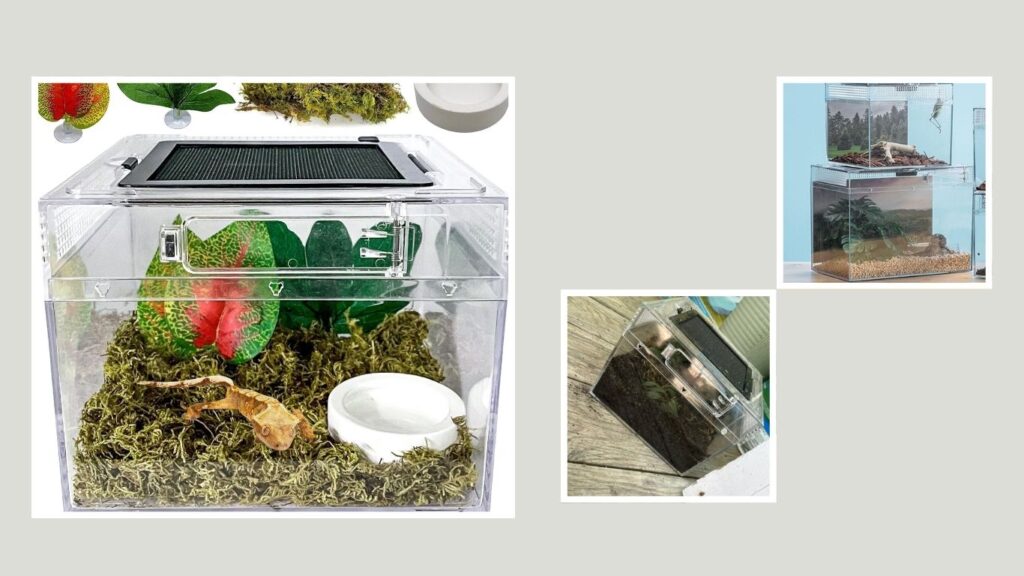
The Acsist Mini Reptile Terrarium Starter Kit is designed for smaller reptiles, amphibians, arachnids, and invertebrates that do not require a large enclosure. Its transparent polycarbonate construction provides clear viewing from multiple directions, while the compact dimensions make it convenient for desktops, shelves, and smaller rooms. The package also includes several basic accessories, giving beginners an easier starting point for creating a simple habitat.
Key Features
- Approximately 8 x 8 x 7-inch enclosure
- Transparent polycarbonate construction
- 360-degree viewing
- Screen ventilation
- Additional ventilation holes
- Dedicated feeding port
- Anti-escape locking system
- Feeding bowl included
- Moss mat included
- Decorative flexible plant included
- Compact starter-kit design
Why It’s Best for Small Pets
The Acsist is particularly useful for keepers working with small spiders, insects, hermit crabs, or similarly compact animals. Its small footprint means it does not require a dedicated stand or large room.
The feeding port is another practical advantage. Opening a complete enclosure every time food is introduced can increase escape risk with fast-moving invertebrates. A dedicated feeding opening makes routine maintenance more controlled.
Performance, Ventilation & Practicality
Ventilation is one of the strongest technical features. The metal screen top and surrounding ventilation openings help maintain airflow and allow heat to escape rather than becoming trapped inside the enclosure.
The transparent body also makes observation easy without constantly opening the habitat. Polycarbonate is lighter than glass, which improves portability and makes the enclosure easier to reposition.
However, the enclosure’s compact size is its main limitation. It should only be used when its dimensions meet the specific space requirements of the animal being housed.
Pros, Cons & Overall Verdict
Pros
- Compact and lightweight
- Excellent visibility
- Multiple ventilation points
- Convenient feeding port
- Basic accessories included
- Easy beginner setup
Cons
- Limited space
- Not appropriate for larger reptiles
- Additional habitat equipment may still be required
Overall Verdict: The Acsist starter kit is an appealing choice for small-species setups where visibility, ventilation, and easy feeding matter most. Its compact design makes it particularly useful for beginners keeping invertebrates or other appropriately sized animals.
3. Crapelles Small Glass Terrarium Kit
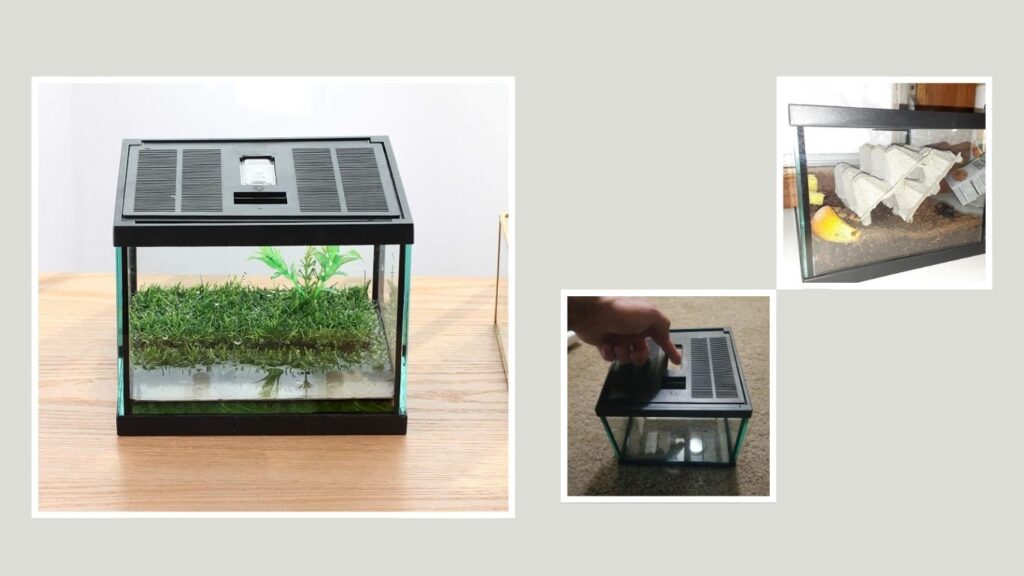
The Crapelles Small Glass Terrarium Kit provides a compact enclosure designed for small amphibians, reptiles, insects, and similar pets. Measuring roughly 7.8 x 7.8 x 5.9 inches, it is clearly intended for smaller occupants rather than full-size reptiles. The glass construction provides excellent visibility, while ventilation, a secure lid, and basic decorative accessories help create a more complete starting habitat than a completely empty enclosure.
Key Features
- Approximately 7.8 x 7.8 x 5.9 inches
- About 1.4-gallon capacity
- Glass construction
- Transparent viewing
- Upper ventilation
- Secure locking design
- Feeding opening
- Waterproof lower section
- Artificial grass accessory
- Decorative plant accessory
- Suitable for small animals and insects
Why It’s Best for Compact Display Habitats
One of the strongest advantages is visibility. The clear enclosure creates an attractive tabletop habitat where small pets can be observed easily without a bulky cage blocking the view.
Its size also works well for keepers who need a compact habitat on a desk, shelf, or small stand.
For appropriately sized inhabitants, the combination of ventilation and a secure closure can provide a practical balance between airflow and containment.
Performance, Construction & Maintenance
Glass generally resists scratching better than many inexpensive clear plastics, helping the enclosure maintain a cleaner display appearance over time.
The waterproof construction also provides more flexibility when creating humid setups or adding moist substrate. However, users still need to match ventilation, temperature, humidity, and substrate depth to the animal’s actual requirements.
The main concern is space. Reviews and product information indicate that it is most suitable for genuinely small creatures rather than animals expected to grow significantly.
Pros, Cons & Overall Verdict
Pros
- Attractive glass construction
- Compact tabletop size
- Clear viewing
- Ventilated design
- Waterproof
- Basic accessories included
Cons
- Limited usable space
- Not suitable for larger reptiles or adult animals requiring more room
Overall Verdict: The Crapelles terrarium is best treated as a specialized small-pet habitat. For appropriately sized insects, arachnids, or small amphibian setups, its clear glass design and compact footprint provide a visually attractive and manageable starting point.
4. DUSPRO DIY Terrarium Starter Kit
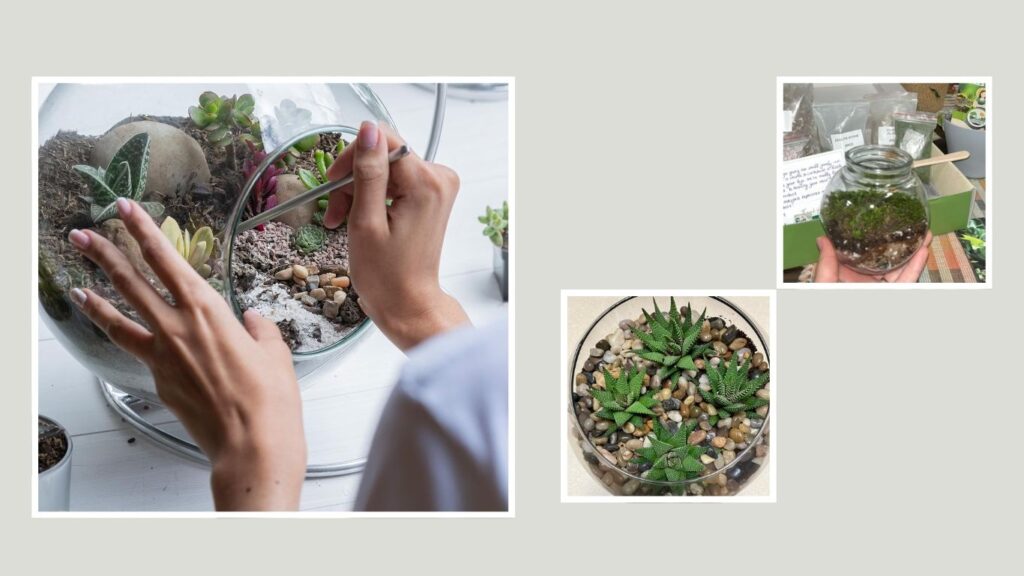
The DUSPRO DIY Terrarium Starter Kit differs significantly from the first three products because it is designed primarily for plant terrariums rather than reptile housing. Instead of providing an animal enclosure, the kit supplies materials used to create layered miniature gardens and decorative planted displays. This makes it particularly appealing to beginners who want to build a succulent, moss, or tropical plant terrarium without sourcing every substrate component individually.
Key Features
- Coco coir
- Peat moss
- Perlite
- Pumice
- Pine bark
- Mesh barrier
- Terrarium care tool
- Materials for drainage and substrate layering
- Suitable for indoor plant terrariums
- Beginner-friendly DIY format
Why It’s Best for DIY Plant Terrariums
The major advantage is convenience. Building a terrarium from scratch normally requires purchasing several substrate and drainage materials separately.
DUSPRO bundles the main components into one package, which simplifies experimentation for beginners and reduces the number of individual products required.
It is also useful for people who enjoy customized decorative projects because the materials can be arranged according to the plant species and visual style being created.
Performance & Substrate Quality
The combination of porous materials such as pumice and perlite can support drainage and aeration, while organic components provide a foundation for plant growth.
The mesh barrier can help keep different layers separated within the terrarium.
One important distinction is that this is primarily a terrarium supply kit, not a complete glass habitat. Users will still need a suitable container and plants. The substrate mixture should also be adjusted according to plant type because succulents and moisture-loving tropical plants have different drainage requirements.
Pros, Cons & Overall Verdict
Pros
- Multiple substrate materials included
- Good for DIY projects
- Helps simplify terrarium layering
- Useful for succulents and decorative plants
- Beginner-friendly
- Allows creative customization
Cons
- Terrarium container is not the main focus of the kit
- Not designed as a reptile or amphibian starter habitat
Overall Verdict: DUSPRO is one of the strongest choices for anyone specifically building a plant terrarium. The variety of substrate and drainage components provides a convenient foundation for creating customized miniature gardens without assembling every material separately.
5. Alphatool Terrarium Starter Kit with Accessories
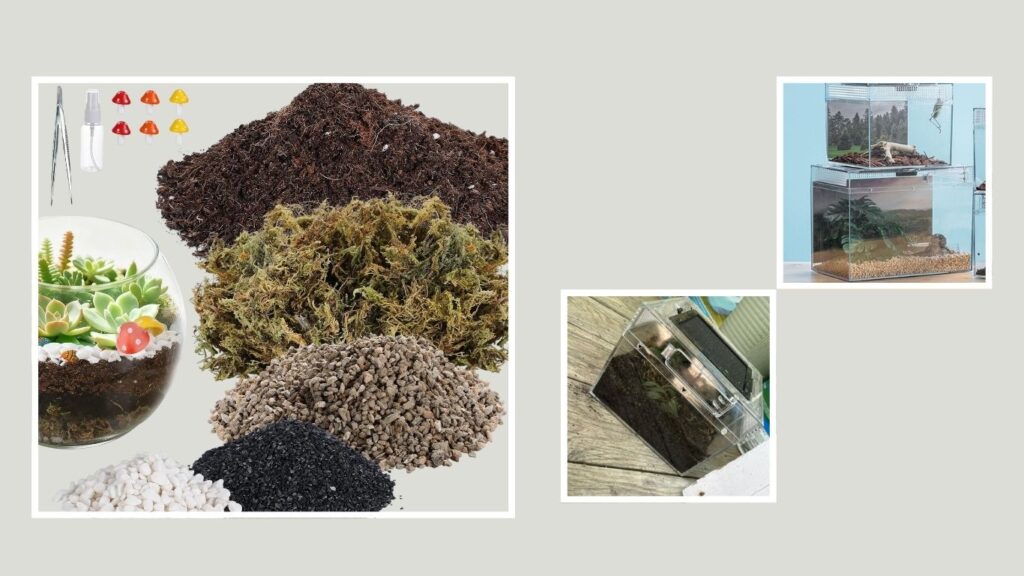
The Alphatool Terrarium Starter Kit is another plant-focused option intended for adults, beginners, and DIY enthusiasts who want to create decorative terrariums. It combines essential layering materials with tools and decorative pieces, allowing users to build a complete miniature display with less additional shopping. The included assortment makes it particularly appealing for succulents, cactus arrangements, desktop gardens, and creative indoor décor projects.
Key Features
- Pumice included
- Moss included
- Terrarium soil
- Decorative pebbles
- Charcoal
- Two terrarium tools
- Mushroom ornaments
- Suitable for succulents and cactus displays
- Designed for DIY plant terrariums
- Decorative gift-style presentation
Why It’s Best for Decorative Terrarium Projects
The Alphatool kit focuses more heavily on the creative side of terrarium building.
Along with functional materials such as soil, pumice, charcoal, and moss, users receive decorative mushroom ornaments that can give the finished arrangement more personality.
That combination makes the kit particularly attractive for someone who wants the building process itself to be part of the experience rather than simply establishing a functional plant container.
Performance, Setup & Versatility
The included materials cover several important terrarium layers. Pumice can contribute to drainage, charcoal can be incorporated into certain layered setups, and moss or pebbles can improve both function and appearance.
The two tools are another useful addition because small containers can be difficult to arrange by hand.
However, users should remember that plants have different moisture requirements. An open succulent terrarium generally needs substantially drier conditions than a closed moss terrarium, so the exact arrangement should be adapted accordingly.
Pros, Cons & Overall Verdict
Pros
- Good selection of substrate materials
- Tools included
- Decorative ornaments included
- Excellent for creative DIY projects
- Suitable for beginners
- Attractive gift option
Cons
- Mainly intended for plant terrariums
- Plants and a suitable container may need to be sourced separately
Overall Verdict: The Alphatool kit is especially appealing for users who want a decorative terrarium-building experience rather than an animal habitat. Its mixture of functional materials, tools, and ornaments provides enough flexibility to create an attractive customized display while remaining approachable for first-time terrarium builders.
FAQs
What should a good terrarium starter kit include?
A good terrarium starter kit should include the main materials needed for the type of setup you are creating. For reptiles or amphibians, this may include an enclosure, ventilation, substrate, lighting, feeding accessories, and temperature or humidity monitoring. For plant terrariums, useful components include soil, drainage materials, moss, charcoal, decorative stones, and small tools.
Are terrarium starter kits good for beginners?
Yes. Starter kits are especially useful for beginners because they reduce the need to source every component separately. A well-matched kit can simplify the initial setup process and help users understand the basic structure of a terrarium. However, the exact requirements still depend on the animal or plant species being kept.
Can I use a plant terrarium kit for reptiles or amphibians?
Not usually. Plant terrarium kits are mainly designed to provide soil, drainage, moss, stones, and decorative materials. They typically do not include a secure animal enclosure, proper ventilation, heating, lighting, or other equipment required for reptiles and amphibians. Animal habitats should be designed around the specific care requirements of the species.
What size terrarium starter kit should I choose?
Choose the size based on the adult size and activity level of the animal or the amount of space the plants require. Small tabletop enclosures may work for certain insects, arachnids, or very small species, but they can quickly become unsuitable for growing reptiles. Always consider the long-term space requirements before selecting a compact starter kit.
Do terrarium starter kits include everything I need?
Not always. Many kits provide a strong starting point, but additional items may still be necessary. Reptile and amphibian setups may require UVB lighting, heating, hides, climbing structures, or upgraded monitoring equipment. Plant kits may require a separate container and live plants. Checking the included components before setup helps avoid missing important supplies.
