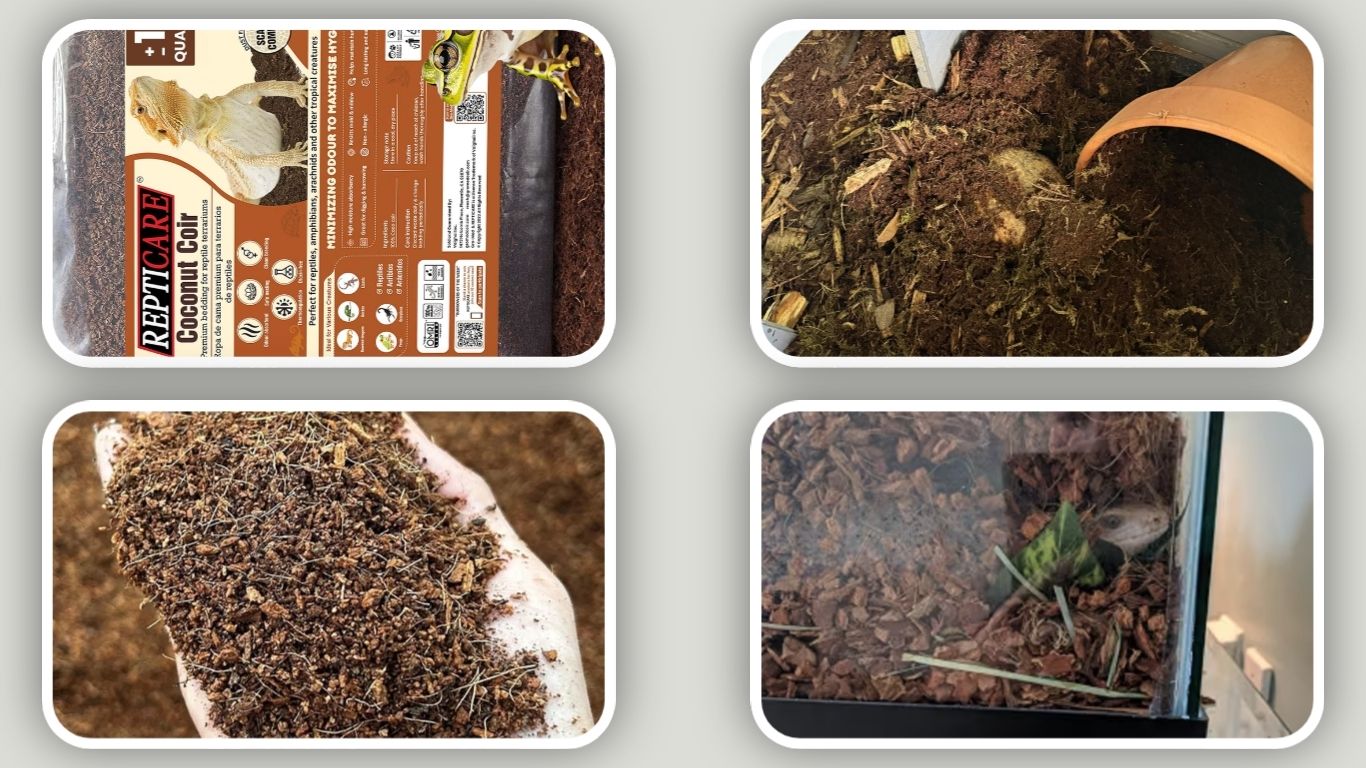
Choosing the right substrate is important for creating a comfortable, moisture-friendly habitat for frogs. Coconut fiber is a popular option because it helps retain humidity, provides a soft natural surface, and supports burrowing behavior in many terrestrial species. It can also make terrariums look more natural while helping with everyday moisture management. In this guide, we review 10 of the best coconut fiber substrates for frogs, including compressed bricks, loose fiber, and coconut chip options suited for different terrarium setups.
1. Halatool Compressed Coconut Fiber Substrate
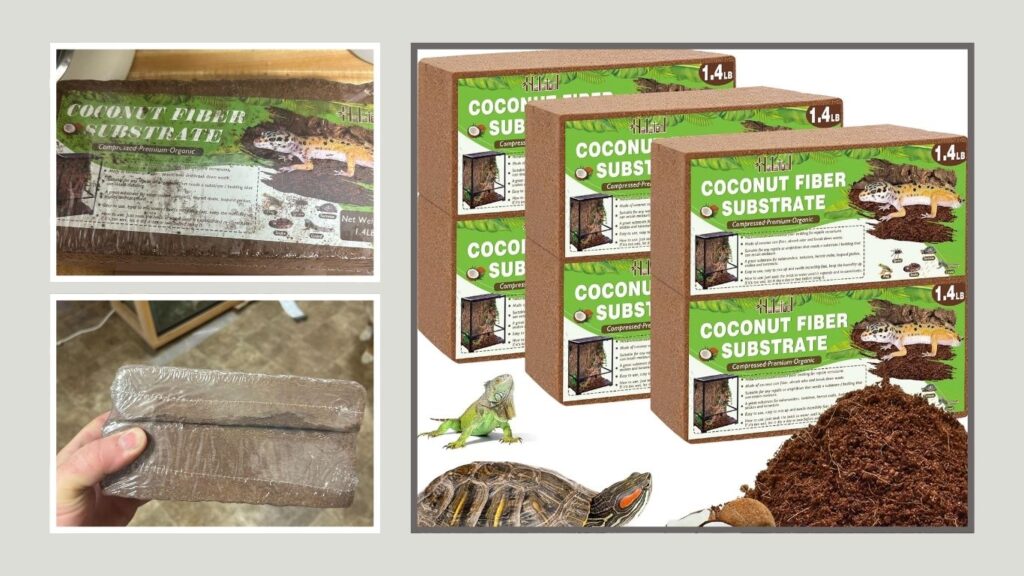
Halatool Compressed Coconut Fiber Substrate is a practical choice for frog keepers who want a natural-looking terrarium base that is easy to store and prepare. The compressed format expands after hydration, creating a loose, soft substrate that can help maintain moisture and support natural digging behavior. It works especially well in tropical or semi-humid frog enclosures where humidity management is important.
Key Features
- Made from coconut-based substrate material
- Compressed for convenient storage
- Expands after adding water
- Helps retain moisture in terrariums
- Soft texture for terrestrial frogs
- Supports digging and burrowing behavior
- Easy to spread across enclosure floors
Why It Is Best for Humidity-Friendly Frog Habitats
Many terrestrial frogs benefit from a substrate that can hold moisture without creating a hard or uncomfortable surface. Coconut fiber is useful because it absorbs water and releases moisture gradually into the enclosure.
Halatool substrate can be prepared slightly damp and distributed throughout the habitat to help create a more humid microclimate. This makes it suitable for frog setups where maintaining consistent moisture is a priority.
Performance and Everyday Maintenance
Once expanded, the substrate creates a loose bedding layer that is easy to shape around plants, hides, cork bark, and other terrarium decorations. It can also be made deeper in areas where burrowing species prefer to settle.
Routine maintenance is relatively simple. Waste and heavily soiled sections can be removed through spot cleaning, while the remaining clean substrate stays in place. Avoid keeping it waterlogged, as excessive moisture can lead to poor enclosure conditions.
Best for Naturalistic Terrarium Setups
Halatool Compressed Coconut Fiber is particularly useful for keepers who want an affordable and flexible base for a natural frog enclosure. Its expandable design makes storage convenient, while its moisture-holding texture supports comfortable terrarium conditions.
For planted habitats, burrowing frogs, and humid setups, it provides a practical foundation that can be combined with leaf litter, moss, or other suitable materials.
2. Zoo Med Coconut Fiber Substrate for Reptiles
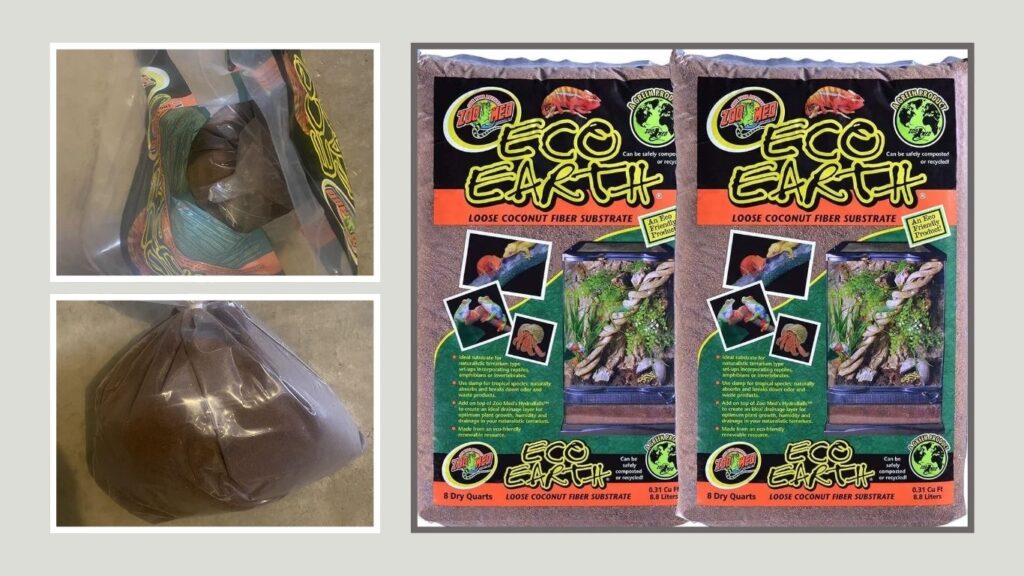
Zoo Med Coconut Fiber Substrate is a versatile terrarium bedding that can also work well for many terrestrial frogs. Its soft, earthy texture helps create a natural enclosure floor while holding moisture efficiently. The substrate can be used by itself or combined with other materials to create a deeper and more varied habitat for frogs that spend much of their time on or beneath the ground.
Key Features
- Coconut fiber-based material
- Soft and natural-looking texture
- Helps maintain terrarium humidity
- Suitable for terrestrial environments
- Supports digging behavior
- Can be mixed with other substrates
- Easy to shape around décor and plants
Why It Is Best for Moisture Management
One of the biggest advantages of coconut fiber is its ability to hold water while remaining loose. For frogs that prefer humid environments, this can help create more stable conditions between misting sessions.
The moisture level can also be adjusted according to the species. Keepers can maintain one area slightly wetter while allowing another section to remain less damp, creating useful humidity gradients inside the enclosure.
Comfort, Cleaning, and Durability
The fine texture makes this substrate comfortable for frogs that spend time sitting, walking, or partially burrowing on the enclosure floor.
Spot cleaning is straightforward because contaminated portions can be removed without immediately replacing the entire substrate. Periodic refreshing or full replacement helps keep the habitat hygienic.
When used in planted terrariums, coconut fiber can also serve as part of a layered substrate system, though drainage and ventilation should still be managed carefully.
Best for Everyday Frog Terrariums
Zoo Med Coconut Fiber Substrate is a strong option for keepers who want a simple and familiar terrarium base without complicated preparation.
Its combination of moisture retention, softness, and natural appearance makes it particularly useful for tropical frog enclosures. It can also be mixed with moss, leaf litter, or appropriate soil components to create a more varied habitat.
3. Riare Compressed Coconut Fiber Terrarium Substrate
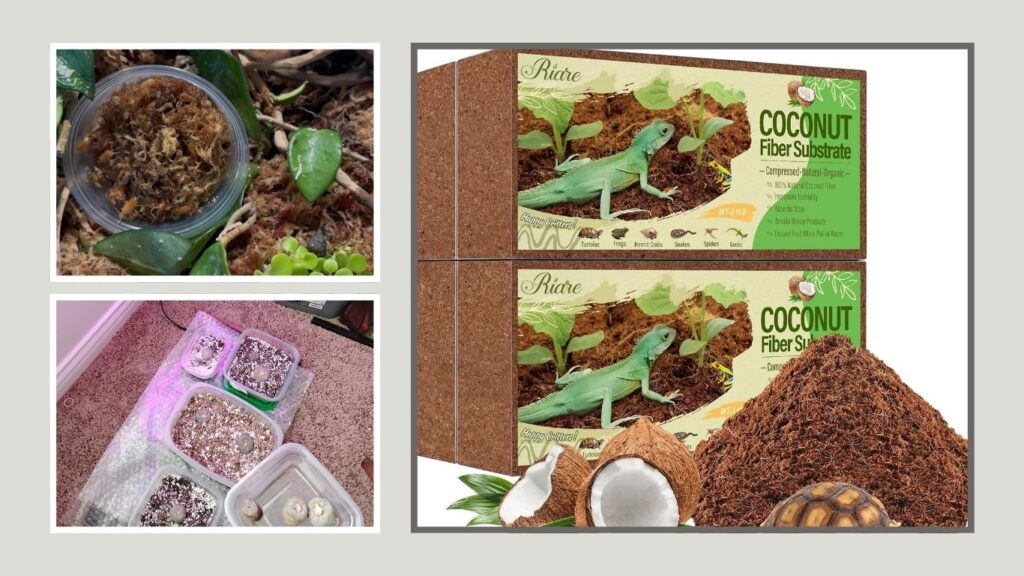
Riare Compressed Coconut Fiber Terrarium Substrate is designed for keepers who want a compact bedding product that expands into a generous amount of loose material. Once hydrated, it creates a soft, earthy base that can support humidity and burrowing behavior. Its flexible preparation makes it useful for a wide range of frog terrariums, especially those requiring a moisture-retentive floor.
Key Features
- Compressed coconut fiber format
- Expands after hydration
- Helps retain moisture
- Loose texture supports burrowing
- Suitable for terrarium environments
- Easy to adjust for different depths
- Convenient for storing extra substrate
Why It Is Best for Burrowing Frogs
Some frogs naturally spend time digging or partially burying themselves in loose material. A substrate that is too hard or compacted can limit that behavior.
Riare coconut fiber becomes soft after hydration, making it easier for terrestrial frogs to push into the substrate. Keepers can also create deeper sections within the enclosure to provide more suitable resting and hiding areas.
Moisture Performance and Maintenance
The substrate absorbs water effectively and can help support elevated humidity when paired with proper misting and ventilation.
Because it is loose, spot cleaning can be done by removing only the contaminated sections. The remaining bedding can be gently turned or refreshed as required.
Its compressed format is also helpful for owners maintaining multiple enclosures because unused material takes up relatively little storage space.
Best for Adjustable Substrate Depth
Riare Compressed Coconut Fiber is particularly suitable for keepers who want control over both moisture and bedding depth.
It can be spread thinly in smaller enclosures or built into deeper areas for frogs that enjoy digging. Combined with leaf litter, hides, and natural décor, it can create a more realistic terrarium environment while remaining manageable for routine care.
4. ZeeDix Compressed Coconut Fiber Substrate for Reptiles
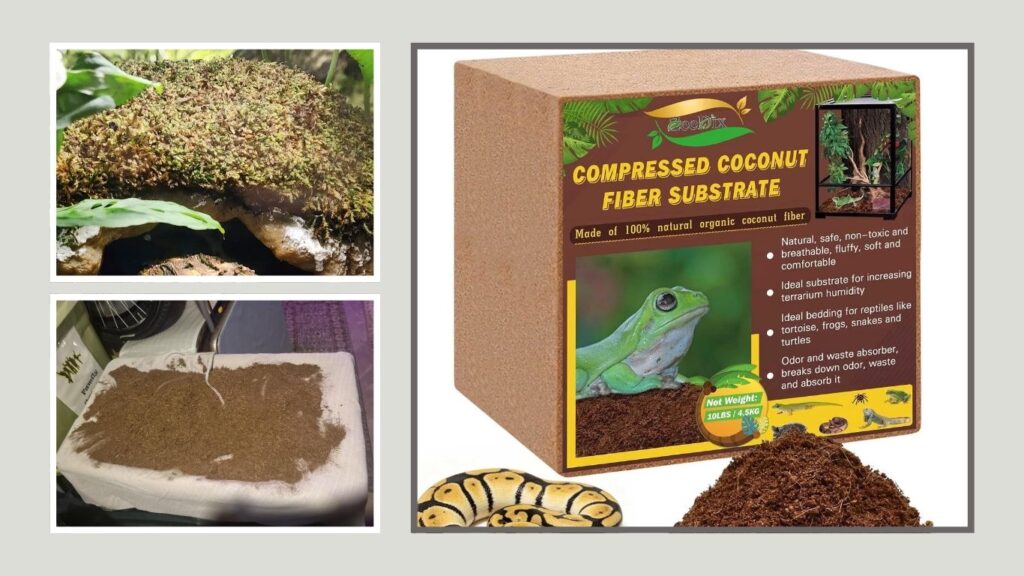
ZeeDix Compressed Coconut Fiber Substrate offers a convenient way to create a soft, moisture-retaining floor for frog terrariums. The compressed material expands after soaking, producing loose coconut fiber that can be distributed around the enclosure. Its natural appearance and adjustable moisture level make it useful for tropical terrariums where frogs benefit from a more humid and earth-like environment.
Key Features
- Compressed coconut fiber bedding
- Expands with water
- Helps support terrarium humidity
- Soft texture for ground-dwelling frogs
- Easy to distribute
- Suitable for naturalistic setups
- Compact for storage
Why It Is Best for Custom Humidity Zones
Different parts of a frog enclosure may need slightly different moisture levels. ZeeDix coconut fiber can be prepared and distributed in a way that creates both damper and relatively drier sections.
This flexibility can help keepers create a more balanced habitat rather than maintaining the entire terrarium at one moisture level.
Everyday Performance and Cleaning
After preparation, the substrate provides a comfortable surface that can be shaped around plants, hides, branches, and other decorations.
Its loose consistency also allows easy removal of waste or dirty sections. Regular spot cleaning and periodic replacement help maintain fresh enclosure conditions.
Because coconut fiber retains water well, it should be monitored to prevent constant saturation. Good ventilation remains important, even in humid frog setups.
Best for Flexible Terrarium Design
ZeeDix Compressed Coconut Fiber is a useful choice for keepers who regularly adjust their terrarium layout or humidity.
The expandable format makes preparation convenient, while the soft texture can help support natural resting and digging behavior. It also pairs well with leaf litter and moss for keepers who want a more detailed forest-floor appearance.
5. Riare Coconut Fiber Substrate for Reptiles & Tortoises
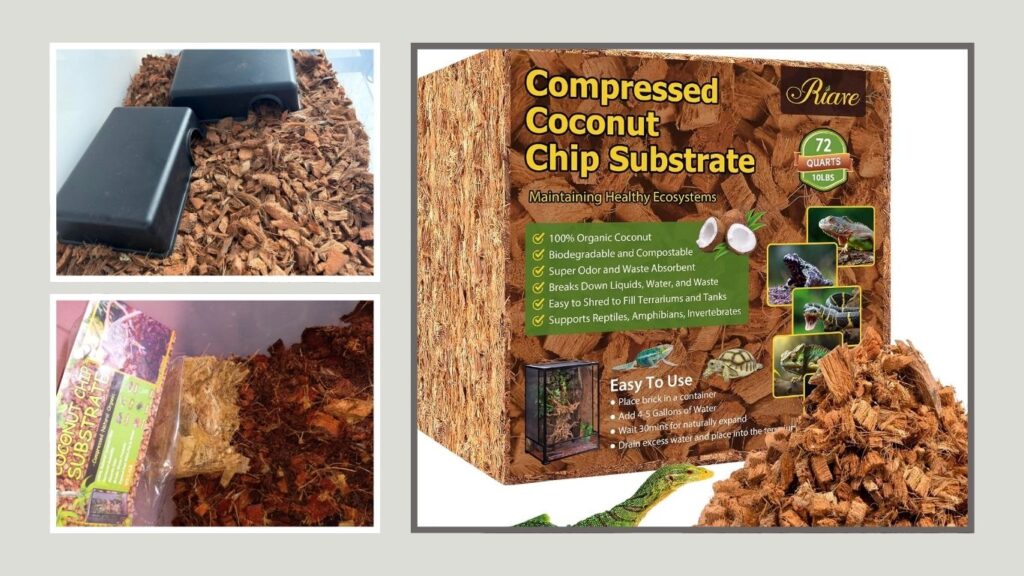
Riare Coconut Fiber Substrate provides a natural bedding material that can also be suitable for many terrestrial frog species. Its loose coconut texture helps retain moisture while giving frogs a softer surface than bare glass or artificial flooring. The substrate can be used throughout the enclosure or combined with other natural materials to build a more layered and realistic habitat.
Key Features
- Coconut fiber-based terrarium substrate
- Natural earthy appearance
- Helps retain moisture
- Soft surface for terrestrial frogs
- Supports digging and hiding
- Can be mixed with leaf litter or moss
- Suitable for naturalistic enclosure layouts
Why It Is Best for Natural-Looking Habitats
For keepers who want a terrarium to resemble a forest floor, coconut fiber provides an excellent visual base. Its brown, soil-like appearance blends naturally with wood, plants, moss, hides, and leaf litter.
This makes it easier to create an enclosure that looks attractive while still providing useful moisture retention.
Moisture Control and Daily Use
Riare coconut fiber can hold moisture and help maintain the humid conditions many frog species prefer. Keepers can lightly mist the substrate as needed and monitor it to prevent excessive wetness.
The loose material is also easy to spot clean. Waste, leftover food, and contaminated portions can be removed individually while leaving clean substrate undisturbed.
For bioactive or planted setups, it may also be incorporated into a broader substrate system depending on the enclosure design.
Best for Decorative and Functional Terrariums
Riare Coconut Fiber Substrate is especially appealing to frog keepers who want both practicality and a natural appearance.
Its soft texture supports everyday comfort, while its moisture-retaining properties make humidity management easier. When combined with appropriate drainage, ventilation, and surface materials such as leaf litter, it can form a strong foundation for an attractive frog habitat.
6. ReptiChip BabiChip Coconut Reptile Substrate
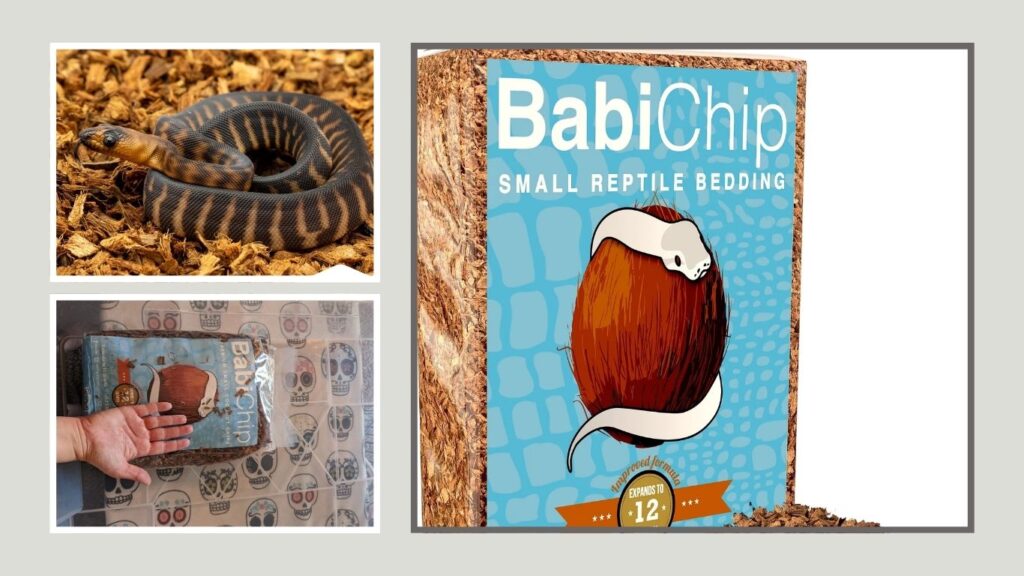
ReptiChip BabiChip Coconut Reptile Substrate offers a chunkier alternative to fine coconut fiber, making it useful for frog keepers who want more structure in the enclosure floor. The smaller coconut husk chips can help create air spaces within the substrate while still retaining moisture. This makes the product particularly useful for mixed-substrate setups, planted terrariums, and natural-looking habitats.
Key Features
- Made from coconut husk chips
- Chunkier texture than fine coconut fiber
- Helps retain moisture
- Provides improved substrate structure
- Suitable for terrarium environments
- Can be mixed with finer coconut fiber
- Natural appearance for planted setups
Why It Is Best for Better Substrate Structure
Fine coconut fiber can sometimes become compacted when kept consistently moist. BabiChip adds more texture to the enclosure floor, helping create a looser substrate structure.
For frog keepers who like combining different materials, these coconut chips can work alongside fine fiber, moss, leaf litter, or other suitable terrarium components.
Moisture Retention and Everyday Use
Coconut husk chips can absorb water and release moisture gradually, helping support humid terrarium conditions. The larger pieces also allow more space between particles than very fine substrate.
Routine maintenance is straightforward because soiled sections can be removed individually. The material should still be monitored carefully to prevent excessive moisture accumulation.
Best for Mixed-Substrate Frog Terrariums
ReptiChip BabiChip is especially useful for keepers who want more than a simple layer of fine coconut fiber. Its structured texture can help create a more varied enclosure floor.
When combined with appropriate drainage and finer substrate materials, it can provide a natural-looking and functional base for many terrestrial frog habitats.
7. ReptiChip Premium Coconut Substrate for Reptiles & Amphibians
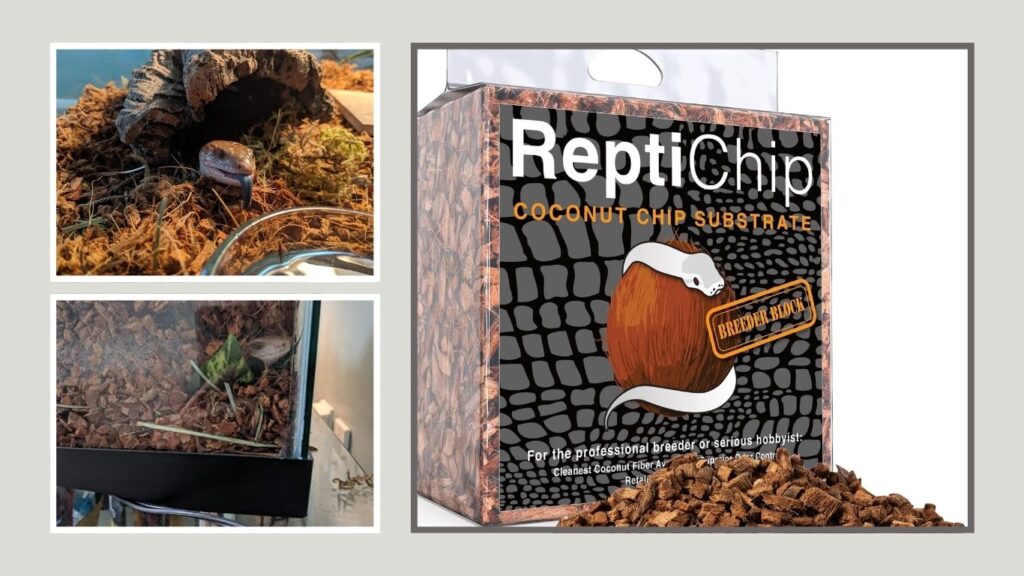
ReptiChip Premium Coconut Substrate is designed for reptiles and amphibians and uses larger coconut husk pieces to create a textured enclosure floor. For frogs, this type of substrate can be useful in humid terrariums where moisture retention is important. Its chunky composition makes it particularly suitable for keepers who prefer layered or mixed naturalistic habitats.
Key Features
- Coconut husk-based substrate
- Suitable for reptiles and amphibians
- Helps retain moisture
- Chunky natural texture
- Can support humid enclosure conditions
- Works well in layered substrate systems
- Easy to combine with moss or coconut fiber
Why It Is Best for Amphibian Terrariums
One advantage of this product is that it is specifically marketed for reptile and amphibian environments. Its coconut husk construction provides both moisture retention and structural texture.
For frogs that spend significant time on the enclosure floor, a varied substrate can help create a more realistic environment than a completely flat surface.
Performance, Moisture, and Maintenance
The coconut pieces can be moistened to help maintain humidity, although the substrate should never remain excessively saturated.
Keepers can use it throughout selected parts of the enclosure or mix it with finer coconut fiber to create different textures and moisture levels.
Spot cleaning is relatively easy because individual pieces can be removed when contaminated.
Best for Humid Naturalistic Setups
ReptiChip Premium Coconut Substrate is a useful option for tropical-style frog terrariums where moisture management and natural appearance are priorities.
Its larger particle size works particularly well alongside finer substrate, leaf litter, moss, and terrarium plants. For keepers who enjoy designing detailed natural habitats, it provides more texture than standard coconut coir alone.
8. ReptiCare Organic Coconut Substrate for Reptiles
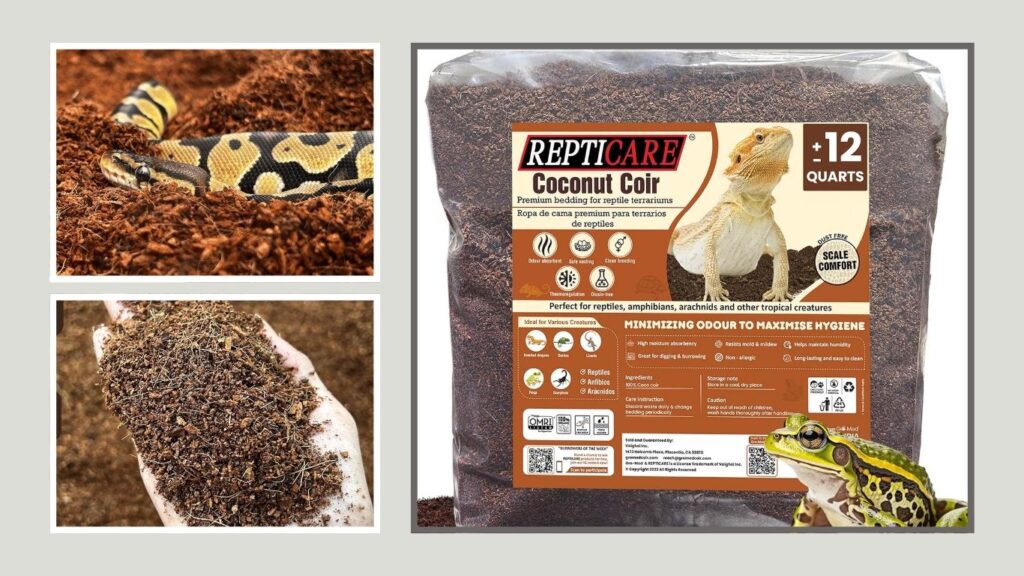
ReptiCare Organic Coconut Substrate offers a natural bedding option for keepers who want to create an earthy and humidity-friendly frog habitat. Coconut-based substrate is commonly chosen for tropical terrariums because it can absorb moisture while maintaining a soft surface. This product can be used as a primary base or incorporated into a layered substrate system.
Key Features
- Coconut-based terrarium substrate
- Organic-style material
- Natural soil-like appearance
- Helps retain moisture
- Suitable for humid terrariums
- Soft texture for ground-dwelling frogs
- Can be combined with other natural materials
Why It Is Best for Natural Terrarium Designs
A realistic-looking enclosure often starts with the substrate. ReptiCare’s dark, earthy coconut material can blend naturally with plants, bark, rocks, moss, and leaf litter.
This gives frog keepers more freedom to create an enclosure that looks closer to a forest floor while still providing functional moisture retention.
Humidity Control and Routine Care
The substrate can absorb water from misting and gradually release moisture into the enclosure. This can help maintain the humidity many tropical frog species need.
At the same time, good ventilation and drainage are essential. The substrate should feel appropriately damp rather than continuously waterlogged.
Regular spot cleaning helps keep the terrarium hygienic, while periodic replacement prevents excessive buildup of waste and organic debris.
Best for Planted and Decorative Frog Habitats
ReptiCare Organic Coconut Substrate is particularly suitable for keepers who want a balance between appearance and everyday functionality.
Its fine, natural texture works well beneath leaf litter and around plants, hides, or decorative wood. For naturalistic frog terrariums where moisture retention and visual appeal both matter, it provides a practical base material.
9. Zoo Med Compressed Coconut Fiber Substrate
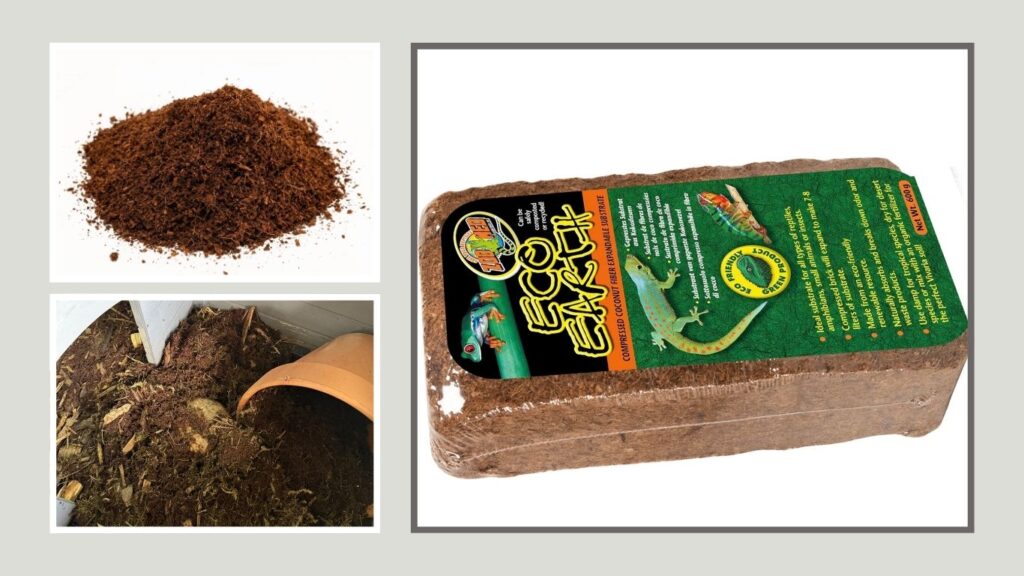
Zoo Med Compressed Coconut Fiber Substrate provides a convenient way to store and prepare terrarium bedding only when it is needed. The compressed material expands after soaking in water, producing a loose coconut fiber substrate that can help maintain humidity. Its soft texture makes it useful for many terrestrial frogs and other amphibians that prefer moist, naturalistic environments.
Key Features
- Compressed coconut fiber format
- Expands after soaking
- Helps retain terrarium moisture
- Soft and loose texture
- Suitable for humid habitats
- Convenient storage
- Supports digging and natural behavior
Why It Is Best for Convenient Storage
Compressed substrate is especially useful for keepers who maintain more than one terrarium or prefer keeping extra bedding on hand.
Instead of storing a large volume of loose substrate, the compact block takes up relatively little space until it is hydrated. Once expanded, it can be distributed according to the enclosure size and desired substrate depth.
Moisture Performance and Maintenance
The expanded coconut fiber absorbs water effectively and can help maintain elevated humidity between misting sessions.
It is also easy to spot clean because dirty sections can be removed individually. Keepers should avoid allowing the entire substrate layer to remain saturated for long periods, as stagnant conditions can create an unhealthy environment.
Best for Practical Everyday Frog Care
Zoo Med Compressed Coconut Fiber is a strong option for frog keepers who want a simple, moisture-retentive substrate that is easy to prepare.
Its combination of compact storage, soft texture, and adjustable depth makes it useful for both smaller terrariums and larger naturalistic setups. It can also be topped with leaf litter or moss to create additional surface texture.
10. Zoo Med Eco Earth Coconut Fiber Brick
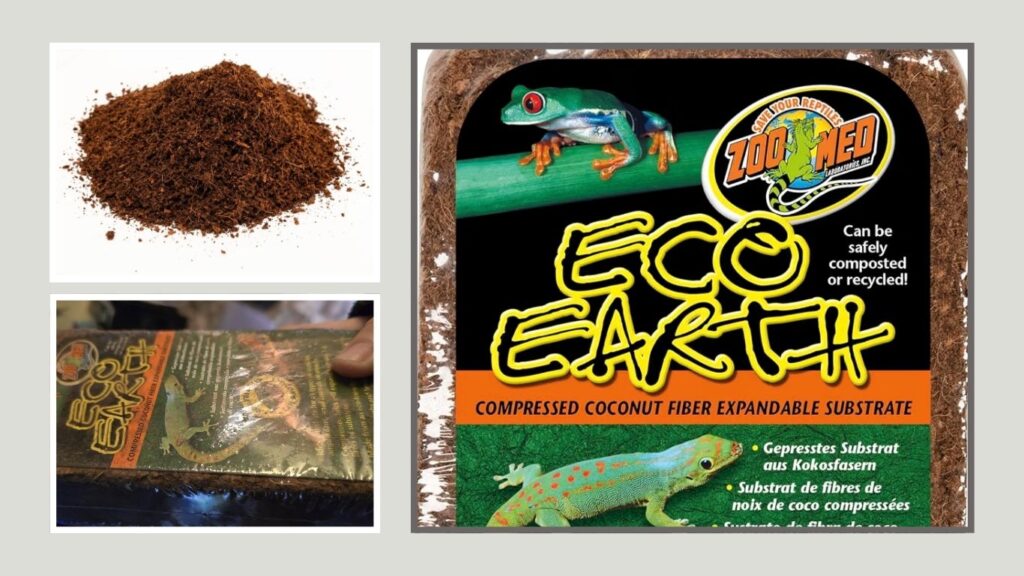
Zoo Med Eco Earth Coconut Fiber Brick is one of the most familiar compressed coconut substrates used in reptile and amphibian terrariums. After soaking, the brick expands into a soft, soil-like material that can help maintain humidity and provide a natural enclosure floor. Its versatility makes it especially useful for frog keepers who want a dependable base for humid or planted terrariums.
Key Features
- Compressed coconut fiber brick
- Expands significantly after hydration
- Soft soil-like texture
- Helps maintain humidity
- Suitable for amphibian habitats
- Supports natural digging behavior
- Easy to combine with moss or leaf litter
Why It Is Best for Versatile Frog Enclosures
Eco Earth can be used in several different ways. It works as a standalone substrate for suitable terrestrial frogs or as part of a more complex layered setup.
The fine texture makes it easy to shape around plants and decorations, while the moisture-holding properties help support humid conditions.
Keepers can also adjust the depth according to the species and enclosure design.
Performance and Long-Term Maintenance
Once expanded, Eco Earth creates a loose, lightweight substrate that is easy to distribute throughout the terrarium.
It can retain moisture well, so careful misting and ventilation are important. Spot cleaning should be performed whenever waste or uneaten food is present, while larger substrate changes can be completed as needed.
For planted or naturalistic enclosures, a drainage layer may help prevent excessive water accumulation.
Best for All-Around Coconut Fiber Use
Zoo Med Eco Earth is particularly useful for keepers who want a versatile coconut fiber product that works across many terrarium styles.
Its soft texture, moisture retention, expandable format, and compatibility with leaf litter and moss make it a dependable foundation for many frog habitats.
FAQs
1. Is coconut fiber substrate good for frogs?
Yes, coconut fiber can be a good substrate for many terrestrial and tropical frogs because it retains moisture, provides a soft surface, and supports digging. However, the exact substrate should always match the needs of the frog species being kept.
2. How wet should coconut fiber be for frogs?
Coconut fiber should usually be moist rather than soaking wet. It should hold some humidity without creating standing water or constantly saturated conditions. Good drainage and ventilation help maintain a healthier terrarium environment.
3. How often should coconut fiber substrate be changed?
Spot-clean waste and uneaten food regularly. A more complete replacement may be needed every few weeks or when the substrate develops an odor, becomes heavily contaminated, or remains excessively wet. Bioactive enclosures may follow a different maintenance schedule.
4. Can frogs burrow in coconut fiber?
Yes. Many terrestrial frogs can dig or partially bury themselves in loose coconut fiber. Providing several inches of substrate can make burrowing easier for species that naturally display this behavior.
5. Can coconut fiber be mixed with other frog substrates?
Yes. Coconut fiber can be combined with materials such as leaf litter, sphagnum moss, coconut husk chips, or suitable terrarium soil components. Mixing materials can improve texture, moisture distribution, and the natural appearance of the enclosure.
