
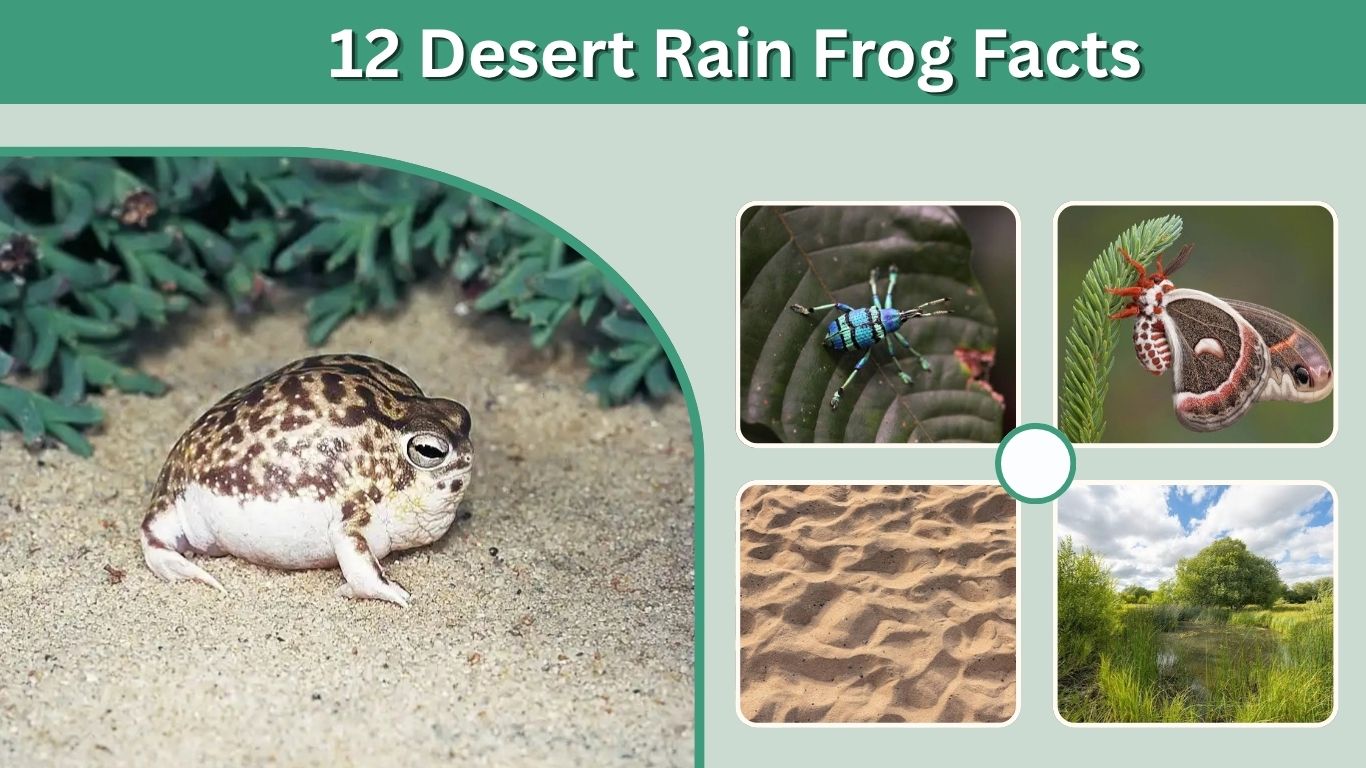
The desert rain frog (Breviceps macrops) is a tiny, round amphibian famous for its unusual appearance, burrowing lifestyle, and surprisingly high-pitched squeak. Unlike the typical pond-dwelling frog, it survives in sandy coastal desert habitat in southwestern Africa and spends much of its life underground. It even reproduces without needing an open pool of water. From its fog-dependent environment to its unusual development, these 12 desert rain frog facts explain what makes this small amphibian one of the most fascinating frogs in the world.
What Is a Desert Rain Frog?
The desert rain frog is a burrowing amphibian belonging to the genus Breviceps. Its scientific name is Breviceps macrops, and its natural range is restricted to the Atlantic coastal region of South Africa and southwestern Namibia. Rather than relying on ponds and streams, it lives primarily in sandy dunes influenced by coastal fog, making it unusually well adapted to an arid environment.
Desert Rain Frog Identification
- Scientific name: Breviceps macrops
- Family: Brevicipitidae
- Small, rounded body
- Short limbs
- Large, prominent eyes
- Short snout
- Pale yellowish-brown to sandy coloration
- Adapted for digging into loose sand
- Frequently found with grains of sand adhering to its body
Its compact body and sandy coloration help it blend into the coastal dune environment where it lives.
12 Interesting Desert Rain Frog Facts
The desert rain frog is unusual even compared with other rain frogs. Its restricted coastal range, underground lifestyle, unusual reproductive strategy, and recognizable defensive sound have attracted considerable attention. Many of its adaptations are connected to one challenge: remaining moist enough to survive in a place where permanent freshwater is scarce.
1. Desert Rain Frogs Live in Only a Small Part of Africa
Desert rain frogs have a very restricted distribution. They occur along the Namaqualand coast of South Africa northward to the Lüderitz area of southwestern Namibia.
Their habitat forms a relatively narrow coastal strip. South African conservation assessments describe them as occurring from close to the high-water mark to roughly 10 km inland, generally at very low elevations.
Because the species depends on this specialized coastal environment, habitat changes within a relatively small geographic area can affect a significant portion of its population.
2. They Really Do Live in a Desert
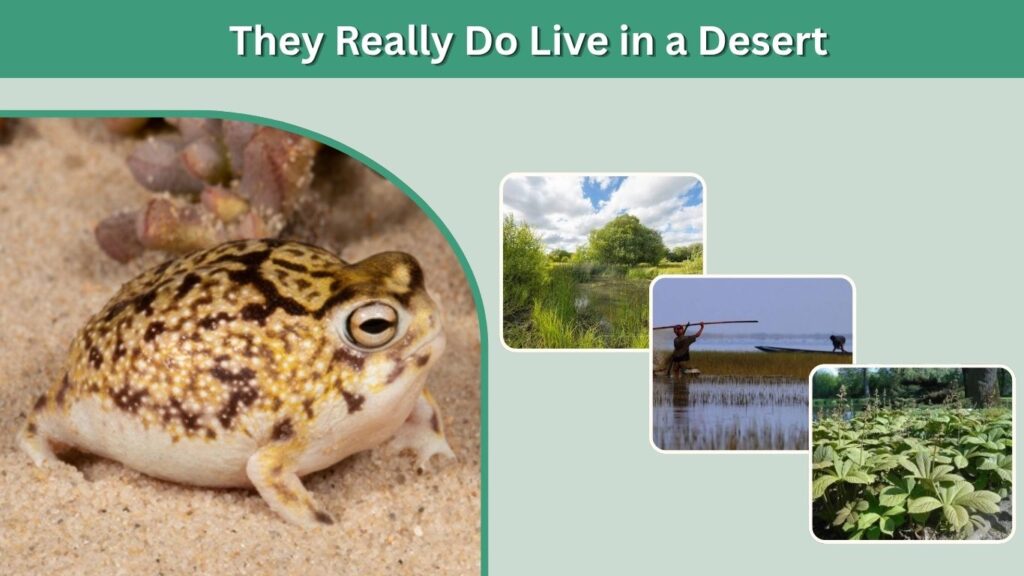
Frogs are usually associated with wetlands, ponds, and other damp places, making the desert rain frog especially surprising.
It inhabits coastal sand dunes with low succulent and other drought-adapted vegetation. These dunes lie within a fog-influenced region along the Atlantic coast. Moisture retained beneath the sand gives the frogs a refuge from the much drier surface environment.
This means the word “desert” in its common name is accurate, even though its particular desert habitat receives important moisture from coastal fog.
3. Desert Rain Frogs Spend Much of Their Time Underground
One of the most important desert rain frog facts is that it is fossorial, meaning it is adapted for burrowing and living underground.
Field observations have found desert rain frogs beneath the surface in damp sand. One account recorded frogs approximately 12.5–27 cm underground. They tend to occupy sand moist enough to retain its shape when compressed.
Burrowing provides shelter from dry surface conditions while helping the frog remain in contact with moisture.
4. They Are Mostly Active at Night
Desert rain frogs are primarily nocturnal. They remain underground for much of the daytime and become active on the surface after dark.
Interestingly, field observations show that they can emerge during both foggy and clear nights. Surface activity and calling have been recorded during many parts of the year, with fog and suitable moisture conditions influencing their activity.
Nighttime activity also allows them to search for food without facing the harshest daytime conditions.
5. Their Squeak Is One of Their Most Famous Features
Despite its small, round appearance, the desert rain frog can produce an unexpectedly loud, high-pitched squeaking sound.
The frog may make this sound when it feels threatened. Male frogs also use high-pitched calls during reproductive activity. Field observations have recorded calling males at the surface, sometimes positioned surprisingly close to one another.
This unusual voice has helped make the species particularly recognizable among people who encounter videos of rain frogs online.
6. They Eat Small Invertebrates
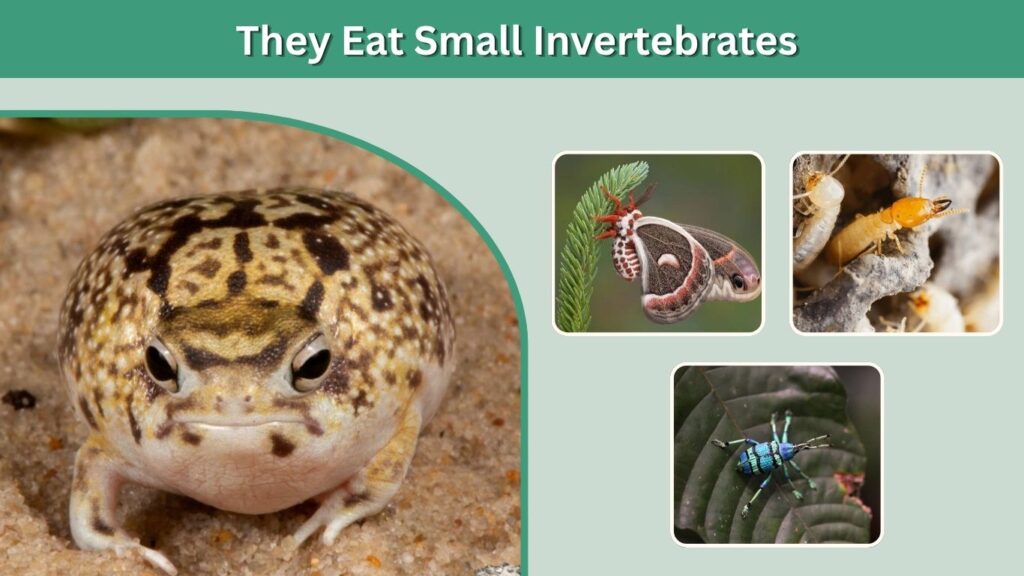
The desert rain frog is an insect-eating amphibian rather than a plant eater. It comes to the surface at night and searches sandy habitat for small prey.
Observations of tracks around dung patches have led researchers to suggest that moths, beetles, and insect larvae form part of the diet. Small arthropods available around the dunes provide the type of prey expected for these small frogs.
Its diet may vary according to which small invertebrates are available at a particular place and time.
7. They Do Not Need a Pond for Their Tadpoles
Perhaps the most remarkable desert rain frog adaptation is its reproductive strategy.
Unlike many familiar frogs, this species is not dependent on open water for breeding. Its eggs develop through a process known as direct development. Instead of producing free-swimming tadpoles that must live in a pond or stream, development takes place within protected eggs underground.
This adaptation allows a frog to reproduce successfully in an environment where permanent pools of freshwater may be unavailable.
8. Young Frogs Can Emerge as Froglets
Direct development means the young bypass the familiar free-living tadpole stage.
Within Breviceps, eggs are deposited in underground nests or burrows, where development takes place inside the egg capsules. The young eventually emerge as small froglets rather than aquatic tadpoles. The IUCN species profile specifically describes the desert rain frog as reproducing through direct development without dependence on water bodies.
This is one of the clearest examples of how its life cycle is adapted to terrestrial conditions.
9. Coastal Fog Is Important to Its Habitat
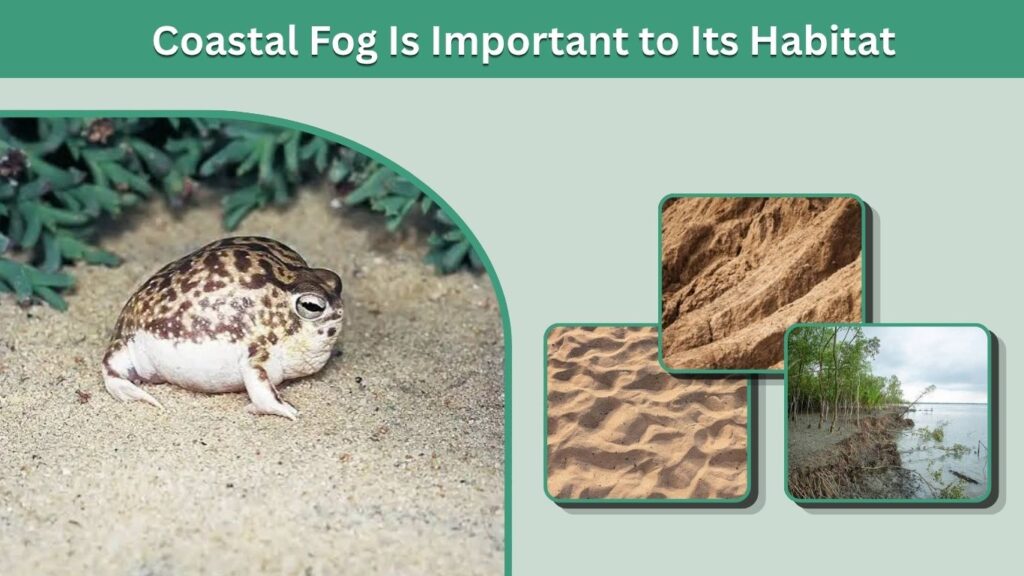
The desert rain frog may live in an arid region, but its habitat is not completely without moisture.
Its coastal distribution overlaps an important fog belt, and moist sand below the surface gives frogs a place to avoid dehydration. The combination of fog, sandy substrate, and low coastal vegetation creates a specialized microhabitat that would be difficult to replace elsewhere.
This helps explain why the species has such a geographically limited distribution.
10. Its Body Is Built for Burrowing
The desert rain frog has a stout, compact appearance rather than the long hind legs associated with many jumping frogs.
Its rounded body, short limbs, and digging-oriented lifestyle suit life beneath loose coastal sand. Instead of depending on ponds, vegetation, and long jumping movements, much of its behavior revolves around moving across sandy surfaces and then burrowing back underground.
Finding small disturbed patches of loose sand can sometimes provide evidence that a frog has recently disappeared beneath the surface.
11. They Can Be Locally Common but Still Vulnerable
A species does not have to be extremely rare everywhere to face conservation concerns.
Desert rain frogs can be locally common in suitable habitat, yet their geographic range is small and fragmented. This makes them particularly sensitive to loss or degradation of coastal dunes. Historical conservation assessments have identified mining, roads, settlement, grazing, and other land-use changes as important pressures.
Protecting the habitat therefore matters even where individual frogs appear reasonably abundant.
12. Their Conservation Status Was Updated to Vulnerable
Conservation status is one of the most important current facts about this species. The IUCN’s 2026 Red List summary reports that the desert rain frog moved from Near Threatened to Vulnerable, reflecting a genuine deterioration rather than simply a change in available information.
The species’ restricted range means coastal habitat loss can have an unusually large effect. Conservation of suitable dunes and the moist underground conditions on which the frogs depend remains important.
Desert Rain Frog Habitat and Behavior
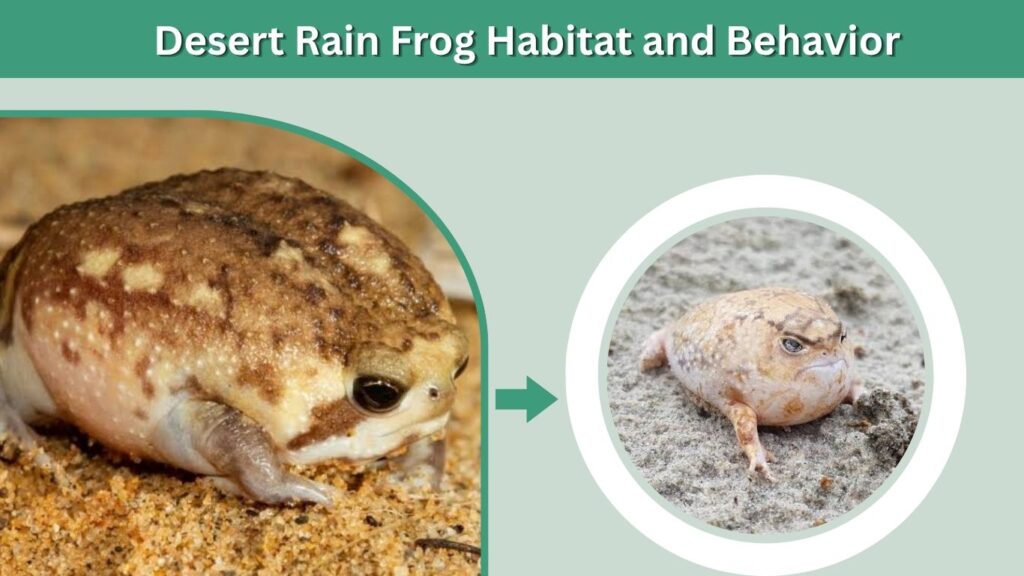
Although it is called a rain frog, Breviceps macrops are strongly associated with coastal desert dunes rather than ponds. Its habitat includes loose sand and low, drought-tolerant vegetation within the Atlantic fog belt. Much of its daily behavior involves remaining underground, where the sand retains more moisture than the exposed surface.
How Does a Desert Rain Frog Survive?
Burrowing is central to survival. During inactive periods, the frog moves downward until it reaches relatively moist sand. It can then emerge at night when surface conditions are less harsh.
This combination of fossorial behavior and direct development means the frog does not need the conventional pond-based lifestyle associated with many amphibians.
Why Do Desert Rain Frogs Come Out at Night?
Nighttime conditions generally reduce exposure to daytime heat and dryness while providing opportunities to hunt small invertebrates.
Surface observations show frogs moving around dunes at night, while males may also call from the surface. Fog and moisture can encourage activity, although frogs have also been recorded above ground on clear nights.
Quick Desert Rain Frog Facts for Kids
These fun desert rain frog facts make the species easy for younger readers to understand. Despite being a true frog, it behaves quite differently from the familiar frogs found around backyard ponds. Its entire lifestyle is shaped by sand, nighttime activity, underground moisture, and the need to reproduce without permanent surface water.
- The desert rain frog’s scientific name is Breviceps macrops.
- It lives in South Africa and Namibia.
- It spends much of its time buried under sand.
- It usually becomes active at night.
- It eats insects and other small invertebrates.
- It can make a high-pitched squeaking sound.
- It does not need a pond for a free-swimming tadpole stage.
- Its babies develop directly into tiny froglets.
- Coastal fog helps maintain its unusual desert habitat.
- It is currently listed as Vulnerable by the IUCN.
Why Is the Desert Rain Frog So Unusual?
Few amphibians combine such an arid habitat with such complete independence from open water during reproduction. The desert rain frog has solved the challenges of its environment through burrowing, nighttime activity, direct development, and use of a narrow fog-influenced coastal ecosystem. Unfortunately, these same habitat requirements make the species vulnerable when dunes are significantly altered.
A Frog Specialized for Coastal Dunes
The desert rain frog cannot simply move to any dry landscape. Suitable loose sand, underground moisture, prey, vegetation, and coastal environmental conditions must occur together.
Its restricted distribution is therefore one of its most distinctive biological characteristics—and one reason conservation of its remaining habitat deserves attention.
FAQs
1. Where does the desert rain frog live?
The desert rain frog lives along the Atlantic coast of South Africa and southwestern Namibia, primarily in sandy coastal dunes within a fog-influenced region.
2. What does a desert rain frog eat?
It feeds on small invertebrates. Field evidence suggests its diet includes moths, beetles, and insect larvae, along with other appropriately sized arthropods available in its habitat.
3. Why does the desert rain frog squeak?
Desert rain frogs can produce a high-pitched squeak when threatened. Males also produce distinctive calls associated with reproductive behavior.
4. Does a desert rain frog have tadpoles?
It does not have a free-swimming aquatic tadpole stage. Development occurs in underground eggs, with young ultimately emerging as formed froglets. This is known as direct development.
5. Is the desert rain frog endangered?
It is not currently categorized as Endangered. In 2026, the IUCN moved the desert rain frog from Near Threatened to Vulnerable, indicating increased conservation concern.
