
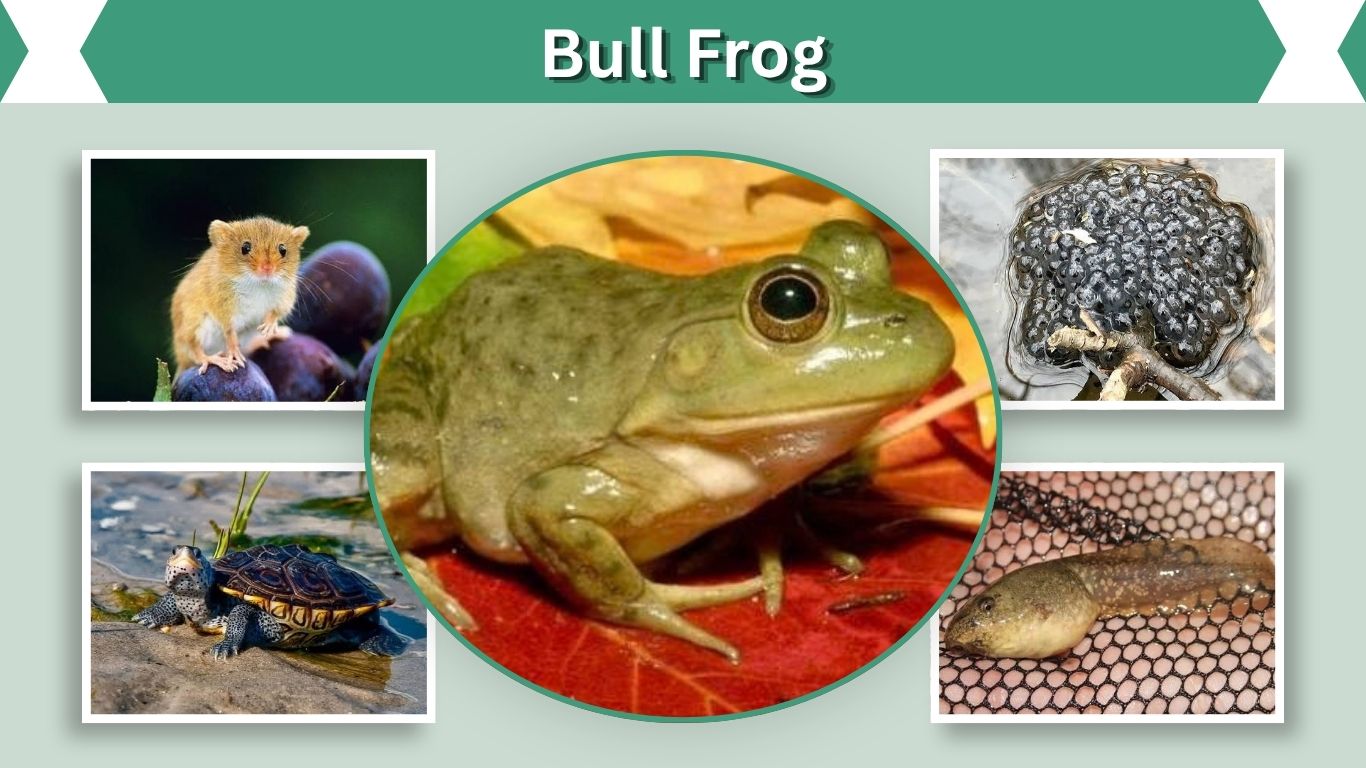
The bull frog, more commonly written bullfrog, is one of the largest and most recognizable frogs in North America. The American bullfrog (Lithobates catesbeianus) is famous for its deep call, powerful hind legs, large appetite, and close association with ponds and other permanent waters. Bullfrogs begin life as aquatic tadpoles before developing into strong adult predators. This guide covers bull frog identification, size, habitat, range, diet, sounds, behavior, eggs, tadpoles, adaptations, and several interesting facts about this impressive amphibian.
What Is a Bull Frog?
The name bull frog usually refers to the American bullfrog, Lithobates catesbeianus. It is a large aquatic frog native to much of eastern North America and now introduced to many other regions. Bullfrogs are closely associated with permanent freshwater habitats because their tadpoles may require many months, and sometimes much longer, to complete development.
Bull Frog Classification
- Common name: American Bullfrog
- Scientific name: Lithobates catesbeianus
- Animal group: Amphibian
- Order: Anura
- Family: Ranidae
- Lifestyle: Semi-aquatic
- Activity: Primarily nocturnal
- Diet: Carnivorous as an adult
Bullfrogs are true frogs rather than toads. Their strong legs, aquatic habits, smooth-to-moderately textured skin, and ability to leap and swim efficiently help distinguish them from many terrestrial toads.
Bull Frog Identification and Size
American bullfrogs have heavy bodies, broad heads, powerful hind legs, and very noticeable circular eardrums, called tympana, behind their eyes. Their coloration varies considerably and may include green, olive, brown, or combinations of these colors. Adults are much larger than many frogs sharing the same habitat, making size an important identification feature.
Key Identification Features
- Large and muscular body
- Green, olive, or brown coloration
- Broad, flattened head
- Large golden or brownish eyes
- Obvious round tympanum behind each eye
- Powerful, webbed hind feet
- Pale belly, sometimes with darker mottling
- No raised dorsolateral folds running all the way down the back
USGS lists adult American bullfrogs at roughly 9–15.2 cm in body length, although especially large individuals can appear considerably bigger when their extended legs are included.
Male vs. Female Bull Frog
Males and females can sometimes be distinguished by the tympanum. In adult males, the eardrum is typically larger relative to the eye, while females generally have a tympanum closer to the eye’s size. Mature males may also develop a more yellowish throat during the breeding season.
Where Do Bull Frogs Live?
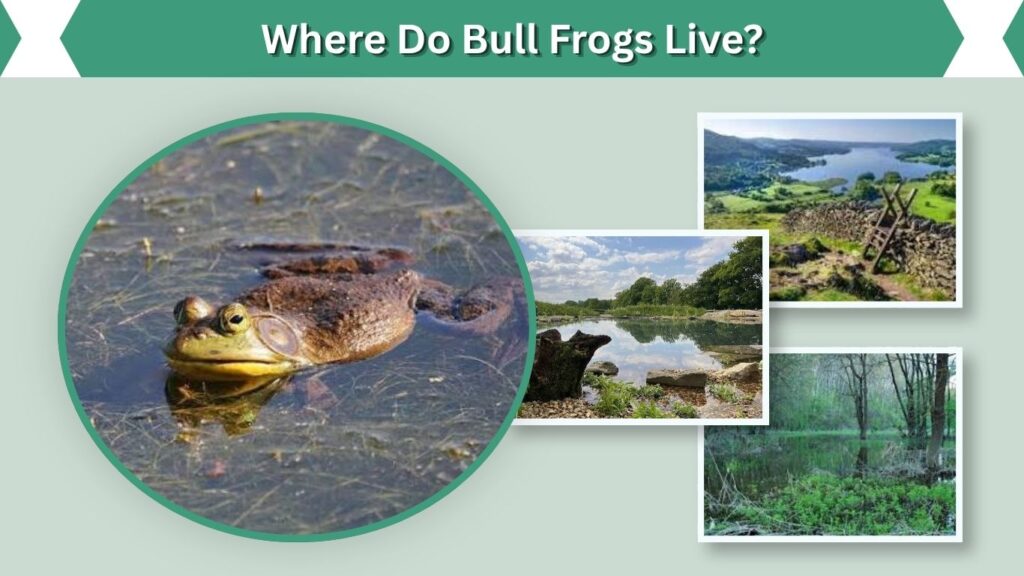
Bullfrogs are strongly associated with water and favor habitats that remain wet long enough for their tadpoles to develop. They can tolerate many different aquatic environments and are considered habitat generalists. Permanent water is particularly important because bullfrog larvae may overwinter before completing metamorphosis.
Bull Frog Habitat
Common habitats include ponds, lakes, reservoirs, marshes, swamps, slow-moving rivers, ditches, irrigation canals, bogs, and cattle ponds. Vegetation along the shoreline provides cover and hunting opportunities.
Adults often sit near the edge of the water, where they can rapidly jump into deeper water if threatened.
Bull Frog Range
The American bullfrog is native primarily to the eastern United States, but people have introduced it extensively outside its original range. Populations now occur across parts of western North America and in other regions of the world.
In some introduced areas, bullfrogs are considered invasive because their large size, broad diet, and reproductive ability can affect native wildlife.
What Do Bull Frogs Eat?
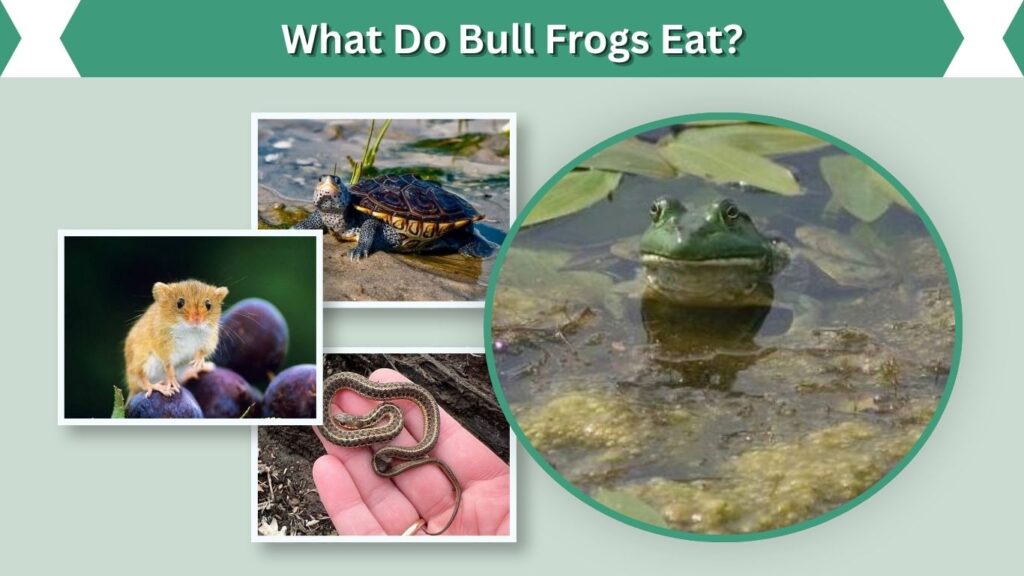
Adult bullfrogs are opportunistic predators. Rather than specializing in one particular prey animal, they attack many creatures that are small enough for them to capture and swallow. Larger bullfrogs can consume surprisingly large vertebrate prey, while young frogs rely much more heavily on insects and other small invertebrates.
Common Bull Frog Foods
- Insects
- Spiders and other arthropods
- Centipedes
- Crayfish and other aquatic invertebrates
- Fish
- Smaller frogs
- Tadpoles
- Small snakes
- Small turtles
- Small rodents
- Young birds and other small vertebrates
Bullfrogs may even eat smaller members of their own species when opportunities arise. Their ability to exploit many food sources contributes to their success in both native and introduced environments.
How Bull Frogs Hunt
Bullfrogs usually hunt from a stationary position near water. When prey comes within range, the frog lunges forward and captures it with its mouth and tongue.
They are mostly active at night, when insects, frogs, and many other potential prey animals are also active. Their combination of patience, camouflage, and rapid striking makes them effective ambush predators.
What Does a Bull Frog Sound Like?
The bullfrog’s voice is one of its most distinctive characteristics. Mature males produce a deep, resonant call during the breeding season. The sound is often described as resembling a low “jug-o-rum” or booming note and can travel considerable distances across ponds and wetlands.
Why Do Bull Frogs Call?
Male bullfrogs call primarily to attract females and communicate with other males. Calling males may establish territories around suitable breeding areas and respond aggressively when rival males approach too closely.
Bullfrog calls are especially noticeable during warm evenings and nights when breeding activity is high. Their deep voices help distinguish them from smaller frog species with higher-pitched calls.
Bull Frog Behavior at Night
Bullfrogs are largely nocturnal predators. During the evening and nighttime hours, they sit along shorelines, float near vegetation, hunt prey, and communicate.
If disturbed, a bullfrog can quickly leap from land into water. It may then swim away or remain submerged until the danger has passed.
Bull Frog Eggs and Tadpoles
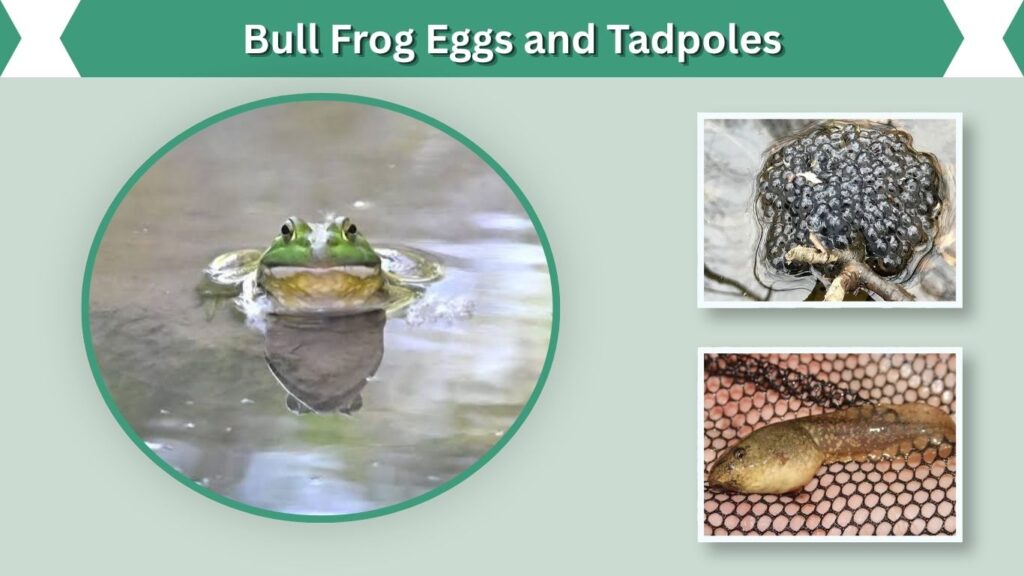
Bullfrog reproduction takes place in water, usually during warm weather. Females can produce very large numbers of eggs, helping populations expand rapidly when suitable habitat is available. The larval stage is unusually long compared with that of many smaller frogs, particularly in cooler regions where tadpoles may overwinter before metamorphosing.
Bull Frog Breeding and Eggs
- Males call to attract females.
- Breeding usually occurs in warm weather.
- Eggs are deposited in water.
- A female may lay roughly 6,000–20,000 eggs at a time.
- Eggs can hatch within several days under suitable conditions.
- Young larvae remain entirely aquatic.
USGS reports that American bullfrog eggs may hatch in approximately 2–5 days.
Bull Frog Tadpole Development
Bullfrog tadpoles are comparatively large and may remain in the larval stage for months or even years. USGS notes that metamorphosis can take from around four months to as long as two years, depending on environmental conditions.
As metamorphosis approaches, hind legs develop first, followed by front legs. The tail is gradually absorbed, and the young frog becomes increasingly adapted to life both in and around water.
Bull Frog Adaptations
Bullfrogs possess several adaptations that allow them to thrive as aquatic predators. Powerful hind limbs enable rapid swimming and long jumps, while their coloration provides camouflage among muddy banks and vegetation. Their broad feeding habits also allow them to exploit whichever suitable prey is locally abundant.
Important Bull Frog Adaptations
- Strong hind legs for jumping and swimming
- Webbed feet for efficient movement through water
- Eyes positioned high on the head
- Large tympana for detecting sounds
- Camouflaged green or brown coloration
- Wide mouth capable of handling large prey
- Broad and flexible diet
- Ability to remain closely associated with aquatic refuges
What Happens During Winter?
In colder areas, bullfrogs reduce their activity considerably during winter. They may overwinter underwater, often in mud or protected aquatic areas.
USGS reports that some individuals can also overwinter in terrestrial burrows. Persistent aquatic habitat is particularly important for tadpoles that must survive winter before completing development.
Bull Frog vs. Green Frog and Toad
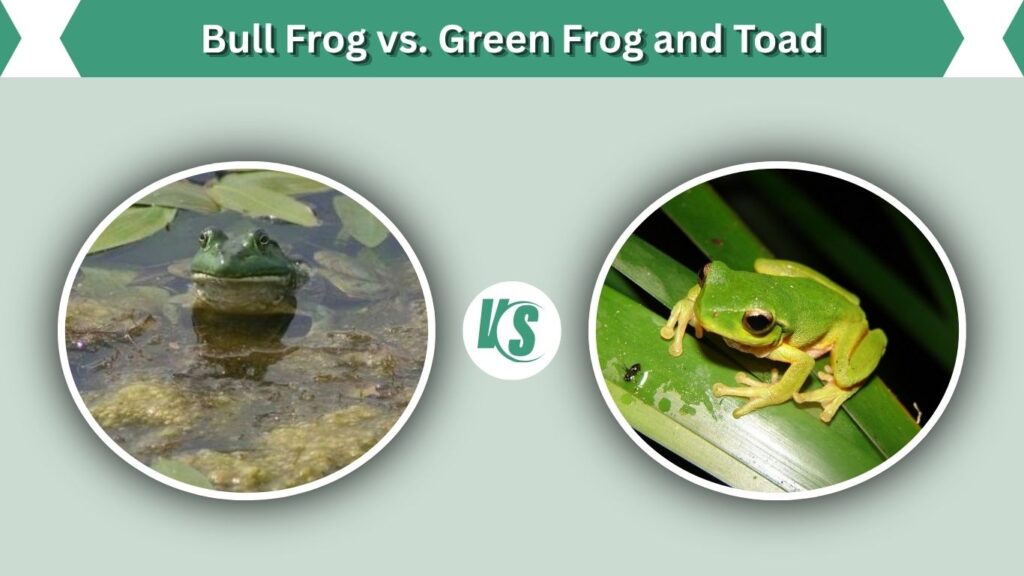
Bullfrogs can be confused with green frogs and sometimes with large toads. Looking at body shape, skin, habitat, dorsolateral folds, and the size of the tympanum can help. Size alone should not be used because young bullfrogs can be considerably smaller than fully grown adults.
Bull Frog vs. Green Frog
Green frogs and bullfrogs can have similar green or brown coloration. One useful difference involves the raised folds of skin on the back.
Green frogs typically have prominent dorsolateral ridges running down much of the back. Bullfrogs generally lack these long back ridges, although a fold curves around the tympanum.
Bull Frog vs. Toad
Bullfrogs are frogs, not toads. Bullfrogs typically have powerful hind legs, webbed feet, and a strong association with water.
Toads generally have shorter legs, drier and more visibly bumpy skin, and spend more time on land. Both frogs and toads are amphibians, but their appearance and typical lifestyles differ substantially.
FAQs
1. What is the scientific name of a bull frog?
The American bullfrog’s scientific name is Lithobates catesbeianus. It has also historically been placed in the genus Rana.
2. How big does a bull frog get?
USGS gives an adult body length of approximately 9–15.2 cm. Females can become particularly large, and their powerful legs make the entire animal appear much longer when stretched out.
3. Why are bull frogs so loud at night?
Male bullfrogs call during the breeding season to attract females and communicate with competing males. Their deep resonant calls travel effectively across water.
4. How long does a bull frog stay a tadpole?
Development varies with climate and habitat. American bullfrog tadpoles may metamorphose in several months, while others can remain tadpoles for up to about two years.
5. Are American and African bull frogs the same?
No. The American bullfrog (Lithobates catesbeianus) and the African bullfrog (Pyxicephalus adspersus) are different species belonging to different frog families. They are both large frogs, but they differ substantially in appearance, habitat, geographic range, and behavior.
