
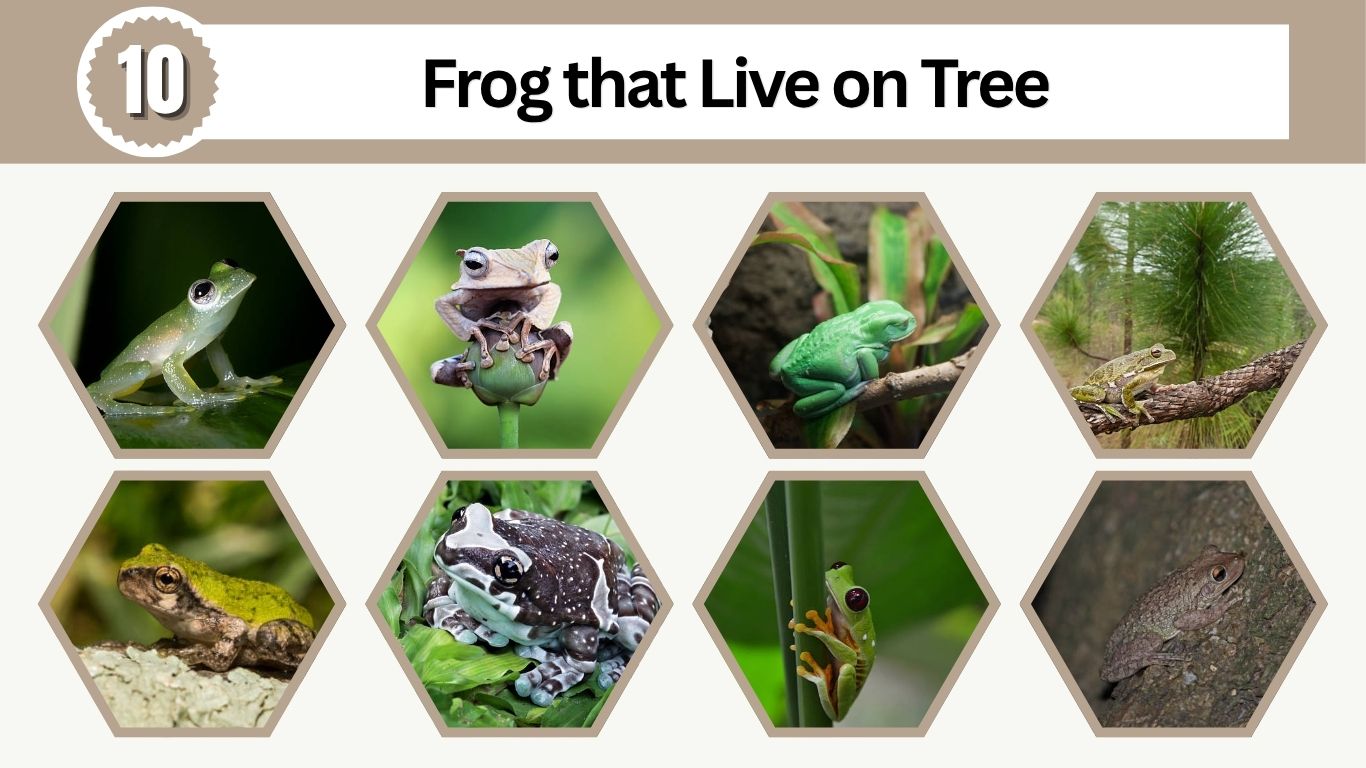
Tree-dwelling frogs are fascinating amphibians specially adapted for life above the ground. With their sticky toe pads, lightweight bodies, and excellent climbing abilities, these frogs thrive in forests, gardens, and wetlands around the world. Many species are nocturnal and rely on camouflage, unique colors, or behaviors to survive in their elevated habitats.
In this guide, you’ll explore 10 types of tree frogs using their common names, along with detailed identification features, habitats, behaviors, and lifecycle information. This structured format makes it easy to recognize each species and understand how they live and adapt in their natural environments.
1. Red-eyed Tree Frog

The Red-eyed Tree Frog is one of the most recognizable tree-dwelling frogs, known for its vivid colors and striking appearance. Native to tropical rainforests, it spends most of its life in trees, rarely coming down except for breeding. Its bright features are not just for beauty—they also play a role in defense and survival.
Identification
- Bright green body with smooth, soft skin
- Large, vivid red eyes with vertical pupils
- Blue and yellow striped sides along the body
- Orange or reddish feet with wide, sticky toe pads
- Slender body adapted for climbing and jumping
- Toes are long and webbed, aiding in grip and movement
Habitat
The Red-eyed Tree Frog is primarily found in tropical rainforests of Central America, including countries like Costa Rica, Nicaragua, and Panama. It thrives in warm, humid environments where dense vegetation provides shelter and moisture. These frogs are usually located near rivers, ponds, or temporary pools, especially during breeding seasons. They spend most of their time high in the canopy or on leaves, where they remain hidden during the day. The constant humidity of rainforest environments is essential for keeping their skin moist and healthy, which is crucial for respiration.
Behaviors
This species is strictly nocturnal, becoming active after sunset. During the day, it rests on the underside of leaves, folding its legs tightly and closing its eyes to blend in with the greenery. When threatened, it uses a defense behavior called “startle coloration,” suddenly opening its bright red eyes and exposing its colorful sides to confuse predators. It is an agile climber and jumper, using its sticky toe pads to move easily between branches. The frog is generally solitary except during mating periods.
Diet and Lifecycle
The Red-eyed Tree Frog mainly feeds on small insects such as crickets, flies, moths, and other invertebrates. It hunts at night using quick movements and a sticky tongue to capture prey. During reproduction, females lay clusters of eggs on leaves that hang over water. After hatching, the tadpoles drop into the water below, where they continue developing. The tadpole stage lasts several weeks before metamorphosis into adult frogs. This unique lifecycle reduces predation risks for eggs while ensuring access to water for development.
2. White’s Tree Frog

White’s Tree Frog, also known as the Dumpy Tree Frog, is a popular tree-dwelling species known for its calm nature and chubby appearance. Native to Australia and nearby regions, it is highly adaptable and often found in both natural and human-made environments.
Identification
- Plump, rounded body with smooth, waxy skin
- Color ranges from light green to bluish-green or even brown
- Large golden or brownish eyes with horizontal pupils
- Wide toe pads for strong grip on surfaces
- Slight folds of skin above the eyes giving a “sleepy” look
- Can change color slightly depending on temperature and mood
Habitat
White’s Tree Frog is commonly found in tropical and subtropical regions of Australia, New Guinea, and Indonesia. It prefers forests, woodlands, and wetlands but is also frequently seen in urban areas, including houses, water tanks, and gardens. This species is highly adaptable and can tolerate drier conditions better than many other tree frogs due to its waxy skin, which helps retain moisture. It often stays in sheltered spots such as tree hollows, leaves, or man-made structures during the day.
Behaviors
This frog is nocturnal and becomes active at night when it hunts and explores. During the day, it rests in cool, shaded places to conserve moisture. It is known for its calm and docile nature, often remaining still even when approached. White’s Tree Frog is an excellent climber but also spends time near the ground. It produces a deep, croaking call, especially during the breeding season. Its ability to adapt to human environments makes it more visible than many other tree frog species.
Diet and Lifecycle
White’s Tree Frog feeds on a variety of insects such as crickets, moths, and beetles, as well as small vertebrates if available. It is an opportunistic feeder and will eat almost anything it can fit into its mouth. Breeding typically occurs during the rainy season, when females lay eggs in water bodies like ponds or temporary pools. Tadpoles develop in water before transforming into froglets. The species can live for many years, especially in stable environments.
3. Gray Tree Frog

The Gray Tree Frog is a well-camouflaged tree-dwelling species known for its ability to blend perfectly with tree bark. Found mainly in North America, it is more often heard than seen due to its excellent camouflage and nocturnal habits.
Identification
- Color varies from gray to green or brown depending on surroundings
- Rough, slightly bumpy skin that resembles tree bark
- Bright yellow or orange patches on the inner thighs
- Large toe pads for strong climbing ability
- Wingspan-like leg stretch when jumping between branches
- Medium-sized body with a compact shape
Habitat
The Gray Tree Frog is commonly found in forests, woodlands, swamps, and suburban areas with plenty of trees. It prefers habitats near water sources such as ponds, lakes, or marshes, especially during breeding season. Outside of breeding, it spends most of its time in trees, shrubs, and even on buildings. This species can tolerate colder climates better than many other tree frogs and is known to survive freezing temperatures by producing natural antifreeze-like compounds in its body.
Behaviors
This frog is nocturnal and becomes active after sunset. During the day, it rests on tree bark or leaves, blending in almost perfectly due to its color-changing ability. When disturbed, it may remain still or leap away quickly. It is an excellent climber and rarely comes down to the ground except for breeding. The Gray Tree Frog is well known for its loud, musical trill call, which is commonly heard during warm evenings in spring and summer.
Diet and Lifecycle
The Gray Tree Frog feeds mainly on insects such as moths, beetles, flies, and spiders. It hunts at night using its quick reflexes and sticky tongue. Breeding occurs in spring and early summer, when females lay eggs in shallow water bodies. Tadpoles develop in water and later transform into froglets. This species has a relatively short larval stage compared to many other frogs, allowing it to adapt to temporary water sources.
4. Green Tree Frog

The Green Tree Frog is a bright and attractive tree-dwelling species commonly found in warm regions. Known for its smooth green color and gentle nature, it is often seen clinging to vegetation near water and is a familiar sight in gardens and wetlands.
Identification
- Bright green body with smooth, shiny skin
- A white or cream-colored stripe running along the side
- Large round eyes with horizontal pupils
- Sticky toe pads for climbing
- Slender body with long legs
- Color may slightly vary depending on temperature and environment
Habitat
The Green Tree Frog is commonly found in wetlands, swamps, ponds, and marshes, especially in warm and humid climates. It prefers areas with abundant vegetation near water sources, where it can easily hide and stay moist. This species is also well adapted to suburban environments and is often seen on windows, walls, and garden plants. During the day, it rests among leaves or reeds, taking advantage of its green coloration to blend into its surroundings.
Behaviors
This frog is nocturnal and becomes active at night. During the day, it remains still and hidden among vegetation. It is an excellent climber and uses its sticky toe pads to move easily on vertical surfaces, including glass. The Green Tree Frog is known for its loud, repetitive calls, especially during the breeding season. It is generally calm and not easily disturbed, often staying in one place for long periods.
Diet and Lifecycle
The Green Tree Frog feeds mainly on insects such as flies, mosquitoes, crickets, and moths. It hunts at night, catching prey with its quick tongue. Breeding occurs in warm seasons, with females laying eggs in water bodies like ponds and marshes. Tadpoles develop in water before transforming into frogs. The lifecycle is closely linked to water availability, and multiple breeding events may occur during favorable conditions.
5. Cuban Tree Frog

The Cuban Tree Frog is a large and highly adaptable tree-dwelling frog known for its ability to thrive in a wide range of environments. Native to the Caribbean, it has spread to other regions and is often seen in urban areas. Its size and feeding habits make it one of the more dominant tree frog species.
Identification
- Large body compared to most tree frogs
- Color varies from light gray to brown or green
- Skin is rough and slightly warty
- Large toe pads for strong climbing ability
- Eyes are prominent with a golden or bronze color
- Can change color slightly depending on environment
Habitat
The Cuban Tree Frog is commonly found in forests, wetlands, gardens, and urban areas. It prefers warm, humid climates and is often associated with human structures such as buildings, water tanks, and outdoor lights. This species is highly adaptable and can live in both natural and disturbed environments. During the day, it hides in damp, shaded places like tree holes, pipes, or crevices to stay cool and moist.
Behaviors
This frog is nocturnal and becomes active at night. It is often seen around lights where insects gather, making feeding easier. The Cuban Tree Frog is an excellent climber and can move across walls, windows, and trees with ease. It is also known for being more aggressive than other tree frogs, sometimes preying on smaller frogs. During the day, it remains hidden and inactive to avoid heat and predators.
Diet and Lifecycle
The Cuban Tree Frog has a broad diet, feeding on insects, spiders, and even small frogs or lizards. It is an opportunistic predator and will eat almost anything it can capture. Breeding occurs in warm, wet conditions, with females laying eggs in standing water such as ponds or containers. Tadpoles develop in water before transforming into adults. The species can reproduce multiple times a year in suitable environments.
6. Amazon Milk Frog

The Amazon Milk Frog is a striking tree-dwelling frog known for its bold patterns and smooth, slightly shiny skin. Native to the Amazon rainforest, it gets its name from the milky secretion it produces when stressed. This species is well adapted to life high in the trees.
Identification
- Light gray or bluish body with dark brown or black band-like patterns
- Smooth, slightly waxy skin
- Large toe pads for strong climbing grip
- Golden or bronze eyes with horizontal pupils
- Stout body compared to many other tree frogs
- Skin may appear slightly glossy
Habitat
The Amazon Milk Frog is found in tropical rainforests of South America, especially within the Amazon Basin. It prefers humid, densely vegetated environments with plenty of trees and access to water. This species spends most of its life in the canopy, often inhabiting tree holes that collect rainwater. These natural water pockets are important for both shelter and breeding. The frog rarely descends to the forest floor, relying instead on elevated habitats where moisture levels remain stable.
Behaviors
This frog is nocturnal and becomes active at night. During the day, it hides inside tree cavities or among dense foliage to avoid predators and maintain moisture. It is a strong climber and moves slowly but steadily across branches. When threatened, it may secrete a milky substance from its skin as a defense. The Amazon Milk Frog is generally calm and spends much of its time resting unless feeding or breeding.
Diet and Lifecycle
The Amazon Milk Frog feeds mainly on insects such as crickets, flies, and beetles. It hunts at night using a quick tongue to catch prey. For reproduction, females lay eggs in water-filled tree holes. After hatching, the tadpoles develop in these small water pools, feeding on organic matter. As they grow, they eventually transform into froglets and leave the water to begin life in the trees.
7. Barking Tree Frog

The Barking Tree Frog is a large and robust tree-dwelling frog known for its loud, dog-like call. It is commonly found in warm regions and is well adapted to both natural and semi-urban environments. Despite its size, it spends much of its time hidden in vegetation.
Identification
- Large, heavy-bodied tree frog
- Color ranges from bright green to gray or brown
- Skin is slightly rough with small bumps
- Prominent eyes with golden or bronze coloration
- Large toe pads for strong climbing ability
- Often has dark spots or irregular markings on the body
Habitat
The Barking Tree Frog is typically found in forests, swamps, wetlands, and areas near ponds or streams. It prefers habitats with plenty of trees and dense vegetation, where it can climb and hide easily. This species is also known to adapt to suburban environments, especially in regions with suitable moisture and plant cover. During the day, it hides in tree hollows, under bark, or among thick foliage to stay cool and protected.
Behaviors
This frog is nocturnal and becomes active after sunset. It gets its name from its distinctive call, which sounds similar to a barking dog and is often heard during the breeding season. It is a strong climber but may also spend time on the ground, especially near water. During the day, it remains still and hidden to avoid predators and conserve moisture.
Diet and Lifecycle
The Barking Tree Frog feeds on a variety of insects, including beetles, crickets, and moths. It hunts at night, using quick movements and a sticky tongue to catch prey. Breeding occurs in warm, wet conditions, with females laying eggs in ponds or temporary water bodies. Tadpoles develop in water before transforming into froglets. The lifecycle depends heavily on seasonal rainfall and water availability.
8. Waxy Monkey Tree Frog

The Waxy Monkey Tree Frog is a unique tree-dwelling species known for its slow movements and waxy skin coating. Native to South America, it is specially adapted to survive in relatively dry environments compared to most other tree frogs.
Identification
- Light green body with a smooth, waxy appearance
- Distinct orange or yellow patches on legs and belly
- Large eyes with horizontal pupils
- Thick, sturdy body with short limbs
- Toes have strong pads for gripping branches
- Skin appears slightly shiny due to protective secretion
Habitat
The Waxy Monkey Tree Frog is found in dry forests, savannas, and scrublands in South America, particularly in regions like Argentina, Bolivia, and Paraguay. Unlike many tree frogs, it prefers habitats that are not constantly wet. It lives in trees and shrubs, often near temporary water sources used for breeding. During the day, it rests on branches or leaves in exposed positions, relying on its unique adaptations to prevent dehydration.
Behaviors
This frog is mostly nocturnal but is also known for being relatively slow-moving compared to other tree frogs. One of its most distinctive behaviors is spreading a waxy secretion over its skin using its legs. This helps reduce water loss in dry conditions. It climbs steadily rather than jumping frequently and often remains still for long periods. Its calm nature and unusual movements make it quite different from more active tree frog species.
Diet and Lifecycle
The Waxy Monkey Tree Frog feeds mainly on insects such as ants, beetles, and flies. It hunts at night using slow, deliberate movements. During breeding, females lay eggs on leaves above water. After hatching, the tadpoles drop into the water below to continue development. This strategy helps protect eggs from aquatic predators while still providing access to water for growth.
9. Flying Tree Frog

The Flying Tree Frog is a remarkable tree-dwelling species known for its ability to glide between trees using its webbed feet. Found in tropical forests, it spends most of its life in the canopy and rarely comes down to the ground.
Identification
- Bright green body with smooth skin
- Very large webbed feet used for gliding
- Yellow or orange webbing visible when limbs are spread
- Large eyes adapted for nocturnal vision
- Slender body with long limbs
- Toe pads are wide and sticky for climbing
Habitat
The Flying Tree Frog is typically found in tropical rainforests of Southeast Asia. It prefers dense forest canopies where tall trees provide space for gliding. This species stays high above the ground, living among branches and leaves. It is usually found near water sources such as forest ponds or streams, especially during breeding periods. The humid environment of the rainforest is essential for maintaining its skin moisture and overall health.
Behaviors
This frog is nocturnal and becomes active at night. Its most unique behavior is gliding from tree to tree by spreading its webbed feet, allowing it to move efficiently without descending to the ground. During the day, it rests quietly on leaves, blending in with its green coloration. It is an excellent climber and rarely seen on the forest floor. Its movements are smooth and controlled, especially during gliding.
Diet and Lifecycle
The Flying Tree Frog feeds mainly on insects such as flies, crickets, and moths. It hunts at night, capturing prey with quick tongue movements. For reproduction, females lay eggs in foam nests on leaves hanging over water. When the eggs hatch, tadpoles fall into the water below, where they continue developing. This lifecycle helps protect the eggs while ensuring access to water for growth.
10. Glass Frog

The Glass Frog is a fascinating tree-dwelling frog known for its partially transparent skin, which allows internal organs to be visible. Found in tropical regions, it is a small and delicate species that spends most of its life in trees near flowing water.
Identification
- Bright green body with translucent or semi-transparent underside
- Internal organs often visible through the belly
- Smooth, soft skin
- Large forward-facing eyes with a golden tint
- Small, slender body
- Wide toe pads for gripping leaves and branches
Habitat
Glass Frogs are typically found in tropical rainforests of Central and South America. They prefer habitats near streams, rivers, and other freshwater sources. These frogs live on leaves and branches overhanging water, which is essential for their reproductive cycle. The humid environment helps maintain their delicate skin. During the day, they rest on the underside of leaves, staying hidden from predators.
Behaviors
This frog is nocturnal and becomes active at night. During the day, it remains still and well-camouflaged on leaves. One of its notable behaviors is guarding eggs—males often stay near egg clutches to protect them from predators and environmental threats. It moves carefully and slowly, relying on stealth rather than speed. Its transparency helps it blend into its surroundings.
Diet and Lifecycle
Glass Frogs feed mainly on small insects such as flies, ants, and tiny beetles. They hunt at night using quick tongue movements. Females lay eggs on leaves above water. After hatching, the tadpoles drop into the stream below, where they continue developing. This reproductive strategy reduces the risk of aquatic predators attacking the eggs while ensuring tadpoles have immediate access to water.
FAQs
What are tree frogs?
Tree frogs are a group of frogs adapted to living in trees and elevated vegetation. They have special features like sticky toe pads that help them climb and stay on surfaces. Most tree frogs are nocturnal and are commonly found in warm, humid environments such as rainforests.
Are tree frogs dangerous to humans?
Most tree frogs are harmless to humans. They do not bite or sting and are generally gentle creatures. Some species may secrete mild toxins from their skin as a defense, but these are usually not dangerous unless handled improperly or ingested.
Why do tree frogs live in trees?
Tree frogs live in trees to avoid predators and access food more easily. Trees provide shelter, moisture, and plenty of insects to eat. Living above ground also helps them stay safe from many ground-based threats.
What do tree frogs eat?
Tree frogs mainly eat insects such as flies, crickets, moths, and beetles. Larger species may also consume small invertebrates or even tiny vertebrates. They hunt mostly at night using their quick reflexes and sticky tongues.
How do tree frogs reproduce?
Tree frogs usually lay eggs near or above water. In many species, eggs are placed on leaves overhanging water so that when they hatch, tadpoles fall into the water below. The tadpoles then grow and develop into adult frogs through metamorphosis.
