
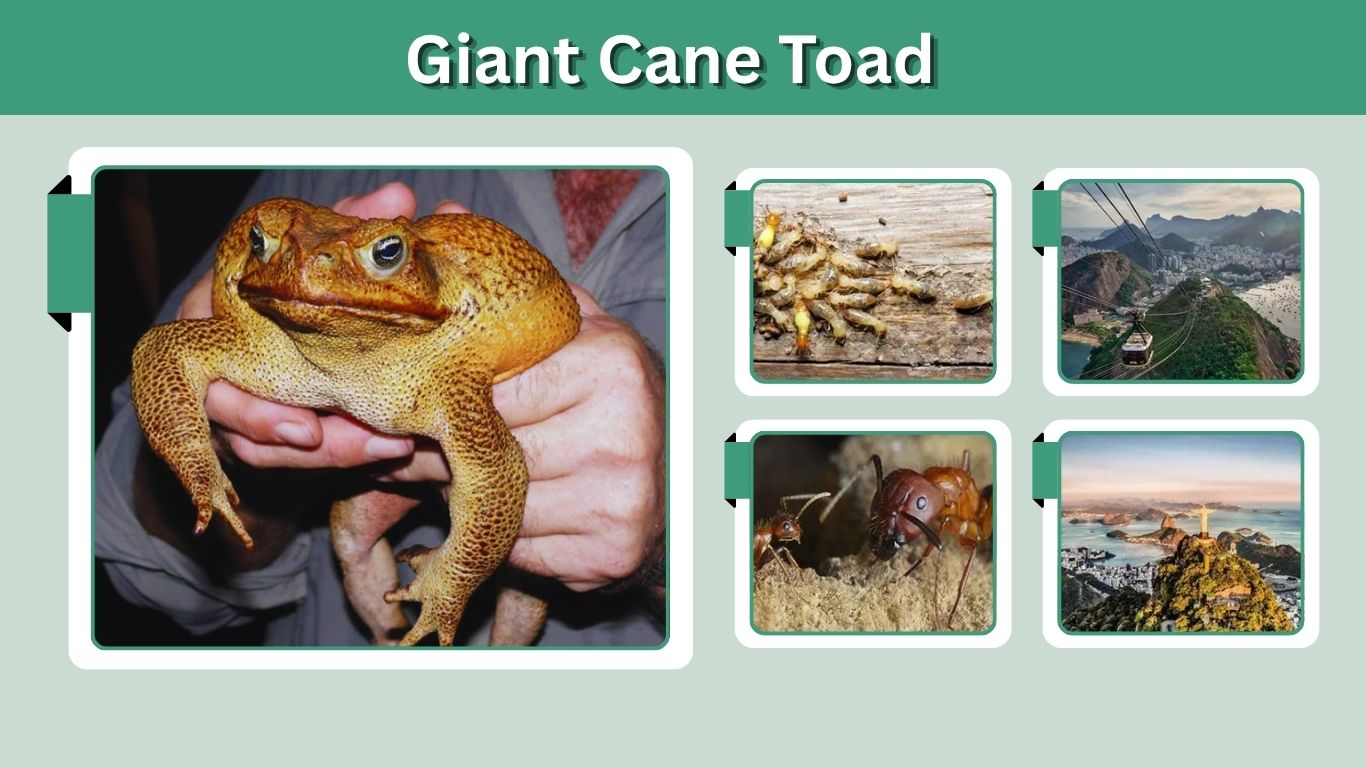
The giant cane toad is a large, poisonous amphibian also known as the cane toad, marine toad, or giant bufo. Its scientific name is Rhinella marina. It is famous for its large size, toxic skin glands, and invasive impact in places like Australia and Florida. Although impressive, this toad can be dangerous to pets and native wildlife.
What Is a Giant Cane Toad?
The giant cane toad is one of the largest true toads in the world. It is native to parts of Central and South America, but humans introduced it to other regions for pest control. Today, it is considered invasive in several places, including Australia and Florida. The Florida Fish and Wildlife Conservation Commission describes the cane toad as a large, nonnative invasive amphibian that is poisonous to most animals that bite or eat it.
Scientific Name and Common Names
The giant cane toad has several common names. This can confuse readers because “cane toad,” “marine toad,” “giant toad,” and “giant bufo” often refer to the same animal.
Common names include:
- Giant cane toad
- Cane toad
- Marine toad
- Giant bufo
- Bufo toad
- Cane toad giant
- Giant marine toad
Its accepted scientific name is Rhinella marina, though older sources may use Bufo marinus.
Giant Cane Toad Identification
A giant cane toad has a broad body, dry warty skin, short legs, and large poison glands behind the eyes. These glands are called parotoid glands and can release a toxic milky substance when the toad is threatened.
Identification features:
- Large, heavy body
- Dry, bumpy skin
- Brown, gray, tan, or reddish-brown color
- Large triangular poison glands behind the eyes
- Horizontal pupils
- Short legs
- No strong jumping ability
- Often active at night
Giant Cane Toad vs Regular Toad
The giant cane toad is larger and more toxic than many common native toads. It also has very large poison glands behind the head. In areas where it is invasive, correct identification is important because native toads may be protected or harmless.
A cane toad may look similar to some native species, so never kill or handle a toad unless you are sure of the identification and local rules.
Giant Cane Toad Size
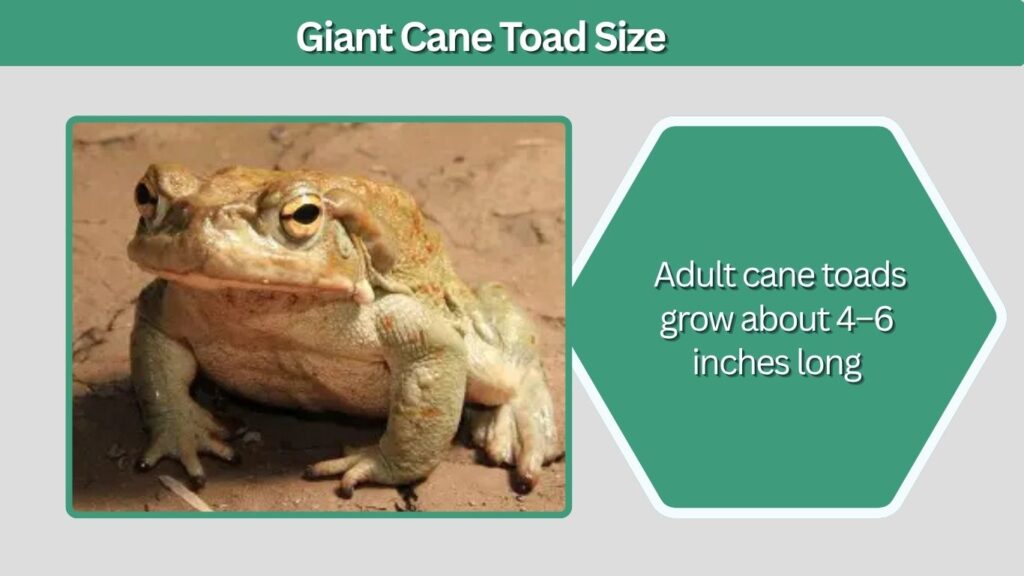
Giant cane toads are known for their large size. Most adults are already much bigger than many backyard toads, and some individuals become unusually massive. Size is one of the main reasons people search for this species.
Average Adult Size
Most adult cane toads grow about 4–6 inches long, though larger individuals can reach 7–9 inches. Females are usually larger than males. Their weight varies by age, sex, food supply, and health.
Typical size details:
- Average adult length: 4–6 inches
- Large adult length: 7–9 inches
- Females: usually larger
- Males: usually smaller
- Body shape: wide and heavy
- Weight: can vary greatly
How Big Can a Giant Cane Toad Get?
Exceptional cane toads can grow extremely large. In 2023, Australian rangers found a huge cane toad nicknamed “Toadzilla” in Queensland. It reportedly weighed about 2.7 kg, or 5.9 pounds, making it an unusually large individual.
Most pet or wild cane toads will not reach that size. However, the species can become very large when food is abundant and conditions are favorable.
Giant Cane Toad Size Chart
| Life Stage | Approximate Size | Notes |
| Tadpole | Very small | Lives in water |
| Young toadlet | Less than 1 inch | Recently left water |
| Juvenile | 1–3 inches | Growing quickly |
| Adult male | 4–6 inches | Usually smaller |
| Adult female | 5–9 inches | Often larger |
| Exceptional giant | Over 9 inches possible | Rare individuals |
Where Do Giant Cane Toads Live?
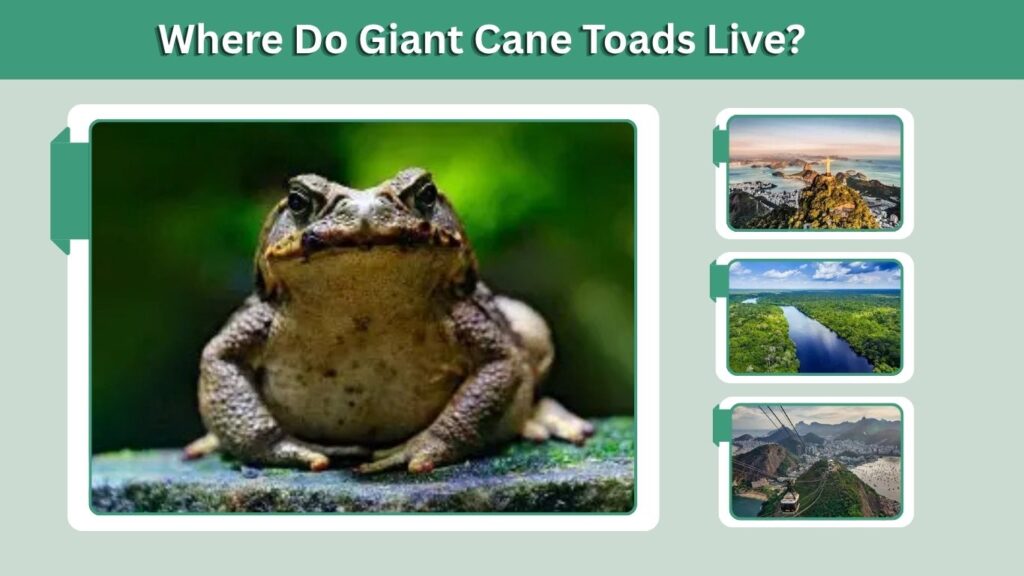
Giant cane toads can survive in many warm environments. They are especially common in disturbed areas where humans create water sources, lights, gardens, yards, and open feeding areas. They are hardy animals that adapt well outside their native range.
Native Habitat
The cane toad is native to parts of Central and South America. In its original range, it lives in tropical and subtropical habitats, including forests, grasslands, wetlands, agricultural land, and areas near human settlement.
It prefers warm places with access to moisture and breeding water. Although it is a toad, it still needs water to reproduce because eggs and tadpoles develop in aquatic environments.
Giant Cane Toad in Australia
Cane toads were introduced to Australia in the 1930s to control beetles in sugarcane fields. The plan failed to solve the pest problem, and the toads spread widely. Queensland’s biosecurity information notes that cane toads affect many Australian native species, including reptiles, crocodiles, freshwater turtles, birds, and native frog tadpoles.
Today, they are one of Australia’s most famous invasive animals.
Giant Cane Toad in Florida
In Florida, the cane toad is a nonnative invasive species. It is especially concerning in neighborhoods because pets may bite or lick the toad and become poisoned. FWC warns that cane toads are poisonous to most animals that try to bite or consume them.
They are often found in yards, gardens, parks, golf courses, canals, and other warm, moist areas.
What Do Giant Cane Toads Eat?
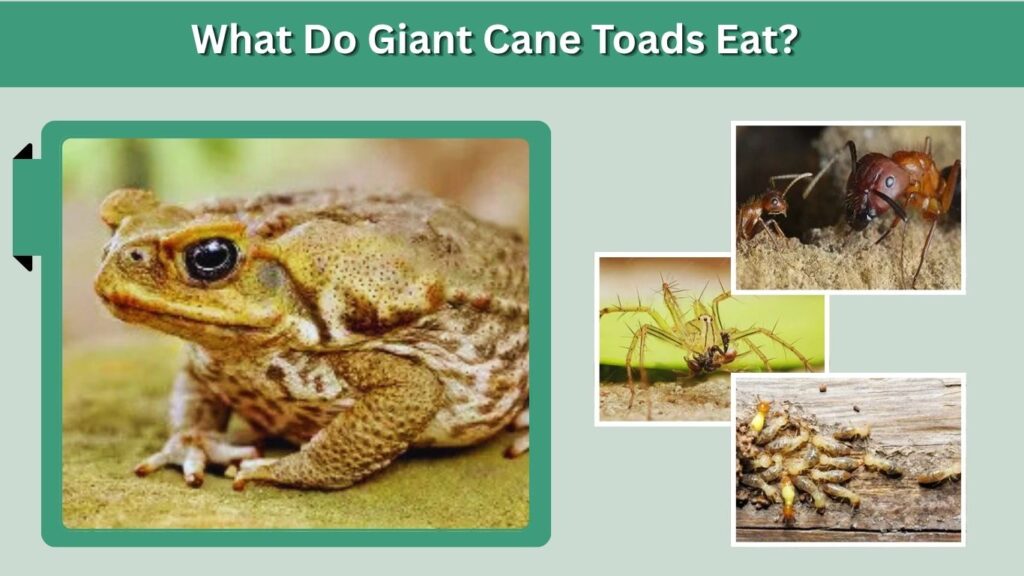
Giant cane toads are opportunistic predators. They eat many types of small animals and will also consume food scraps, pet food, and other easy meals. This flexible diet helps them survive in cities, farms, and wild habitats.
Giant Cane Toad Diet
Cane toads are not picky eaters. They wait for prey, then grab it with a quick tongue movement. They are most active at night, especially after rain.
Common foods include:
- Beetles
- Crickets
- Roaches
- Moths
- Ants
- Termites
- Spiders
- Small frogs
- Small reptiles
- Small mammals
- Pet food
- Carrion
- Food scraps
Feeding Behavior
Giant cane toads often sit near lights because insects gather there. They may also visit pet bowls left outside overnight. This is one reason homeowners in cane toad areas are advised to bring pet food indoors.
They are ground hunters, not fast chasers. They rely on stillness, sudden strikes, and a wide diet.
Do Giant Cane Toads Eat Native Animals?
Yes, cane toads can eat native insects, frogs, reptiles, and other small animals. Their impact is not only from what they eat but also from their poison. Native predators that try to eat cane toads may die after contact with the toxin.
Are Giant Cane Toads Poisonous?
Yes, giant cane toads are poisonous. Their toxin comes from glands behind the eyes and from the skin. This toxin can harm or kill animals that bite, lick, or eat the toad.
How Their Poison Works
When threatened, a cane toad can release a milky toxin from its parotoid glands. This toxin can irritate the mouth, eyes, and skin. It is especially dangerous if swallowed.
The toxin helps protect the toad from predators. Unfortunately, in invasive areas, many native animals have not evolved defenses against it.
Danger to Dogs and Cats
Cane toads are very dangerous to pets. Dogs are especially at risk because they may bite or mouth the toad. Poisoning can happen quickly, so pet owners should treat contact as urgent.
Possible signs in pets include:
- Drooling
- Foaming at the mouth
- Pawing at the mouth
- Vomiting
- Red gums
- Weakness
- Disorientation
- Seizures
- Irregular heartbeat
- Collapse
If a pet contacts a cane toad, contact a veterinarian immediately.
Are Giant Cane Toads Dangerous to Humans?
Giant cane toads are not aggressive toward humans, but they should not be handled with bare hands. Their toxin can irritate skin, eyes, and mouth. The greatest risk is to pets and wildlife, but humans should still be cautious.
Wash hands well after any accidental contact and avoid touching your face.
Giant Cane Toad as a Pet
Some people search for a giant cane toad pet or giant cane toad for sale. While they may look interesting, they are not suitable pets for everyone. They grow large, produce toxins, need secure housing, and may be illegal or restricted in some places.
Is a Giant Cane Toad a Good Pet?
A giant cane toad can be kept only by experienced amphibian keepers where legal. It needs a large secure enclosure, proper humidity, safe substrate, clean water, and a correct diet. It also must be handled carefully because of its toxins.
Pet challenges include:
- Large adult size
- Toxic skin secretions
- Legal restrictions
- Escape risk
- Live insect diet
- Long-term care needs
- Sanitation concerns
- Not suitable for children
Giant Cane Toad Care Basics
Basic care requires a secure terrarium with enough floor space, hiding places, shallow water, and proper humidity. The enclosure should prevent escape because released cane toads can become invasive.
Care basics include:
- Secure enclosure lid
- Moist but not waterlogged substrate
- Shallow water dish
- Hiding places
- Warm temperature range
- Live insect diet
- Clean environment
- Minimal handling
Giant Cane Toad for Sale Warning
Before buying any giant cane toad, check your local laws. In some regions, owning, transporting, selling, or releasing cane toads may be restricted. Never release a pet cane toad outdoors. Released animals can harm ecosystems and may suffer or die in unsuitable conditions.
If you no longer want a pet amphibian, contact a rescue, exotic vet, or wildlife authority for safe options.
Giant Cane Toad Breeding and Life Cycle
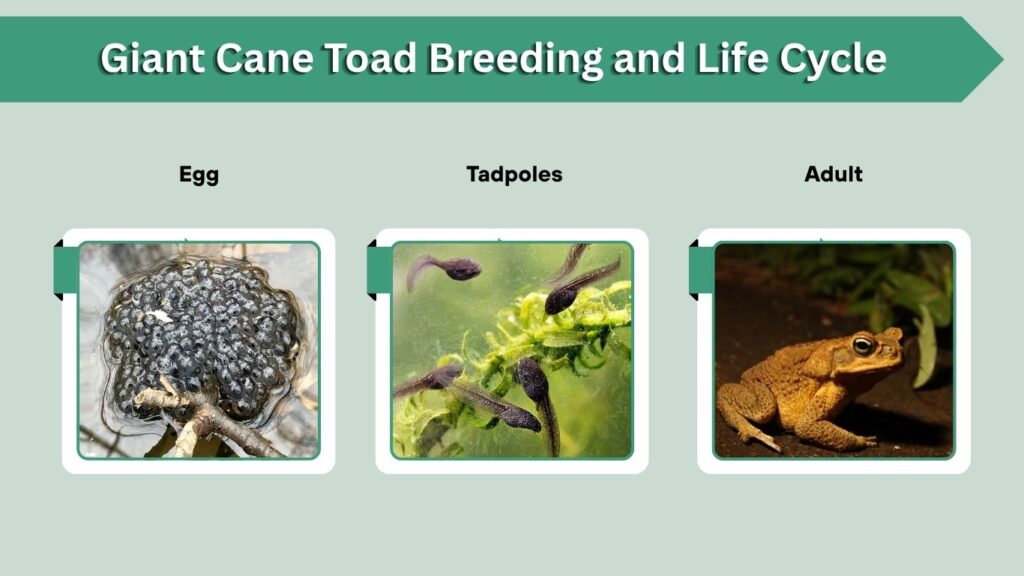
Giant cane toads reproduce in water. Their life cycle includes eggs, tadpoles, toadlets, juveniles, and adults. Their ability to lay many eggs helps them spread quickly in warm, wet environments.
Eggs and Tadpoles
Female cane toads can lay long strings of eggs in ponds, ditches, canals, puddles, and other water bodies. Tadpoles hatch and develop in the water. In invasive areas, cane toad eggs and tadpoles may also affect native aquatic life.
Australian government information notes that cane toads are a key threatening process for native species and ecological communities, which is why management plans focus on reducing their impact.
From Toadlet to Adult
After metamorphosis, young toadlets leave the water and spread across land. They are tiny at first but can grow quickly when food is abundant. Young cane toads may gather in large numbers near breeding areas.
Why They Spread Quickly
Cane toads spread quickly because they reproduce heavily, eat many foods, tolerate disturbed habitats, and have toxic defenses. Humans also help them spread accidentally through transport, landscaping materials, and artificial water sources.
Giant Cane Toad Invasive Impact
The giant cane toad is a serious invasive species in places where it has been introduced. Its toxins harm predators, and its wide diet can pressure local wildlife. It also competes with native species for food and habitat.
Impact on Native Predators
Many predators try to eat cane toads and are poisoned. This has affected snakes, lizards, crocodiles, mammals, birds, and other animals in invaded regions. In Australia, government biosecurity sources report cane toads threaten many native reptile and amphibian-related species.
Impact on Homeowners
In Florida and Australia, cane toads often appear in yards after rain. They may sit near lights, pet bowls, pools, ponds, and patios. This creates concern for families with dogs and cats.
Homeowners can reduce risk by:
- Bringing pet food indoors
- Turning off unnecessary outdoor lights
- Removing standing water
- Keeping grass trimmed
- Blocking access under sheds
- Supervising pets at night
- Learning correct identification
Can Cane Toads Be Controlled?
Cane toad control is difficult. Once established, they are hard to remove completely. Management usually focuses on reducing local numbers, protecting pets, limiting breeding sites, and preventing spread into new areas.
Recent research has explored new biological control possibilities, including special cane toad tadpoles designed to consume eggs, but broad use would require careful testing.
Giant Cane Toad Facts
The giant cane toad is one of the most recognizable invasive amphibians in the world. Its size, poison, and spread have made it a major topic in wildlife management.
Quick Facts
- Scientific name: Rhinella marina
- Older name: Bufo marinus
- Common names: cane toad, marine toad, giant bufo
- Native range: Central and South America
- Diet: insects, small animals, scraps
- Activity: mostly nocturnal
- Defense: toxic skin glands
- Major issue: invasive in some regions
- Pet risk: dangerous to dogs and cats
- Habitat: warm, moist, disturbed areas
Giant Cane Toad Sound
Male cane toads make a low, pulsing trill to attract females during breeding season. Calls are usually heard near water at night, especially after rain. Sound can help identify breeding activity nearby.
Giant Cane Toad in Toilet or Yard
Cane toads may enter yards, garages, patios, pool areas, and occasionally bathrooms or toilets if there is access. They are attracted to moisture, insects, and shelter. Seal gaps, repair screens, and reduce insect-attracting lights to lower encounters.
FAQs
How big is a giant cane toad?
A giant cane toad commonly grows around 4–6 inches long, but large females may reach 7–9 inches. Rare individuals can become much heavier and larger than average. The famous “Toadzilla” found in Queensland reportedly weighed about 5.9 pounds.
Is a giant cane toad poisonous?
Yes, the giant cane toad is poisonous. It has large glands behind the eyes that can release a toxic milky substance. This toxin can harm predators, pets, and other animals that bite, lick, or eat the toad.
Where are giant cane toads found?
Giant cane toads are native to parts of Central and South America. They have also been introduced to places such as Australia and Florida, where they are considered invasive. They often live in warm, moist areas near water, yards, farms, and disturbed habitats.
Can you keep a giant cane toad as a pet?
Some people keep giant cane toads as pets where it is legal, but they are not beginner-friendly. They are toxic, grow large, need secure housing, and may be restricted in some regions. Never release a pet cane toad outdoors.
Why are giant cane toads invasive?
Giant cane toads are invasive because they reproduce quickly, eat many foods, adapt to disturbed habitats, and poison predators that try to eat them. In Australia and Florida, they can harm native wildlife and create risks for pets.
