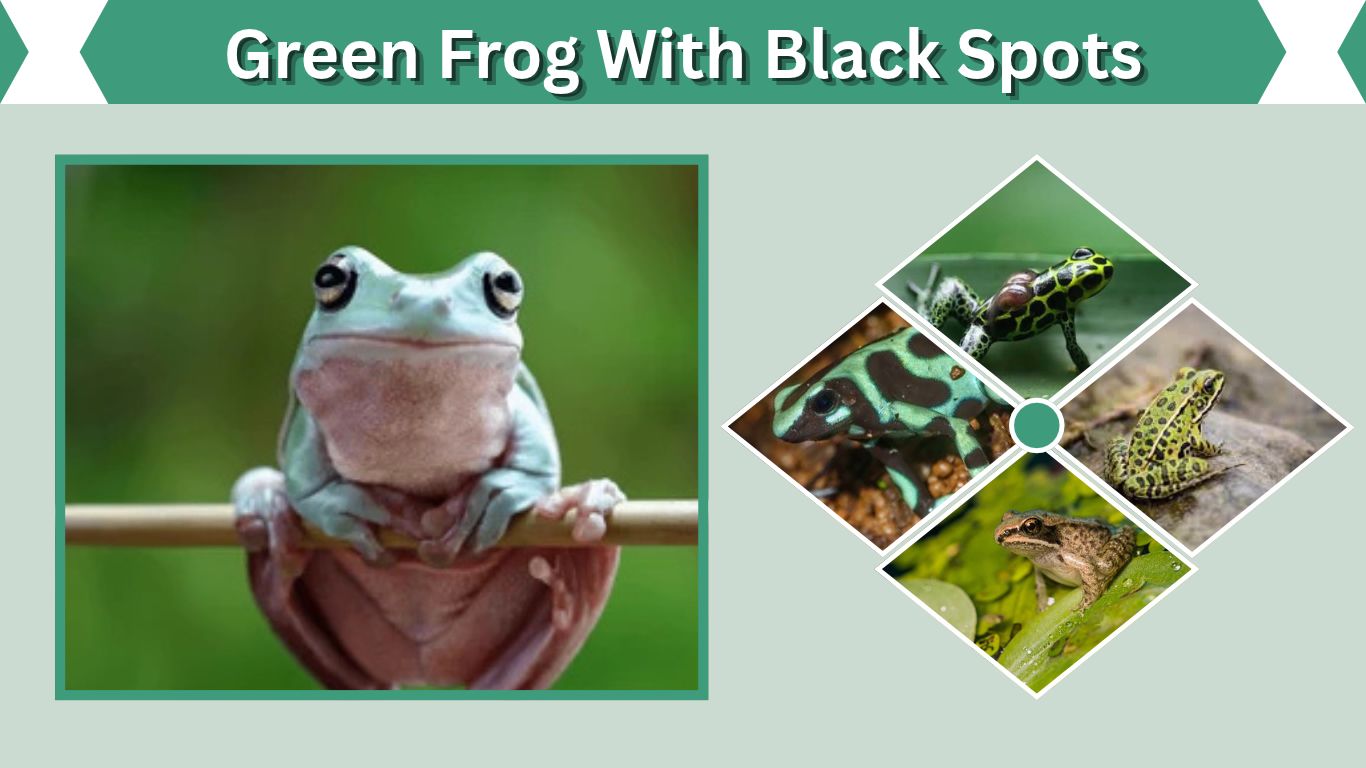
A green frog with black spots can belong to several different species, including leopard frogs, tree frogs, and poison dart frogs. These amphibians display beautiful patterns ranging from small dark dots to large, irregular markings across their bodies. Some inhabit freshwater ponds and wetlands, while others live in forests or tropical environments. Although certain species possess toxic skin secretions, most spotted green frogs found around North American homes are not dangerously poisonous. Understanding their appearance, size, markings, and habitats can help you identify the species correctly.
What Is a Green Frog With Black Spots?
A green frog with black spots is not a single species. Several unrelated frog species have green, olive, or yellow-green skin decorated with dark brown or black markings. Their spots may serve as camouflage, warning coloration, or part of their natural pigmentation.
The most recognizable examples include northern leopard frogs, southern leopard frogs, and barking treefrogs. These species can be distinguished by their spot patterns, body shapes, toe structure, and the habitats where they occur.
7 Types of Green Frogs With Black Spots
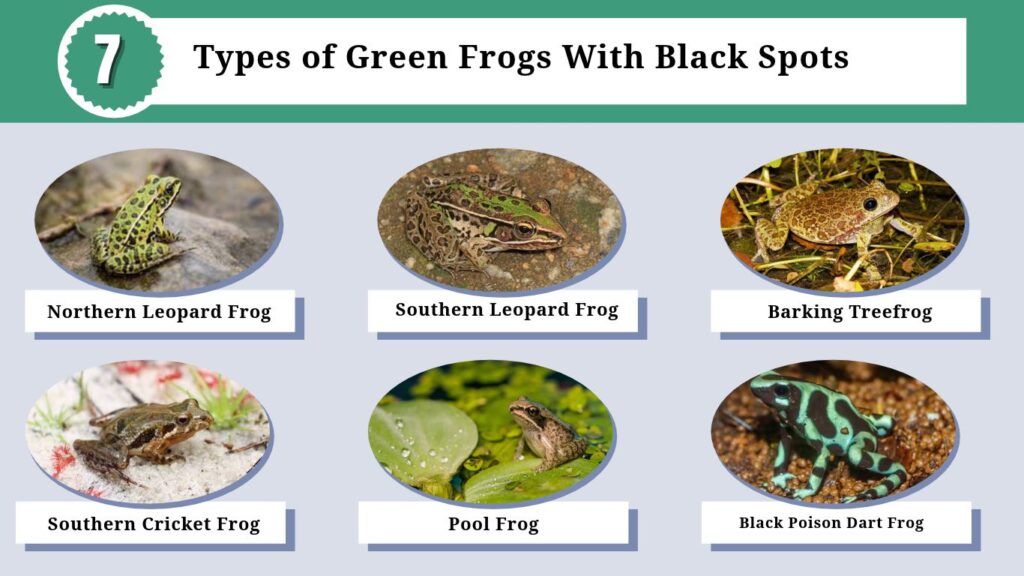
Several frog species have naturally spotted bodies, but their patterns differ significantly. Some have large circular black spots surrounded by pale rings, while others display irregular dark blotches or tiny scattered markings. The following seven species are useful examples for identifying green-and-black spotted frogs across North America, Europe, and tropical regions.
1. Northern Leopard Frog (Lithobates pipiens)
The northern leopard frog is one of the most recognizable green frogs with black spots in North America. Its green or brown body features large, rounded dark spots surrounded by pale borders. Two light-colored ridges run along its back.
Adults typically measure 2–3.5 inches long. Northern leopard frogs inhabit grasslands, wetlands, ponds, and freshwater marshes across parts of the United States and Canada. Their long hind legs allow them to make powerful jumps when escaping predators.
2. Southern Leopard Frog (Lithobates sphenocephalus)
The southern leopard frog has green, tan, or light brown skin covered with irregular dark spots. It resembles the northern leopard frog but generally has a more pointed snout and narrower ridges extending along the back.
Adults usually reach approximately 2–3.5 inches. This species is common in Florida and other southeastern states, particularly around swamps, ponds, ditches, and shallow wetlands. It frequently moves through grassy areas near freshwater habitats.
3. Barking Treefrog (Dryophytes gratiosus)
The barking treefrog is an excellent match for a bright green frog with black spots. Its rounded body is often covered with circular brown or blackish markings. The skin has a slightly granular texture, and enlarged toe pads help it climb vegetation.
Adults usually measure about 2–2.75 inches long. Barking treefrogs inhabit pine forests, wooded wetlands, and swampy environments throughout the southeastern United States. Their distinctive calls sound similar to distant barking dogs.
4. North American Green Frog (Lithobates clamitans)
The North American green frog is a medium-sized amphibian with green, olive, or brownish skin. Some individuals have faint dark spots on their backs, while their hind legs may display irregular spots or bars.
These frogs inhabit ponds, marshes, streams, and other freshwater environments across eastern North America. A distinctive feature is the raised skin ridge extending from behind each eye to approximately the middle of the body. Their calls resemble the sound of a loose banjo string.
5. Southern Cricket Frog (Acris gryllus)
The southern cricket frog is a small amphibian with variable green, gray, or brown coloration. Its body may feature irregular black patches and a distinctive Y-shaped marking on the back.
Adults typically measure only 0.5–1.5 inches long, making them among the smallest spotted frogs in the southeastern United States. They commonly inhabit ponds, marshes, drainage canals, and other freshwater areas. These active frogs feed on small insects and spiders.
6. Pool Frog (Pelophylax lessonae)
The pool frog is a European amphibian with green or brown skin decorated with dark spots and blotches. Many individuals also have a distinctive pale yellow or cream stripe running down the center of their backs.
Pool frogs inhabit shallow ponds, marshes, and slow-moving waterways surrounded by vegetation. Adults may reach approximately 3.5 inches, with females generally larger than males. The species is native to parts of Europe and has been reintroduced to a limited area of England.
7. Green and Black Poison Dart Frog (Dendrobates auratus)
The green-and-black poison dart frog is a small tropical amphibian with striking green, turquoise, and black markings. Unlike leopard frogs, its pattern often consists of broad patches, irregular bands, or interconnected markings.
Adults typically measure 1–1.7 inches long. This species naturally inhabits tropical forests in Central America and northern South America. Wild individuals possess toxic skin secretions that help discourage predators, making it important not to handle them.
How to Identify a Green Frog With Black Spots
Identifying spotted green frogs requires examining more than their coloration. Different species may have similar green and black patterns, particularly when viewed from a distance. Body size, spot arrangement, toe structure, and geographic location provide more reliable clues. Observing the frog without disturbing it is the safest way to recognize distinguishing features.
Examine the Spot Patterns
Leopard frogs usually have rounded dark spots arranged across their backs and legs. Northern leopard frogs often display distinctive pale rings around these markings.
Barking treefrogs may have smaller, evenly spaced dark spots on bright green skin. Poison dart frogs frequently feature bold, interconnected patterns rather than the separated spots commonly seen on leopard frogs.
Check the Body Shape and Habitat
Treefrogs have enlarged toe pads for climbing branches, leaves, and other surfaces. Leopard frogs have long, powerful hind legs and are commonly seen jumping around freshwater habitats.
Location also matters. A spotted frog discovered in a Florida garden is more likely to be a native tree frog or leopard frog than a tropical poison dart frog.
Are Green Frogs With Black Spots Poisonous?
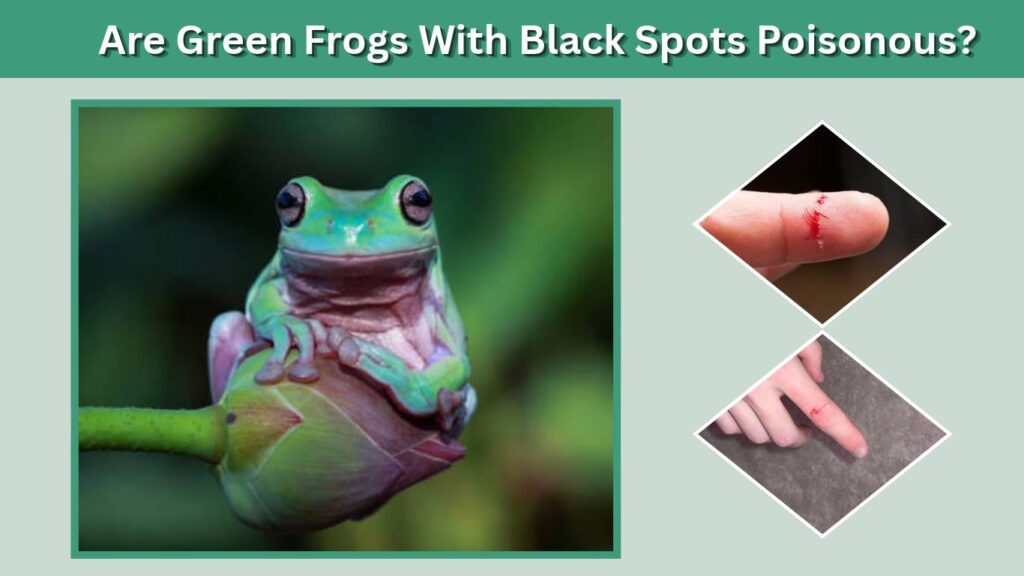
Most green frogs with black spots commonly encountered in the United States are not dangerously poisonous to humans. Northern leopard frogs, southern leopard frogs, and barking treefrogs are not known for the potent chemical defenses associated with poison dart frogs. However, amphibians may produce skin secretions that irritate sensitive tissues, and they can carry harmful microorganisms.
Green-and-black poison dart frogs are different because wild individuals possess defensive alkaloids in their skin. Their toxicity is associated with chemicals obtained from particular prey animals in their natural environments.
Avoid handling unidentified frogs. Never touch your eyes or mouth after contact with an amphibian, and wash your hands thoroughly.
Where Can You Find Green Frogs With Black Spots?
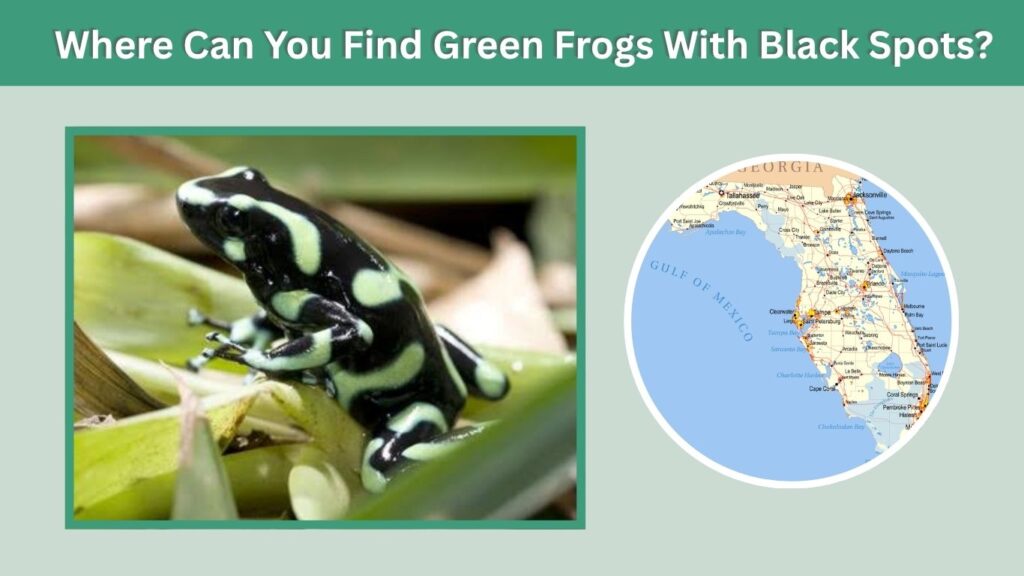
Spotted green frogs occur in several geographic regions, including North America, Europe, and tropical Central America. Their habitats range from freshwater wetlands to humid forests. Because the same general color patterns appear in unrelated species, identifying where a frog was discovered can help narrow down the possibilities.
Green Frog With Black Spots in Florida
Florida is home to several spotted frog species, including the southern leopard frog and barking treefrog. Southern leopard frogs commonly inhabit freshwater ponds, wetlands, and grassy areas.
Barking treefrogs are especially recognizable when they display bright green skin with rounded dark spots. Florida’s ordinary green treefrog (Dryophytes cinereus) may have yellow flecks, but prominent circular black spots are more characteristic of a barking treefrog.
Green Frogs With Black Spots in the UK
In the United Kingdom, green frogs with dark markings may include pool frogs and other members of the European green frog group.
Pool frogs can have dark blotches and a pale stripe along the back. Common frogs (Rana temporaria) may also appear olive-green with dark markings, although brown coloration is more typical.
FAQs
1. What Kind of Frog Is Green With Black Spots?
Several species match this description, including northern leopard frogs, southern leopard frogs, and barking treefrogs. Northern leopard frogs have large dark spots with pale borders, while barking treefrogs often display circular spots on bright green skin. Geographic location helps distinguish them.
2. Are Green Tree Frogs With Black Spots Dangerous?
Most spotted green treefrogs found in North America are not dangerously poisonous to humans. Barking treefrogs, for example, have distinctive dark markings but lack the potent defensive toxins associated with wild poison dart frogs. Avoid unnecessary handling because amphibian skin is sensitive.
3. What Is a Big Green Frog With Black Spots?
A large green frog with black spots may be a northern or southern leopard frog. Both species can reach approximately 3.5 inches in body length. Their long hind legs, webbed feet, and dark dorsal markings make them relatively recognizable around wetlands.
4. Why Does My Green Frog Have Black Spots?
Black spots may be part of a frog’s natural coloration, helping it blend into surrounding vegetation or break up its body outline. However, newly appearing marks accompanied by skin damage, unusual behavior, or other symptoms may indicate disease and require professional assessment.
5. Can a Black Frog Have Green Spots?
Yes. The green-and-black poison dart frog often has a predominantly black or dark brown body decorated with bright green patches. These contrasting markings serve as warning coloration. Unlike most spotted North American frogs, wild poison dart frogs possess defensive skin toxins.
