
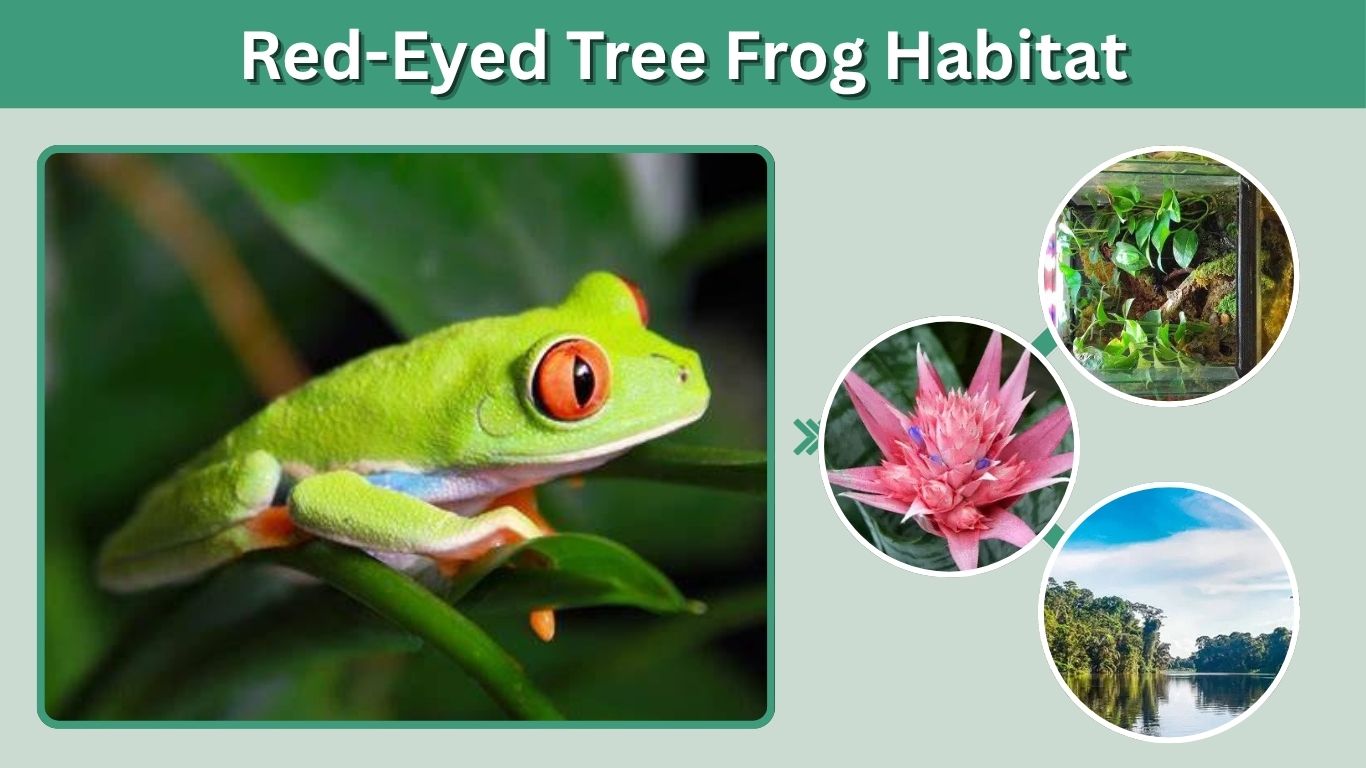
The red-eyed tree frog habitat is warm, humid, leafy, and close to water. In the wild, red-eyed tree frogs live in tropical rainforests from southern Mexico through Central America and into northern South America. They are arboreal frogs, which means they spend much of their time climbing leaves, branches, and tree trunks. A good pet habitat should copy this natural rainforest environment with vertical space, plants, humidity, clean water, and safe climbing areas.
Red-Eyed Tree Frog Habitat Overview
A red-eyed tree frog needs a habitat that supports climbing, hiding, moisture, and nighttime activity. These frogs are nocturnal, so they usually rest during the day and become more active after dark. Smithsonian’s National Zoo notes that their adhesive toe pads help them climb surfaces easily.
| Habitat Feature | Natural Habitat | Pet Habitat |
| Environment | Tropical rainforest | Tall planted terrarium |
| Lifestyle | Arboreal | Vertical climbing setup |
| Moisture | High humidity | Regular misting |
| Water source | Ponds, rivers, wet leaves | Shallow dechlorinated water bowl |
| Shelter | Leaves, branches, bromeliads | Plants, cork bark, vines |
| Activity time | Mostly nighttime | Dim evening activity |
Red-Eyed Tree Frog Natural Habitat
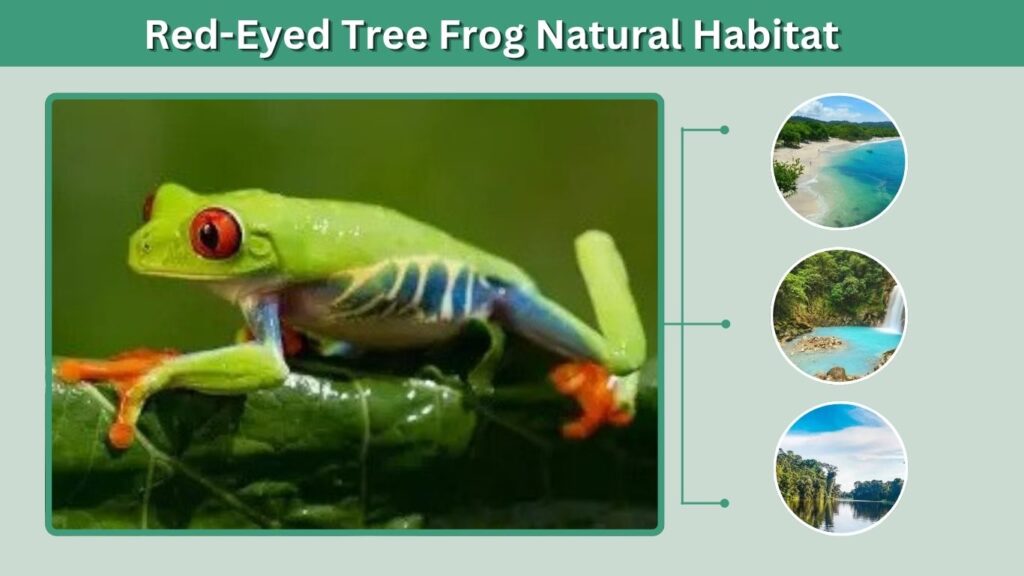
The natural habitat of a red-eyed tree frog is the humid lowland rainforest. Rainforest Alliance says these frogs are found in lowlands and slopes of Central America and as far north as Mexico. Adults stay close to water sources such as rivers because amphibians need moisture to keep their skin from drying out.
Where Do Red-Eyed Tree Frogs Live?
Red-eyed tree frogs live in warm tropical forests, especially in areas with dense leaves and nearby water. PetMD lists their range as tropical rainforests in southern Mexico, Central America, and northern South America.
They are commonly associated with rainforest countries such as:
- Mexico
- Belize
- Honduras
- Nicaragua
- Costa Rica
- Panama
- Colombia
Rainforest Canopy Habitat
Red-eyed tree frogs are often found on branches, tree trunks, and the undersides of leaves. Adults live in the rainforest canopy layer and may hide in bromeliads. Their bright green body helps them blend with leaves while resting during the day.
Red-Eyed Tree Frog Habitat Facts
Red-eyed tree frog habitat facts are closely connected to their body design. Their sticky toe pads help them grip wet leaves, and their large eyes help them move and hunt at night. Their skin also needs moisture, which is why dry habitats are dangerous for them.
Important habitat facts include:
- They are tropical rainforest frogs.
- They live near water sources.
- They are arboreal and need climbing space.
- They rest on leaves during the day.
- They become active at night.
- Tadpoles develop in temporary or permanent ponds.
- Adults may hide inside bromeliads.
- Their rainforest home is affected by habitat loss.
Red-Eyed Tree Frog Habitat Map and Range
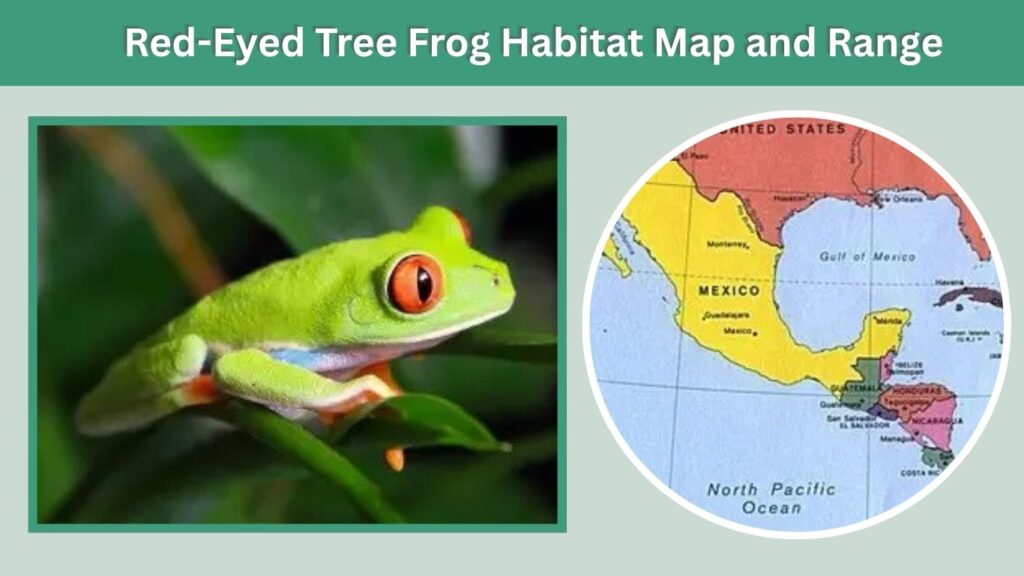
A red-eyed tree frog habitat map would mainly show tropical regions from southern Mexico through Central America and into northern South America. Their range follows warm, humid forest zones rather than dry deserts or cold mountain habitats. Rainforest Alliance describes them as found in Central America and as far north as Mexico, while PetMD also includes northern South America in their range.
Pet Red-Eyed Tree Frog Habitat Setup
A pet red-eyed tree frog habitat should be tall, not flat. Since these frogs are tree-dwellers, vertical space is more important than floor space. PetMD recommends a tall enclosure with climbing decor, plants, branches, and a secure screen top for ventilation and escape prevention.
Habitat Setup Checklist
A good red-eyed tree frog habitat setup includes:
- Tall glass terrarium
- Secure screen lid
- Live or artificial plants
- Cork bark or branches
- Vines for climbing
- Moisture-holding substrate
- Shallow dechlorinated water bowl
- Hygrometer
- Thermometer
- Low-level UVB or suitable lighting
Do not keep red-eyed tree frogs in a dry, open, or short enclosure. They need height, humidity, and hiding cover.
Red-Eyed Tree Frog Habitat Requirements
Red-eyed tree frog habitat requirements are different from desert reptiles or ground frogs. These frogs need warm air, high humidity, clean water, and many climbing surfaces. PetMD recommends humidity around 70–80%, a shallow dechlorinated water bowl, and misting plants and decor to support moisture.
| Requirement | Recommended Range or Feature |
| Enclosure type | Tall arboreal terrarium |
| Humidity | Around 70–80% |
| Day temperature | Often around 75–85°F |
| Night temperature | Around 68–75°F |
| Water | Shallow, clean, dechlorinated |
| Lighting | 10–12 hours of light cycle |
| Decor | Leaves, vines, cork bark, branches |
Exo Terra’s care guidance gives a daytime terrarium temperature of 75–85°F, nighttime drop to 68–75°F, daytime humidity around 70–75%, and nighttime humidity rising to about 90%.
How to Make a Red-Eyed Tree Frog Habitat
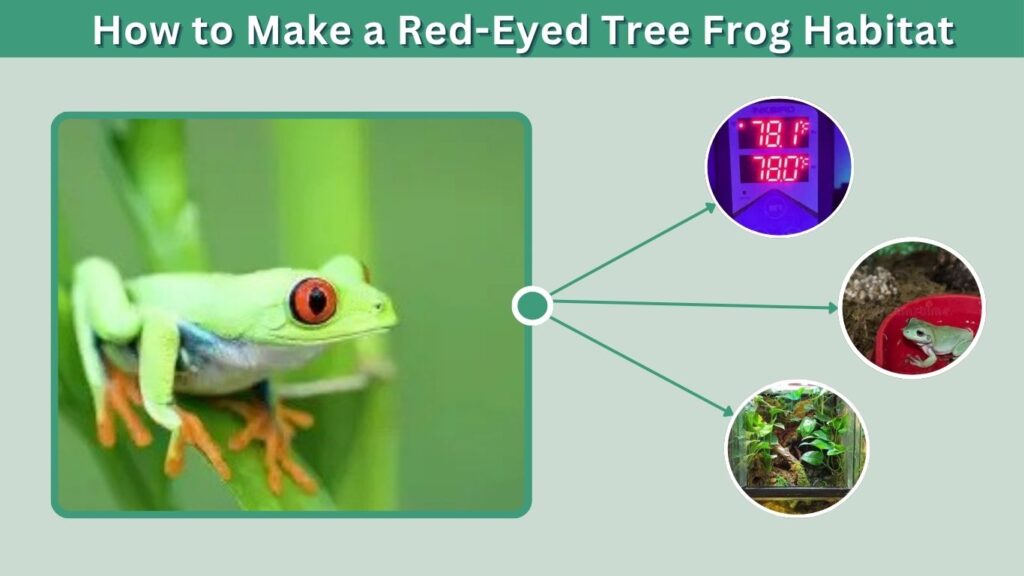
To make a red-eyed tree frog habitat, start with a tall terrarium and build upward. Place branches diagonally, add broad leaves, and create shaded resting spots. Use plants to make the habitat feel secure, but leave enough open space for the frog to move and catch insects.
Simple Setup Steps
- Choose a tall terrarium.
- Add moisture-holding substrate.
- Place a shallow water bowl.
- Add branches, vines, and cork bark.
- Add broad-leaf plants for cover.
- Install a thermometer and hygrometer.
- Mist the enclosure to maintain humidity.
- Use dechlorinated water only.
- Keep the enclosure clean and well ventilated.
PetMD notes that red-eyed tree frogs absorb water through their skin, so their water dish should be clean, shallow, and suitable for soaking.
Red-Eyed Tree Frog Habitat Temperature
Temperature is important because red-eyed tree frogs are ectothermic. They rely on their environment to regulate body temperature. A safe pet setup should avoid overheating and should provide stable tropical conditions. PetMD warns that these frogs can overheat easily and says the habitat should not go above 80°F, while Exo Terra gives a broader daytime range of 75–85°F. Because care sheets vary, keepers should monitor behavior closely and avoid extreme heat.
Safe Plants for Red-Eyed Tree Frog Habitat
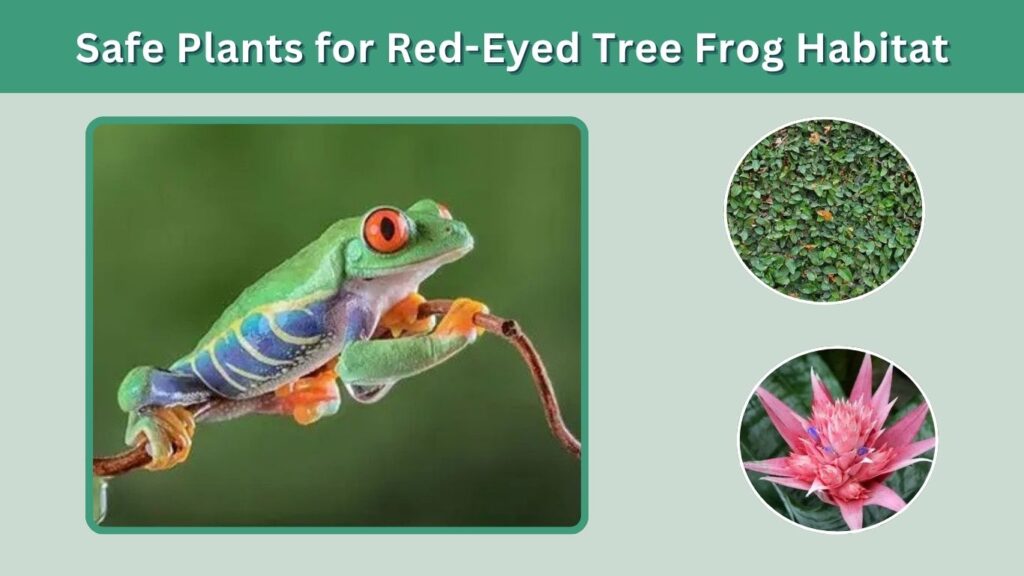
Plants are useful because they provide hiding spots, moisture, climbing surfaces, and a rainforest look. Live plants also help maintain humidity. Choose sturdy, non-toxic plants that can handle moist terrarium conditions.
Good habitat plants include:
- Pothos
- Philodendron
- Bromeliads
- Ficus pumila
- Peperomia
- Ferns
- Calathea
- Dracaena
- Snake plant
Always rinse plants well and avoid pesticide-treated plants. Broad leaves are especially useful because red-eyed tree frogs often rest on leaves during the day.
FAQs
What is the habitat of a red-eyed tree frog?
The habitat of a red-eyed tree frog is a humid tropical rainforest with trees, leaves, branches, and nearby water. These frogs live mostly above the ground on leaves and branches. They are commonly found in southern Mexico, Central America, and northern South America.
Do red-eyed tree frogs live in the rainforest?
Yes, red-eyed tree frogs live in tropical rainforests. They are especially connected to humid lowland forests, where they can stay near water and climb through leafy vegetation. Adults often rest on leaves, branches, tree trunks, and sometimes inside bromeliads.
What does a pet red-eyed tree frog habitat need?
A pet red-eyed tree frog habitat needs a tall terrarium, high humidity, climbing branches, plants, clean dechlorinated water, safe substrate, ventilation, and stable temperature. Because they are arboreal, they need vertical space more than a wide floor area.
What temperature should a red-eyed tree frog habitat be?
A red-eyed tree frog habitat is commonly kept warm but not hot. Exo Terra suggests 75–85°F during the day and 68–75°F at night. PetMD warns that red-eyed tree frogs can overheat easily, so temperatures should be monitored carefully.
What humidity does a red-eyed tree frog habitat need?
A red-eyed tree frog habitat usually needs high humidity. PetMD recommends maintaining humidity around 70–80% and providing a shallow bowl of dechlorinated water. Misting plants and decor helps keep the enclosure moist and supports the frog’s delicate skin.
