
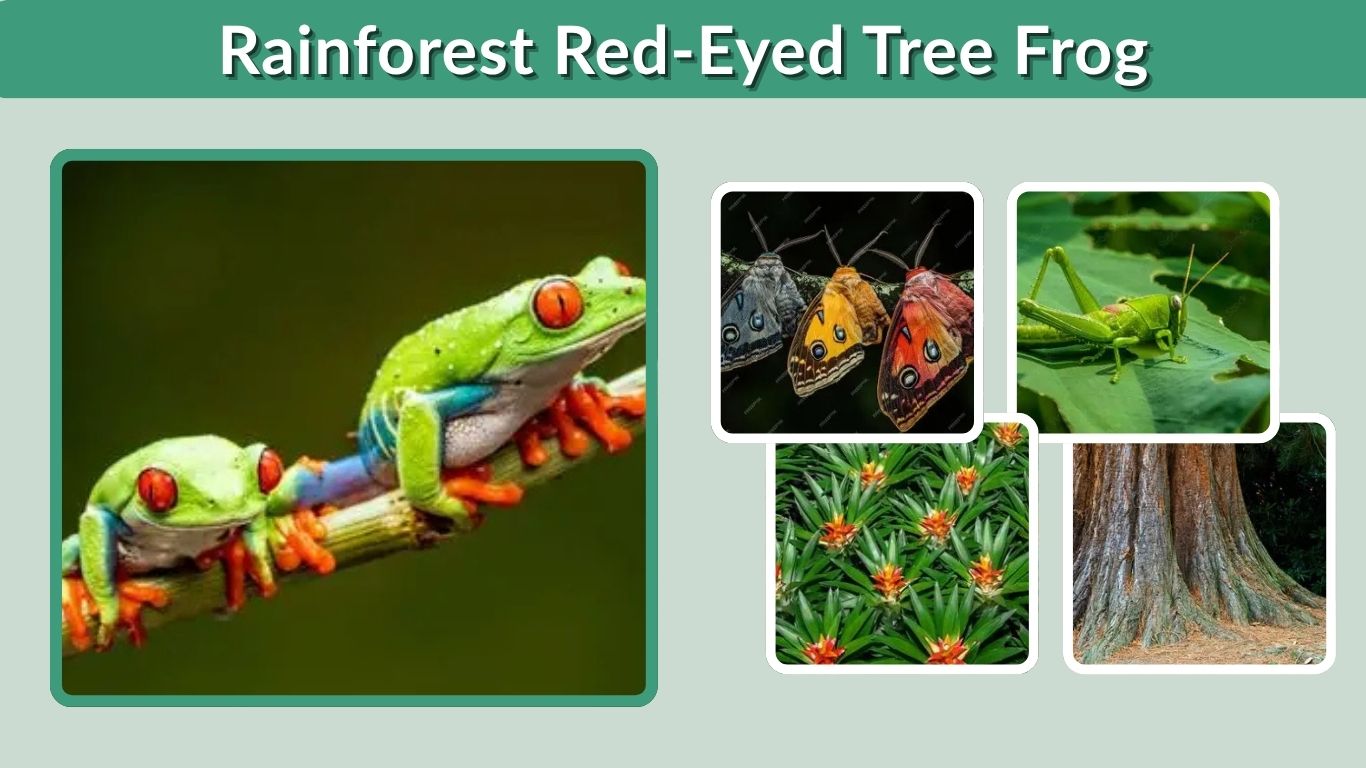
The rainforest red-eyed tree frog is one of the most recognizable amphibians in tropical forests. Known for its bright green body, red eyes, orange feet, and blue-and-yellow side markings, this frog is closely tied to humid rainforest habitats. Red-eyed tree frogs live mostly in Central American rainforests, where they climb leaves, sleep during the day, hunt insects at night, and lay eggs above ponds or slow water.
What Is a Rainforest Red-Eyed Tree Frog?
The rainforest red-eyed tree frog is usually the species Agalychnis callidryas, also called the red-eyed leaf frog. It is an arboreal frog, meaning it spends much of its adult life in trees, leaves, and forest vegetation.
Quick Identification
- Bright green body
- Large red eyes
- Orange or reddish feet
- Blue and yellow side stripes
- Smooth skin
- Sticky toe pads for climbing
- Usually active at night
- Often rests under leaves during the day
| Feature | Red-Eyed Tree Frog |
| Scientific name | Agalychnis callidryas |
| Animal type | Amphibian |
| Main habitat | Tropical rainforest |
| Activity | Nocturnal |
| Diet | Carnivore/insect-eater |
| Poisonous? | No |
Where Do Red-Eyed Tree Frogs Live in the Rainforest?
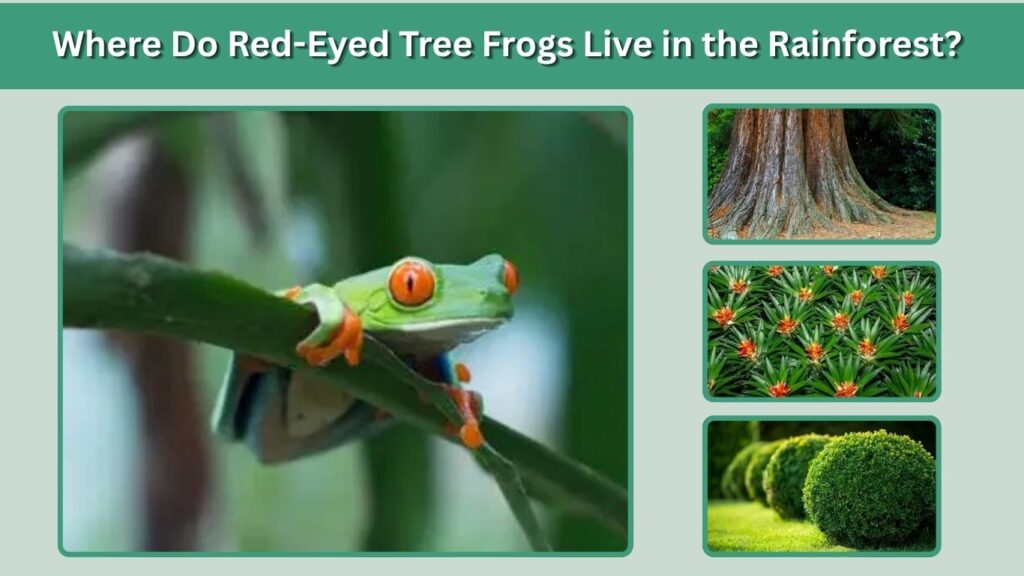
Red-eyed tree frogs live in humid lowland and montane rainforests with trees, thick vegetation, and nearby water. Their range extends from Mexico through Central America to Panama, with minimal or isolated distribution in northern Colombia. They are especially linked with rainforests in places such as Costa Rica, Panama, Honduras, Nicaragua, Belize, and nearby regions.
Rainforest Habitat
In the rainforest, they are often found in:
- Leaves above ponds
- Tree branches near water
- Shrubs and vines
- Bromeliads
- Tree trunks
- Forest edges near rivers
- Humid lowland rainforest plants
They stay close to water because their eggs and tadpoles need aquatic habitats. Rainforest Alliance notes that adults remain near rivers and humid lowland rainforest water sources because they depend on moisture and breeding sites.
Do Red-Eyed Tree Frogs Live in the Amazon Rainforest?
Many people search for “Amazon rainforest red-eyed tree frog,” but this can be misleading. Red-eyed tree frogs are mainly Central American rainforest frogs, not typical Amazon rainforest animals. Their range is usually described from Mexico to Panama, with only limited distribution in northern Colombia.
That means they are more strongly associated with Costa Rican, Panamanian, Nicaraguan, Honduran, Belizean, Guatemalan, and southern Mexican rainforests than with the main Amazon Basin.
What Rainforest Layer Do Red-Eyed Tree Frogs Live In?
Red-eyed tree frogs are often described as canopy or vegetation-dwelling frogs, but they may use different levels of rainforest plants depending on feeding, resting, and breeding needs. Adults cling to leaves, branches, tree trunks, and sometimes bromeliads. Rainforest Alliance says adults live in the canopy layer and may hide under leaves during the day.
Daily Rainforest Behavior
During the day, they usually rest quietly on the underside of leaves. At night, they become active and move through vegetation to hunt insects. This nocturnal lifestyle helps them avoid many daytime predators and keeps them active when many rainforest insects are moving.
Red-Eyed Tree Frog Adaptations in the Rainforest
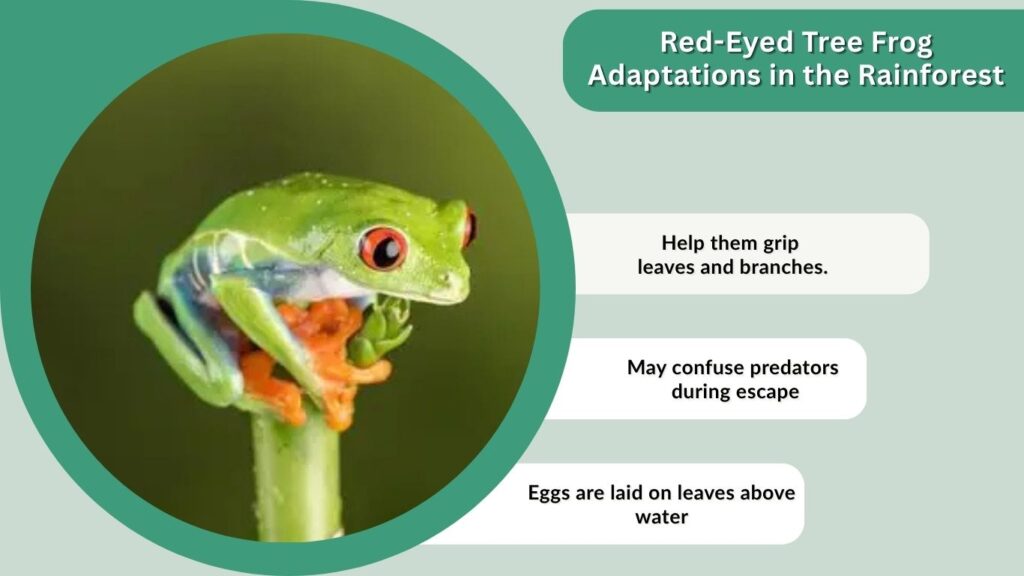
Red-eyed tree frogs have several adaptations that help them survive in tropical rainforest conditions. Their body design helps them climb, hide, hunt, and escape danger.
Main Adaptations
- Sticky toe pads: Help them grip leaves and branches.
- Green body color: Helps them blend with rainforest leaves.
- Red eyes: Can startle predators when suddenly opened.
- Bright side colors: May confuse predators during escape.
- Nocturnal activity: Helps them hunt at night and avoid some predators.
- Leaf-resting behavior: Hiding under leaves protects them during the day.
- Egg placement: Eggs are laid on leaves above water so tadpoles can drop into ponds after hatching.
National Geographic Kids explains that their green color helps them blend with leaves, while their red eyes and bright leg colors can surprise predators long enough for the frog to escape.
What Do Red-Eyed Tree Frogs Eat in the Rainforest?
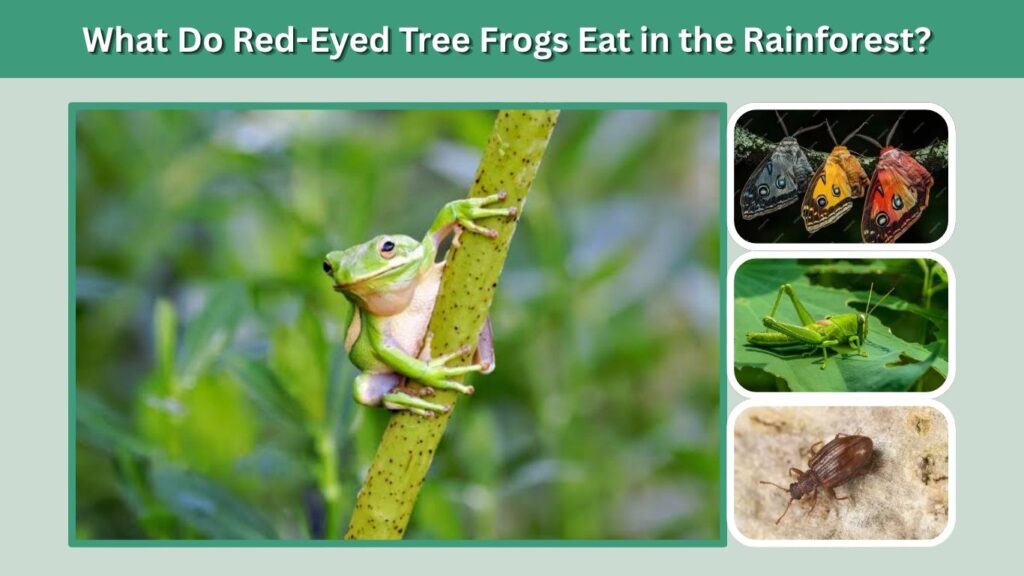
Red-eyed tree frogs are carnivores that mostly eat insects. At night, they hunt from leaves and branches, using their large eyes and quick tongue to catch prey. Rainforest Alliance lists common foods such as crickets, flies, grasshoppers, moths, and sometimes smaller frogs.
Rainforest Diet
Common prey includes:
- Crickets
- Flies
- Moths
- Grasshoppers
- Small beetles
- Other small insects
- Occasionally smaller frogs
Their diet makes them part of the rainforest’s natural pest-control system. They help reduce insect numbers while also serving as food for other animals.
Red-Eyed Tree Frog Eggs in the Rainforest
Red-eyed tree frogs have a fascinating breeding strategy. Females lay eggs on leaves that hang over ponds or other water bodies. When the tadpoles hatch, they fall from the leaf into the water below. Smithsonian Tropical Research Institute notes that these embryos can even hatch early in response to environmental threats.
| Life Stage | Where It Lives |
| Egg | On leaves above water |
| Tadpole | In ponds or water below leaves |
| Froglet | Leaves water and climbs vegetation |
| Adult | Trees, leaves, branches, and rainforest plants |
This life cycle shows why the frog needs both rainforest vegetation and nearby water. Without leaves over water, its breeding strategy would not work well.
What Eats Red-Eyed Tree Frogs in the Rainforest?
Red-eyed tree frogs face many predators in the rainforest. Eggs, tadpoles, juveniles, and adults all have different threats. Smithsonian notes that red-eyed treefrog eggs face jungle threats such as predators, pathogens, flooding, and hot, dry conditions.
Common predators may include:
- Snakes
- Birds
- Bats
- Larger frogs
- Fish that eat tadpoles
- Aquatic insects that attack tadpoles
- Wasps and other egg predators
Their camouflage, bright warning-like flashes, nighttime activity, and careful egg placement all help improve survival, but many eggs and tadpoles still become food for other rainforest animals.
Why Are Red-Eyed Tree Frogs Important to the Rainforest?
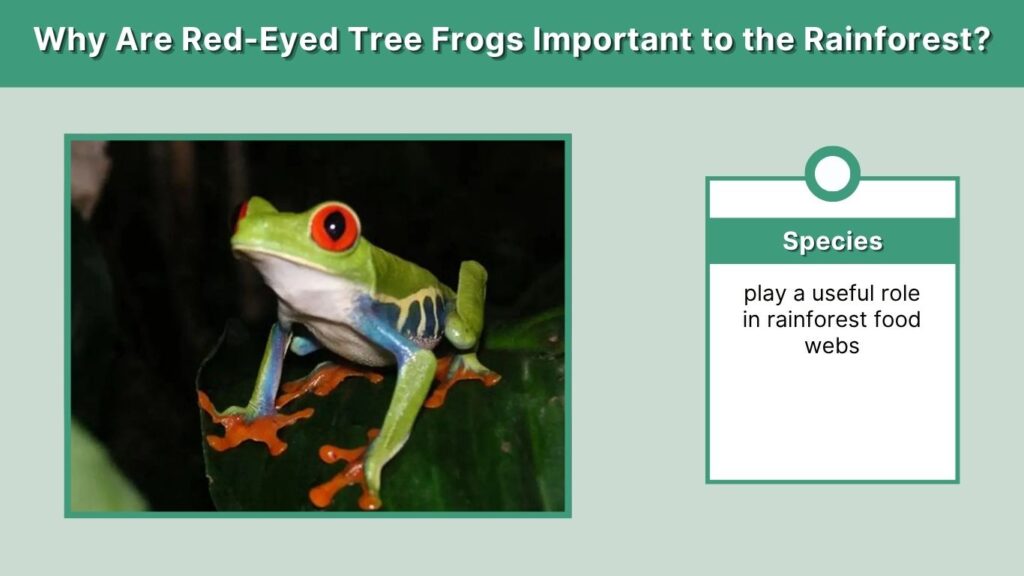
Red-eyed tree frogs play a useful role in rainforest food webs. They eat insects, provide food for predators, and depend on clean, moist habitats. Rainforest Alliance notes that frogs are often considered indicators of ecosystem health because amphibian populations can be affected by pollution, habitat loss, and environmental change.
They are also important symbols of rainforest conservation. Their bright appearance has made them one of the most famous rainforest animals, helping people connect with tropical forest protection.
FAQs
Do red-eyed tree frogs live in the rainforest?
Yes. Red-eyed tree frogs live in humid tropical rainforests, especially in Central America. They spend much of their adult life on leaves, branches, tree trunks, and vegetation near ponds, rivers, or other water sources.
Do red-eyed tree frogs live in the Amazon rainforest?
Red-eyed tree frogs are not mainly Amazon rainforest frogs. They are mostly found from Mexico through Central America to Panama, with limited distribution in northern Colombia. Most famous wild populations are associated with Central American rainforests.
What rainforest layer do red-eyed tree frogs live in?
Red-eyed tree frogs often live in the canopy and leafy vegetation of the rainforest. They rest under leaves during the day and move through branches and plants at night to hunt insects and search for mates.
What do red-eyed tree frogs eat in the rainforest?
They mostly eat insects such as crickets, flies, moths, and grasshoppers. They may also eat smaller frogs. Tadpoles live in water and feed differently before they develop into froglets and climb into vegetation.
Are red-eyed tree frogs poisonous?
No. Red-eyed tree frogs are not poisonous. Their bright colors are mainly used as a defense display to startle or confuse predators, not as a sign of dangerous poison.
