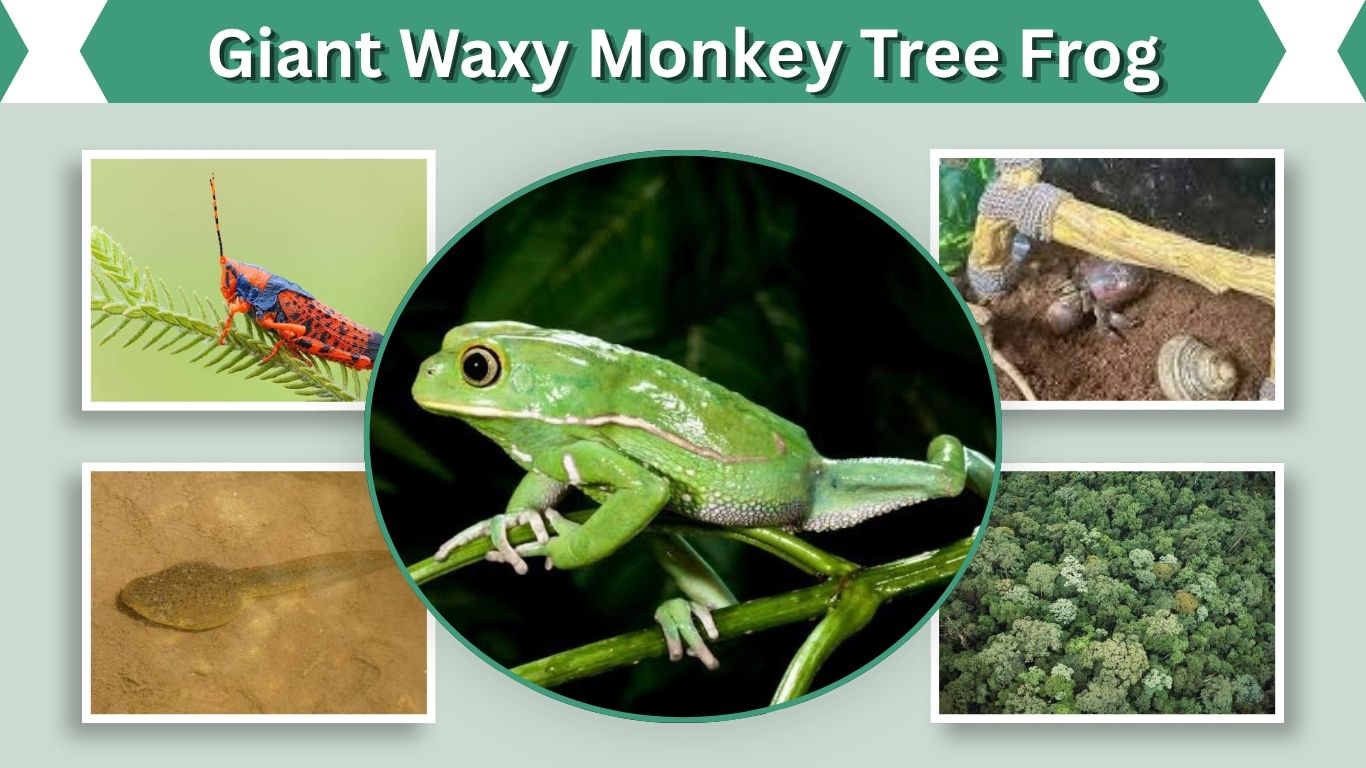
The giant waxy monkey tree frog (Phyllomedusa bicolor) is one of the largest and most fascinating tree frogs native to the Amazon rainforest. Known for its bright green body, unusual climbing behavior, and protective waxy skin secretions, this remarkable amphibian has several distinctive characteristics. Unlike many tree frogs that jump frequently, the giant monkey frog often moves slowly through branches using its specialized feet. Its impressive size and appearance also attract interest from amphibian enthusiasts. Understanding its natural habitat, diet, lifespan, breeding habits, and care requirements is essential for appreciating this unique species.
What Is a Giant Waxy Monkey Tree Frog?
The giant waxy monkey tree frog is a large, tree-dwelling amphibian native to tropical South America. Its scientific name is Phyllomedusa bicolor, and it is also called the giant monkey frog, giant leaf frog, or Amazonian giant monkey tree frog.
The word “waxy” refers to protective skin secretions that help reduce moisture loss. Its monkey-like movements and ability to grasp branches explain its common name.
Giant Waxy Monkey Tree Frog Identification
This species has several recognizable physical characteristics:
- Body color: Bright green upper body with a cream, yellowish, or brownish underside.
- Eyes: Large, prominent eyes with vertical pupils.
- Skin: Smooth skin with specialized glands that produce protective secretions.
- Legs: Long, muscular limbs adapted for climbing.
- Feet: Grasping digits and adhesive toe pads that help secure branches.
- Markings: Pale spots with darker outlines along the sides and limbs.
The combination of its large body, slow movements, and distinctive markings makes this frog recognizable among Amazonian amphibians.
Giant Waxy Monkey Tree Frog Size
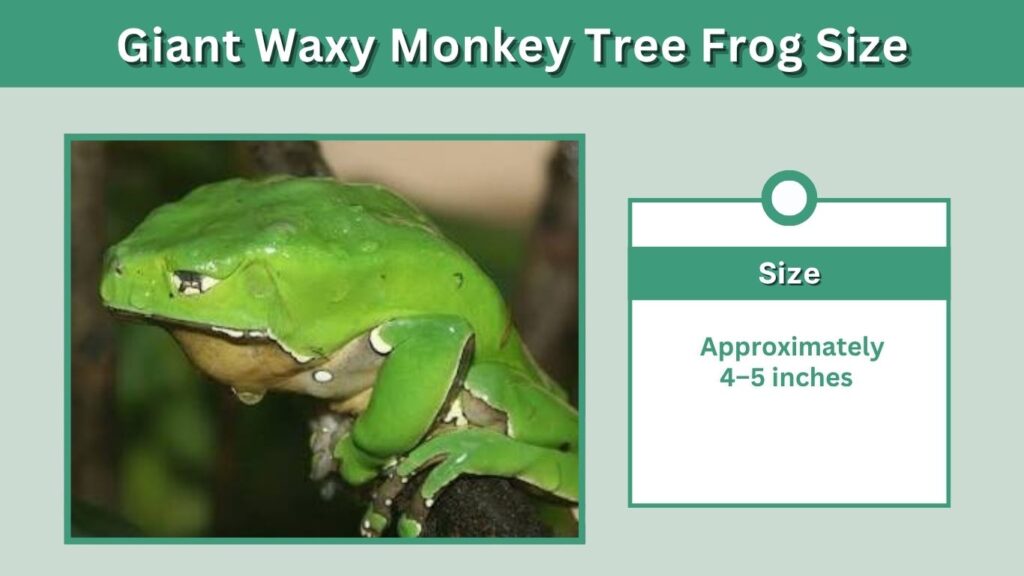
Giant waxy monkey tree frogs are among the largest members of their group. Their size varies with sex, age, and geographic population. Adult females are generally larger and heavier than males.
Despite their large bodies, these frogs are skilled climbers capable of moving through dense rainforest vegetation.
How Big Does a Giant Waxy Monkey Tree Frog Get?
Most adult giant waxy monkey tree frogs measure approximately 4–5 inches (10–13 cm) from snout to vent. Some individuals can approach 6 inches (15 cm).
Females often develop broader bodies, particularly during the breeding season. Males are generally smaller and slimmer.
Juveniles begin life much smaller and gradually develop their adult proportions as they mature. Their extended legs make them appear especially large when climbing or resting across branches.
Giant Waxy Monkey Tree Frog Habitat
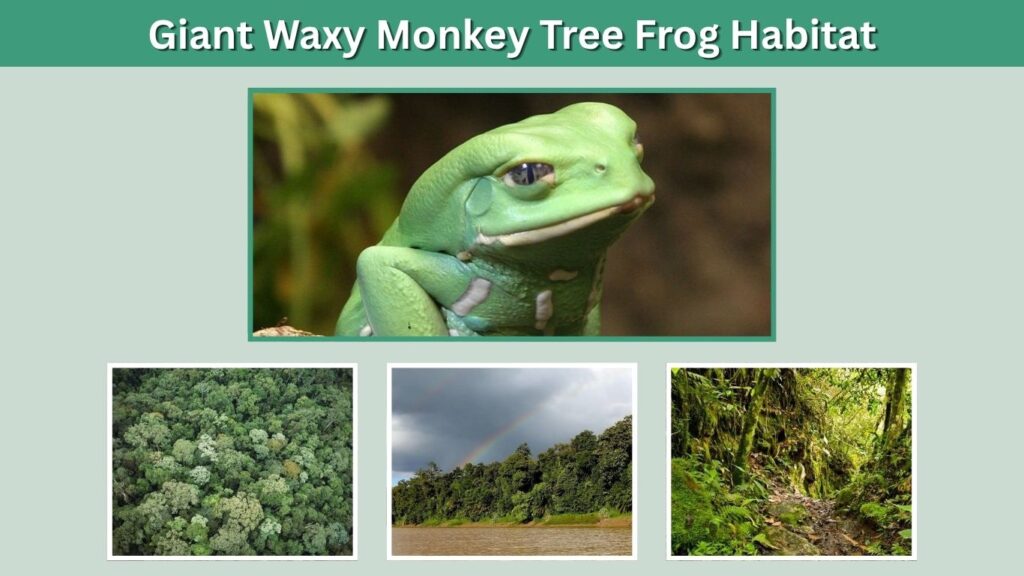
The giant waxy monkey tree frog inhabits tropical environments throughout the Amazon Basin. It spends most of its life in trees, where leaves and branches provide shelter and opportunities to capture prey.
Although it lives in humid rainforests, this frog can occupy relatively exposed areas of the canopy because its specialized skin helps reduce dehydration.
Where Do Giant Waxy Monkey Tree Frogs Live?
The species occurs in several South American countries, including Brazil, Peru, Colombia, Bolivia, Venezuela, Guyana, Suriname, and French Guiana.
Its natural habitats include tropical rainforests, forest edges, and areas with vegetation near freshwater.
These frogs generally remain above the forest floor, descending toward suitable breeding sites during the reproductive season.
Giant Waxy Monkey Tree Frog Adaptations
One of this frog’s most unusual adaptations is its ability to spread waxy secretions across its skin.
These secretions help limit water loss, allowing the frog to rest in exposed branches without drying out as quickly as many other amphibians.
Its grasping feet, adhesive toe pads, and deliberate climbing movements also help it navigate vegetation securely.
What Do Giant Waxy Monkey Tree Frogs Eat?
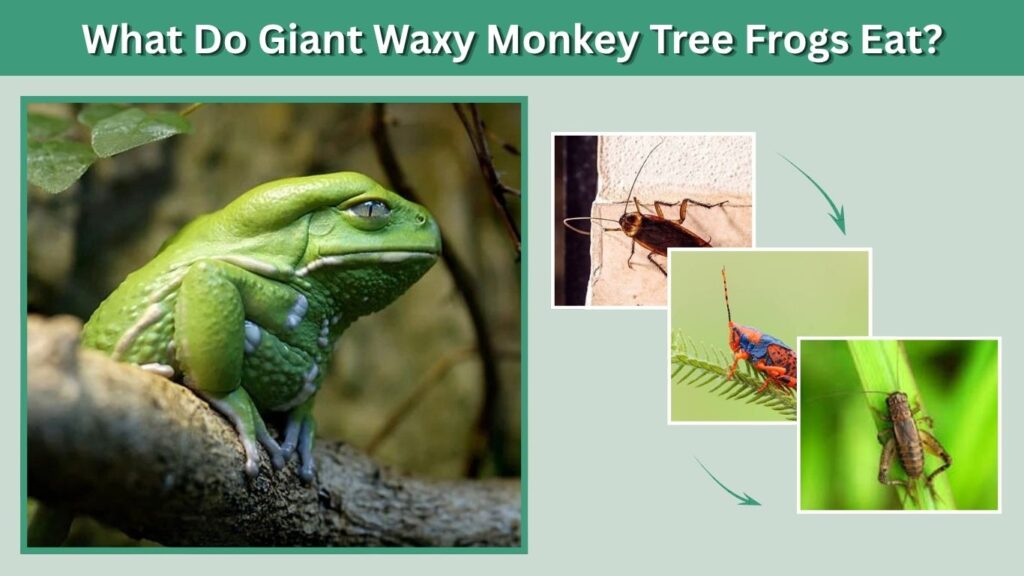
Giant waxy monkey tree frogs are carnivorous amphibians that primarily feed on insects and other small animals. Their natural feeding behavior depends on prey availability and environmental conditions.
They are mainly nocturnal hunters, searching for food after sunset. In captivity, a varied diet helps provide the nutrients needed for healthy growth and development.
Giant Waxy Monkey Tree Frog Diet
Common food sources include:
- Crickets: A commonly accepted insect prey.
- Cockroaches: Appropriately sized roaches provide variety.
- Moths: Flying insects captured during nighttime activity.
- Grasshoppers: Suitable prey for larger individuals.
- Silkworms: Soft-bodied insects sometimes offered in captivity.
- Other insects: Additional small invertebrates may be consumed when available.
Captive frogs need appropriately sized prey, gut-loaded feeder insects, and suitable calcium and vitamin supplementation.
Giant Waxy Monkey Tree Frog Lifespan
The lifespan of a giant waxy monkey tree frog depends on its environment, diet, and overall health.
Reliable information about maximum lifespan in the wild remains limited. In captivity, approximately 10 years is sometimes reported, although individual longevity can vary considerably.
Proper nutrition, suitable temperatures, ventilation, and routine health monitoring contribute to long-term welfare.
These frogs may become vulnerable to infections, dehydration, and nutritional problems when kept under unsuitable conditions.
Giant Waxy Monkey Tree Frog Care Guide
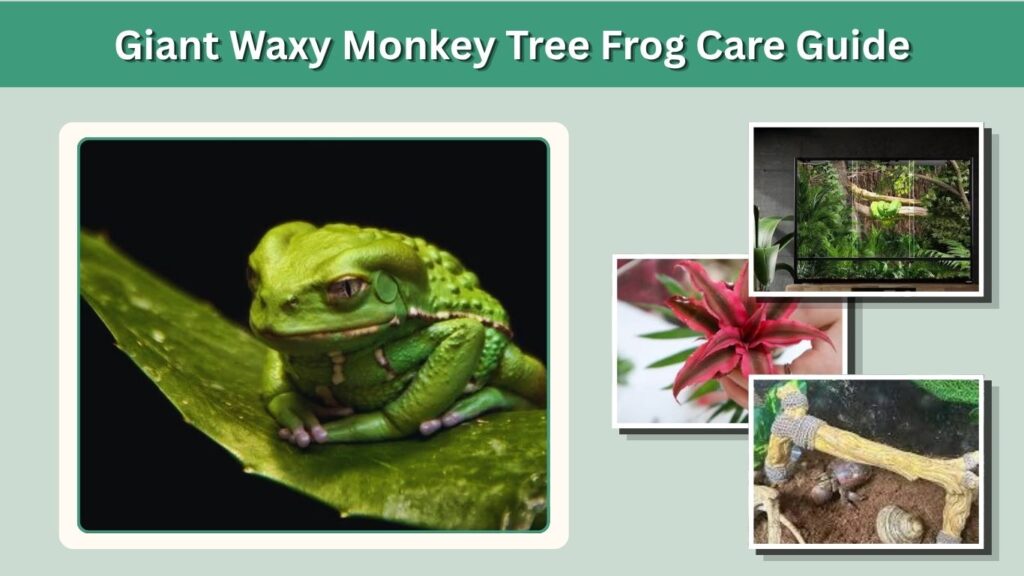
Giant waxy monkey tree frogs are challenging amphibians to maintain in captivity. Their large size, specialized habitat needs, and sensitivity to environmental conditions make them better suited to experienced keepers.
Successful care requires a spacious enclosure, appropriate climbing structures, controlled temperatures, and careful attention to humidity.
Giant Waxy Monkey Tree Frog Enclosure
A suitable enclosure should provide enough vertical space for climbing and comfortable movement.
Important enclosure features include:
- Spacious terrarium: A tall enclosure designed for large arboreal amphibians.
- Climbing branches: Strong, securely positioned branches of different widths.
- Plants: Natural or artificial vegetation that provides shelter.
- Substrate: A suitable moisture-managing substrate with proper drainage.
- Water dish: A shallow container of clean, amphibian-safe water.
- Ventilation: Adequate airflow to prevent stagnant conditions.
Adult frogs require substantially more room than juveniles. The enclosure should also allow keepers to observe the frog without unnecessary handling.
Temperature and Humidity Requirements
Captive care guidance commonly recommends ambient daytime temperatures around 72–80°F (22–27°C), with slightly cooler nights.
A carefully controlled warmer area may be provided, but overheating must be prevented.
For adult frogs, humidity around 50–60% is commonly recommended, along with good ventilation. Young froglets may require more humid conditions than adults.
Temperatures and humidity should be checked using reliable monitoring equipment. Constantly wet, poorly ventilated conditions can create health problems.
Feeding and Handling
Captive giant waxy monkey tree frogs should receive varied, appropriately sized feeder insects. Feeding frequency depends on age, body condition, and veterinary guidance.
Handling should remain minimal because amphibian skin is delicate and can absorb contaminants.
Their defensive skin secretions are also biologically active, so direct contact should be avoided, particularly around the eyes, mouth, and broken skin.
Giant Waxy Monkey Tree Frog Breeding
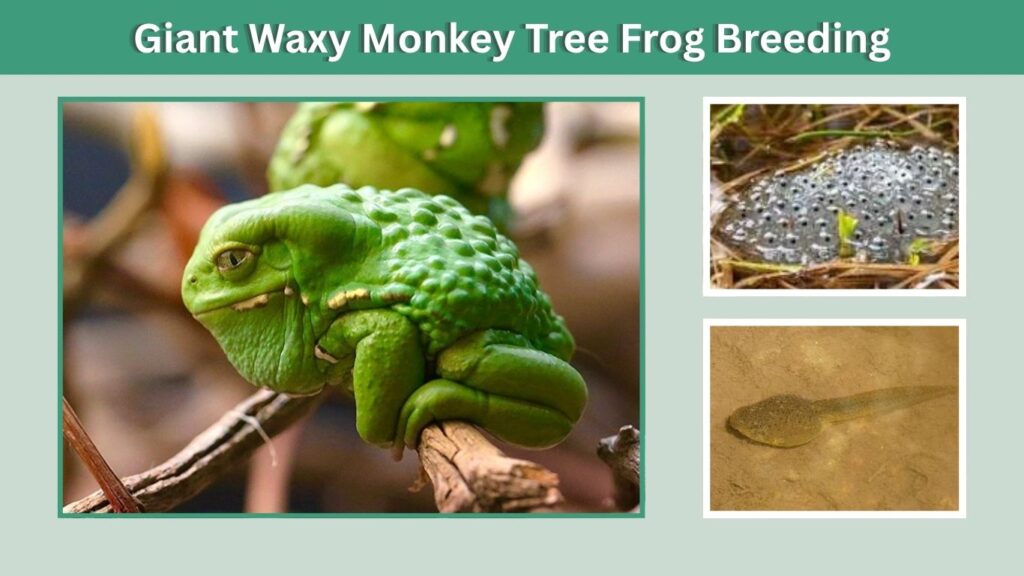
Breeding giant waxy monkey tree frogs requires suitable environmental conditions that imitate seasonal changes in their natural habitat.
In the wild, reproductive activity is associated with rainy conditions and the availability of freshwater breeding sites.
How Do Giant Waxy Monkey Tree Frogs Reproduce?
During breeding, males call to attract females near suitable water sources.
Females deposit eggs on large leaves positioned above water. The leaves are folded around the eggs, creating a protected nesting structure.
After development, the tadpoles hatch and drop into the water below. They continue growing until they undergo metamorphosis into young frogs.
Captive breeding is difficult and often requires experienced keepers to recreate appropriate seasonal environmental conditions.
Are Giant Waxy Monkey Tree Frogs Poisonous?
Giant waxy monkey tree frogs produce potent defensive skin secretions containing biologically active compounds.
These secretions are associated with traditional kambô practices in parts of South America. However, applying the secretions to humans is dangerous and can cause severe vomiting, changes in blood pressure, cardiovascular problems, and other serious reactions.
Their secretions should never be used as a home remedy or wellness treatment. They are not an established safe medical therapy.
Giant Waxy Monkey Tree Frog for Sale: What to Know
Giant waxy monkey tree frogs occasionally appear in the specialist amphibian trade, but they are uncommon compared with popular captive-bred pet frogs.
Prospective owners should prioritize reputable breeders offering documented captive-bred animals rather than wild-caught specimens.
Before purchasing, verify local ownership and import regulations, confirm that appropriate veterinary care is available, and prepare a suitable enclosure.
Because of their demanding requirements, this species is generally not recommended for beginners.
FAQs
Are Giant Waxy Monkey Tree Frogs Rare?
Giant waxy monkey tree frogs have a broad natural distribution across the Amazon Basin. However, they are relatively uncommon in the captive pet trade, particularly as captive-bred animals. Their specialized care and breeding requirements limit availability.
Are Giant Monkey Tree Frogs Good Pets?
Giant monkey tree frogs can be fascinating animals for experienced amphibian keepers. However, they need spacious climbing enclosures, carefully managed environmental conditions, and appropriate feeding. Their large size and sensitive skin make them unsuitable for many beginners.
Why Are They Called Waxy Monkey Tree Frogs?
These frogs produce protective waxy skin secretions that help reduce moisture loss. Their slow, deliberate climbing movements and grasping feet resemble those of monkeys, which explains the other part of their unusual common name.
How Long Do Giant Waxy Monkey Tree Frogs Live?
Captive giant waxy monkey tree frogs are sometimes reported to live around 10 years with appropriate care. However, reliable lifespan data remain limited, and individual survival depends on nutrition, housing conditions, veterinary care, and general health.
Can Giant Waxy Monkey Tree Frogs Be Bred in Captivity?
Yes, captive breeding is possible, although it can be difficult. Successful breeding generally requires mature frogs, appropriate seasonal environmental cues, and suitable nesting sites above water. Several specialist breeding programs have successfully produced captive-bred offspring.
